
Medicines
SmPC of 23/03/2026
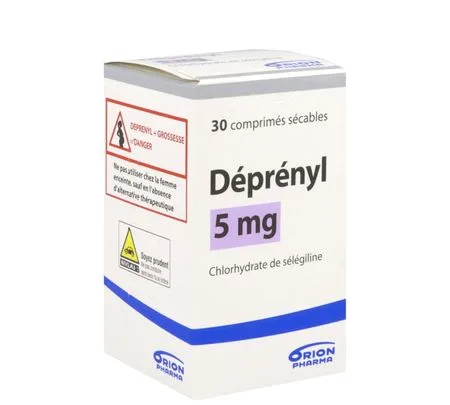
DEPRENYL 5 mg, scored tablet
Composition
Selegiline hydrochloride..........................................................................................................................5,0 mg
For one tablet.
Mannitol, microcrystalline cellulose, povidone, maize starch, magnesium stearate.
Indications
Treatment of Parkinson's disease:
1) As monotherapy : at the onset of the disease, selegiline allows delay of the need for dopatherapy.
2) In combination with levodopa associated with a peripheral dopa decarboxylase inhibitor :
- selegiline enhances the action of levodopa and thus allows a reduction in its dosage;
- at the stage of "end-of-dose" fluctuations, selegiline prolongs the effectiveness of dopatherapy.
Dosage and administration
Dosage
Paediatric population
There is no justified use of DEPRENYL 5 mg, scored tablet in the paediatric population.
Adults and elderly subjects
The usual dose, effective in Parkinson's disease, is 5 to 10 mg per day of selegiline hydrochloride:
• as monotherapy: start treatment at 10 mg/day
• in combination with levodopa: start treatment at 5 mg/day.
When selegiline is combined with levodopa, it is possible to reduce the dose of the latter. The reduction of levodopa must be progressive, depending on the clinical improvement of the patient, and may reach 30 % in steps of 10 % every 3 or 4 days.
Special populations
Hepatic impairment
There are no data regarding dose adjustment in patients with mild hepatic impairment.
Renal impairment
There are no data regarding dose adjustment in patients with mild renal impairment.
Method of administration
Selegiline may be administered either as a single dose in the morning, or as two doses at breakfast and lunch.
Contraindications
DEPRENYL is contraindicated in the following cases:
Hypersensitivity to the active substance or to any of the excipients listed in section Composition.,
In patients with a duodenal or gastric ulcer,
In association with antiemetic neuroleptics (see section Interactions),
In association with pethidine (see section Interactions),
In association with bupropion (see section Interactions),
In association with monoamine oxidase inhibitors (see section Interactions),
In association with selective serotonin reuptake inhibitors (SSRIs) and serotonin-noradrenaline reuptake inhibitors (SNRIs),
In association with serotonergic agonists such as sumatriptan, naratriptan, zolmitriptan, rizatriptan, lasmiditan. (See section Interactions)
In association with tricyclic antidepressants (see section Interactions),
In association with sympathomimetics (see section Interactions).
When selegiline is prescribed in association with levodopa, the contraindications of levodopa must be taken into account.
Warnings and precautions
Serotonin syndrome
Concomitant administration of DEPRENYL 5 mg, scored tablet with other serotonergic agents, such as MAO inhibitors, selective serotonin reuptake inhibitors, serotonin and noradrenaline reuptake inhibitors or tricyclic antidepressants may cause a potentially fatal serotonin syndrome.
If concomitant use of other serotonergic agents is clinically justified, close monitoring of the patient is recommended, particularly at the start of treatment and at each dose increase.
Symptoms of serotonin syndrome may include alterations in mental state, autonomic nervous system instability, neuromuscular abnormalities and/or gastrointestinal manifestations.
If serotonin syndrome is suspected, a dose reduction or discontinuation of treatment should be considered depending on the severity of the symptoms.
Special warnings
Selegiline potentiates the effects of levodopa; the undesirable effects of levodopa may be increased, particularly in patients receiving a very high dose of levodopa. Monitoring of these patients is necessary. The association of selegiline at a dose of 10 mg with a maximum dose of levodopa may induce abnormal movements and/or agitation. These undesirable effects disappear when the doses of levodopa are reduced by approximately 30 % (see section Adverse effects).
Administration of selegiline at doses higher than those recommended (10 mg) may result in a loss of its selectivity for monoamine oxidase B, thereby increasing the risk of arterial hypertension.
Precautions for use
Introducing selegiline into the treatment of a patient with Parkinson's disease requires enhanced monitoring at the start of treatment, particularly in individuals at risk: patients suffering from labile hypertension, cardiac arrhythmia, severe angina pectoris, psychosis or with a history of peptic ulcers. Worsening of these symptoms is likely during treatment.
Selegiline should be administered with caution in patients with severe renal or hepatic impairment. Dose adjustment is necessary in these patients.
Caution is required in patients receiving monoamine oxidase inhibitors during general anaesthesia. Monoamine oxidase inhibitors, including selegiline, may potentiate the effects of CNS depressant drugs used during general anaesthesia. Transient respiratory and cardiovascular depression, hypotension and coma have been reported (see section Interactions).
Some studies have concluded that there is an increased risk of mortality in patients receiving selegiline and levodopa compared with those receiving levodopa alone.
However, it should be noted that many methodological biases have been identified in these studies, and a meta-analysis and large cohort studies have concluded that there were no significant differences in mortality in patients treated with selegiline compared with those treated with comparators or with the selegiline/levodopa combination.
Studies have described a risk of increased hypotensive response following concomitant use of selegiline and levodopa in patients with cardiovascular risk.
The association of selegiline with levodopa may not be beneficial in patients who present with non-dose-dependent response fluctuations.
It is advisable to avoid taking selegiline with other medicinal products and substances acting centrally.
Concomitant intake of alcohol should also be avoided.
Interactions
DEPRENYL 5 mg, scored tablet should be administered with caution when used at the same time as:
• other serotonergic medicinal products, such as MAO inhibitors, selective serotonin reuptake inhibitors (SSRIs), serotonin and noradrenaline reuptake inhibitors (SNRIs) or tricyclic antidepressants, due to the risk of potentially fatal serotonin syndrome (see section Warnings and precautions).
Contraindicated combinations
+ Antiemetic neuroleptics
Reciprocal antagonism between the dopaminergic agent and the neuroleptic.
Use an antiemetic free of extrapyramidal effects.
+ Bupropion
Risk of hypertensive crises.
+ Pethidine
Signs of central excitation suggesting serotonin syndrome: diarrhoea, tachycardia, sweating, tremor, confusion or even coma.
+ Triptans metabolised by MAO (almotriptan, rizatriptan, sumatriptan, zolmitriptan)
Risk of arterial hypertension and coronary arterial vasoconstriction.
+ MAO inhibitors
Risk of disorders of the central nervous system and cardiovascular system: transient respiratory and cardiovascular depression, hypotension, coma (see section Warnings and precautions).
+ Serotonin reuptake inhibitors and serotonin and noradrenaline reuptake inhibitors
Risk of serotonin syndrome.
Fluoxetine must not be used less than 14 days after stopping selegiline. As fluoxetine has a very long elimination half-life, a minimum of 5 weeks must be observed after stopping fluoxetine and before starting selegiline.
+ Tricyclic antidepressants
Risk of onset of serotonin syndrome, sometimes associated with hypertension, hypotension, diaphoresis.
+ Sympathomimetics
Risk of hypertensive surge.
+ Serotonergic agonists
Selegiline must not be used in combination with serotonergic agonists (such as sumatriptan, naratriptan, zolmitriptan, rizatriptan, lasmiditan) due to the risk of serious interactions (potentially leading to serotonin syndrome).
Combinations not recommended
+ Antipsychotic neuroleptics (except clozapine)
Reciprocal antagonism between dopaminergic agents and neuroleptics. Dopaminergic agents may cause or worsen psychotic disorders. If neuroleptic treatment is necessary in a patient with Parkinson's disease treated with a dopaminergic agent, the neuroleptics should be progressively reduced until discontinued (abrupt withdrawal exposes the patient to a risk of "neuroleptic malignant syndrome").
+ Triptans not metabolised by MAO (naratriptan, frovatriptan)
Risk of arterial hypertension and coronary arterial vasoconstriction.
+ Tetrabenazine
Reciprocal antagonism between dopaminergic agents and tetrabenazine.
+ Alcohol (beverage or excipient)
Alcohol increases the sedative effect of this substance. Impaired alertness may make driving vehicles and operating machinery dangerous. Avoid alcoholic beverages and medicines containing alcohol.
+ Oral contraceptives
Risk of increased bioavailability of selegiline.
Associations to be taken into account
+ Levodopa
Increased risk of orthostatic hypotension.
If combined with levodopa, also take into account the interactions related to this medicine.
+ Tramadol
Risk of serotonin syndrome.
+ Dapoxetine
Risk of increased adverse effects, notably dizziness or syncope.
+ Other sedative medicines
Worsening of central depression. Impaired alertness may make driving vehicles and operating machinery dangerous
+ Other sedative medicines
Worsening of central depression. Impaired alertness may make driving vehicles and operating machinery dangerous.
+ Medicines with a narrow therapeutic index
Particular caution is required in patients treated with medicines with a narrow therapeutic index, such as digitalis glycosides and/or anticoagulants.
Interactions with food
As selegiline is a selective MAO-B inhibitor, foods containing tyramine did not induce hypertensive reactions during treatment with selegiline at the recommended dose (no "cheese effect"). No dietary restriction is therefore necessary.
When selegiline is combined with conventional MAOIs or MAO-A inhibitors, hypertensive reactions have been reported following ingestion of foods high in tyramine (such as fermented cheeses and yeast-based products).
Fertility, pregnancy and breastfeeding
Pregnancy
Data available on pregnant women are very limited.
Animal studies have shown reproductive toxicity at doses higher than those used in humans.
As a precautionary measure, selegiline should not be used during pregnancy.
Breast-feeding
The excretion of selegiline in breast milk is not known. Excretion of selegiline in milk has not been studied in animals. However, the physicochemical data of selegiline indicate excretion into breast milk. A risk to the breastfed infant cannot be excluded. Therefore, selegiline should not be used during breastfeeding.
Fertility
Not applicable.
Driving and using machines
DEPRENYL 5 mg, scored tablet has a major influence on the ability to drive vehicles and use machines.
Adverse effects
The frequencies of adverse effects listed by MedDRA system organ class are defined according to the following categories: very common (≥1/10), common (≥ 1/100 to < 1/10), uncommon (≥ 1/1 000 to < 1/100), rare (≥ 1/10 000 to < 1/1 000), very rare (< 1/10 000) and frequency not known.
|
Organ class |
Frequency |
Adverse reaction |
|
Nervous system disorders |
Common |
Dizziness. Headache |
|
Uncommon |
Mild and transient sleep disorders. |
|
|
Gastrointestinal disorders |
Common |
Nausea. |
|
Uncommon |
Dry mouth |
|
|
Renal and urinary disorders |
Frequency not known |
Urinary retention. |
|
Skin and subcutaneous tissue disorders |
Rare |
Skin reactions |
|
Cardiac disorders |
Common |
Bradycardia |
|
Uncommon |
Supraventricular tachycardia |
|
|
Vascular disorders |
Rare |
Orthostatic hypotension |
|
Investigations |
Common |
Slight increase in liver enzymes (AST, ALT). |
|
Psychiatric disorders |
Uncommon |
Mood disorders |
|
Frequency not known |
Impulse control disorders and compulsions* |
*Impulse control disorders and compulsions: pathological gambling, hypersexuality, compulsive spending or buying, excessive consumption of food and compulsive eating.
In combination with levodopa
When selegiline is combined with levodopa, and insofar as this product enhances and prolongs dopamine levels, effects that are in fact those of dopamine therapy have been reported: headache, dyskinesia, hypotonia, nausea, vomiting, constipation, dry mouth, anorexia, oedema, dizziness, vertigo, fatigue, arterial hypertension, anxiety, agitation, psychotic episodes with hallucinations and confusion, sleep disorders, cases of pathological gambling (compulsive gambling), hypersexuality and increased libido, orthostatic hypotension, heart rhythm disorders, bradycardia, angina pectoris, micturition disorders, skin reactions, dyspnoea, spasticity, leukopenia and thrombocytopenia.
Once the optimal dose of levodopa has been determined, the undesirable effects of this combination are generally less than those resulting from levodopa alone.
Reporting of suspected adverse reactions
Reporting suspected adverse reactions after authorisation of the medicinal product is important. It allows continued monitoring of the benefit/risk balance of the medicinal product. Healthcare professionals are asked to report any suspected adverse reaction via the national reporting system: National Agency for the Safety of Medicines and Health Products (ANSM) and the network of Regional Centres of Pharmacovigilance - Website: https://signalement.social-sante.gouv.fr/
Overdose
Selegiline hydrochloride having low toxicity, no overdose incidents have been encountered. Selegiline hydrochloride is rapidly metabolised, and the metabolites rapidly excreted.
At the recommended doses, selegiline selectively inhibits MAO-B; at high doses this selectivity disappears and MAO-A is also affected.
Significant inhibition of MAO-A, particularly in combination with food rich in tyramine (known as the "cheese effect"), may cause severe headache, hyperactivity, agitation, hallucinations and arterial hypertension; inhibition of MAO-B mainly induces vomiting.
Since selective inhibition of MAO-B by selegiline is only obtained at doses within the range recommended for the treatment of Parkinson's disease (5 to 10 mg/day), overdoses are likely to induce considerable inhibition of both MAO-A and MAO-B.
The signs and symptoms of overdose may resemble those observed with non-selective MAOIs (disorders of the central nervous system and cardiovascular system) (e.g. tranylcypromine, isocarboxazid and phenelzine). Symptoms of overdose with non-selective MAO inhibitors may progress within 24 hours to a state of agitation, dizziness, ataxia, irritability, severe muscle spasms, hyperthermia, tremors, hypomania, psychosis, convulsions, euphoria, respiratory depression, arterial hypotension (alternating hyper- and hypotension), arterial hypertension (sometimes with subarachnoid haemorrhage), coma and extrapyramidal symptoms.
There is no specific antidote and treatment must be symptomatic.
In case of suspected overdose, the patient should be kept under observation for 24 to 48 hours.
Pharmacodynamics
Pharmacotherapeutic class: antiparkinsonian agents, monoamine oxidase B inhibitors, ATC code: N04BD01.
Selegiline is a specific inhibitor of monoamine oxidase type B; it also acts by inhibiting the reuptake of catecholamines. Its interest in Parkinson's disease lies in the possibility of enhancing the action of levodopa by increasing and especially prolonging the useful synaptic levels of dopamine.
Pharmacokinetics
Absorption
(I) Selegiline is rapidly absorbed orally. The peak plasma concentration is reached 0,5 to 0,75 h after oral administration on an empty stomach. However, its absolute bioavailability is low due to an intense hepatic first-pass effect. Studies using 14C-selegiline have shown that its absorption half-life is approximately 0,5 h.
Distribution
Due to its high lipophilicity, selegiline diffuses rapidly into tissues. It crosses the blood-brain barrier. The volume of distribution measured in studies using 14C-selegiline is approximately 5 l/kg. Selegiline is rapidly distributed into tissues, the apparent volume of distribution being 130 l after an intravenous dose of 10 mg.
Selegiline is bound to plasma proteins at 75-85% at therapeutic doses. Selegiline irreversibly inhibits the MAO-B enzyme, and enzymatic activity can only recover after synthesis of a new enzyme. The strong inhibition of platelet MAO-B enzyme activity after administration of a dose of 10 mg lasts more than 24 h. This enzyme will recover its initial activity after a delay of approximately 2 weeks.
Biotransformation
(I) Selegiline is extensively metabolised in the liver into active metabolites, (I) desmethylselegiline and (I) methylamphetamine, which is metabolised to (I) amphetamine.
In vitro studies indicate that several hepatic enzymes (cytochrome P450 (CYP)) are involved in the metabolism of selegiline. In humans, the three metabolites are found in plasma and urine after a single or multiple dose of selegiline.
These latter metabolites may be transformed into pharmacologically inactive para-hydroxylated derivatives. It has been shown that (I) amphetamine has less central activity than (d) amphetamine.
Elimination
(I) Selegiline is excreted mainly via the kidneys but also in the faeces. It is eliminated unchanged but mostly in metabolised form. The elimination half-life is on average 1,5 to 3,5 h for selegiline. The total clearance of selegiline is approximately 500 l/h.
The elimination half-life of the main metabolites is variable. It is on average 2,5 h for (I) desmethylselegiline, 18 h for (I) amphetamine and 21 h for methylamphetamine.
Selegiline metabolites are mainly excreted in the urine but also at 15% in the faeces.
Preclinical safety
The tolerance of selegiline hydrochloride in acute and chronic toxicity studies in animals is good.
No mutagenic effect and no carcinogenic effect have been reported in studies in vivo or in vitro with selegiline hydrochloride.
Prescription, supply and reimbursement
| Marketing authorisation (AMM) |
|
| Price: |
|
Collection.
6-8 RUE DU 4 SEPTEMBRE
92130 ISSY-LES-MOULINEAUX CEDEX
Tel: 01 85 18 00 00 fr-contact@orionpharma.com
https://www.orionpharma.fr/
Source: VIDAL · Updated on 10/11/2026. This information does not replace advice from a healthcare professional.