
Medicines
SmPC of 17/10/2023
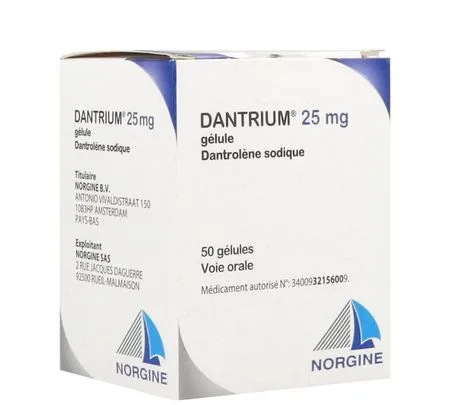
DANTRIUM 25 mg, capsule
Composition
Per capsule :
Dantrolene sodium: 0,025 g
Excipients with known effect: Lactose monohydrate, wheat starch.
Lactose monohydrate, wheat starch, talc, magnesium stearate.
Capsule shell : gelatin, erythrosine (E127), iron oxide, titanium dioxide (E171).
Indications
DANTRIUM is indicated for the treatment of chronic and severe forms of skeletal muscle spasticity resulting from conditions such as stroke, spinal cord injury, cerebral palsy and multiple sclerosis in adults and in children over 5 years weighing 25 kg or more.
Dosage and administration
Dosage
For each patient, treatment initiation must be gradual until the optimal individual dose is reached. For each patient, it is recommended to seek the minimum dose providing optimal efficacy. The recommended dose escalation schedule is presented below.
Adults
The dose escalation of DANTRIUM must follow the schedule below and must not be faster:
- Week 1: 25 mg once daily
- Week 2: 25 mg twice daily
- Week 3: 50 mg twice daily
- Week 4: 50 mg three times daily
Once the optimal dose is reached, the patient's total daily dose should be divided into 2 to 4 individual doses in order to obtain plasma levels that are as uniform as possible and to minimise adverse effects.
Doses higher than 200 mg must not be administered during long-term treatment with DANTRIUM. Temporarily, the dose may be gradually increased up to 400 mg per day if situations of tension or stress are anticipated in the patient.
The dose should be increased as follows:
- Week 5: 75 mg three times daily
- Week 6: 75 mg four times daily
- Week 7: 100 mg four times daily
However, administration of doses higher than 200 mg per day must not exceed a duration of 2 months.
Paediatric population
Dosage schedule for children over 5 years (from 25 kg body mass).
For each patient, it is recommended to seek the minimum dose providing optimal efficacy. The recommended dose escalation schedule is presented below:
- Week 1: 1 capsule of 25 mg once daily
- Week 2: 1 capsule of 25 mg twice daily
- Week 3: 1 capsule of 25 mg three times daily
- Week 4: 2 capsules of 25 mg twice daily
- Week 5: 2 capsules of 25 mg three times daily
- Week 6: 3 capsules of 25 mg three times daily
For children weighing 50 kg or more, refer to the adult dosage.
The dose may be gradually increased up to 200 mg per day.
DANTRIUM is a long-term treatment.
If no improvement is observed after 6 to 8 weeks, treatment must be discontinued.
Due to insufficient experience regarding its use and assessment of its tolerability, DANTRIUM must not be used in children under 5 years of age.
Method of administration
Oral use.
Contraindications
- Hypersensitivity to the active substance or to any of the excipients listed in section Composition.
- Hepatic disorders.
- Respiratory insufficiency.
- Severe heart failure due to myocardial disease.
- In cases where an abnormally high muscle tone is needed to allow better function, upright posture or balance during movement.
- Pregnancy and breastfeeding (see section Fertility, pregnancy and breastfeeding).
- This medicine is contraindicated in patients with an allergy to wheat (other than coeliac disease) (see section Warnings and precautions).
Warnings and precautions
DANTRIUM should be used with caution in the following situations:
In cases of amyotrophic lateral sclerosis or in the presence of symptoms of bulbar palsy, as the paresis may be aggravated by DANTRIUM.
Patients suffering from heart disease, in particular those with myocardial lesions and/or cardiac arrhythmias, require particular medical monitoring.
Dantrolene causes hepatic lesions ranging from mild to severe in approximately 9 patients treated out of 100 000, for whom the mortality rate is 10 to 20 %.
The risk of hepatic lesions appears to be particularly increased at daily doses above 300 mg, during prolonged therapy, in women, in patients over 30 years of age or with a history of hepatic lesions, and during concomitant use of other medicines that may damage the liver. Hepatic lesions may be fatal, particularly in elderly patients. In patients with multiple sclerosis, the risk of severe hepatic lesions appears to be increased.
Before starting and during treatment with DANTRIUM, liver enzymes must be monitored at regular intervals; in particular, AST and ALT, which must be measured frequently. Patients for whom the risk of hepatic lesions is increased must be monitored particularly closely. If the values are outside the normal range or if symptoms of hepatic lesions appear, DANTRIUM must be discontinued.
Some data show that when hepatic lesions occur, high serum bilirubin levels are correlated with severe progression.
To reduce the risk of hepatic lesions, the lowest effective dose of DANTRIUM possible must be used.
DANTRIUM may cause photosensitisation; therefore, patients must protect themselves against strong sun exposure during treatment.
Treatment must be discontinued if patients develop pleural or pericardial effusion or pleuropericarditis.
Patients with galactose intolerance, total lactase deficiency or glucose-galactose malabsorption syndrome (rare hereditary diseases) must not take DANTRIUM.
At doses above 200 mg of dantrolene sodium per day, an increase in undesirable effects is expected.
This medicine contains a very low gluten content (from wheat starch). It is considered "gluten-free" and is therefore unlikely to cause problems in cases of coeliac disease.
A capsule contains no more than 3,8 micrograms of gluten.
Interactions
Concomitant intake of central nervous system depressants (such as benzodiazepine-type tranquilisers, antihistamines, sedatives) and alcohol consumption should be avoided, as the undesirable effects with DANTRIUM may be increased (in particular the depressant effect on the central nervous system and muscle weakness).
With concomitant administration:
- of oestrogens or other potentially hepatotoxic substances, the risk of liver damage is increased.
- of non-depolarising muscle relaxants (vecuronium), the effect of DANTRIUM may be potentiated.
- of metoclopramide, the rate and speed of absorption of DANTRIUM may be increased and thus lead to an increase in the therapeutic effect and undesirable effects of DANTRIUM.
In patients with a predisposition to malignant hyperthermia who were receiving intravenous dantrolene sodium, co-administration of calcium antagonists and/or beta-blockers was observed to result in hyperkalaemia and cardiac failure.
Fertility, pregnancy and breastfeeding
Pregnancy
There are no or few data on the use of dantrolene sodium in pregnant women. Dantrolene crosses the placental barrier and may induce muscular hypotonia, particularly in the uterus. Animal studies are insufficient with regard to reproductive toxicity (see section Preclinical safety). Use during pregnancy is contraindicated.
Breast-feeding
This medicinal product is contraindicated during breast-feeding, as its active substance, dantrolene, is excreted in breast milk and undesirable effects in the breast-fed infant cannot be excluded, particularly during long-term treatment with DANTRIUM. If treatment of the breast-feeding mother with DANTRIUM is necessary, breast-feeding must be stopped.
Fertility
There are no data on the effects of dantrolene on fertility in humans.
Driving and using machines
When administered orally, the effects of DANTRIUM on the central nervous system, such as drowsiness or confusion, may impair responsiveness to the point of reducing the ability to drive or use machines. This applies in particular at the start of treatment, when the dose is increased, and in combination with alcohol or other central nervous system depressant medicines.
Adverse effects
Undesirable effects are presented below by system organ class and by frequency. Frequencies are defined as: very common (≥ 1/10), common (≥ 1/100, < 1/10), uncommon (≥ 1/1 000, < 1/100), rare (≥ 1/10 000, < 1/1 000), very rare (< 1/10 000) and not known (cannot be estimated from the available data).
|
System organ class |
Frequency |
Adverse effects |
|
Benign, malignant and unspecified tumours (including cysts and polyps) |
Uncommon |
Lymphocytic lymphoma |
|
Uncommon |
Lymphoma |
|
|
Blood and lymphatic system disorders |
Uncommon |
Aplastic anaemia |
|
Uncommon |
Anaemia |
|
|
Uncommon |
Leukopenia |
|
|
Uncommon |
Thrombocytopenia |
|
|
Immune system disorders |
Uncommon |
Hypersensitivity |
|
Uncommon |
Anaphylactic reaction |
|
|
Metabolism and nutrition disorders |
Common |
Decreased appetite |
|
Psychiatric disorders |
Common |
Depression |
|
Common |
Confusional state |
|
|
Common |
Nervousness |
|
|
Common |
Insomnia |
|
|
Uncommon |
Hallucination |
|
|
Frequency not known |
Disorientation |
|
|
Nervous system disorders |
Very common |
Vertigo |
|
Very common |
Somnolence |
|
|
Common |
Headache |
|
|
Common |
Speech disturbances |
|
|
Common |
Convulsions |
|
|
Uncommon |
Increased paresis in cases of amyotrophic lateral sclerosis or in the presence of bulbar palsy symptoms |
|
|
Uncommon |
Dysgeusia |
|
|
Frequency not known |
Hypotonia |
|
|
Eye disorders |
Common |
Visual impairment |
|
Uncommon |
Diplopia |
|
|
Uncommon |
Increased lacrimation |
|
|
Cardiac disorders |
Common |
Pericarditis |
|
Uncommon |
Heart failure |
|
|
Uncommon |
Tachycardia |
|
|
Uncommon |
Pleuropericarditis |
|
|
Frequency not known |
Bradycardia |
|
|
Vascular disorders |
Uncommon |
Phlebitis |
|
Uncommon |
Fluctuation of blood pressure |
|
|
Respiratory, thoracic and mediastinal disorders |
Common |
Respiratory depression |
|
Common |
Respiratory insufficiency |
|
|
Uncommon |
Dyspnoea |
|
|
Very rare |
Sensation of suffocation |
|
|
Gastrointestinal disorders |
Very common |
Diarrhoea |
|
Common |
Abdominal cramps |
|
|
Common |
Nausea |
|
|
Common |
Vomiting |
|
|
Uncommon |
Constipation (rarely progressing to signs of intestinal obstruction) |
|
|
Uncommon |
Dysphagia |
|
|
Uncommon |
Gastrointestinal haemorrhage |
|
|
Uncommon |
Upper abdominal pain |
|
|
Uncommon |
Hypersalivation |
|
|
Frequency not known |
Dyspepsia |
|
|
Frequency not known |
Dry mouth |
|
|
Hepatobiliary disorders |
Common |
Hepatotoxicity/hepatitis |
|
Common |
Jaundice |
|
|
Common |
Cholestasis |
|
|
Skin and subcutaneous tissue disorders |
Common |
Skin rash |
|
Common |
Acneiform dermatitis/acne-like rash/acne |
|
|
Uncommon |
Hyperhidrosis |
|
|
Uncommon |
Abnormal hair growth |
|
|
Uncommon |
Pruritus |
|
|
Uncommon |
Photosensitivity reaction |
|
|
Very rare |
Urticaria |
|
|
Very rare |
Eczema |
|
|
Musculoskeletal and connective tissue disorders |
Common |
Muscle weakness |
|
Uncommon |
Back pain |
|
|
Uncommon |
Myalgia |
|
|
Renal and urinary disorders |
Uncommon |
Urinary incontinence |
|
Uncommon |
Pollakiuria |
|
|
Uncommon |
Crystalluria |
|
|
Uncommon |
Hematuria |
|
|
Uncommon |
Urinary retention |
|
|
Very rare |
Micturition disorders |
|
|
Frequency not known |
Chromaturia |
|
|
Frequency not known |
Nocturia |
|
|
Disorders of the reproductive system and breast |
Very rare |
Erectile dysfunction |
|
General disorders and administration site conditions |
Very common |
Fatigue |
|
Very common |
Malaise |
|
|
Very common |
Asthenia |
|
|
Common |
Chills |
|
|
Common |
Fever |
|
|
Investigations |
Common |
Abnormal liver function tests |
In addition, the following specific adverse effects have been observed with the use of DANTRIUM:
- Onset of cerebral convulsions, particularly in children with cerebral palsy;
- Pleuropericarditis and pericardial effusion (with associated eosinophilia)
- Pleural effusion (with associated eosinophilia),
- Diarrhea (which may be severe and require temporary discontinuation of treatment).
Reporting of suspected adverse reactions
Reporting suspected adverse reactions after authorisation of the medicinal product is important. It allows continued monitoring of the benefit/risk balance of the medicinal product. Healthcare professionals are asked to report any suspected adverse reactions via the national reporting system: National Agency for the Safety of Medicines and Health Products (ANSM) and the network of Regional Pharmacovigilance Centres - Website: https://signalement.social-sante.gouv.fr
Overdose
Symptoms that may occur in case of overdose are as follows: muscle weakness, troublesome hypotonia, visual disturbances (diplopia), disturbances of consciousness (lethargy, coma), fatigue, dizziness, vomiting, diarrhea, tachycardia, hypo- or hypertension, pruritus, undesirable hepatotoxic reactions.
In case of poisoning, if possible ensure gastric emptying and provide general measures of cardiac and respiratory support. Administer diluting solutions by intravenous infusion so as to avoid a risk of crystalluria.
In case of overdose with dantrolene, the benefit of dialysis is not known and there is no specific antidote.
Pharmacodynamics
Pharmacotherapeutic class: direct-acting muscle relaxants, ATC code: M03CA01.
Dantrolene sodium uncouples nerve excitation and contraction of skeletal muscles, probably by interfering with calcium release at the level of the sarcoplasmic reticulum.
Its action is selective and has no influence on neuromuscular transmission nor any measurable effect on the excitable membrane.
At therapeutic doses, smooth muscles and the myocardium are not affected by DANTRIUM.
Studies in vitro in animals indicated that effects on smooth muscles and the myocardium may occur at doses well above therapeutic doses; however, as the results are contradictory, no definitive conclusion can be drawn regarding such effects in humans.
Pharmacokinetics
Absorption
Gastrointestinal absorption of dantrolene sodium is approximately 70% and leads to dose-dependent plasma concentrations. After administration of 25 mg of dantrolene sodium, maximum plasma concentrations were reached after 3 to 4 hours and were 0,22 μg/mL. Absolute bioavailability was 83,6% on average.
Distribution
Dantrolene is reversibly bound to plasma albumin; the in vitro binding constant value was established at 4,3 x 10⁻⁴M-1. For transplacental passage of dantrolene, a factor of 0,4 was measured.
Biotransformation
Metabolism in the liver occurs by 5-hydroxylation at the hydantoin ring, as well as by reduction of the nitro group to an amine group followed by acetylation.
The parent substance and metabolites are mainly excreted via the renal and biliary routes, renal excretion occurring at a ratio of 79% of 5-hydroxy-dantrolene, 17% of acetylamino-dantrolene and 1 to 4% of unchanged dantrolene. The metabolite 5-hydroxy-dantrolene is pharmacologically active, whereas acetylamino-dantrolene has no muscle relaxant effect.
Elimination
Renal clearance (5-OH-dantrolene) is 1,8 to 7,8 L/h. The mean biological half-life in adults is 8,7 hours after an oral dose of 100 mg. In children with chronic spasticity, an elimination half-life of 7,3 hours has been observed.
The duration and intensity of skeletal muscle relaxation in patients depend on blood concentrations of dantrolene sodium.
Preclinical safety
Acute toxicity
Non-clinical data on intravenous administration are not available. Following intraperitoneal administration, the LD50 is approximately 800 mg/kg body mass in rats (human equivalent dose 128 mg/kg) and following oral administration, the LD50 is approximately 3 g/kg in newborn rats (human equivalent dose 480 mg/kg). No LD50 value could be determined following oral administration in adult animals, due to insufficient mortality.
With subacute intravenous administration of dantrolene at doses up to 20 mg/kg/day, the only observations were a lower gain in body mass in rats (human equivalent dose 3,2 mg/kg) and hepatic changes in dogs (human equivalent dose 10,8 mg/kg).
Chronic toxicity
In chronic toxicity studies in rats, dogs and monkeys, oral administration of more than 30 mg/kg/day (human equivalent dose 4,8 mg/kg, 16,2 mg/kg and 9,6 mg/kg respectively) for 12 months resulted in reduced growth or body mass gain. Hepatotoxic effects and potentially renal obstruction were observed; these were reversible.
Mutagenicity
Dantrolene sodium produced positive results in the Ames test with S. typhimurium both in the presence and in the absence of hepatic activation.
Carcinogenicity
Doses of dantrolene sodium up to 60 mg/kg/day (human equivalent dose 9,6 mg/kg) for 18 months led to an increase in benign hepatic neoplasms, an increase in hepatic lymphangiomas and hepatic angiosarcomas, and, in females only, an increase in mammary tumours.
The relevance of these data to clinical practice is not known.
Reproductive toxicity
In adult male and female rats, orally administered dantrolene up to 45 mg/kg/day (human equivalent dose 7,3 mg/kg/day) had no negative effects on fertility or general reproductive capacity. Administration of dantrolene to pregnant female rats (at 20 mg/kg/day or more; human equivalent dose 3,2 mg/kg/day) and pregnant female rabbits (at 45 mg/kg/day; human equivalent dose 14,5 mg/kg/day) resulted in an increase in the unilateral or bilateral formation of supernumerary ribs in the offspring.
Special storage precautions
To be stored in the blister packs, in the outer packaging, protected from light and moisture.
Prescription, supply and reimbursement
| Marketing authorisation (AMM) |
|
| Price: |
|
Marketing authorisation holder: NORGINE B.V., Antonio Vivaldistraat 150, 1083 HP Amsterdam, Netherlands.
NORGINE SAS
23, rue François-Jacob. 92500 Rueil-Malmaison
Tel: 01 41 39 94 00
Source: VIDAL · Updated on 10/11/2026. This information does not replace advice from a healthcare professional.