
Medicines
SPC of 06/05/2025
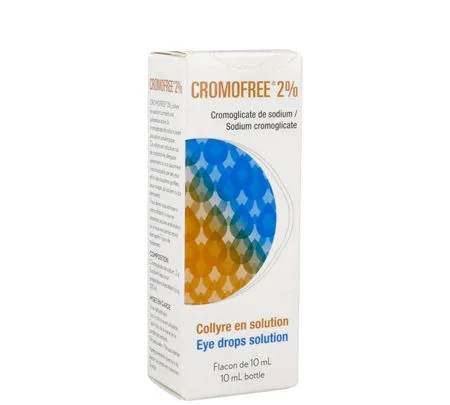
CROMOPTIC 2 % WITHOUT PRESERVATIVE, eye drops in solution
Dosage and administration
Ophthalmic use.
Dosage
Adults and children : depending on the severity of symptoms, instil 1 drop of eye drops 2 to 6 times a day, at regular intervals, into the conjunctival sac of the affected eye, looking upward and gently pulling the eyelid downward.
Paediatric population
In children, medical advice is required.
Method of administration
Wash hands thoroughly before proceeding with instillation.
Avoid contact of the tip with the eye or eyelids.
Systemic absorption may be reduced by nasolacrimal occlusion or by closing the eyelids for 2 minutes. This method may help to reduce systemic adverse effects and increase local efficacy.
Close the bottle immediately after use.
In case of concomitant treatment with another eye drops, wait 15 minutes between each instillation.
If there is no improvement after 7 days of treatment, it is necessary to seek medical advice.
Contraindications
Hypersensitivity to the active substance or to any of the excipients listed in section Composition.
Warnings and precautions
- DO NOT INJECT, DO NOT SWALLOW.
- The eye drops must not be administered by peri- or intra-ocular injection.
- Do not exceed the recommended dose.
- This eye drop does not contain a preservative.
Interactions
In case of concomitant treatment with another eye drops, wait 15 minutes between each instillation.
Fertility, pregnancy and breastfeeding
Pregnancy
Studies performed in animals have not demonstrated a teratogenic effect.
In the absence of a teratogenic effect in animals, a malformative effect in humans is not expected. Indeed, to date, substances responsible for malformations in humans have proven teratogenic in animals in well-conducted studies in two species.
In clinical practice, there is currently no sufficiently relevant data to assess a possible malformative or foetotoxic effect of sodium cromoglicate when administered during pregnancy.
Consequently, as a precautionary measure, it is preferable not to use sodium cromoglicate during pregnancy.
Breast-feeding
There is no data on the passage of sodium cromoglicate into breast milk. However, given the absence of toxicity, breastfeeding is possible during treatment with this medicine.
Driving and using machines
A temporary visual disturbance may be felt after instillation of the eye drops. In this case, wait until the symptoms have ended before driving a vehicle or using machinery.
Adverse effects
Possible occurrence of:
- hypersensitivity reactions to sodium cromoglicate or to one of the components of the eye drops,
- temporary visual disturbance after instillation of the eye drops.
Reporting of suspected adverse reactions
Reporting suspected adverse reactions after authorisation of the medicinal product is important. It allows continued monitoring of the benefit/risk balance of the medicinal product. Healthcare professionals are asked to report any suspected adverse reactions via the national reporting system: National Agency for the Safety of Medicines and Health Products (ANSM) and the network of Regional Pharmacovigilance Centres - Website: https://signalement.social-sante.gouv.fr/.
Overdose
No cases of overdose have been reported. However, prolonged repeated applications may lead to a non-negligible systemic passage of the active ingredients, in addition to an exacerbation of local adverse effects.
Pharmacodynamics
Pharmacotherapeutic class: Local anti-allergic agent, ATC code: S01GX01.
Sodium cromoglicate has recognised anti-allergic properties at the level of the mucous membranes; by stabilising the mast cell membrane, it prevents the release of the chemical mediators responsible for anaphylactic reactions.
Pharmacokinetics
Sodium cromoglicate is partly absorbed through the mucous membrane, resulting in a low systemic passage. It is not metabolised. It is excreted unchanged in bile and urine.
Preclinical safety
Non-clinical data from conventional safety pharmacology, repeated-dose toxicity, genotoxicity, carcinogenesis, and reproduction and developmental function studies revealed no particular risk for humans.
INCOMPATIBILITIES
In the absence of compatibility studies, this medicinal product must not be mixed with other medicinal products.
Shelf life
Before opening: 2 years.
After 1year opening of the bottle: to be stored for a maximum of 3 months.
SPECIAL PRECAUTIONS FOR DISPOSAL AND OTHER HANDLING
Any unused medicinal product or waste material should be disposed of in accordance with local requirements.
Prescription, supply and reimbursement
| Marketing authorisation (AMM) |
|
| Price: |
|
Collection.
416 RUE SAMUEL MORSE CS 99535
34961 MONTPELLIER CEDEX 2
Tel: 04 67 12 30 30 https://www.bausch.com/
Source: VIDAL · Updated on 10/11/2026. This information does not replace advice from a healthcare professional.