
Medicines
SmPC of 15/09/2022
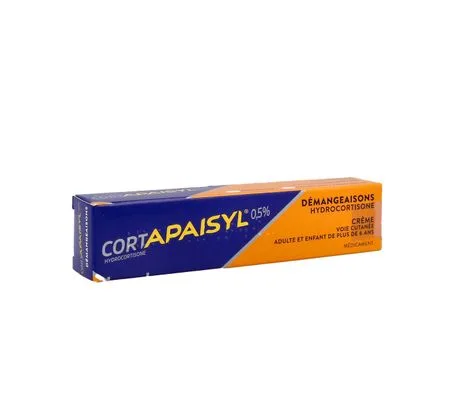
CORTAPAISYL 0,5%, cream
Composition
Hydrocortisone base.............................................................................................................................................0,500 g
In the form of hydrocortisone acetate.......................................................................................................0,558 g
For 100 g of cream
Excipients with known effect: Cetostearyl alcohol, sodium methyl parahydroxybenzoate (E219), sodium propyl parahydroxybenzoate (E217).
Sorbitan stearate, polysorbate 60, synthetic spermaceti wax, cetostearyl alcohol, octyldodecanol, sodium methyl parahydroxybenzoate (E 219), sodium propyl parahydroxybenzoate (E 217), imidurea, anhydrous citric acid, purified water.
Indications
This medicine is indicated in adults and children over 6 years of age for:
- nettle stings,
- insect bites,
- localised sunburn.
Dosage and administration
Reserved for adults and children over 6 years of age.
Dosage
2 applications per day.
An increase in the number of applications increases the risk of adverse effects without improving therapeutic effects.
The duration of treatment is limited to three days.
Method of administration
It is advised to apply the product in spaced dabs, then spread it by massaging lightly until it is completely absorbed.
Wash hands after application.
Contraindications
- Hypersensitivity to the active substance or to any of the excipients listed in section Composition.
- Ulcerated skin lesions, wounds.
- Acne.
- Rosacea.
- Bacterial, viral, fungal and parasitic skin infections.
Warnings and precautions
Special precautions for use
Do not treat large areas, do not use an occlusive dressing.
Do not apply other dermatological products to the treated surface.
Do not increase the frequency of applications.
If the itching persists, or in case of local intolerance or cutaneous superinfection, treatment must be stopped and the course of action reassessed.
Visual disorders
Visual disturbances may occur with systemic or local corticosteroid therapy. In case of blurred vision or the appearance of any other visual symptom during corticosteroid therapy, an ophthalmological examination is required to look for cataract, glaucoma, or rarer lesions such as central serous chorioretinopathy, as described with systemic or local administration of corticosteroids.
This medicine contains cetostearyl alcohol and may cause local skin reactions (for example contact dermatitis).
This medicine contains sodium methyl parahydroxybenzoate (E219) and sodium propyl parahydroxybenzoate (E217) and may cause allergic reactions (possibly delayed).
Fertility, pregnancy and breastfeeding
Pregnancy
No animal teratogenicity study has been carried out with corticosteroids administered topically.
Nevertheless, studies concerning the intake of corticosteroids per os in pregnant women did not reveal a risk of malformation greater than that observed in the general population.
Consequently, this medicine may be prescribed during pregnancy if needed.
Breast-feeding
Breast-feeding is possible during treatment with this medicine.
Do not apply to the breasts during breastfeeding because of the risk of the newborn ingesting the product.
Adverse effects
As this medicine contains a corticosteroid of weak activity and low dosage, the undesirable effects described below are minimised.
Prolonged use of corticosteroids of strong or very strong activity may lead to cutaneous atrophy, telangiectasias (to be feared particularly on the face), striae (particularly at the root of the limbs, and occurring more readily in adolescents), ecchymotic purpura secondary to atrophy, and skin fragility.
These effects are rare with corticosteroids of weak activity such as hydrocortisone at 0,5 %.
On the face, corticosteroids may cause perioral dermatitis or worsen rosacea.
A delay in healing of atonic wounds, bedsores, leg ulcers (see section Contraindications).
Acneiform or pustular eruptions, hypertrichosis, and depigmentation have been reported.
Uncommon ocular disorders have been reported, blurred vision (see section Warnings and precautions).
Secondary infections, particularly under occlusive dressings or in skin folds, and allergic contact dermatoses have also been reported with the use of topical corticosteroids.
Reporting of suspected adverse reactions
Reporting suspected adverse reactions after authorisation of the medicinal product is important. It allows continued monitoring of the benefit/risk balance of the medicinal product. Healthcare professionals are asked to report any suspected adverse reactions via the national reporting system: National Agency for the Safety of Medicines and Health Products (ANSM) and the network of Regional Pharmacovigilance Centres - Website: www.signalement-sante.gouv.fr.
Pharmacodynamics
Pharmacotherapeutic class: CORTICOSTEROID OF WEAK ACTIVITY (GROUP I), ATC code: D07AA02
Dermocorticoids are classified into 4 levels of activity according to skin vasoconstriction tests: very potent, potent, moderate, weak.
CORTAPAISYL 0,5 %, cream is of weak activity.
Active on certain inflammatory processes such as contact hypersensitivity and the pruritic effect associated with them; vasoconstrictor, inhibits cell multiplication.
Pharmacokinetics
The extent of transdermal absorption and of systemic effects depends on the treated surface area, the degree of epidermal alteration, and the duration of treatment. These effects are all the more significant the longer the treatment is prolonged.
Prescription, supply and reimbursement
| Marketing authorisation (AMM) |
|
163-165 QUAI AULAGNIER
92600 ASNIERES-SUR-SEINE CEDEX
Tél : 01 40 88 50 00 https://fr.pg.com/
Source: VIDAL · Updated on 10/11/2026. This information does not replace advice from a healthcare professional.