
Medicines
SmPC of the 09/03/2026
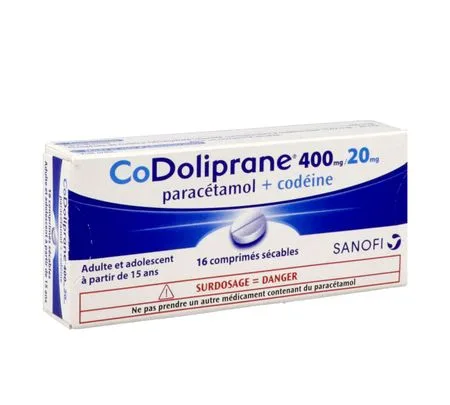
CODOLIPRANE ADULTS 400 mg/20 mg, scored tablet
Forms and presentations
Scored tablet.
Box of 16, under blisters.
Box of 100, under blisters (hospital model).
Composition
For a scored tablet:
Paracetamol: 400,00 mg
Codeine phosphate hemihydrate: 20,00 mg
quantity corresponding to codeine base: 15,62 mg
Gelatin, stearic acid, potato starch, povidone, crospovidone.
Indications
CODOLIPRANE ADULTS 400 mg/20 mg, scored tablet is indicated in patients older than 12 years for the treatment of acute pain of moderate intensity that cannot be relieved by other analgesics such as paracetamol or ibuprofen (alone).
Dosage and administration
Dosage
The dosage must be adapted to the intensity of the pain; the lowest effective dose should generally be used, for the shortest possible duration. This dose may be taken up to 4 times a day, respecting an interval of 6 hours between each intake.
The duration of treatment should not exceed 3 days. If the pain is not relieved, patients/carers are advised to seek the opinion of a doctor.
Adults
1 tablet, to be renewed if necessary after 6 hours, or possibly 2 tablets in case of severe pain without exceeding 6 tablets per day.
It is generally not necessary to exceed 6 tablets per day. However, in case of more intense pain, this dosage may be increased up to 8 tablets per day (maximum dosage).
However, the maximum total daily dose of paracetamol in adults and adolescents over 50 kg must not exceed 4 g per day and the maximum total daily dose of codeine must not exceed 240 mg.
Paediatric population
Children aged under 12 years
Codeine must not be used in children under 12 years because of the risk of opioid toxicity linked to the variable and unpredictable metabolism of codeine into morphine (see sections Contraindications and Warnings and precautions).
Adolescents aged 12 to 18 years
The recommended daily dose is:
- of approximately 60 mg/kg/day of paracetamol to be divided into 4 doses, i.e. approximately 15 mg/kg every 6 hours,
- approximately 3 mg/kg/day of codeine to be divided into 4 doses, i.e. approximately 0,5 to 1 mg/kg every 6 hours.
It is imperative to respect the dosages defined according to the adolescent's weight and therefore choose a suitable presentation. The approximate ages according to weight are given for information only:
- Between 31 and 50 kg (from 12 to 15 years approximately): 1 tablet per dose, to be repeated if necessary after a minimum of 6 hours, not exceeding 4 tablets per day.
- More than 50 kg (from approximately 15 years): 1 tablet per dose, to be repeated if necessary after a minimum of 6 hours, or possibly 2 tablets in case of severe pain, not exceeding 6 tablets per day.
Special populations
Elderly subject
The initial dosage should be halved compared with the recommended adult dosage, and may be increased if necessary depending on tolerance and needs.
Renal impairment
In cases of renal impairment, there is a risk of accumulation of codeine and paracetamol. Consequently:
- The interval between two doses will be at least 8 hours.
- A dose reduction should be considered.
- In children, close monitoring must be put in place.
Hepatic insufficiency (mild to moderate), chronic alcoholism and Gilbert's syndrome (familial non-haemolytic jaundice)
It is recommended to reduce the dose and increase the minimum interval between two doses. The daily dose of paracetamol must not exceed 2 000 mg/day (2 g/day).
Other
The dose total maximum daily paracetamol must not exceed 60 mg/kg/day nor exceed 3 000 mg per day (3 g/day) in the following situations:
- Adults weighing less than 50 kg.
- Dehydration.
- In cases of low reserves or hepatic glutathione deficiency (e.g. chronic malnutrition, fasting, recent weight loss, anorexia, cachexia).
Recommended maximum doses
Warning : take all medicines into account to avoid overdose, including those obtained without prescription (see section Warnings and precautions).
The dose total maximum daily dose of codeine must not exceed 240 mg in adults.
The dose total maximum daily dose of paracetamol must not exceed (see section Overdose) :
- 80 mg/kg/day in adolescents weighing less than 37 kg,
- 3 g per day in adolescents weighing 38 kg to 50 kg,
- 4 g per day in adults and adolescents weighing more than 50 kg.
Frequency of administration
Systematic dosing prevents pain fluctuations. In adults and adolescents, doses must be spaced at least 6 hours apart.
Method of administration
Oral use.
The tablets must be swallowed whole with a large glass of water.
Treatment objectives and discontinuation
Before initiating treatment with this medicine, a therapeutic strategy specifying the duration and objectives of treatment as well as a plan for the end of treatment must be agreed with the patient, in accordance with the guidelines for pain management. During treatment, the physician and the patient must be in frequent contact in order to assess the need to continue treatment, consider its discontinuation or adjust the dose if necessary. If a patient no longer requires treatment with codeine, it may be advised to gradually reduce the dose to avoid withdrawal symptoms. In the absence of adequate pain control, the possibility of hyperalgesia, drug tolerance or progression of the underlying disease should be considered (see section Warnings and precautions).
Duration of treatment
The duration of treatment must be as short as possible and, if pain is not effectively relieved, patients/carers should be advised to seek the advice of a physician
Contraindications
- Child under 12 years.
- Hypersensitivity to any of the excipients mentioned in section Composition.
Related to paracetamol
- Hypersensitivity to paracetamol.
- Severe hepatocellular insufficiency.
Related to codeine
- Hypersensitivity to codeine.
- In patients treated with sodium oxybate (see section Interactions).
- In asthmatic patients and patients with respiratory insufficiency, regardless of the degree of respiratory insufficiency, due to the depressant effect of codeine on respiratory centres.
- Acute asthma attack.
- In all patients under 18 years of age following tonsillectomy and/or adenoidectomy for obstructive sleep apnoea syndrome, due to the increased risk of serious adverse events that may be life-threatening (see section Warnings and precautions).
- In patients known to be ultra-rapid CYP2D6 metabolisers (see section Warnings and precautions).
- During breastfeeding (see section Fertility, pregnancy and breastfeeding).
Warnings and precautions
Special warnings
To avoid a risk of overdose:
- Check for the absence of codeine and paracetamol in the composition of other medicines, including if they are medicines obtained without prescription.
- Respect the recommended maximum doses (see section Dosage and administration).
Pain due to deafferentation (neurogenic pain) does not respond to the codeine/paracetamol combination.
Related to codeine
Tolerance and opioid use disorder (abuse and dependence)
Tolerance, physical and psychological dependence, and opioid use disorder (OUD) may develop with repeated administration of opioids such as CODOLIPRANE ADULTES 400 mg/20 mg, scored tablet. Repeated use of CODOLIPRANE ADULTES 400 mg/20 mg, scored tablet may lead to OUD.
Increasing the dose and a longer duration of opioid treatment may increase the risk of developing OUD. Intentional abuse or misuse of CODOLIPRANE ADULTES 400 mg/20 mg, scored tablet may lead to overdose and/or death of the patient.
The risk of developing OUD is increased in patients with a personal or family history (parents or siblings) of substance use disorders (including alcohol use disorder), in smokers, or in patients with a personal history of mental health disorders (e.g. major depression, anxiety and personality disorder).
Before initiating treatment with CODOLIPRANE ADULTES 400 mg/20 mg, scored tablet, and during treatment, treatment goals and a treatment discontinuation plan should be agreed with the patient (see section Dosage and administration). Before and during treatment, the patient should also be informed of the risks and symptoms of OUD. If these signs appear, patients are advised to contact their doctor.
Patients should be monitored for signs of excessive medicine use (e.g. early requests for prescription renewal). This includes checking concomitant opioid and psychoactive medicines (such as benzodiazepines). For patients showing signs and symptoms of OUD, consultation with an addiction specialist should be considered.
After prolonged treatment, administration should be discontinued gradually.
Cases of abuse and dependence have been reported with codeine, particularly in adults and young adults, but also in adolescents, for recreational purposes, and/or in patients with a history of abuse and/or drug dependence (alcohol, medicine or other) or mental illness (e.g. major depression). This medicine should be used with caution in these patients.
The occurrence of signs or symptoms suggestive of codeine misuse or dependence must be closely monitored.
Any abuse or misuse may lead to overdose and/or death (see section Overdose).
Hyperalgesia
As with other opioids, if pain is insufficiently controlled in response to a higher dose of codeine, the possibility of opioid-induced hyperalgesia should be considered. A dose reduction or re-evaluation of treatment may be indicated.
Sleep-related respiratory depression
Opioids may cause sleep-related breathing disorders, including central sleep apnoea (CSA) and sleep-related hypoxaemia. Opioid use increases the risk of CSA in a dose-dependent manner. In patients with CSA, consider reducing the total opioid dose.
Children and adolescents
Monitoring should include in particular the child's alertness: before taking this medicine, make sure the child does not show excessive or abnormal drowsiness.
Post-operative use in children
Cases published in the literature have shown that codeine used post-operatively in children after tonsillectomy and/or adenoidectomy for obstructive sleep apnoea syndrome causes rare adverse effects that may be life-threatening or even lead to death (see section Contraindications). All these children had received codeine at the recommended doses; however, evidence showed that these children were rapid or ultra-rapid metabolisers of codeine into morphine.
Children with impaired respiratory function
Codeine is not recommended in children who may have impaired respiratory function due to neuromuscular disorders, severe cardiac or respiratory conditions, upper respiratory or pulmonary infections, multiple trauma, or lengthy surgical procedures. These factors may aggravate the symptoms of morphine toxicity.
Elderly subject
Elderly people may be more sensitive to the adverse effects of this medicine, particularly respiratory depression. They are also more likely to have prostatic hypertrophy, prostatic obstruction and age-related impairment of renal function. They are also more likely to have opioid-induced urinary retention.
Reduce the initial dose by half compared with the recommended adult dose, and subsequently increase it if necessary according to tolerance and needs (see section Dosage and administration).
CYP2D6 metabolism
Codeine is metabolised into morphine, its active metabolite, by the hepatic enzyme CYP2D6. In the case of deficiency or absence of this enzyme, the expected analgesic effect will not be achieved. It is estimated that up to 7% of the Caucasian population may have this deficiency.
However, if the patient is a rapid or ultra-rapid metaboliser, they have an increased risk, even at therapeutic doses, of developing adverse effects due to opioid toxicity. These patients convert codeine to morphine rapidly, and as a consequence their serum morphine levels are higher than expected.
General symptoms of opioid toxicity include confusion, drowsiness, shallow breathing, miosis, nausea, vomiting, constipation and loss of appetite. In severe cases, patients may present with symptoms of respiratory and circulatory depression, which may be life-threatening and, in very rare cases, fatal.
The estimated prevalences of ultra-rapid metabolisers in the different populations are summarised below:
|
Population |
Prevalence % |
|
Africans/Ethiopians |
29 % |
|
African Americans |
3.4 % to 6.5 % |
|
Asians |
1.2 % to 2 % |
|
Caucasians |
3.6 % to 6.5 % |
|
Greeks |
6.0 % |
|
Hungarian |
1.9 % |
|
Northern Europeans |
1 % to 2 % |
Interactions
Risk related to concomitant use of opioids and alcohol
Taking this medicine is not recommended in combination with alcohol, mixed agonist-antagonist opioids, partial opioid antagonists, CYP2D6 inhibitors (see section Interactions).
Risk related to concomitant use of opioids and gabapentinoids
Concomitant use of opioids, including codeine, and gabapentinoids (gabapentin and pregabalin) may result in respiratory depression, hypotension, profound sedation, coma or death. Concomitant use of gabapentinoids is not recommended.
Precautions for use
Related to the combination with alcohol
Consumption of alcoholic beverages during treatment is not recommended.
Related to paracetamol
Paracetamol should be administered with caution in the following situations:
- Weight less than 50 kg.
- Mild to moderate hepatic insufficiency.
- Severe renal insufficiency (creatinine clearance ≤ 30 ml/min (see sections Dosage and administration and Pharmacokinetics)).
- Chronic alcoholism and recent withdrawal.
- Dehydration,
- Gilbert's syndrome,
- In cases of low reserves or hepatic glutathione deficiency (e.g. chronic malnutrition, fasting, recent weight loss, anorexia, cachexia).
- Elderly persons.
- Allergy to aspirin and/or non-steroidal anti-inflammatory drugs (NSAIDs).
In case of acute viral hepatitis, treatment should be discontinued.
Caution is recommended when paracetamol and flucloxacillin are administered concomitantly due to an increased risk of high anion gap metabolic acidosis (HAGMA), particularly in patients with severe renal insufficiency, septicaemia, malnutrition and other sources of glutathione deficiency (for example, chronic alcoholism), as well as in those taking maximum daily doses of paracetamol. Close monitoring, including measurement of urinary 5-oxoproline, is recommended.
After prolonged use, monitoring should include a full blood count, liver function and renal function.
Related to codeine
With long-term use, high doses, or incorrect use of analgesics in patients with chronic headaches, headaches may appear or worsen; they should not be treated with higher doses of analgesics. In such cases, use of analgesics should be discontinued on medical advice.
CODOLIPRANE ADULTS 400 mg/20 mg, scored tablet, should only be used after careful assessment of the risk-benefit ratio in cases of:
- Chronic constipation. Concomitant use of codeine with antiperistaltic antidiarrhoeal medicinal products may increase the risk of severe constipation.
- Raised intracranial pressure or head injury. Codeine may increase cerebrospinal fluid pressure and may increase respiratory depression. Like other opioids, it causes adverse effects that may alter the clinical course of patients with head injury.
- Impaired consciousness.
- Impaired respiratory function (due to emphysema, kyphoscoliosis, severe obesity) and chronic obstructive bronchopneumopathy.
CODOLIPRANE ADULTS 400 mg/20 mg, scored tablet should be administered with caution in the following situations:
- In patients with convulsive disorders.
- In certain patients, such as those with impaired cardiac, hepatic or renal function, benign prostatic hyperplasia, urethral stricture, adrenocortical insufficiency (Addison's disease), hypothyroidism, chronic ulcerative enterocolitis, gallbladder disease and diseases in which respiratory capacity is reduced.
- In case of intracranial hypertension, codeine may increase the severity of this hypertension.
- In patients who have had a cholecystectomy, codeine may cause acute abdominal pain syndrome of biliary or pancreatic type, most often associated with biological abnormalities, suggestive of spasm of the sphincter of Oddi.
- In case of productive cough, codeine may hinder expectoration.
Hepatobiliary disorders:
Codeine may cause dysfunction and spasm of the sphincter of Oddi, thereby increasing the risk of biliary tract symptoms and pancreatitis. Therefore, codeine/paracetamol should be administered with caution in patients with pancreatitis and biliary tract diseases.
Risks concerning concomitant use of opioids, benzodiazepines and alcohol
- Avoid taking alcoholic beverages and medicinal products containing alcohol (see section Interactions).
- Concomitant use of opioids, including codeine, and benzodiazepines may result in sedation, respiratory depression, coma and death. Because of these risks, concomitant prescription of opioids and benzodiazepines should be reserved for patients for whom alternative treatment options are inadequate.
- Concomitant use of mixed agonist-antagonist opioids in substitution treatment may reduce the analgesic effect and increase the risk of onset of withdrawal syndrome.
- When combined with other opioids, the lowest effective doses and the shortest possible duration of concomitant use should be prescribed; the patient should be closely monitored for the occurrence of sedation, withdrawal symptoms and respiratory depression (see section Interactions).
Interactions with paraclinical tests
Related to paracetamol
Taking paracetamol may distort blood glucose measurement by the glucose oxidase-peroxidase method in cases of abnormally high concentrations.
Taking paracetamol may distort the measurement of blood uric acid by the phosphotungstic acid method.
Interactions
RELATED TO PARACETAMOL
Associations requiring precautions for use
+ Vitamin K antagonists
Risk of increased effect of vitamin K antagonists and of bleeding risk when paracetamol is taken at maximum doses (4 g/day) for at least 4 days.
More frequent INR monitoring. Possible adjustment of the vitamin K antagonist dose during paracetamol treatment and after its discontinuation.
+ Flucloxacillin
Caution should be exercised when paracetamol and flucloxacillin are used concomitantly, as simultaneous intake has been associated with high anion gap metabolic acidosis, particularly in patients with risk factors (see section Warnings and precautions).
RELATED TO CODEINE
Patients receiving other opioid analgesics, antitussives, antihypertensives, antihistamines, antipsychotics, anxiolytic agents or other central nervous system (CNS) depressants, including alcohol, concomitantly with this codeine-containing medicinal product may exhibit additional CNS depression.
Contraindicated combinations (see section Contraindications)
+ Sodium oxybate
Increased risk of respiratory depression, which may be fatal in the event of overdose.
Contraindicated combinations (see section Warnings and precautions)
+ Alcohol
Avoid consumption of alcoholic beverages or medicines containing alcohol.
Impaired alertness may make driving vehicles and using machines dangerous.
+ Mixed agonist-antagonist opioids: buprenorphine, nalbuphine, pentazocine
Reduction of the analgesic effect through competitive receptor blockade, with risk of onset of withdrawal syndrome
Concomitant use of codeine with a partial agonist (e.g. buprenorphine) or an antagonist (e.g. naltrexone) may accelerate or delay the effects of codeine.
+ Partial opioid antagonists: naltrexone, nalmefene
Risk of reduction of the analgesic effect
+ CYP2D6 inhibitors
Codeine is metabolised by the hepatic enzyme CYP2D6 into its active metabolite, morphine. Medicinal products that inhibit the activity of CYP2D6 may reduce the analgesic effect of codeine (see section Warnings and precautions).
Patients taking codeine and moderate to strong CYP2D6 inhibitors (such as quinidine, fluoxetine, paroxetine, bupropion, cinacalcet, methadone) must be adequately monitored for this reduced efficacy and for signs and symptoms of withdrawal. If necessary, treatment adjustment must be carried out.
Associations to be taken into account
+ Barbiturates, benzodiazepines, other morphine derivatives (analgesics, antitussives and substitution treatments)
Increased risk of respiratory depression, which may be fatal in case of overdose.
Concomitant use of benzodiazepines and opioids increases the risk of sedation, respiratory depression, coma and death due to the additive depressant effects on the central nervous system. The doses and duration of concomitant treatment with benzodiazepines and opioids must be limited (see section Warnings and precautions).
+ Other CNS depressants (including alcohol) such as, for example, antitussives, sedating antidepressants, sedating H1 antihistamines, anxiolytics, antipsychotics, antihypertensives, clonidine and related substances, hypnotics, neuroleptics.
Increased central depression.
Impaired alertness may make driving vehicles and using machines dangerous.
+ Gabapentinoids
Concomitant use of opioids and gabapentinoids (gabapentin and pregabalin) increases the risk of respiratory depression, hypotension, profound sedation, coma or death due to the additive CNS depressant effect (see section Warnings and precautions).
+ Monoamine oxidase inhibitors (MAOIs)
Concomitant use of certain opioids such as methadone or fentanyl with MAOIs has been observed to potentiate central nervous effects and other undesirable effects of unpredictable severity. Extrapolation of these effects to the combination of codeine with MAOIs cannot be excluded.
Fertility, pregnancy and breastfeeding
Pregnancy
The use occasional use of this medicine may be considered during pregnancy, if clinically necessary. However, it should be used at the lowest effective dose, for the shortest possible duration and at the lowest possible frequency. Repeated use of CODOLIPRANE ADULTES 400 mg/20 mg should be avoided during pregnancy, unless the expected benefit for the mother outweighs the potential risk to the foetus, and will then be accompanied by medical monitoring.
In case of administration during pregnancy, the morphine-mimetic properties of this medicinal product must be taken into account, in particular at term (theoretical risk of respiratory depression in the newborn after high doses before delivery, risk of withdrawal syndrome in case of chronic administration at the end of pregnancy).
Related to paracetamol
A large amount of data on pregnant women demonstrates the absence of any malformation or foetal/neonatal toxicity. Epidemiological studies on the neurodevelopment of children exposed to paracetamol in utero produce inconclusive results.
Related to codeine
In clinical practice, although some case-control studies show an increased risk of occurrence of cardiac malformations, most epidemiological studies rule out a malformative risk.
Studies carried out in animals have shown a teratogenic effect.
Breast-feeding
This medicine is contraindicated during breast-feeding (see section Contraindications) :
Paracetamol and codeine pass into breast milk.
The management during breastfeeding is determined by the presence of codeine.
At normal therapeutic doses, codeine and its active metabolite may be present in breast milk at very low levels, and they are unlikely to cause adverse effects in the breastfed infant. However, if the patient is an ultra-rapid CYP2D6 metaboliser, a significant amount of the active metabolite, morphine, may be present in maternal blood as well as in breast milk. In very rare cases, these high levels may lead to symptoms of opioid toxicity in the infant (drowsiness, difficulty feeding, pauses or respiratory depression, and hypotonia), which may be fatal.
Fertility
Related to paracetamol
Because of its potential mechanism of action on cyclo-oxygenases and prostaglandin synthesis, paracetamol could impair fertility in women, through an effect on ovulation that is reversible upon discontinuation of treatment.
Effects on male fertility have been observed in an animal study. The relevance of these effects in humans is not known.
Related to codeine
There are no animal data concerning male and female fertility.
Driving and using machines
CODOLIPRANE ADULTS 400 mg/20 mg, scored tablet may cause drowsiness, visuomotor coordination and visual acuity disturbances, impairing the mental and/or physical ability required to perform potentially hazardous tasks, such as driving vehicles or operating machinery.
Patients should be advised not to drive and not to use machines until they are able to perform these activities.
Adverse effects
Adverse effects are classified by system organ class. Their frequencies are defined as follows:
- Very common (≥ 1/10)
- Common (≥ 1/100 to < 1/10)
- Uncommon (≥ 1/1 000 to < 1/100)
- Rare (≥ 1/10 000 to < 1/1 000)
- Very rare (< 1/10 000)
- Frequency not determinable (cannot be estimated from the available data).
Related to paracetamol
|
System organ class |
Rare
|
Very rare
|
Frequency not known |
|
Immune system disorders |
Anaphylactic shock-type hypersensitivity reactions, Quincke's oedema1. |
||
|
Skin and subcutaneous tissue disorders |
Erythema1,
|
Severe skin reactions1 |
Fixed pigmented erythema |
|
Blood and lymphatic system disorders |
Thrombocytopenia,
|
Agranulocytosis,
|
|
|
Hepatobiliary disorders |
Increase in transaminases, cytolytic liver involvement, acute hepatitis, massive hepatitis, in particular when used in a risk situation (see section Warnings and precautions), cytolytic hepatitis that may lead to acute liver failure. |
||
|
Respiratory, thoracic and mediastinal disorders |
Bronchospasm (see section Warnings and precautions) |
||
|
Metabolism and nutrition disorders |
Pyroglutamic acidosis in patients with factors predisposing to glutathione depletion. |
||
|
1 Should these occur, permanent discontinuation of this medicine and related medicines is required. |
|||
Related to codeine
|
System organ class |
Rare
|
Very rare
|
Frequency not known |
|
Gastrointestinal disorders |
Constipation,
|
||
|
Hepatobiliary disorders |
Pancreatitis |
Dysfunction of the sphincter of Oddi.
|
|
|
Nervous system disorders |
Convulsions,
|
||
|
Immune system disorders |
Hypersensitivity reactions (pruritus, urticaria and rash) |
||
|
Respiratory, thoracic and mediastinal disorders |
Bronchospasm,
|
||
|
Eye disorders |
Miosis. In particularly sensitive patients, visuomotor coordination and visual acuity may be negatively affected in a dose-dependent manner. |
||
|
Ear and labyrinth disorders |
Tinnitus |
||
|
Renal and urinary disorders |
Urinary retention |
||
|
General disorders and administration site conditions |
Fatigue |
||
|
Psychiatric disorders |
Confusional state, Abuse.
|
Drug dependence
Repeated use of CODOLIPRANE ADULTES 400 mg/20 mg, scored tablet may lead to drug dependence (pharmacodependence), even at therapeutic doses. The risk of pharmacodependence may vary depending on the patient's individual risk factors, the dosage and the duration of opioid treatment (see section Warnings and precautions).
Reporting of suspected adverse reactions
Reporting suspected adverse reactions after authorisation of the medicinal product is important. It allows continued monitoring of the benefit/risk balance of the medicinal product. Healthcare professionals are asked to report any suspected adverse reactions via the national reporting system: National Agency for the Safety of Medicines and Health Products (ANSM) and the network of Regional Pharmacovigilance Centres - Website: https://signalement.social-sante.gouv.fr/.
Overdose
PARACETAMOL OVERDOSE
The risk of severe poisoning (therapeutic overdose or accidental poisoning) may be particularly high in elderly subjects, young children, patients with hepatic impairment, in cases of chronic alcoholism, in patients suffering from chronic malnutrition, as well as in patients receiving enzyme-inducing medicinal products. In these cases, poisoning may be fatal.
Symptoms
Nausea, vomiting, anorexia, pallor, abdominal pain generally appear within the 24 first hours.
An overdose may cause hepatic cytolysis that may lead to hepatocellular insufficiency that may require a liver transplant, gastrointestinal bleeding, metabolic acidosis, encephalopathy that may extend to coma and death.
Cases of disseminated intravascular coagulation have been observed in the context of paracetamol overdose.
Simultaneously, an increase in hepatic transaminases, lactate dehydrogenase, bilirubin and a decrease in prothrombin level may be observed 12 to 48 hours after ingestion. The clinical symptoms of hepatic involvement are generally observed after 1 to 2 days, and reach a maximum after 3 to 4 days.
Overdose may also lead to acute pancreatitis, hyperamylasemia, acute renal failure and pancytopenia.
Emergency management
- Discontinue treatment.
- Immediate transfer to a hospital setting for emergency medical care, despite the absence of significant early symptoms.
- Rapid evacuation of the ingested product, by aspiration and gastric lavage, preferably within the 4 hours following ingestion.
- Blood sampling to perform the initial plasma paracetamol assay. The plasma concentration of paracetamol must be measured at least 4 hours after ingestion (an assay performed earlier is not reliable).
- Management of overdose classically involves administration of the antidote N-acetylcysteine as early as possible by I.V. route or oral route if possible, ideally before the tenth hour. Although less effective, a protective effect of the antidote may be obtained up to 48 hours post-ingestion. In this case the antidote must be administered for longer.
- Symptomatic treatment.
- Liver tests should be performed at the start of treatment and repeated every 24 hours. In most cases, hepatic transaminases return to normal in 1 to 2 weeks with complete restoration of liver function. However, in very severe cases, liver transplantation may be necessary.
- Other measures may be considered depending on the severity, nature and course of the clinical symptoms of paracetamol poisoning and should follow standard intensive care protocols.
CODEINE OVERDOSE
Ingestion of very high doses of codeine may initially cause excitation, anxiety, insomnia, then drowsiness; in some cases, areflexia progressing to stupor or coma, headache, miosis, changes in blood pressure, arrhythmias, dry mouth, hypersensitivity reactions, clammy and cold skin, bradycardia, tachycardia, convulsions, gastrointestinal disorders, nausea, vomiting and respiratory depression.
Severe poisoning may result in apnoea, circulatory collapse, cardiac arrest and death.
Signs in adults
Acute depression of the respiratory centres (cyanosis, slowed breathing), drowsiness, rash, vomiting, pruritus, ataxia, pulmonary oedema (rarer).
Signs in children (toxic threshold: 2 mg/kg in a single dose)
Slowed respiratory rate, respiratory pauses, miosis, convulsions, signs of histamine release: "facial puffiness", urticarial eruption, collapse, urinary retention.
Emergency management
- Discontinue treatment.
- In general, treatment should be symptomatic: restore adequate gas exchange by ensuring the airways are clear and using mechanical ventilation.
- Intravenous administration of naloxone hydrochloride, an opioid antagonist and antidote for respiratory depression.
Pharmacodynamics
Pharmacotherapeutic class: OTHER ANALGESICS AND ANTIPYRETICS.
ATC code: N02BE51
Combination of two active ingredients:
- Paracetamol: peripheral analgesic - antipyretic.
- Codeine phosphate: central analgesic.
The combination of paracetamol and codeine phosphate has significantly greater analgesic activity than its components taken alone, with a longer-lasting effect.
Codeine is an analgesic with weak central action. It exerts its effect through its action on opioid receptors μ although its affinity for these receptors is low. Its analgesic effect is due to its conversion into morphine. Codeine, particularly when combined with other analgesics such as paracetamol, has shown efficacy in the treatment of acute nociceptive pain.
Pharmacokinetics
Paracetamol, codeine and its salts have superimposable absorption and kinetics which are not modified when they are combined.
Related to paracetamol
Absorption
Oral absorption of paracetamol is complete and rapid. Maximum plasma concentrations are reached 30 to 60 minutes after ingestion.
Distribution
Paracetamol is rapidly distributed in all tissues. Concentrations are comparable in blood, saliva and plasma. Binding to plasma proteins is low.
Biotransformation
Paracetamol is metabolised mainly in the liver. The 2 major metabolic pathways are glucuronidation and sulfoconjugation. The latter pathway is rapidly saturable at doses above therapeutic doses. A minor pathway, catalysed by cytochrome P 450, is the formation of a reactive intermediate (N-acetyl benzoquinone imine) which, under normal conditions of use, is rapidly detoxified by reduced glutathione and eliminated in urine after conjugation with cysteine and mercapturic acid. In contrast, during massive overdoses, the amount of this toxic metabolite is increased.
Elimination
Elimination is mainly urinary. 90 % of the ingested dose is eliminated by the kidney in 24 hours, mainly in glucuronide conjugated form (60 to 80 %) and sulfate conjugated form (20 to 30 %).
Less than 5% is eliminated unchanged.
The elimination half-life is approximately 2 hours.
Pathophysiological variations
- Renal impairment : in case of renal impairment, the elimination of paracetamol and its metabolites is delayed (see section Dosage and administration).
- Elderly subject : the conjugation capacity is not modified.
Related to codeine
After oral ingestion, codeine is well absorbed and its relative bioavailability compared to the intramuscular route is 40-70%. Plasma concentrations peak at 1 hour and then decrease with a half-life of 2 to 4 hours.
Codeine is metabolised to give codeine-6-glucuronide, morphine and norcodeine.
The elimination of codeine and its metabolites occurs almost entirely via the renal route (85-90%), essentially as glucuronide conjugates; elimination is considered complete after 48 hours. The percentages of the administered dose (free product + conjugate) recovered in the urine are as follows: approximately 10% as morphine, 10% as norcodeine, 50-70% as codeine. Nearly 25 to 30% of the administered codeine binds to plasma proteins.
Preclinical safety
No animal studies are available concerning the combination of paracetamol and codeine.
Related to paracetamol
Preclinical studies of genotoxicity, repeated-dose toxicity and carcinogenesis have not shown any particular risk for humans at therapeutic doses.
At high doses, effects on the kidney, fertility and malformations have been observed in animals; at hepatotoxic doses, a carcinogenic potential has been demonstrated.
No conventional study based on currently accepted standards for assessing reproductive and developmental toxicity is available.
Related to codeine
Preclinical studies of genotoxicity, repeated-dose toxicity, reproductive toxicity and carcinogenesis have not shown any particular risk for humans at therapeutic doses.
At maternotoxic doses, foetal toxicity has been observed in animals.
Studies carried out in animals have shown a teratogenic effect.
Prescription, supply and reimbursement
Prescription duration limited to 12 weeks. Prescription written out in full on a secure prescription form.
| Marketing authorisation (AMM) |
|
| Price: |
|
Only in adults and adolescents from 15 years of age:
Social security reimbursement at 65%. Collective.
Hospital model (Blister/100): Collect.
OPELLA HEALTHCARE France SAS
157, av Charles-de-Gaulle. 92200 Neuilly-sur-Seine
Medical information, Pharmacovigilance, Quality complaints, Quality of information and Medical visit ethics:
https://www.opella.com/our-countries/fr-fr
Source: VIDAL · Updated on 10/11/2026. This information does not replace advice from a healthcare professional.