
Medicines
SmPC of 21/07/2025
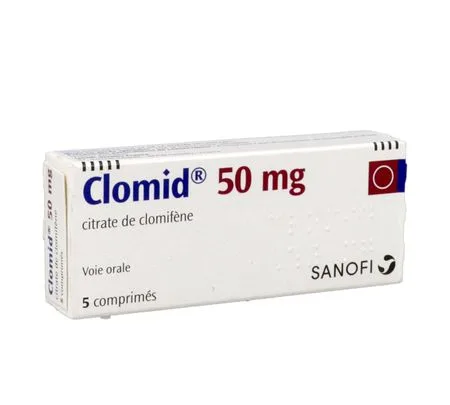
CLOMID 50 mg, tablet
Composition
For a 320 mg tablet:
Clomifene citrate: 50,000 mg
Excipients with known effect: lactose, sucrose
Sucrose, lactose monohydrate, maize starch, soluble starch, magnesium stearate, yellow iron oxide (E172).
Indications
Treatment of infertility due to anovulation and dysovulation with normoprolactinaemia of high functional origin:
- infertility due to anovulation
- infertility due to dysovulation:
- "inadequate corpus luteum"
- short luteal phase
- polycystic ovary syndrome.
Test with both diagnostic and therapeutic purpose:
- in certain amenorrhoea of hypothalamic-pituitary origin
- in persistent amenorrhoea following oral contraception (after verifying that the plasma prolactin level is normal).
Induction of ovulation within the framework of medically assisted reproduction (intrauterine insemination, IVF)
Dosage and administration
Dosage
Treatment of infertility due to anovulation and dysovulation with normoprolactinaemia of high functional origin
The initial dosage is 1 tablet per day (i.e. 50 mg) for 5 days.
Treatment will begin 2 to 5 days after the onset of withdrawal bleeding, whether natural or induced by a progestogen, or, in the absence of a cycle, on a day arbitrarily chosen by the treating physician.
In case of ovulation there is no benefit in increasing the dosage in subsequent cycles. Otherwise (no temperature shift, plasma progesterone on day 20e-26e of the cycle < 3 ng/ml), 100 mg per day for 5 days (2 tablets in a single daily intake) will be prescribed during the second treatment cycle.
It is not recommended to increase the daily dose and duration of treatments beyond 100 mg/day, for 5 days. If, at this dosage, three courses have not achieved ovulation, the therapeutic trial will be considered complete. When, at the dose of 50 or 100 mg, ovulation has been obtained without being followed by pregnancy, treatment may be continued up to a maximum total of six treatment cycles. The efficacy and safety of clomifene beyond 6 treatment cycles have not been demonstrated.
Some patients with polymicrocystic ovaries may be hypersensitive to CLOMID, even at the initial dosage (50 mg/day). In this case, the dosage for subsequent cycles may be reduced to ½ tablet per day (25 mg/day).
It is important to remind the couple of the need for regular sexual intercourse during the presumed fertile period.
CLOMID is not indicated in women who ovulate.
Test with both diagnostic and therapeutic purposes
This test is used for the diagnosis of gonadotropic insufficiency if there is a desire for pregnancy. The dosage is 2 tablets/day (i.e. 100 mg) for 5 consecutive days and for a single cycle only.
Induction of ovulation in the context of medically assisted reproduction (IVF,...)
Some ovarian stimulation protocols use CLOMID (2 tablets per day from day 2th on day 6th of the cycle) followed by hMG for several days in order to induce the maturation of several follicles.
Method of administration
CLOMID is administered orally and may only be used under specialist medical supervision.
Contraindications
- Hypersensitivity to the active substance or to any of the excipients listed in section Composition.
- Severe or recent hepatic disorders.
- Gynaecological haemorrhages of poorly defined aetiology.
- "Hormone-dependent" tumours.
- Organic ovarian cysts.
- History of significant visual disorders related to the use of CLOMID and medically confirmed (previous or current treatment) (See section Warnings and precautions).
Warnings and precautions
Warnings:
Before administering CLOMID:
- ensure that the woman is not pregnant before administering CLOMID. In case of doubt, carry out a sensitive and reliable pregnancy test (review the patient before each course),
- ensure that the cause of infertility is not due to:
- primary ovarian insufficiency,
- hypothalamic-pituitary insufficiency of organic origin,
- search for and, where appropriate, treat other possible causes of female and male sterility,
- the couple must be warned of the greater likelihood of a multiple pregnancy and of its possible complications.
- Certain studies published in the literature have reported that medicines used in the treatment of infertility could increase the risk of occurrence of certain tumours, benign or malignant, in particular hormone-dependent ones. However, the overall literature data do not allow a definitive conclusion on the presence or absence of an excess risk of developing certain tumours, in particular hormone-dependent ones, in patients treated with ovulation inducers.
During treatment:
- CLOMID, alone or in combination with gonadotrophins, may cause ovarian hyperstimulation syndrome, most often moderate, exceptionally severe. Rare cases of severe ovarian hyperstimulation syndrome have been reported with the following symptoms: pericardial effusion, anasarca, hydrothorax, acute abdomen, renal failure, pulmonary oedema, ovarian haemorrhage, deep vein thrombosis, ovarian torsion and acute respiratory distress. If pregnancy occurs in a woman with ovarian hyperstimulation syndrome, rapid progression to a severe form of the syndrome may occur.
- Ovarian hyperstimulation appears a few days after the end of CLOMID treatment.
- Particular attention should be paid when the patient complains of pelvic pain during treatment, weight gain, or a sensation of generalised swelling. Ultrasound should then be used to look for an increase in ovarian volume. A new course of CLOMID treatment should only be resumed after the ovarian volume has returned to normal. The dosage of the treatment should then be reduced.
Ovarian hyperstimulation under CLOMID very rarely becomes complicated.
Visual symptoms:
Patients must be informed that visual disturbances such as accommodation disorders, blurred vision, phosphenes, spots or flashes (scintillating scotomas) may sometimes occur during or shortly after treatment with CLOMID. These visual disturbances are generally reversible; however, cases of prolonged or irreversible visual disturbances, sometimes associated with partial or complete visual impairment (blindness), have been reported, including after discontinuation of CLOMID.
These visual disturbances occur mainly when the dosage or duration of treatment is increased (see sections Driving and using machines and Adverse effects).
The patient must be warned to stop treatment immediately if unusual visual symptoms occur and to inform the physician. In such cases, a complete ophthalmological examination is necessary and treatment must be permanently discontinued if no other cause of visual disturbance has been identified.
A few rare cases of posterior capsular cataracts have been reported in patients taking CLOMID, without a cause-and-effect relationship being either ruled out or confirmed.
Hypersensitivity reactions
Hypersensitivity reactions, including anaphylaxis and angioedema, have been reported with the use of CLOMID. In the event of allergic reactions, treatment with CLOMID must be discontinued and appropriate symptomatic treatment must be initiated (see section Adverse effects).
Precautions for use
- In obese patients, appropriate dietary measures are recommended throughout treatment in order to achieve significant weight loss. As with any ovulation-inducing treatment, significant obesity should delay the start of treatment and dietary measures should be considered as a priority.
- CLOMID should only be used under specialist medical supervision.
- Monitoring should be clinical (functional signs, menstruation) and possibly biological, with measurement of plasma progesterone, to be performed between day 20e and day 26e of the cycle.
- During a cycle induced by CLOMID, any progestogen treatment should not be prescribed before day 20th of the cycle, so as not to alter cervical mucus, especially when ovulation is somewhat late. At the end of an anovulatory cycle, obtaining a withdrawal bleed through a progestogen sequence makes it possible to consider a new course of treatment at a higher dose without delay.
- Particular monitoring is recommended in patients with uterine fibroids due to the risk of fibroid enlargement.
- Although isolated cases of congenital abnormalities have been observed after treatment with CLOMID, it has not been shown that CLOMID alters the frequency of congenital malformations in children born to women with fertility problems. Maternal age and multiple pregnancies are risk factors for foetal or neonatal abnormalities.
- Insufficient cervical mucus due to the antioestrogenic action of CLOMID may warrant concomitant local oestrogen therapy.
- Cases of hypertriglyceridaemia have been reported (see section Adverse effects). Familial or pre-existing hypertriglyceridaemia, and use at a higher dose and/or for a longer treatment duration than recommended, are associated with a risk of hypertriglyceridaemia. Periodic monitoring of plasma triglyceride levels may be indicated in these patients.
- CLOMID may interfere with cholesterol synthesis when administered over long periods. Patients on prolonged treatment may present with elevated desmosterol levels.
- This medicine contains sucrose. Its use is not recommended in patients with fructose intolerance, glucose-galactose malabsorption syndrome or sucrase/isomaltase deficiency.
- This medicine contains lactose. Its use is not recommended in patients with galactose intolerance, Lapp lactase deficiency or glucose or galactose malabsorption syndrome (rare hereditary diseases).
Fertility, pregnancy and breastfeeding
Animal studies have demonstrated a teratogenic effect.
In clinical practice, there is currently no sufficiently relevant data to assess a possible malformative or foetotoxic effect of this medicinal product when administered during pregnancy.
There is no indication for this medicinal product during pregnancy. However, in the event of accidental exposure, there is no argument to advise termination of pregnancy.
Driving and using machines
CLOMID has a moderate influence on the ability to drive vehicles and use machines. Patients should be warned that blurred vision or other visual symptoms may occasionally occur during treatment with CLOMID or immediately after its discontinuation. These visual symptoms may make activities such as driving a car or using machines more dangerous than usual, particularly in variable lighting conditions (see section Warnings and precautions).
Adverse effects
Reproductive system and breast disorders:
- ovarian hyperstimulation (see section Warnings and precautions).
- insufficient cervical mucus due to the anti-oestrogenic action of CLOMID, which may warrant concomitant local oestrogen therapy.
A few cases of onset of endometriosis or worsening of pre-existing endometriosis have been reported:
- hypermenorrhoea, intermenstrual bleeding
- breast tenderness
- pelvic discomfort
- reduction of endometrial thickness
Renal and urinary tract disorders:
- pollakiuria
Pregnancy, puerperal and perinatal conditions:
- moderate risk of multiple pregnancy including simultaneous intra- and extra-uterine pregnancies: the risk of an extra-uterine pregnancy is increased after a course of CLOMID.
Eye disorders:
Common
- Scintillating scotomata (spots or flashes);
- Phosphenes;
Rare
Optic neuritis
Frequency not known
- Reduced visual acuity;
- Diplopia;
- Ocular pain;
- Accommodation disorders;
- Ischaemic optic neuropathy;
- Retinal detachment;
- Central retinal vein occlusion;
- Vitreous detachment;
Since marketing, the undesirable effects mentioned above have been reported, associated in some cases with reversible or irreversible visual impairment, partial or total (blindness), particularly with an increase in the dose or duration of treatment (see sections Contraindications, Warnings and precautions and Overdose).
Cardiac disorders:
- Tachycardia, palpitations;
Skin and subcutaneous tissue disorders:
- urticaria or allergic dermatitis, alopecia
Benign, malignant and unspecified neoplasms:
Isolated cases of onset or worsening of certain tumours, most often hormone-dependent, have been reported.
Nervous system disorders:
- Headache, vertigo, dizziness and giddiness, transient paraesthesia.
- Cases of convulsions have been reported.
Psychiatric disorders:
- a few cases of worsening of a pre-existing psychosis have been reported,
- Anxiety, depression, mood disorders (including mood changes, mood swings and irritability), nervousness, and insomnia have also been reported.
Vascular disorders:
- Hot flushes.
Hepatobiliary disorders:
- Increase in transaminases.
Gastrointestinal disorders:
- nausea, vomiting,
- Abdominal discomfort (distension, bloating),
- Pancreatitis.
Metabolic disorders:
Hypertriglyceridaemia, sometimes associated with pancreatitis, has been observed in patients with familial or pre-existing hypertriglyceridaemia, and/or when used at doses and for durations exceeding those recommended. Periodic monitoring of plasma triglyceride levels may be indicated in these patients.
Immune system disorders:
Hypersensitivity reactions, including anaphylaxis and angioedema (frequency not determined).
Reporting of suspected adverse reactions
Reporting suspected adverse reactions after authorisation of the medicinal product is important. It allows continued monitoring of the benefit/risk balance of the medicinal product. Healthcare professionals are asked to report any suspected adverse reactions via the national reporting system: National Agency for the Safety of Medicines and Health Products (ANSM) and the network of Regional Pharmacovigilance Centres - Website: https://signalement.social-sante.gouv.fr/
Overdose
No cases of acute intoxication have been reported.
In case of overdose, nausea, vomiting, hot flushes, potentially irreversible visual disturbances, and ovarian hypertrophy with abdominal and pelvic pain may be observed.
Pharmacodynamics
Pharmacotherapeutic class: ovulation inducers, ATC code: G03GB02.
Mechanism of action: competitive inhibition of oestrogen negative feedback at the hypothalamic level, which leads to an increase in FSH responsible for follicular maturation. Follicular maturation is itself accompanied by a rise in oestradiol secretion, which promotes the occurrence of an LH surge that triggers ovulation and the formation of a secreting corpus luteum.
In 5 413 patients presenting with ovulatory disorders, treatment with CLOMID achieved ovulation in more than 70% of cases.
Pharmacokinetics
After oral administration, the product is well absorbed; elimination is mainly faecal, and the product and its metabolites are slowly eliminated via an enterohepatic cycle.
Preclinical safety
Reproductive toxicity
A deleterious effect (inhibition of foetal development and possible foetal abnormalities) in rat and rabbit foetuses was demonstrated when high doses of clomifene were administered to pregnant animals.
Carcinogenicity - Mutagenicity
No long-term carcinogenicity study has been conducted to evaluate the carcinogenic potential of CLOMID.
Clomifene citrate did not induce any genetic mutation in bacteria (Ames test) nor any chromosomal aberration in cultured human peripheral blood lymphocytes. Clomifene citrate administered at oral doses up to 2 000 mg/kg/day did not induce a genotoxic effect in rats.
At the highest dose tested of 2 000 mg/kg/day in rats, exposure ratios ranged from 2 to 232 for Z-clomifene and E-clomifene respectively, taking into account the limited pharmacokinetic data available in humans.
Prescription, supply and reimbursement
| Marketing authorisation (AMM) |
|
| Price: |
|
Laboratoires FIDIA
Immeuble Paroi Nord de La Grande Arche.
1, parvis de la Défense. 92800 Puteaux
E-mail: info@fidiapharma.fr
Tel: 01 53 24 53 88. Fax: 01 84 10 48 34
Source: VIDAL · Updated on 10/11/2026. This information does not replace advice from a healthcare professional.