Medicines
SmPC of the 03/03/2026
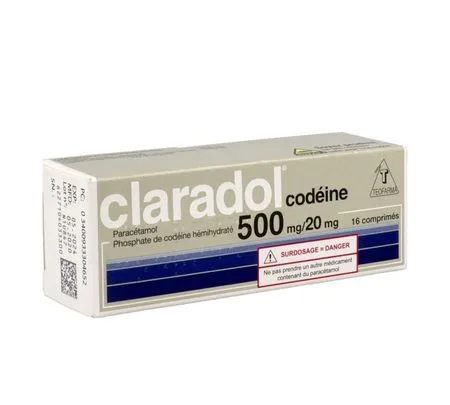
CLARADOL CODEINE 500 mg/20 mg, tablet
Composition
Paracetamol ..........................................................................................................................................500,00 mg
Codeine phosphate hemihydrate ....................................................................................................20,50 mg
Quantity corresponding to anhydrous codeine phosphate ................................................................20,0 mg
For one tablet
Pregelatinised maize starch, povidone, microcrystalline cellulose, carmellose sodium type A, magnesium stearate.
Indications
Treatment of moderate to severe pain that is not relieved by aspirin, paracetamol or ibuprofen used alone.
Dosage and administration
FOR ADULTS ONLY (FROM 15 YEARS OF AGE).
Dosage
1 tablet, to be repeated if necessary after 6 hours, or possibly 2 tablets in case of severe pain, without exceeding 6 tablets per day.
It is generally not necessary to exceed 3 g of paracetamol per day. However, in case of more severe pain, the maximum dose may be increased up to 4 g of paracetamol per day (i.e. 8 tablets per day).
Method of administration
Oral use.
The tablets must be swallowed whole, with a glass of water.
Objectives and discontinuation of treatment
Before starting treatment with CLARADOL CODEINE 500 mg/20 mg, tablet, a therapeutic strategy specifying the duration and goals of treatment as well as a plan for the end of treatment must be agreed with the patient, in accordance with the guidelines on pain management. During treatment, the physician and the patient must be in frequent contact 8 in order to assess the need to continue treatment, consider its discontinuation and adjust the dose if necessary. If a patient no longer requires codeine treatment, it may be advisable to gradually reduce the dose to avoid withdrawal symptoms. In the absence of adequate pain control, the possibility of hyperalgesia, drug tolerance or progression of the underlying disease must be considered (see section Warnings and precautions).
Duration of treatment
The duration of treatment must be as short as possible and, if pain is not effectively relieved, patients/carers should be advised to seek the opinion of a physician.
Frequency of administration
Systematic intake helps avoid fluctuations in pain or fever.
In adults : they should preferably be spaced by 6 hours and at least 4 hours apart.
Elderly subject : the initial dose will be halved compared with the recommended adult dose, and may possibly be increased depending on tolerance and needs.
Renal impairment:
In case of severe renal impairment (creatinine clearance below 10 ml/min), the interval between 2 doses will be at least 8 hours. The dose of paracetamol must not exceed 3 g per day, i.e. 6 units.
The tablets are to be swallowed whole, with a large glass of water.
Contraindications
• Child under 15 years,
• Hypersensitivity to the active substances or to any of the excipients listed in section Composition,
• During breastfeeding (see section Fertility, pregnancy and breastfeeding)
Related to paracetamol:
• Severe hepatocellular insufficiency (Child-Pugh score >9).
Related to codeine :
• Asthma and respiratory insufficiency (due to the presence of codeine).
• In all patients under 18 years following tonsillectomy and/or adenoidectomy in the context of obstructive sleep apnoea syndrome, due to the increased risk of serious adverse events that may be life-threatening (see section Warnings and precautions).
• In patients known to be ultra-rapid CYP2D6 metabolisers.
Warnings and precautions
Special warnings
To avoid a risk of overdose; check that paracetamol is not present in the composition of other medicines.
In adults and children weighing more than 50 kg, THE TOTAL DOSE OF PARACETAMOL MUST NOT EXCEED 4 GRAMS PER DAY (see section Overdose).
As with other opioids, if pain control is insufficient despite an increase in the codeine dose, the possibility of opioid-induced hyperalgesia should be considered. A dose reduction or re-evaluation of treatment may be indicated.
Opioids may cause sleep-related breathing disorders, including central sleep apnoea (CSA) and sleep-related hypoxaemia. Opioid use increases the risk of CSA in a dose-dependent manner. In patients with CSA, consider decreasing the total opioid dose.
Hepatobiliary disorders
Codeine may cause dysfunction and spasm of the sphincter of Oddi, thereby increasing the risk of biliary tract symptoms and pancreatitis. Therefore, codeine/paracetamol should be administered with caution in patients with pancreatitis and biliary tract diseases.
Dependence, abuse and misuse
Tolerance and opioid use disorder (abuse and dependence)
Tolerance, physical and psychological dependence, and opioid use disorder (OUD) may develop with repeated administration of opioids such as CLARADOL CODEINE 500 mg/20 mg, tablet. Repeated use of CLARADOL CODEINE 500 mg/20 mg, tablet may lead to OUD. Increased dose and longer duration of opioid treatment may increase the risk of developing OUD. Intentional abuse or misuse of CLARADOL CODEINE 500 mg/20 mg, tablet may lead to overdose and/or death of the patient. The risk of developing OUD is increased in patients with a personal or family history (parents or siblings) of substance use disorders (including alcohol use disorder), in smokers, or in patients with a personal history of mental health disorders (e.g. major depression, anxiety and personality disorder).
Before initiating treatment with CLARADOL CODEINE 500 mg/20 mg, tablet and during treatment, treatment goals and a treatment discontinuation plan should be agreed with the patient (see section Dosage and administration). Before and during treatment, the patient should also be informed of the risks and symptoms of OUD. If these signs appear, patients are advised to contact their doctor.
Patients should be monitored for signs of excessive medicine use (e.g. early requests for prescription renewal). This includes checking concomitant opioid and psychoactive medicines (such as benzodiazepines). For patients showing signs and symptoms of OUD, consultation with an addiction specialist should be considered. Deafferentation pain (neuropathic pain) does not respond to the codeine paracetamol combination.
Concomitant use of this medicine with mixed opioid agonist-antagonists, alcohol or naltrexone is not recommended (see section Interactions).
Codeine is metabolised to morphine by the hepatic enzyme CYP2D6, its active metabolite. In case of deficiency or absence of this enzyme, the expected analgesic effect will not be obtained.
It is estimated that up to 7% of the Caucasian population may have this deficiency.
However, if the patient is a rapid or ultra-rapid metaboliser, they have an increased risk, even at therapeutic doses, of developing adverse effects due to opioid toxicity. These patients convert codeine to morphine rapidly, and as a consequence their serum morphine levels are higher than expected.
General symptoms of opioid toxicity include confusion, drowsiness, shallow breathing, miosis, nausea, vomiting, constipation and loss of appetite. In severe cases, patients may present with symptoms of respiratory and circulatory depression, which may be life-threatening and, in very rare cases, fatal.
The estimated prevalences of ultra-rapid metabolisers in the different populations are summarised below:
|
Population |
Prevalence in % |
|
African/Ethiopian |
29% |
|
African Americans |
3.4% to 6.5% |
|
Asians |
1.2% to 2% |
|
Caucasians |
3.6% to 6.5% |
|
Greeks |
6% |
|
Hungarian |
1.9% |
|
Northern European |
1% to 2% |
Paediatric population
Post-operative use in children
Cases published in the literature have shown that codeine used post-operatively in children after tonsillectomy and/or adenoidectomy in the context of obstructive sleep apnoea syndrome causes rare adverse effects that may be life-threatening or even lead to death (see section Contraindications). All these children had received codeine at the recommended doses; however, elements showed that these children were rapid or ultra-rapid metabolisers of codeine into morphine.
Children with impaired respiratory function
Codeine is not'recommended in children who may have impaired respiratory function due to neuromuscular disorders, severe cardiac or respiratory disorders, or'upper respiratory tract or pulmonary infections, multiple trauma or lengthy surgical procedures. These factors may aggravate the symptoms of morphine toxicity.
Precautions for use
Related to codeine
• In case of intracranial hypertension, codeine may increase the severity of this hypertension.
• Renal impairment: (creatinine clearance less than 10 ml/min), increase the interval between doses (minimum 8 hours).
• In patients who have had a cholecystectomy, codeine may cause an acute abdominal pain syndrome of biliary or pancreatic type, most often associated with biological abnormalities, suggestive of spasm of the sphincter of Oddi.
• In case of productive cough, codeine may hinder expectoration
Elderly subjects: halve the initial dose compared with the recommended dose, and subsequently increase it if necessary according to tolerance and needs.
Related to the presence of paracetamol:
Because of its hepatotoxicity, paracetamol must not be used at doses or for a duration greater than those recommended. Use over a longer period than recommended may lead to severe hepatic sequelae, such as liver cirrhosis. Acute or chronic overdose may lead to severe hepatotoxicity, exceptionally with a fatal outcome (see section Overdose).
Patients suffering from hepatic disorders or infections affecting the liver such as viral hepatitis must consult a doctor before taking paracetamol. In these patients, an evaluation of liver function must be carried out at regular intervals during high-dose or long-term treatment, in particular in patients with pre-existing hepatic disease.
Patients with hepatic insufficiency (Child-Pugh < 9) must use paracetamol with caution.
An elevation of alanine aminotransferase (ALAT) may occur when paracetamol is administered at therapeutic doses.
Moderate alcohol intake combined with paracetamol intake may potentially lead to an increased risk of liver toxicity. Patients suffering from kidney disease must consult a doctor before taking paracetamol, insofar as a dose adjustment may prove necessary. In cases of severe renal impairment (creatinine clearance < 10 mL/min), the doctor must critically assess the benefit/risk ratio of using paracetamol. A dose adjustment and continuous monitoring must be carried out.
In general, continuous use of paracetamol, in particular in combination with other analgesics, may lead to permanent renal damage and a risk of renal insufficiency (analgesic nephropathy).
Prolonged use at high doses may lead to liver and kidney damage. Situations that increase hepatic oxidative stress and decrease hepatic glutathione reserves, such as concomitant use with certain medicines, alcoholism, sepsis, or diabetes mellitus, may increase the risk of liver toxicity at therapeutic doses.
Cases of high anion gap metabolic acidosis (HAGMA) due to pyroglutamic acidosis have been reported in patients with serious illness such as severe renal impairment and sepsis, or in patients suffering from malnutrition or other sources of glutathione deficiency (for example, chronic alcoholism) who have been treated with paracetamol at a therapeutic dose for a prolonged period, or with a combination of paracetamol and flucloxacillin. If HAGMA due to pyroglutamic acidosis is suspected, it is recommended to stop paracetamol immediately and carry out close monitoring. Measurement of urinary 5 oxoproline may be useful to identify pyroglutamic acidosis as the underlying cause of HAGMA in patients presenting with multiple risk factors.
Cases of severe skin reactions have been very rarely reported. In the event of skin reddening, rash, appearance of vesicles or desquamation, paracetamol intake must be stopped and medical care must be provided immediately (see section Adverse effects).
Use of paracetamol in patients with Gilbert's syndrome may lead to more pronounced hyperbilirubinaemia and associated clinical symptoms such as jaundice. Therefore, these patients must use paracetamol with caution.
Concomitant intake of other medicines containing paracetamol must be avoided.
If new symptoms appear or if the pain and/or fever are not relieved within 3 days, patients are advised to stop treatment and consult a doctor.
Patients with a hereditary deficiency of glucose-6-phosphate dehydrogenase must consult their doctor before taking paracetamol (risk of haemolytic anaemia).
Interactions
Related to paracetamol
Associations requiring precautions for use
+ Vitamin K antagonists:
Risk of increased effect of the vitamin K antagonist and of bleeding risk when paracetamol is taken at maximum doses (4 g/day) for at least 4 days.
More frequent INR monitoring. Possible adjustment of the vitamin K antagonist dose during paracetamol treatment and after its discontinuation.
Related to codeine
Combinations not recommended (see section Warnings and precautions)
+ Mixed agonist-antagonist opioids (buprenorphine, nalbuphine, pentazocine)
Reduction of the analgesic or antitussive effect of the opioid, by competitive receptor blockade, with risk of onset of a withdrawal syndrome.
+ Alcohol (beverage or excipient)
Alcohol increases the sedative effect of opioid analgesics.
Impairment of alertness may make driving vehicles and using machinery dangerous.
Avoid consumption of alcoholic beverages or medicines containing alcohol.
+ Partial opioid antagonists (nalmefene, naltrexone)
Risk of reduced analgesic effect. If necessary, increase the doses of the opioid derivative.
+ Sodium oxybate
Increased central depression. Impaired alertness may make driving vehicles and operating machinery dangerous.
Associations to be taken into account
+ Other opioid agonist analgesics (alfentanil, dextromoramide, dihydrocodeine, fentanyl, hydromorphone, morphine, oxycodone, pethidine, phenoperidine, remifentanil, sufentanil, tapentadol, tramadol), morphine-like antitussives (dextromethorphan, noscapine, pholcodine), true morphine antitussives (codeine, ethylmorphine), benzodiazepines, barbiturates, methadone
Increased risk of respiratory depression, which may be fatal in case of overdose.
+ Other sedative medicines: morphine derivatives (analgesics, antitussives and substitution treatments), neuroleptics, barbiturates, benzodiazepines, anxiolytics other than benzodiazepines (meprobamate), hypnotics, sedative antidepressants (amitriptyline, doxepin, mianserin, mirtazapine, trimipramine), sedative H1 antihistamines, central antihypertensives, baclofen and thalidomide.
Increased central depression. Impaired alertness may make driving vehicles and using machines dangerous.
Other interactions related to the presence of paracetamol:
Medicines leading to delayed gastric emptying may lead to slower absorption of paracetamol and therefore to a delayed onset of action.
Medicines leading to accelerated gastric emptying (for example metoclopramide) may lead to faster absorption of paracetamol and therefore to a faster onset of action.
Concomitant use of medicines that cause induction of hepatic enzymes, for example certain hypnotic and antiepileptic medicines (phenobarbital, phenytoin, carbamazepine etc.) or rifampicin, may lead to liver damage, even at doses of paracetamol that would otherwise be without risk. In case of excessive alcohol consumption, taking paracetamol, even at therapeutic doses, may lead to liver damage.
The effects of the following medicines are intensified: the combination with chloramphenicol may prolong its half-life and thus potentially increase its toxicity.
Tropisetron and granisetron, serotonin 5HT-3 receptor antagonists, may completely inhibit the analgesic effect of paracetamol due to a pharmacodynamic interaction.
Concomitant use of paracetamol and AZT (zidovudine) increases the tendency towards a reduction in the white blood cell count (neutropenia). Therefore paracetamol must not be taken in combination with AZT, except on medical advice.
It is preferable to avoid continuous treatment combining more than one analgesic; there is little evidence of additional benefit for the patient, and the incidence of side effects is generally additive.
Caution should be exercised when paracetamol and flucloxacillin are used concomitantly, as simultaneous use has been associated with high anion gap metabolic acidosis due to pyroglutamic acidosis, particularly in patients with risk factors (see section Warnings and precautions).
Concomitant use of CLARADOL CODEINE with gabapentinoids (gabapentin and pregabalin) may result in respiratory depression, hypotension, profound sedation, coma or death (see section Warnings and precautions).
Interactions with paraclinical tests :
Taking paracetamol may distort the measurement of uric acid by the phosphotungstic acid method, and the measurement of blood glucose by the glucose oxidase-peroxidase method.
Fertility, pregnancy and breastfeeding
Pregnancy
The use occasional of this medicine may be considered during pregnancy if needed, regardless of the stage, but chronic use should be avoided.
In case of administration at the end of pregnancy, take into account the morphine-like properties of this medicine (theoretical risk of respiratory depression in the newborn after high doses before delivery, risk of withdrawal syndrome in case of chronic administration at the end of pregnancy).
Data concerning paracetamol
A large amount of data on pregnant women demonstrates the absence of any malformation or any fetal/neonatal toxicity. Epidemiological studies on the neurodevelopment of children exposed to paracetamol in utero produce inconclusive results. If clinically necessary, paracetamol may be used during pregnancy; however, it should be used at the lowest effective dose, for the shortest possible duration and at the lowest possible frequency.
Data concerning codeine
In clinical practice, although some case-control studies show an increased risk of occurrence of cardiac malformations, most epidemiological studies rule out a malformative risk.
Studies carried out in animals have shown a teratogenic effect.
Breast-feeding
Paracetamol and codeine pass into breast milk.
The management during breastfeeding is determined by the presence of codeine.
At normal therapeutic doses, codeine and its active metabolite may be present in breast milk at very low doses and it is unlikely to cause adverse effects in the breastfed infant. However, if the patient is an ultra-rapid CYP2D6 metabolizer, a significant quantity of the active metabolite, morphine, may be present in the maternal blood as well as in breast milk. In very rare cases, these high levels may lead to symptoms of opioid toxicity in the infant (drowsiness, difficulty sucking, pauses or even respiratory depression and hypotonia) which can be fatal.
Consequently, this medicine is contraindicated during breastfeeding (see section Contraindications).
Fertility
Data related to paracetamol
Data are limited regarding the fact that medicines that inhibit cyclo-oxygenase or prostaglandin synthesis could impair female fertility, through an effect on ovulation, reversible upon discontinuation of treatment. Paracetamol being suspected of inhibiting prostaglandin synthesis, it is possible that it could impair fertility, although this has not been demonstrated.
Related to codeine:
There are no data in animals concerning male and female fertility.
Driving and using machines
Attention is drawn, particularly for drivers of vehicles and users of machinery, to the risks of drowsiness due to the presence of codeine.
Some patients taking paracetamol may experience dizziness or drowsiness. Patients should be cautious if they engage in activities requiring alertness.
Adverse effects
Related to paracetamol
The listed adverse effects are based on spontaneous reports, therefore an organisation according to the CIOMS III frequency categories is not possible.
Blood and lymphatic system disorders
Changes in blood count, including thrombocytopenia, thrombocytopenic purpura, leukopenia and pancytopenia.
Metabolism and nutrition disorders
High anion gap metabolic acidosis with "undetermined" frequency (cannot be estimated from available data)
Description of selected adverse reactions
High anion gap metabolic acidosis
Cases of high anion gap metabolic acidosis due to pyroglutamic acidosis have been observed in patients with risk factors taking paracetamol (see section Warnings and precautions). Pyroglutamic acidosis may occur in these patients due to low glutathione levels.
Gastrointestinal disorders
Nausea, vomiting, stomach ache, diarrhoea and abdominal pain.
Hepatobiliary disorders
Hepatic impairment, hepatitis, dose-dependent hepatic failure, hepatic necrosis (including fatal outcome). Non-compliant chronic use may lead to hepatic fibrosis, hepatic cirrhosis, including fatal outcome (see sections Warnings and precautions and Overdose).
Immune system disorders
Allergic reactions, anaphylactic reaction, and anaphylactic shock.
Nervous system disorders
Dizziness, drowsiness.
Renal and urinary disorders
Renal impairment, particularly in cases of overdose.
Respiratory, thoracic and mediastinal disorders
Bronchospasm and asthma, in particular analgesic asthma syndrome.
Skin and subcutaneous tissue disorders
Very rare cases of severe skin reactions have been reported.
Rash, pruritus, urticaria, allergic oedema and angioedema, acute generalised exanthematous pustulosis, fixed pigmented erythema, erythema multiforme, Stevens-Johnson syndrome and toxic epidermal necrolysis (including fatal outcome).
Related to codeine
Psychiatric disorders
Frequency not determined: abuse. Prolonged use leads to a risk of drug dependence (see section Warnings and precautions).
There is a risk of dependence and withdrawal syndrome on abrupt discontinuation, which may be observed in the user and in the newborn of a mother intoxicated with codeine (see section Fertility, pregnancy and breastfeeding).
Possibility of:
• sedation, euphoria, dysphoria,
• miosis, urinary retention,
• hypersensitivity reactions (pruritus, urticaria and rash),
• constipation, nausea, vomiting,
• drowsiness, vertigo,
• bronchospasm, respiratory depression (cf. section Contraindications),
• acute abdominal pain syndrome of biliary or pancreatic type, suggestive of spasm of the sphincter of Oddi, occurring particularly in patients who have undergone cholecystectomy,
• there is a risk of dependence and withdrawal syndrome on abrupt discontinuation, which may be observed in the user and the newborn of a mother intoxicated with codeine.
Hepatobiliary disorders
Oddi sphincter dysfunction with "undetermined" frequency (cannot be estimated from the available data)
Drug dependence
Repeated use of CLARADOL CODEINE 500 mg/20 mg, tablet may lead to drug dependence (pharmacodependence), even at therapeutic doses. The risk of pharmacodependence may vary according to the patient's individual risk factors, the dosage and the duration of opioid treatment (see section Warnings and precautions).
Reporting of suspected adverse reactions
Reporting suspected adverse reactions after authorisation of the medicinal product is important. It allows continued monitoring of the benefit/risk balance of the medicinal product. Healthcare professionals should report any suspected adverse reactions via the national reporting system: French National Agency for the Safety of Medicines and Health Products (ANSM) and the network of Regional Centres of Pharmacovigilance - Website: https://signalement.social-sante.gouv.fr/.
Overdose
Related to paracetamol
Intoxication is to be feared in elderly subjects and especially in young children (therapeutic overdose or frequent accidental intoxication), where it can be fatal.
In case of paracetamol overdose, a doctor or a poison control centre must be contacted immediately.
Acute toxicity
The most important effect of acute paracetamol intoxication is hepatotoxicity: hepatocellular lesions are caused by binding of reactive paracetamol metabolites to hepatic cellular proteins. At therapeutic doses, these metabolites are bound by glutathione and form non-toxic conjugates. In the case of massive overdose, the liver's supply of –SH group donors (which promotes glutathione formation) is exhausted, toxic metabolites accumulate and cause hepatic cell necrosis, resulting in impaired liver function progressing to hepatic coma. Renal damage following necrosis of the renal tubules has also been described independently.
The overdose threshold may be lowered in patients taking certain medicines or alcohol, or who are severely malnourished.
Chronic toxicity
Chronic toxicity includes various hepatic impairments (see "Symptoms of intoxication"). Data on chronic toxicity, and in particular on the nephrotoxicity of paracetamol, are controversial. Attention should be paid to the possible influence on the peripheral blood count during chronic use.
Symptomatology
Nausea, vomiting, anorexia, pallor, abdominal pain, sweating and general malaise generally appear within the first 24 hours. The patient's condition may improve within 24 to 48 hours, although symptoms may not disappear completely.
Liver size increases rapidly, transaminases and bilirubin are elevated, prothrombin time becomes pathological, urine output falls, and mild azotaemia may develop. Hypokalaemia and metabolic acidosis (in particular lactic acidosis) may also develop in the context of acute and/or chronic overdose. Frequent clinical manifestations after 3 to 5 days are: jaundice, fever, fetor hepaticus, haemorrhagic diathesis, hypoglycaemia, and hepatic failure. Hepatic failure may progress to all stages of hepatic encephalopathy, to cerebral oedema, and to death.
Acute renal failure with acute necrosis of the renal tubules, strongly suggested by back pain, haematuria and proteinuria, which may develop even in the absence of severe hepatic impairment.
An overdose from 10 g of paracetamol in a single dose in adults and 150 mg/kg in children in a single dose causes hepatic cytolysis which may lead to complete and irreversible necrosis resulting in hepatocellular failure, metabolic acidosis, encephalopathy which may progress to coma and may result in death.
Simultaneously, an increase in hepatic transaminases, lactate dehydrogenase and bilirubin, and a decrease in the prothrombin level may be observed, appearing 12 to 48 hours after ingestion.
Emergency management
Intensive medical care with close monitoring of vital signs, laboratory tests and circulatory status should generally be initiated.
• Immediate transfer to a hospital setting. Rapid medical assistance is critical for both adults and children, even if no signs or symptoms are apparent
• Draw a blood tube to perform the initial plasma assay of paracetamol,
• Rapid evacuation of the ingested product by gastric lavage (within the first six hours).
• Treatment of overdose classically includes administration of the antidote N-acetylcysteine, a donor of –SH groups (or methionine, cysteamine), as early as possible by IV or oral route if possible before the tenth hour, insofar as they conjugate reactive metabolites and thereby contribute to their normal detoxification. N-acetylcysteine may be protective to some degree up to 48 hours after ingestion.
• Symptomatic treatment.
• Haemodialysis and haemoperfusion contribute to elimination of the product. It is recommended to monitor the plasma concentration of paracetamol.
Related to codeine
Symptomatology
• In adults: acute depression of respiratory centres (cyanosis, bradypnoea), drowsiness, rash, vomiting, pruritus, ataxia, pulmonary oedema (rarer)
• In children, (toxic threshold: 2 mg/kg as a single dose): bradypnoea, respiratory pauses, miosis, convulsions, signs of histamine release; flushing and facial oedema, urticarial eruption, urinary retention.
Management
• Respiratory assistance
• Naloxone.
Pharmacodynamics
Pharmacotherapeutic class: OTHER ANALGESICS AND ANTIPYRETICS, ATC code: N02BE51
Combination of two active ingredients:
• Paracetamol: peripheral analgesic, antipyretic. Its analgesic mechanism of action has not yet been fully elucidated. Its action would result mainly from inhibition of prostaglandin synthesis in the central nervous system (CNS).
• codeine phosphate hemihydrate: opioid analgesic.
The combination of paracetamol and codeine phosphate has greater analgesic activity than its components taken alone, with a longer-lasting effect.
Codeine is an analgesic at with weak central action. It exerts its effect through at its action on opioid receptors µ although its affinity for these receptors is weak. Its analgesic effect is due to at its conversion to morphine. Codeine, particularly when combined at with other analgesics such as paracetamol has shown efficacy in treating nociceptive pain.
Pharmacokinetics
Paracetamol, codeine and its salts have superimposable absorption and kinetics which are not modified when they are combined.
Related to paracetamol
Absorption
Oral absorption of paracetamol is complete and rapid. Maximum plasma concentrations are reached 30 to 90 minutes after ingestion, depending on the formulation.
Distribution
Paracetamol is rapidly distributed in all tissues. Concentrations are comparable in blood, saliva and plasma. Binding to plasma proteins is low.
Biotransformation
Paracetamol is metabolised mainly in the liver. The 2 major metabolic pathways are glucuronidation and sulfoconjugation. The latter pathway is rapidly saturable at dosages above therapeutic doses. A minor pathway, catalysed by cytochrome P 450, is the formation of a reactive intermediate (N-acetyl benzoquinone imine), which, under normal conditions of use, is rapidly detoxified by reduced glutathione and eliminated in the urine after conjugation with cysteine and mercapturic acid. In contrast, during massive intoxications, the amount of this toxic metabolite is increased.
Elimination
Elimination is essentially urinary. 80% of the ingested dose is eliminated by the kidney within 24 hours, mainly in glucuronide-conjugated form (60 to 80 %) and sulfate-conjugated form (20 to 30 %).
Only 1 to 3 % is eliminated in unchanged form. Elimination is delayed in patients with impaired hepatic or renal function.
The elimination half-life is 1,5 to 2,5 hours.
Pathophysiological variations
• Renal impairment: in cases of severe renal impairment (creatinine clearance below 10 ml/min), elimination of paracetamol and its metabolites is delayed.
• Elderly subjects: the conjugation capacity is not modified.
Related to Codeine
After oral ingestion, codeine is well absorbed and its relative bioavailability compared with the intramuscular route is 40-70 %. Plasma concentrations peak at 1 hour and then decline with a half-life of 2 to 4 hours. Codeine is metabolised to codeine-6-glucuronide, morphine and norcodeine.
Elimination of codeine and its metabolites occurs almost entirely via the renal route (85-90 %), mainly as glucuronide conjugates; elimination is considered complete after 48 hours. The percentages of the administered dose (free product + conjugate) recovered in the urine are as follows: approximately 10 % as morphine, 10 % as norcodeine, 50 -70 % as codeine. Nearly 25 to 30 % of administered codeine binds to plasma proteins.
Preclinical safety
Data relating to paracetamol
Acute toxicity
After oral administration, paracetamol is slightly toxic to adult rats and guinea pigs. The considerably greater toxicity in mice and newborn rats is probably due to a different metabolism of the product in mice and to the immaturity of the hepatic enzyme system in newborn rats.
Administration of higher doses in dogs and cats caused vomiting, making it impossible to determine the oral LD50 for these species.
Chronic toxicity
After administration of toxic doses, animal tests showed slower weight gain, more frequent urination, aciduria, dehydration and increased sensitivity to infections. At necropsy, an increase in the volume of abdominal organs, irritation of the intestinal mucosa and, in male animals, testicular atrophy with inhibition of spermatogenesis were observed. In a study over 100 days in rats, the toxicological target organs were the liver and kidneys. In humans, a safety factor of approximately 7 in relation to the daily dose and 43 for a single dose was calculated from animal data for a treatment duration not exceeding 10 days.
Mutagenic and tumorigenic potential
A genotoxic potential was observed in rats at hepatotoxic doses, explained as an indirect consequence of hepatotoxicity/myelotoxicity rather than direct DNA damage. Consequently, a threshold dose may be assumed. In a study of 2 years in male rats receiving a diet containing up to 6000 ppm of paracetamol, no evidence of carcinogenicity was demonstrated. In female rats, carcinogenicity was demonstrated based on the increased incidence of mononuclear cell leukaemias. In a study of 2 years in mice receiving up to 6000 ppm of paracetamol, no evidence of carcinogenicity was demonstrated.
Reproductive toxicity
No conventional study based on currently accepted standards for assessing reproductive and developmental toxicity is available.
Special storage precautions
Store in the original packaging, protected from moisture.
Store at a temperature not exceeding 25°C.
Prescription, supply and reimbursement
Prescription duration limited to 84 day(s).
Prescription on a secure prescription form (meeting the specifications set by the order of 31 March 1999).
| Marketing authorisation (AMM) |
|
| Price: |
|
Collection.
VIA F.LLI CERVI, 8
27010 VALLE SALIMBENE (PAVIA)
Tel: 00 39 0382 422 008 amministrazione@teofarma.it
https://www.teofarmasrl.it/
Source: VIDAL · Updated on 10/11/2026. This information does not replace advice from a healthcare professional.