
Medicines
SmPC of 05/03/2025
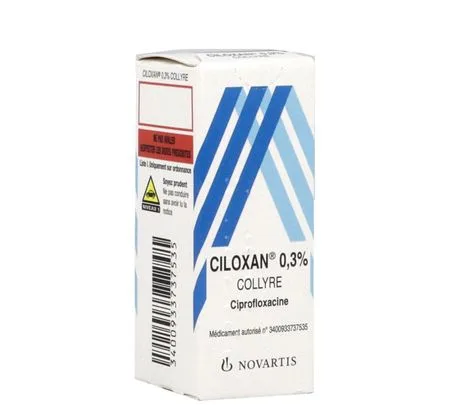
CILOXAN 0,3 PER CENT, eye drops
Composition
For 100 ml of eye drops:
Ciprofloxacin: 0,300 g
in the form of ciprofloxacin hydrochloride: 0,350 g
Excipient with known effect: benzalkonium chloride
Benzalkonium chloride, disodium edetate, mannitol, glacial acetic acid, sodium acetate, sodium hydroxide and/or concentrated hydrochloric acid, purified water.
Indications
CILOXAN 0,3 PER CENT, eye drops is indicated in adults, adolescents (12-16 years), children (2-11 years), infants and young children (28 days to 23 months) and newborns (0-27 days).
Local antibacterial treatment of severe eye infections (severe conjunctivitis, keratitis, corneal ulcers and corneal abscesses) due to germs sensitive to ciprofloxacin.
Official recommendations concerning the appropriate use of antibacterial agents should be taken into account.
Dosage and administration
Dosage
Adults and paediatric population [adolescents (12-16 years), children (2-11 years), infants and young children (28 days to 23 months) and newborns (0-27 days)].
Corneal abscesses:
Administration should be carried out at the following intervals, including during the night:
On the first day, instil 2 drops into the affected eye every 15 minutes during the first six hours, then 2 drops every 30 minutes for the rest of the day.
On the second day, instil 2 drops into the affected eye every hour.
From the third to the fourteenth day, place 2 drops into the affected eye every 4 hours.
If the patient requires treatment exceeding 14 days, the dosage regimen is left to the discretion of the treating physician.
Conjunctivitis, keratitis, corneal ulcers:
For the first two days, instil 1 or 2 drops into the conjunctival sac of the infected eye or eyes every 2 hours while awake, then 1 or 2 drops every 4 hours until the bacterial infection has resolved.
The dosage regimens may be adjusted at the physician's discretion.
Method of administration
Ophthalmic use.
For ocular instillation.
Contraindications
Hypersensitivity to the active substance, to another medicine of the quinolone family or to any of the excipients mentioned in section Composition.
Breast-feeding (see section Fertility, pregnancy and breastfeeding).
Warnings and precautions
General:
For ophthalmic use only.
Do not inject, do not swallow.
Serious and sometimes fatal hypersensitivity reactions (anaphylactic shock), some occurring after administration of the first dose, have been observed in patients treated with systemic quinolones. Some reactions were accompanied by cardiovascular collapse, loss of consciousness, tingling, pharyngeal or facial edema, dyspnea, urticaria and pruritus. Treatment must be discontinued at the first signs of skin rash or any other hypersensitivity reaction.
Serious acute hypersensitivity reactions to ciprofloxacin may require immediate emergency treatment. Oxygen therapy and respiratory support should be administered when clinically indicated.
As with all antibiotic pharmaceutical presentations, prolonged use may promote the emergence or selection of resistant bacteria or the development of fungi. In case of superinfection, appropriate treatment must be initiated.
Tendinitis and tendon rupture may occur with systemic fluoroquinolone treatment such as ciprofloxacin, particularly in elderly patients and in those concomitantly treated with corticosteroids. Therefore, CILOXAN must be discontinued at the first sign of tendinitis.
Related to the eye drops:
The eye drops must not be used for peri- or intra-ocular injection.
Clinical experience in children under 1 year of age, particularly newborns, is very limited. In the absence of evaluation, the use of these eye drops is not recommended in newborns with neonatal conjunctivitis due to Neisseria gonorrhoeae or due to Chlamydia trachomatis. These patients must receive appropriate treatment.
The use of these eye drops must take into account the risk of nasopharyngeal passage, which may contribute to the emergence and spread of bacterial resistance.
Cross-resistance between quinolones may exist.
During instillation, do not touch the eye, eyelids or other surfaces with the tip of the bottle.
In patients with corneal ulcer requiring frequent administration of CILOXAN, white precipitates (drug residues) have been observed, but these disappear with continued treatment with CILOXAN. The precipitate does not prevent continued use of CILOXAN and does not interfere with the clinical healing process.
Related to excipients:
Wearing contact lenses is not recommended during treatment for an eye infection. Therefore, patients should be advised not to wear lenses during treatment with CILOXAN.
Benzalkonium chloride:
This medicine contains 6 mg of benzalkonium chloride per 100 ml of eye drops.
Benzalkonium chloride may be absorbed by soft contact lenses and change their color. Contact lenses must be removed before application and it is necessary to wait at least 15 minutes before reinserting them.
Benzalkonium chloride may also cause eye irritation, especially if the patient suffers from dry eye syndrome or corneal disorders. Inform the patient that in case of abnormal sensation, stinging or pain in the eyes after using this medicine, a doctor must be consulted.
Interactions
In case of concomitant treatment with other topical ophthalmic products, wait 5 minutes before instilling them. The ophthalmic ointment must be applied last.
Although the amounts of ciprofloxacin passing into the systemic circulation are low after ocular instillation, interactions observed with systemic ciprofloxacin should be taken into account.
Combinations not recommended
+ Agomelatine
Increased agomelatine concentrations, with risk of increased adverse effects.
+ Methotrexate
Increased toxicity of methotrexate due to inhibition of its renal tubular secretion by ciprofloxacin.
Associations requiring precautions for use
+ Vitamin K antagonists
Increased effect of the vitamin K antagonist and risk of bleeding.
More frequent monitoring of INR. Possible adjustment of the vitamin K antagonist dosage during treatment with the fluoroquinolone and after its discontinuation.
+ Clozapine
Increased clozapine concentrations with risk of overdose, due to decreased hepatic metabolism by ciprofloxacin.
Clinical monitoring and possible dose reduction of clozapine during treatment with ciprofloxacin and after its discontinuation.
+ Iron
Decreased digestive absorption of fluoroquinolones.
Take iron salts at a distance from fluoroquinolones (more than 2 hours, if possible).
+ Phenytoin (and, by extrapolation, fosphenytoin)
Variation, possibly significant, in phenytoin concentrations during treatment with ciprofloxacin.
Clinical monitoring and monitoring of the anticonvulsant's plasma concentrations during treatment with ciprofloxacin and after its discontinuation.
+ Ropinirole
Increased ropinirole concentrations with risk of overdose, due to decreased hepatic metabolism by ciprofloxacin.
Clinical monitoring and possible dose reduction of ropinirole during treatment with ciprofloxacin and after its discontinuation.
+ Strontium
Decreased digestive absorption of strontium.
Take strontium at a distance from fluoroquinolones (more than two hours, if possible).
+ Substances liable to induce torsades de pointes
Increased risk of ventricular rhythm disorders, in particular torsades de pointes.
Clinical and electrocardiographic monitoring during the combination.
+ Sucralfate
Decreased digestive absorption of fluoroquinolones.
Take sucralfate at a distance from fluoroquinolones (more than 2 hours, if possible).
+ Theophylline (and, by extrapolation, aminophylline)
Increased theophyllinemia with risk of overdose, due to decreased hepatic metabolism by ciprofloxacin.
Clinical monitoring and possibly of theophyllinemia.
+ Gastrointestinal topicals, antacids and adsorbents
Decreased absorption of these substances.
As a precaution, these topicals or antacids should be taken at a distance from any other medication (more than 2 hours, if possible).
+ Zinc
Decreased digestive absorption of fluoroquinolones.
Take zinc salts at a distance from fluoroquinolones (more than 2 hours, if possible).
Associations to be taken into account
+ Other medicinal products lowering the epileptogenic threshold
Increased risk of convulsions.
+ Caffeine
Increase in plasma concentrations of caffeine, due to decreased hepatic metabolism.
+ Glucocorticoids (except hydrocortisone)
Possible increased risk of tendinopathy, or even tendon rupture (exceptional), particularly in patients receiving prolonged corticosteroid therapy.
+ Mycophenolate mofetil
Decrease in mycophenolic acid concentrations by approximately one third, with potential risk of reduced efficacy.
Fertility, pregnancy and breastfeeding
Pregnancy
There are little or no data on the use of CILOXAN in pregnant women. Animal studies with ciprofloxacin do not indicate direct harmful effects on reproduction.
Systemic exposure to ciprofloxacin following topical use is low. As a precaution, it is preferable to avoid using CILOXAN during pregnancy, unless the expected therapeutic benefit outweighs the potential risk to the foetus.
Breast-feeding
Ciprofloxacin is excreted in breast milk after oral administration. It is unknown whether ciprofloxacin is excreted in breast milk following topical ocular or otic administration. A risk to the breastfed child cannot be excluded.
Therefore, CILOXAN is contraindicated during breastfeeding.
Fertility
Studies to assess the effect of topical administration of ciprofloxacin on fertility have not been performed in humans. Oral administration in animals does not indicate direct harmful effects on fertility.
Driving and using machines
CILOXAN 0,3 PER CENT, eye drops has no or negligible effect on the ability to drive vehicles and use machines.
Transient blurred vision or other visual disturbances may reduce the ability to drive vehicles or use machines. If blurred vision occurs upon instillation, the patient must wait until their vision returns to normal before driving a vehicle or using a machine.
Adverse effects
Summary of the safety profile
In clinical trials, the most frequently reported adverse reactions were: ocular discomfort, dysgeusia and corneal deposits occurring in approximately 6 %, 3 % and 3 % of patients, respectively.
Tabulated list of adverse reactions
The following adverse reactions were reported in clinical trials with CILOXAN and are classified according to the following convention: very common (≥ 1/10), common (≥ 1/100 to < 1/10), uncommon (≥ 1/1 000 to < 1/100), rare (≥ 1/10 000 to < 1/1 000), very rare (< 1/10 000). Within each frequency group, adverse reactions are presented in order of decreasing seriousness.
The following adverse reactions have been reported with ocular use of CILOXAN:
|
System organ class |
Adverse effects |
|
MedDRA Preferred Term (v. 15.1) |
|
|
Immune system disorders |
Rare: hypersensitivity |
|
Nervous system disorders |
Uncommon: headache |
|
Rare: vertigo |
|
|
Eye disorders |
Common: corneal deposits, ocular discomfort, ocular hyperaemia |
|
Uncommon: keratopathy, punctate keratitis, corneal infiltrates, corneal staining, photophobia, decreased visual acuity, eyelid oedema, blurred vision, ocular pain, ocular dryness, swelling of the eyes, ocular pruritus, sensation of foreign bodies in the eyes, increased lacrimation, ocular discharge, crust formation on the eyelid margin, eyelid exfoliation, conjunctival oedema, eyelid erythema |
|
|
Rare: ocular toxicity, keratitis, conjunctivitis, disorder of the cornea and corneal epithelium, diplopia, ocular hypoaesthesia, asthenopia, hordeolum, ocular irritation, ocular inflammation, conjunctival hyperaemia |
|
|
Ear and labyrinth disorders |
Rare: ear pain |
|
Respiratory, thoracic and mediastinal disorders |
Rare: paranasal sinus hypersecretion, rhinitis |
|
Gastrointestinal disorders |
Common: dysgeusia |
|
Uncommon: nausea |
|
|
Rare: diarrhoea, abdominal pain |
|
|
Skin and subcutaneous tissue disorders |
Rare: dermatitis |
|
General disorders and administration site conditions |
Rare: drug intolerance |
|
Investigations |
Rare: abnormal laboratory tests |
Other adverse reactions identified from post-marketing surveillance are presented below. The frequencies cannot be estimated from the available data.
|
System organ class |
Adverse effects |
|
MedDRA preferred term (v. 15.1) |
|
|
Musculoskeletal and systemic disorders |
Tendon disorders |
Description of certain adverse effects:
Local effects :
With topically administered fluoroquinolones, (generalised) rash, toxic epidermal necrolysis, exfoliative dermatitis, Stevens-Johnson syndrome and urticaria are very rarely observed.
In isolated cases, blurred vision, decreased visual acuity, and drug residues have been observed with ophthalmically administered ciprofloxacin.
Systemic effects :
Serious and sometimes fatal hypersensitivity reactions (anaphylactic shock), some occurring after the first dose, have been observed in patients treated with systemically administered quinolones. Some reactions were accompanied by cardiovascular collapse, loss of consciousness, paraesthesia, pharyngeal or facial oedema, dyspnoea, urticaria and pruritus.
Ruptures of the shoulder, hand, Achilles or other tendons requiring surgical repair or resulting in prolonged disability have been reported in patients receiving systemic fluoroquinolones. Studies and post-marketing experience with systemic fluoroquinolones indicate that the risk of these ruptures is increased in patients treated with corticosteroids, particularly elderly patients, and where the tendon is subjected to high stress, including the Achilles tendon.
Severe to moderate phototoxicity has been observed in patients treated with systemically administered quinolones. However, phototoxic reactions to ciprofloxacin are uncommon.
Paediatric population
The safety and efficacy of this eye drop solution have been evaluated in 230 children aged 0 to 12 years. No serious adverse reactions were observed in these patients.
Reporting of suspected adverse reactions
Reporting suspected adverse reactions after authorisation of the medicinal product is important. It allows continued monitoring of the benefit/risk balance of the medicinal product. Healthcare professionals are asked to report any suspected adverse reactions via the national reporting system: National Agency for the Safety of Medicines and Health Products (ANSM) and the network of Regional Pharmacovigilance Centres - Website: https://signalement.social-sante.gouv.fr.
Overdose
In case of excessive local application, rinse abundantly with lukewarm water.
Due to the characteristics of this preparation, no toxic effect is to be expected with ocular overdose of this product, nor in case of accidental ingestion of the contents of a vial.
Pharmacodynamics
Pharmacotherapeutic class: Ophthalmological medicines, anti-infectives, ATC code: S01AE03.
Ciprofloxacin is a synthetic antibiotic belonging to the quinolone family, of the fluoroquinolone group. Its activity is strongly bactericidal through inhibition of bacterial DNA gyrase, preventing the synthesis of bacterial chromosomal DNA.
ANTIBACTERIAL ACTIVITY SPECTRUM
Critical concentrations separate susceptible strains from strains of intermediate susceptibility, and the latter from resistant ones:
S ≤ 1 mg/l and R > 2 mg/l.
The prevalence of acquired resistance can vary according to geography and time for certain species. It is therefore useful to have information on local resistance prevalence, especially for the treatment of severe infections. These data can only provide guidance on the probabilities of the susceptibility of a bacterial strain to this antibiotic.
Where the variability of resistance prevalence in Europe is known for a bacterial species, it is indicated in the table below:
|
Categories |
Frequency of acquired resistance in Europe
|
|
SENSITIVE SPECIES |
|
|
Gram-positive aerobes |
|
|
Bacillus anthracis** |
|
|
Methicillin-susceptible Staphylococcus |
|
|
Gram-negative aerobes |
|
|
Acinetobacter baumannii |
6-93 % |
|
Bordetella pertussis |
|
|
Campylobacter |
0-80 % |
|
Citrobacter freundii |
0-26 % |
|
Enterobacter cloacae |
0-13 % |
|
Escherichia coli |
0-10 % |
|
Haemophilus influenzae |
|
|
Klebsiella oxytoca |
|
|
Klebsiella pneumoniae |
2-13 % |
|
Legionella |
|
|
Moraxella catarrhalis (Branhamella catarrhalis) |
|
|
Morganella morganii |
|
|
Neisseria |
|
|
Pasteurella |
|
|
Proteus mirabilis |
0-10 % |
|
Proteus vulgaris |
|
|
Providencia |
10-65 % |
|
Pseudomonas aeruginosa |
1-45 % |
|
Salmonella |
|
|
Serratia |
0-21 % |
|
Shigella |
|
|
Vibrio spp. |
|
|
Yersinia |
|
|
Anaerobes |
|
|
Mobiluncus |
|
|
Peptostreptococcus |
25-30 % |
|
Propionibacterium acnes |
5-10 % |
|
Other |
|
|
Mycoplasma hominis |
|
|
MODERATELY SENSITIVE SPECIES |
|
|
(in vitro of intermediate susceptibility) |
|
|
Gram-positive aerobes |
|
|
Corynebacteria |
|
|
Streptococcus |
|
|
Streptococcus pneumoniae |
|
|
Other |
|
|
Mycoplasma pneumoniae |
|
|
RESISTANT SPECIES |
|
|
Gram-positive aerobes |
|
|
Enterococci |
|
|
Listeria monocytogenes |
|
|
Nocardia asteroides |
|
|
Methicillin-resistant Staphylococcus* |
|
|
Anaerobes |
|
|
With the exception of Mobiluncus, Peptostreptococcus and Propionibacterium acnes |
|
|
Other |
|
|
Ureaplasma urealyticum |
* The frequency of methicillin resistance is approximately 30 % to 50 % of all staphylococci and is found mainly in hospital settings.
** Bacillus anthracis : a study conducted on an experimental infection model of anthrax, carried out by inhalation of spores of Bacillus anthracis in rhesus monkeys, shows that antibiotic therapy started early after exposure prevents the onset of the disease if treatment is continued until the number of spores persisting in the body falls below the infecting dose.
Atypical mycobacteria : ciprofloxacin has in vitro moderate activity on certain species of mycobacteria: Mycobacterium tuberculosis, Mycobacterium fortuitum, lesser on Mycobacterium kansasii, and even lesser on Mycobacterium avium.
Cross-resistance
Cross-resistance exists in vitro between ciprofloxacin and the other fluoroquinolones. Given the mechanism of action, there is generally no cross-resistance between ciprofloxacin and the other classes of antibacterials.
Remark : this spectrum corresponds to that of the systemic forms of ciprofloxacin. With the local pharmaceutical presentations, the concentrations obtained in situ are much higher than plasma concentrations. Some uncertainties remain regarding the kinetics of the concentrations in situ, the local physicochemical conditions that may alter the activity of the antibiotic, and the stability of the product in situ.
Pharmacokinetics
In men
Penetration into the cornea is around 5 μg/g after 1 drop/hour for 10 hours, and also increases strongly with multiplication of doses (173 μg/g after 1 drop every 15 minutes for 4 hours) and with corneal abrasion (900 μg/g).
Kinetics in tears show a level of 16 μg/ml 4 hours after 1 drop of this product in healthy volunteers.
Mean maximum serum concentrations are not higher (2,6 ng/ml) with intensive administration in corneal ulcers than with administration at the conjunctivitis dosage (2,4 ng/ml). These levels correspond to 1/1 000 of the serum levels after administration of a ciprofloxacin tablet at 500 mg.
No pharmacokinetic data are available in children.
Preclinical safety
Repeated-dose toxicity studies carried out in rats and monkeys, lasting a maximum of 13 and 26 weeks respectively, revealed typical changes in certain renal tubules caused by the presence of crystals. As these are observed in animals under maximized dose conditions and pH-specific conditions, the occurrence of renal damage is unlikely in humans under therapeutic conditions of use.
Non-clinical data from conventional studies of genotoxicity, carcinogenesis and teratogenesis have not revealed any particular risk.
In most species studied, ciprofloxacin and other quinolones administered orally caused arthropathies in young animals. The degree of impact on cartilage depended on age, species and dosage. At the dose of 30 mg/kg, the effect of ciprofloxacin on the joints was minimal.
A one-month study evaluating ocular administration of ciprofloxacin at 3 mg/ml in young dogs showed no joint lesion. Therefore there are no preclinical signs suggesting that the ophthalmic form may have effects on the joints.
No occurrence of cataract has been reported in the toxicological studies.
Prescription, supply and reimbursement
| Marketing authorisation (AMM) |
|
| Price: |
|
Novartis Pharma SAS
8/10, Rue Henri-Sainte-Claire-Deville. CS 40150. 92563 Rueil-Malmaison cdx
Tel: 01 55 47 60 00
Medical Information and Communication:
Tel: 01 55 47 66 00
E-mail: icm.phfr@novartis.com
http://www.novartis.fr
Source: VIDAL · Updated on 10/11/2026. This information does not replace advice from a healthcare professional.