
Medicines
SmPC of 03/02/2026
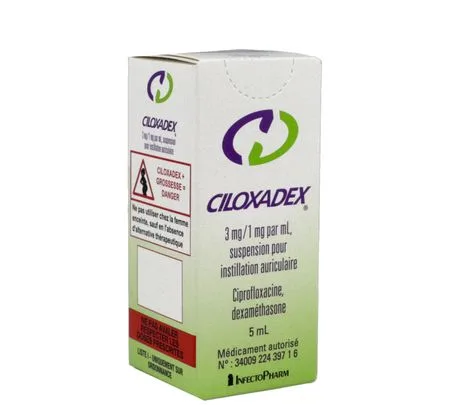
CILOXADEX 3 mg/1 mg per mL, suspension for auricular instillation
Forms and presentations
Suspension for auricular instillation.
Uniform white to off-white suspension (pH 4,3 to 4,8).
Composition
For 1 mL of suspension:
Ciprofloxacin (as hydrochloride): 3 mg
Dexamethasone: 1 mg
Excipients with known effect:
This medicinal product contains 0,004 mg of benzalkonium chloride per drop, equivalent to 0,1 mg/mL of suspension.
Benzalkonium chloride, hydroxyethylcellulose, sodium acetate trihydrate, acetic acid, sodium chloride, disodium edetate, tyloxapol, boric acid, hydrochloric acid / sodium hydroxide (for pH adjustment), purified water.
Indications
CILOXADEX is indicated for the treatment of the following infections in adults and children (see section Dosage and administration). See section Pharmacodynamics for commonly susceptible species.
• Otorrhoea through transtympanic ventilation tubes
• Acute otitis externa
Official recommendations on the appropriate use of antibacterial agents should be taken into account.
Dosage and administration
Dosage
Adults and elderly
Instil four drops into the affected ear(s) twice daily for 7 days, in accordance with the various instillation instructions for patients with otorrhoea through transtympanic ventilation tubes or acute otitis externa.
Overall, no difference in safety and efficacy was observed between elderly and other adult patients.
Paediatric population
The safety and efficacy of this medicinal product have been established in children aged 6 months and older with otorrhoea through transtympanic ventilation tubes and in children aged one year and older with acute otitis externa. (See section Warnings and precautions for use in children aged under 6 months with otorrhoea through transtympanic ventilation tubes and children aged under one year with acute otitis externa). CILOXADEX may be administered at the same dose as in adults (see section Pharmacokinetics).
Patients with hepatic or renal impairment
Hepatic or renal impairment (mild to moderate in severity) does not alter the pharmacokinetics of ciprofloxacin or dexamethasone upon systemic administration.
Following auricular administration of CILOXADEX as an auricular suspension, small increases in plasma concentrations of ciprofloxacin and dexamethasone may be observed in patients with severe impairment of hepatic or renal function. However, as systemic exposure to ciprofloxacin or dexamethasone is relatively low following local auricular administration, any increase in systemic concentrations due to renal or hepatic dysfunction would remain well below the plasma concentrations well tolerated in children or adults receiving recommended oral or intravenous doses.
Dose adjustment of this medicinal product in patients with hepatic or renal dysfunction is not necessary.
Method of administration
For auricular instillation only.
Patients should be asked to shake the bottle well before each use. The suspension should be warmed by holding the bottle in the hands for a few minutes, in order to avoid dizziness that may result from instilling a cold suspension. The patient should lie down with the affected ear facing upward, then instil the drops while pulling the auricle several times. In patients with otorrhoea through transtympanic ventilation tubes, the tragus should be pressed inward 5 times to facilitate penetration of the drops into the middle ear. This position should be maintained for approximately 5 minutes to facilitate penetration of the drops into the ear. Repeat the procedure, if necessary, for the other ear.
To prevent contamination of the tip of the dropper and limit bacterial risks, its contact with the auricle of the ear or the external auditory canal or adjacent areas should be avoided. Keep the bottle carefully closed when not in use. Keep the bottle until the end of treatment.
Contraindications
• Hypersensitivity to ciprofloxacin, to other quinolones, to dexamethasone or to any of the excipients listed in section Composition.
• Viral ear infections (chickenpox, infections with Herpes simplex) and fungal infections.
Warnings and precautions
This medicine is intended for auricular use only, and is not intended for ophthalmic use, nor for use by inhalation or injection.
If otorrhoea persists after treatment, or if two or more episodes of otorrhoea occur within six months, further evaluation is recommended in order to exclude any underlying problem, such as a cholesteatoma, a foreign body or a tumour.
As with other preparations containing antibiotics, prolonged use of this product may promote the growth of non-susceptible organisms, including bacteria, yeasts and fungi. In case of superinfection, stop CILOXADEX and initiate appropriate treatment. If signs or symptoms persist after one week of treatment, further evaluation is recommended to reassess the disease and the treatment.
Serious and sometimes fatal hypersensitivity reactions (anaphylactic reactions), some occurring after administration of the first dose, have been observed in patients treated with systemically administered quinolones. Some reactions were accompanied by cardiovascular collapse, loss of consciousness, angioedema (laryngeal, pharyngeal or facial oedema), airway obstruction, dyspnoea, urticaria and pruritus. Treatment must be discontinued at the first appearance of a skin rash or any other hypersensitivity reaction. Severe acute hypersensitivity reactions may require emergency treatment. Oxygen administration and airway clearance should be carried out as clinically indicated.
Inflammation and rupture of tendons may occur with systemic fluoroquinolone treatment including ciprofloxacin, particularly in elderly subjects and in patients treated with corticosteroids. Therefore, treatment with CILOXADEX must be stopped at the first signs of tendon inflammation.
Corticosteroids may reduce the immune response and thus promote the occurrence of bacterial, viral or fungal infections, and promote the latter. They may mask the clinical signs of an infection, preventing recognition of antibiotic ineffectiveness; they may also suppress hypersensitivity reactions to substances present in the medicine.
Visual disorders
Visual disturbances may occur with systemic or local corticosteroid therapy. In case of blurred vision or the appearance of any other visual symptom during corticosteroid therapy, an ophthalmological examination is required to look for cataract, glaucoma, or rarer lesions such as central serous chorioretinopathy, as described with systemic or local administration of corticosteroids.
Excipients
Benzalkonium chloride may irritate the skin.
Paediatric population
The safety and efficacy of CILOXADEX have not been established in children under 6 months of age with otorrhoea through transtympanic ventilation tubes, nor in children under one year of age with acute external otitis. In certain circumstances, CILOXADEX could be used in these paediatric subpopulations after a thorough assessment of the benefit/risk ratio by the physician, and taking into account that although no safety problem or difference in the pathophysiology of the disease related to the use of this product in these children is known, clinical experience is insufficient in these paediatric subpopulations.
Interactions
No interaction study has been conducted.
Following auricular administration in children with transtympanic ventilation tubes, low plasma concentrations were observed for ciprofloxacin (≥ 0,50 ng/mL in only 4 patients out of 25) and for dexamethasone (≥ 0,05 ng/mL in 14 patients out of 24), 6 hours after intake. It was concluded that after auricular administration, for both components of this medicine, a clinically significant pharmacokinetic interaction via a binding protein, or due to involvement of cytochrome P450 with concomitantly taken medicines, is unlikely to be observed.
However, certain systemically administered quinolones have been shown to increase the effects of warfarin (an oral anticoagulant) and its derivatives, and have been associated with transient increases in serum creatinine in patients concomitantly treated with ciclosporin.
Oral administration of ciprofloxacin inhibits the CYP1A2 and CYP3A4 isoenzymes of cytochrome P450 and impairs the metabolism of methylxanthine compounds (caffeine, theophylline). Following auricular administration of CILOXADEX, plasma concentrations of ciprofloxacin are low, and an interaction involving cytochrome P450 with concomitantly taken medicines is unlikely to cause clinically significant changes in plasma levels of methylxanthine compounds.
Fertility, pregnancy and breastfeeding
Pregnancy
As no reproduction studies have been conducted in animals, and no appropriate or comparative study combining ciprofloxacin and dexamethasone has been conducted in pregnant women, CILOXADEX should be used during pregnancy only if clearly needed and only if the expected benefit outweighs the potential risk to the foetus (see section Preclinical safety).
Breast-feeding
Ciprofloxacin and corticosteroids are found in milk following oral administration. It has not been shown that their topical administration in humans leads to sufficient systemic absorption capable of resulting in detectable amounts in breast milk. A risk to the infant cannot be excluded. Particular attention should be paid when this medicine is administered during breastfeeding.
Fertility
No data are available in humans on the effects of CILOXADEX on fertility (see also section Preclinical safety). Topical dermal studies in animals showed effects on male reproductive organs following prolonged administration of high doses of dexamethasone. Reproductive function studies carried out in rats and mice at doses up to six times higher than those administered daily to humans orally showed no impairment of fertility.
Driving and using machines
CILOXADEX has no or negligible effect on the ability to drive vehicles and use machines.
Adverse effects
Summary of the safety profile
In five clinical studies involving 976 patients, CILOXADEX was administered twice daily. Three clinical studies involved 439 patients with otorrhoea through transtympanic ventilation tubes, and two clinical studies involved 537 patients with acute otitis externa. No serious systemic or ear adverse effects related to CILOXADEX were reported in these clinical studies. In the clinical trials, the most frequent adverse effects were ear pain and ear discomfort, occurring in approximately 1% to 1,5% of patients.
Table of adverse reactions
The adverse effects listed in the table below were observed during clinical studies or since marketing. They are classified by system organ class and listed according to the following convention: very common (≥ 1/10), common (≥ 1/100 to < 1/10), uncommon (≥ 1/1 000 to < 1/100), rare (≥ 1/10 000 to < 1/1 000), very rare (< 1/10 000), or frequency not known (cannot be estimated from the available data). Within each group, adverse effects are presented in decreasing order of seriousness.
|
System Organ Classes |
Adverse effects |
|
Eye disorders |
Frequency not known: blurred vision (see section Warnings and precautions) |
|
Infections and infestations |
Uncommon: candidiasis |
|
Immune system disorders |
Frequency not known: hypersensitivity |
|
Nervous system disorders |
Uncommon: paraesthesia (tingling in the ears), crying
|
|
Ear and labyrinth disorders |
Common: ear pain,
|
|
Vascular disorders |
Uncommon: hot flush |
|
Gastrointestinal disorders |
Uncommon: vomiting, dysgeusia |
|
Skin and subcutaneous tissue disorders |
Uncommon: skin exfoliation
|
|
General disorders and administration site conditions |
Uncommon: occlusion of the device (obstruction of the trans-tympanic ventilation tubes), irritability, fatigue |
Description of selected adverse reactions
The most frequently reported adverse reactions in 439 patients with otorrhea through trans-tympanic ventilation tubes were ear pain (2,5%), discomfort in the ear (2,5%) and dysgeusia (defined as the taste of the medicinal product) (1,1%). Of these adverse reactions, only 1 patient had to discontinue treatment due to the occurrence of discomfort in the ear.
The most frequently reported adverse reaction in 537 patients with acute otitis externa was ear pruritus (1,5%). No patient had to discontinue treatment for this reason.
Serious and sometimes fatal hypersensitivity reactions (anaphylactic reactions), some occurring just after the first dose, have been observed in patients treated with systemically administered quinolones. Some reactions were accompanied by cardiovascular collapse, loss of consciousness, angioedema (including laryngeal, pharyngeal or facial edema), airway obstruction, dyspnea, urticaria and itching.
Secondary infections have developed after use of the combination of corticosteroids and antimicrobials.
Tendon ruptures of the shoulder, hand and Achilles tendon, requiring surgical intervention or resulting in prolonged disability, have been reported in patients treated with systemically administered fluoroquinolones. Studies and experience since the marketing of systemically administered fluoroquinolones indicate that the risk of these ruptures may be increased in patients treated with corticosteroids (particularly elderly people) and when tendons are subjected to high tension (including the Achilles tendon). To date, clinical and post-marketing data have not shown a link between otic administration of ciprofloxacin and these adverse effects affecting musculoskeletal and connective tissues.
Paediatric population
The safety of CILOXADEX has been established in children aged 6 months and older with otorrhea through trans-tympanic ventilation tubes and in children aged one year and older with acute otitis externa. The frequency, type and severity of adverse reactions in children are expected to be the same as in adults.
Reporting of suspected adverse reactions
Reporting suspected adverse reactions after authorisation of the medicinal product is important. It allows continued monitoring of the benefit/risk balance of the medicinal product. Healthcare professionals are asked to report any suspected adverse reactions via the national reporting system: National Agency for the Safety of Medicines and Health Products (ANSM) and the network of Regional Pharmacovigilance Centres - Website: https://signalement.social-sante.gouv.fr
Overdose
For topical otic products, the limited retention capacity of the ear canal excludes overdose with this topical route. However, oral ingestion of CILOXADEX resulting in overdose, or prolonged topical otic treatment, may lead to inhibition of the hypothalamic-pituitary-adrenal (HPA) axis. Although changes in children's growth curves and/or decreases in plasma cortisol concentrations may be more pronounced after a large overdose or prolonged treatment (several months) with CILOXADEX, these effects are expected to remain transient (days/weeks) and easily reversible without long-term sequelae.
Treatment of acute overdose is generally symptomatic and administered systemically, and may include emetics or gastric lavage.
Pharmacodynamics
Pharmacotherapeutic class: otological products, corticosteroids and anti-infectives in combination, ATC code: S02CA06.
Mechanism of action
This otic suspension contains a fluoroquinolone, ciprofloxacin, acting as an antibacterial agent. The bactericidal action of ciprofloxacin results from inhibition of topoisomerase type II (DNA gyrase) and topoisomerase IV, which are necessary for bacterial DNA replication, transcription, repair and recombination.
The mechanism of action of dexamethasone (corticosteroid) is not fully understood. However, it is known that corticosteroids bind to receptors present in the cytoplasm, followed by nuclear translocation, and then interfere with transcription of target genes. Corticosteroids stimulate transcription of anti-inflammatory proteins and inhibit the expression of many inflammatory genes. Dexamethasone has an anti-inflammatory activity 25 times more potent than hydrocortisone.
Resistance mechanism
Resistance in vitro to ciprofloxacin may develop through successive mutations resulting in modifications of the target sites of ciprofloxacin on DNA gyrase and topoisomerase IV. The degree of cross-resistance between ciprofloxacin and other fluoroquinolones varies. Single mutations do not give rise to clinical resistance, but multiple mutations generally result in clinical resistance to several or even all active substances of this therapeutic class.
Resistance mechanisms through membrane impermeability and/or active efflux may have variable effects on bacterial susceptibility to fluoroquinolones depending on their physicochemical properties and on the affinity of transport systems for the different antibiotics of this therapeutic class. All resistance mechanisms in vitro are frequently observed in clinical isolates. Resistance to other antibiotic families through mechanisms such as those affecting membrane permeability (frequent with Pseudomonas aeruginosa) and efflux mechanisms can alter bacterial susceptibility to ciprofloxacin.
Plasmid-mediated resistance encoded by qnr genes has been observed.
Critical concentrations
Currently, the critical concentrations of the minimum inhibitory concentration (MIC), as established by the European Committee on Antimicrobial Susceptibility Testing (EUCAST), take into account the drug concentrations achievable at the systemic level after oral or intravenous administration of the antibiotic. These Susceptibility/Resistance (S/R) critical concentrations (in mg/L) are used daily in laboratory practice to determine clinical efficacy. However, when ciprofloxacin is administered by the auricular route, higher concentrations may be achieved in the ear and the activity of the drug may be influenced by local physicochemical characteristics. EUCAST critical concentrations are not appropriate for topical antibiotics, but the following recommendations may still be followed in general.
EUCAST recommended S/R critical concentrations for ciprofloxacin
(version 10.0 – 2020.01.01)
|
Microorganisms |
Susceptibility (S) |
Resistance (R) |
|
Staphylococcus spp. spp. |
S ≤ 0,001 mg/L |
R > 1 mg/L |
|
Haemophilus influenzae |
S ≤ 0,06 mg/L |
R > 0,06 mg/L |
|
Moraxella catarrhalis |
S ≤ 0,125 mg/L |
R > 0,125 mg/L |
|
Pseudomonas aeruginosa |
S ≤ 0,001 mg/L |
R > 0,5 mg/L |
The prevalence of acquired resistance may vary by geography and over time for certain species; it is therefore useful to have information on local resistance prevalence, especially for the treatment of severe infections. If necessary, specialist advice should be sought when the usefulness of the drug in certain types of infections may be questioned due to the level of local resistance prevalence.
Otorrhea through transtympanic ventilation tubes
|
Commonly susceptible species |
|
Aerobic Gram-positive: Staphylococcus aureus (sensitive to methicillin) Streptococcus pneumoniae Aerobic Gram-negative: Haemophilus influenzae Moraxella catarrhalis Pseudomonas aeruginosa |
|
Species with variable susceptibility |
|
Aerobic Gram-positive: Staphylococcus aureus (methicillin-resistant) |
Acute otitis externa
|
Commonly susceptible species |
|
Aerobic Gram-positive: Staphylococcus aureus (sensitive to methicillin) Aerobic Gram-negative: Pseudomonas aeruginosa |
|
Species with variable susceptibility |
|
Aerobic Gram-positive: Staphylococcus aureus (methicillin-resistant) |
The above information is based on microbiological surveillance studies conducted at several European sites and on data obtained from clinical studies carried out in the United States and Canada.
Pharmacokinetics
Ciprofloxacin
Absorption
In paediatric patients who received a dose of CILOXADEX locally in the ear, blood levels of ciprofloxacin are very low. After 4 drops in each ear (equivalent to a total of 0,84 mg of ciprofloxacin), maximum concentrations of ciprofloxacin (Cmax) are reached within one hour and range from less than 0,50 ng/mL to 3,45 ng/mL with a Cmax mean of 1,33 ng/mL. These amounts are then eliminated with a half-life of approximately 3 hours, comparably to adult subjects receiving oral doses.
Distribution
Tissue distribution studies performed in animals show that ciprofloxacin distributes into most organs and tissues. The highest concentrations are generally found in the liver and kidneys. The brain, fat and bone show low concentrations. An increase in dose results in a proportional increase in tissue concentrations.
The distribution and elimination of radioactivity are identical after one or several doses. Ciprofloxacin is weakly bound to plasma proteins. In rats and monkeys, binding varies from 20 to 40% and is constant over a concentration range from 0,02 to 2,0 µg/mL.
Ciprofloxacin is found in the breast milk of female rats. The radioactivity present in milk is mainly linked to unchanged parent molecule. In pregnant female rats receiving ciprofloxacin labelled with 14C, radioactivity is found in the foetus, but at levels lower than those observed in maternal plasma.
Biotransformation
The metabolism of ciprofloxacin is identical in rats, monkeys and humans. Ciprofloxacin is weakly metabolised and is eliminated mainly unchanged in the urine. Metabolism yields metabolites whose microbiological activity is much lower than that of the parent molecule. In studies in vitro performed on human and rat liver microsomes, ciprofloxacin prevents any biotransformation by CYP1A and CYP3A of cytochrome P450. Drug interactions have been shown for certain specific medicines taken concomitantly with intravenous and oral ciprofloxacin. Some of these interactions have been associated with the ability of ciprofloxacin to inhibit biotransformation by CYP1A and CYP3A of cytochrome P450.
Elimination
Ciprofloxacin is excreted via the urinary, faecal or biliary routes. In rats, following an intravenous dose, 51% is recovered in the urine and 47% in the faeces. In monkeys and humans, urinary excretion is the main route of elimination. No significant enterohepatic circulation was observed in rats.
Paediatric population
Following a single, bilateral administration of 4 drops per ear (8 drops per administration) of CILOXADEX in 25 paediatric patients, the mean plasma concentration of ciprofloxacin Cmax was 1,33 ± 0,96 ng/mL. Ciprofloxacin concentrations then decreased and were no longer quantifiable (< 0,50 ng/mL) in 21 patients, 6 hours after the first dose, indicating low systemic exposure. The mean Cmax of ciprofloxacin (1,33 ng/mL) was approximately 570 times lower than the mean Cmax of 760 ng/mL observed in adult subjects after therapeutic oral administration of 250 mg of ciprofloxacin. The mean t1/2 of ciprofloxacin was approximately 3 hours and was similar to that observed in adult subjects after oral administration. The systemic exposure to ciprofloxacin observed in clinical studies after otic administration of CILOXADEX represents a maximum in paediatric patients with otitis and transtympanic ventilation tubes, due to the presence of transtympanic ventilation tubes without otorrhoea. Systemic exposure to ciprofloxacin in patients with acute otitis externa after otic administration of CILOXADEX would not be as high as that observed in paediatric patients with transtympanic ventilation tubes, due to the lower bioavailability of topical medicines across an intact tympanic membrane.
Dexamethasone
Absorption
In paediatric patients who received a dose of CILOXADEX locally in the ear, blood levels of dexamethasone are very low. After 4 drops in each ear (equivalent to a total of 0,28 mg of dexamethasone), maximum concentrations of dexamethasone (Cmax) are reached within one hour, with a Cmax mean of 0,09 ng/mL. These amounts are then eliminated with a half-life of approximately 4 hours, comparably to adult subjects receiving oral doses.
Distribution
The mean volume of distribution in humans ranged between 0,576 and 1,15 L/kg. In animals, corticosteroids distribute into muscle, liver, skin, intestines and kidneys. In pregnant female rats, dexamethasone was found in the placenta, but foetal plasma levels did not exceed maternal levels. Traces of dexamethasone were also found in breast milk, but in very small amounts. Binding to serum albumin varies approximately from 77 to 84%.
Biotransformation
The main route of elimination of dexamethasone is hepatic metabolism. In humans, nearly 60% of the administered dose is recovered in the urine as 6-β hydroxydexamethasone, with 6-(β)-hydroxy-20-dihydrodexamethasone also identified as an important urinary metabolite.
Unchanged dexamethasone is not found in the urine. The main cytochrome P450 isoenzyme responsible for the biotransformation of dexamethasone is CYP3A4. In humans, dexamethasone clearance varies between 0,111 and 0,225 L/h/kg. The elimination half-life varies approximately from 3 to 4,7 hours in humans. Metabolism of dexamethasone is induced by anticonvulsants and inhibited by isoniazid and by itraconazole, a potent inhibitor of CYP3A4 P450.
Paediatric population
Following a single, bilateral administration of 4 drops per ear (8 drops per administration) of CILOXADEX in 24 paediatric patients, the mean plasma concentration of dexamethasone Cmax was 0,90 ± 1,04 ng/mL. Dexamethasone concentrations then decreased and were no longer quantifiable (< 0,05 ng/mL) in 10 patients, 6 hours after the first dose, indicating low systemic exposure. The mean Cmax of dexamethasone (0,90 ng/mL) was approximately 8,8 times lower than the mean Cmax of 7,9 ng/mL observed in adult subjects after oral administration of a 0,5 mg dose of dexamethasone. The mean t1/2 half-life of dexamethasone was approximately 4 hours and was similar to that observed in adult subjects after oral administration. Systemic exposure to dexamethasone observed during clinical studies after auricular administration of CILOXADEX represents a maximum in paediatric patients with otitis with transtympanic ventilation tubes, due to the presence of transtympanic ventilation tubes without otorrhoea. Systemic exposure to dexamethasone in patients with acute otitis externa after auricular administration of CILOXADEX would not be as high as that observed in paediatric patients with transtympanic ventilation tubes, due to lower bioavailability of topical medicinal products through an intact tympanic membrane.
Preclinical safety
Non-clinical data from conventional repeated-dose toxicity studies did not reveal any particular risk for humans.
There is no evidence that auricular administration of CILOXADEX has effects on joints, although oral administration of certain quinolones has caused arthropathy in immature animals.
Guinea pigs receiving auricular instillation of CILOXADEX into the middle ear for one month showed no drug-related structural or functional changes in cochlear cells, nor any damage to the ossicles.
Mutagenic and carcinogenic potential
Available data from genetic toxicology tests on ciprofloxacin and dexamethasone showed no biologically significant mutagenic potential following auricular administration of CILOXADEX.
No long-term study has been conducted to evaluate the carcinogenic potential of CILOXADEX.
Reproductive toxicity
Topical dermal studies in animals showed effects on male reproductive organs following long-term administration of dexamethasone at doses much higher than those resulting from administration of CILOXADEX auricular suspension. Reproduction studies performed in rats and mice at doses up to six times those administered daily to humans orally showed no impairment of fertility, nor harm to the foetus, due to ciprofloxacin.
After intravenous administration of doses up to 20 mg/kg, no maternal toxicity was observed in rabbits, nor embryotoxicity or teratogenicity. Corticosteroids are generally teratogenic in laboratory animals when administered systemically at relatively low doses.
Special storage precautions
Do not freeze.
Store the bottle in the outer packaging, protected from light.
SPECIAL PRECAUTIONS FOR DISPOSAL AND OTHER HANDLING
Any unused product or waste must be disposed of in accordance with the regulations in force.
Prescription, supply and reimbursement
| Marketing authorisation (AMM) |
|
| Price: |
|
90 AVENUE MARIUS BERLIET
69970 CHAPONNAY
Tel: 04 78 95 29 35 contact.fr@infectopharm.com
https://en.infectopharm.com/
Source: VIDAL · Updated on 10/11/2026. This information does not replace advice from a healthcare professional.