
Medicines
SmPC of 17/02/2026
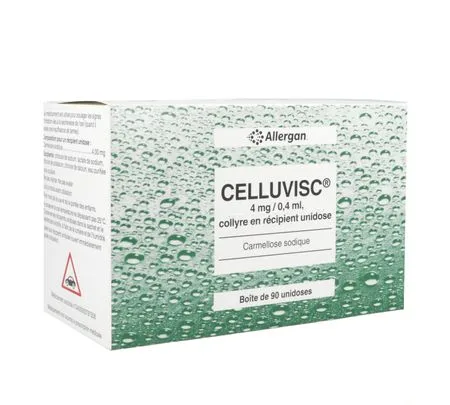
CELLUVISC 4 mg/0,4 ml, eye drops in single-dose container
Composition
Sodium carmellose.................................................................................................................................. 4,00 mg
for one single-dose container.
Sodium chloride, sodium lactate, potassium chloride, calcium chloride, purified water.
Indications
This medicine is indicated for the symptomatic treatment of dry eye syndrome in its moderate manifestations.
Dosage and administration
Dosage
Adults (including the elderly)
For ocular instillation.
The dosage is 1 drop in the eye or eyes to be treated, 2 to 4 times a day and up to 8 times depending on the severity of the symptoms.
Paediatric population
The safety and efficacy of CELLUVISC in the paediatric population have not been established.
Method of administration
Turn the cap to open the single-dose container and instil the eye drops.
Instil the eye drops into the conjunctival sac by gently pulling the lower eyelid down and looking upward.
Use the single-dose container immediately after opening and discard after use.
Contraindications
Hypersensitivity to the active substance or to any of the excipients listed in section Composition.
Warnings and precautions
If irritation, pain, redness or visual disturbances appear or worsen, or if symptoms worsen, treatment must be stopped and re-evaluated.
These eye drops are presented in single-dose containers (for single use) and do not contain a preservative: there is therefore a risk of rapid bacterial contamination. To avoid any contamination or possible ocular damage, do not allow the tip of the single-dose container to come into contact with the eye, the eyelid or any other surface. The single-dose container must be discarded immediately after use and must not be kept for later use.
A brief visual disturbance may occur on instillation of the product until it spreads evenly over the surface of the eye.
Fertility, pregnancy and breastfeeding
Pregnancy and breastfeeding
There are no data on the use of this medicine in pregnant or breast-feeding women.
CELLUVISC should only be prescribed with caution in pregnant or breast-feeding women.
Driving and using machines
Vision may be blurred for a few minutes after instillation, depending on the viscosity of the product.
In this case, the patient should be advised not to drive or use machines until normal vision is restored.
Adverse effects
The adverse effects reported after use of CELLUVISC are classified by system organ class and listed below as Very common (≥1/10) ; Frequent (≥1/100, <1/10) ; Uncommon (≥1/1 000, <1/100) ; Rare (≥1/10 000, <1/1 000) ; Very rare (<1/10 000) and frequency not known (cannot be estimated from the available data) :
Eye disorders
Frequent :
Eye irritation (including burning and eye discomfort)
Post-marketing experience:
The following adverse reactions have been identified during use of CELLUVISC in clinical practice after its marketing authorisation. Since reporting of adverse reactions after marketing authorisation is voluntary and comes from a population of uncertain size, it is not always possible to estimate the frequency of these adverse reactions.
Immune system disorders
Hypersensitivity including eye allergy with symptoms such as eye swelling or eyelid oedema.
Eye disorders
Blurred vision, tingling sensation, foreign body sensation, red eye, pruritus, increased lacrimation, eye discharge, eye pain, crust formation on the eyelid margins or drug residue, impaired vision.
Injury, poisoning and procedural complications
Superficial eye damage (resulting from contact between the unit-dose tip and the eye during administration) and/or corneal abrasion.
Reporting of suspected adverse reactions
Reporting suspected adverse reactions after authorisation of the medicinal product is important. It allows continued monitoring of the benefit/risk balance of the medicinal product. Healthcare professionals are asked to report any suspected adverse reaction via the national reporting system: National Agency for the Safety of Medicines and Health Products (ANSM) and the network of Regional Centres of Pharmacovigilance - Website: https://signalement.social-sante.gouv.fr/.
Pharmacodynamics
Pharmacotherapeutic class: lacrimal substitute, ATC code: S01XA20.
Mechanism of action
This eye drop solution is a corneal moisturiser.
It has no pharmacological activity but acts through a mechanical effect (lubrication, hydration).
It compensates for insufficient tear secretion by temporarily restoring the aqueous phase of tears.
The sodium carboxymethylcellulose contained in this eye drop solution is a viscosity agent derived from cellulose. Its role is to increase the corneal contact time of the eye drops.
Pharmacokinetics
No controlled pharmacokinetic study has been performed in animals or in humans.
Absorption or accumulation in ocular tissues can likely be excluded due to the high molecular weight of carmellose.
Preclinical safety
Non-clinical data from conventional safety pharmacology, repeated-dose toxicity, genotoxicity, carcinogenesis, and reproductive and developmental studies revealed no particular risk for humans.
Shelf life
Before opening: 24 months
After opening: use immediately and discard the unit-dose container after use. Do not store the unit-dose container after opening.
Special storage precautions
Store at a temperature not exceeding 25°C.
Store the unit-dose containers in the sachet and the sachet in the carton, protected from light and moisture.
Prescription, supply and reimbursement
| Marketing authorisation (AMM) |
|
| Price: |
|
Collection.
5-13, BOULEVARD DE LA RÉPUBLIQUE
92100 BOULOGNE BILLANCOURT
Tel: 01 45 60 13 00 https://www.abbvie.fr/
Source: VIDAL · Updated on 10/11/2026. This information does not replace advice from a healthcare professional.