
Medicines
SmPC of the 10/04/2025
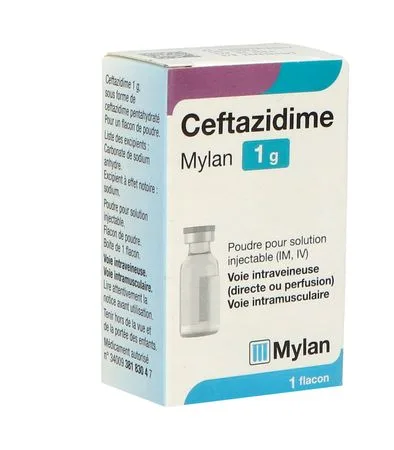
CEFTAZIDIME VIATRIS 1 g, powder for injectable solution (IM, IV)
Composition
Ceftazidime ........................................................................................................................................................ 1 g
as ceftazidime pentahydrate
For one vial of powder.
Excipient with known effect : This medicine contains 50,5 mg of sodium per vial.
Anhydrous sodium carbonate.
Indications
CEFTAZIDIME VIATRIS is indicated for the treatment of the following infections in adults, children and infants, including newborns (from birth).
• Nosocomial pneumonia
• Broncho-pulmonary infections in cystic fibrosis
• Bacterial meningitis
• Chronic suppurative otitis media
• Malignant external otitis
• Complicated urinary tract infections
• Complicated skin and soft tissue infections
• Complicated intra-abdominal infections
• Bone and joint infections
• Peritonitis associated with peritoneal dialysis in patients on CAPD.
Treatment of patients with bacteraemia associated with, or suspected to be associated with, any of the infections listed above.
Ceftazidime may be used in the management of neutropenic patients with fever suspected to be due to a bacterial infection.
Ceftazidime may be used for perioperative prophylaxis of urinary tract infections in patients undergoing transurethral resection of the prostate (TURP).
The choice of ceftazidime should take into account its antibacterial spectrum, which is mainly limited to aerobic Gram-negative bacteria (see sections Warnings and precautions and Pharmacodynamics).
Ceftazidime must be co-administered with other antibacterial agents whenever the possible range of causative bacteria is not covered by its spectrum of activity.
Official recommendations concerning the appropriate use of antibacterial agents should be taken into account.
Dosage and administration
Dosage
Table 1: Adults and children ≥ 40 kg
|
Discontinue administration |
|
|
Infection |
Dose to be administered |
|
Broncho-pulmonary infections in cystic fibrosis |
100 to 150 mg/kg/day every 8h, with a maximum of 9 g per day1 |
|
Febrile neutropenia |
2 g every 8 h |
|
Nosocomial pneumonia |
|
|
Bacterial meningitis |
|
|
Bacteremia* |
|
|
Bone and joint infections |
1-2 g every 8 h |
|
Complicated skin and soft tissue infections |
|
|
Complicated intra-abdominal infections |
|
|
Peritonitis associated with peritoneal dialysis in patients on CAPD |
|
|
Complicated urinary tract infections |
1 -2 g every 8 h or 12 h |
|
Peri-operative prophylaxis in transurethral resection of the prostate (TURP) |
1 g at induction of anesthesia and a second dose at catheter removal |
|
Chronic suppurative otitis media |
1 g to 2 g every 8 h |
|
Malignant otitis externa |
|
|
Continuous infusion |
|
|
Infection |
Dose to be administered |
|
Febrile neutropenia |
Loading dose of 2 g followed by a continuous infusion of 4 to 6 g every 24 h1 The infusion duration of any dose of dissolved medicinal product must not exceed 9 h (see section Shelf life). Therefore, after reconstitution, the unit dose in the infusion fluid must be administered within 9 h, for example for a daily dose of 8 g: 2 g loading dose followed by 2 g as a continuous infusion every 8 h |
|
Nosocomial pneumonia |
|
|
Broncho-pulmonary infections in cystic fibrosis |
|
|
Bacterial meningitis |
|
|
Bacteremia* |
|
|
Bone and joint infections |
|
|
Complicated skin and soft tissue infections |
|
|
Complicated intra-abdominal infections |
|
|
Peritonitis associated with peritoneal dialysis in patients on CAPD |
|
|
1 9 g/day has been used in adults with normal renal function without observing undesirable effects. *Concomitant, or suspected to be concomitant with an infection listed in section Indications. |
|
Table 2: Children < 40 kg
|
Very young children and infants > 2 months and children < 40 kg |
Infection |
Usual dose |
|
Discontinue administration |
||
|
|
Complicated urinary tract infections |
100-150 mg/kg/day divided into 3 doses, not exceeding the dose of 6g/day |
|
|
Chronic suppurative otitis media |
|
|
|
Malignant otitis externa |
|
|
|
Neutropenic children |
150 mg/kg/day divided into 3 doses, not exceeding a dose of 6 g/day |
|
|
Broncho-pulmonary infections in cystic fibrosis |
|
|
|
Bacterial meningitis |
|
|
|
Bacteremia* |
|
|
|
Bone and joint infections |
100-150 mg/kg/day divided into 3 doses, not exceeding a dose of 6g/day |
|
|
Complicated skin and soft tissue infections |
|
|
|
Complicated intra-abdominal infections |
|
|
|
Peritonitis associated with peritoneal dialysis in patients on CAPD |
|
|
Continuous infusion |
||
|
|
Febrile neutropenia |
Loading dose of 60-100 mg/kg followed by a continuous infusion of 100-200 mg/kg/day, with a maximum of 6g/day |
|
|
Nosocomial pneumonia |
|
|
|
Broncho-pulmonary infections in cystic fibrosis |
|
|
|
Bacterial meningitis |
|
|
|
Bacteremia* |
|
|
|
Bone and joint infections |
|
|
|
Complicated skin and soft tissue infections |
|
|
|
Complicated intra-abdominal infections |
|
|
|
Peritonitis associated with peritoneal dialysis in patients on CAPD |
|
|
Newborns and infants ≤ 2 months |
Infection |
Usual dose |
|
Discontinue administration |
||
|
|
Majority of infections |
25-60 mg/kg/day divided into 2 doses1 |
|
1 In newborns and infants ≤ 2 months, the serum half-life of ceftazidime may be 3 to 4 times longer than that in adults. * Concomitant, or suspected to be concomitant with an infection listed in the section Indications. |
||
Paediatric population
The safety and efficacy of Ceftazidime administered by continuous infusion in newborns and infants ≤ 2 months have not been established
Elderly patients
Due to decreased clearance of ceftazidime in elderly subjects, the daily dose should normally not exceed 3 g in patients over 80 years of age.
Hepatic impairment
Available data do not indicate the need to adjust the dose in cases of mild to moderate hepatic impairment. There is no clinical trial data in patients with severe hepatic impairment (see also section Pharmacokinetics). Close clinical monitoring of tolerability and efficacy is advised.
Renal impairment
Ceftazidime is excreted unchanged by the kidneys. Therefore, the dosage should be reduced in patients with renal impairment (see also section Warnings and precautions.).
An initial loading dose of 1 g must be administered. Maintenance doses should be based on creatinine clearance:
Table 3: Recommended maintenance doses of Ceftazidime in cases of renal impairment – intermittent infusion
Adults and children ≥ 40 kg
|
Creatinine clearance (mL/min) |
Approximate serum creatinine μmol/L (mg/dL) |
Recommended unit dose of ceftazidime (g) |
Frequency of administration (hours) |
|
50-31 |
150-200 (1,7-2,3) |
1 |
12 |
|
30-16 |
200-350 (2,3-4,0) |
1 |
24 |
|
15-6 |
350-500 (4,0-5,6) |
0,5 |
24 |
|
<5 |
>500 (>5,6) |
0,5 |
48 |
For patients with severe infections, the unit dose should be increased by 50%, or the frequency of administration should be increased.
In children, creatinine clearance should be adjusted according to body surface area or lean body mass.
Children < 40 kg
|
Creatinine clearance (ml/min)** |
Serum creatinine approx. * μmol/L (mg/dL) |
Recommended individual dose (in mg/kg body weight) |
Frequency of administration (hours) |
|
50-31 |
150-200 (1,7-2,3) |
25 |
12 |
|
30-16 |
200-350 (2,3-4,0) |
25 |
24 |
|
15-6 |
350-500 (4,0-5,6) |
12,5 |
24 |
|
<5 |
>500 (>5,6) |
12,5 |
48 |
|
* Serum creatinine values are indicative values that may not indicate exactly the same degree of reduction for all patients with renal insufficiency. ** Estimated on the basis of body surface area, or measured. |
|||
Close clinical monitoring of tolerance and efficacy is advised.
Table 4: Recommended ceftazidime maintenance doses in renal impairment – continuous infusion
Adults and children ≥ 40 kg
|
Creatinine clearance (mL/min) |
Serum creatinine approx. μmoles/l (mg/dl) |
Frequency of administration (hours) |
|
50-31 |
150-200 (1,7-2,3) |
Loading dose of 2 g followed by 1 to 3 g /24 hours |
|
30-16 |
200-350 (2,3-4,0) |
Loading dose of 2 g followed by 1 g/24 hours |
|
≤15 |
>350 (>4,0) |
Not evaluated |
Particular attention must be paid to dose selection. Close clinical monitoring of tolerance and efficacy is advised.
Children < 40 kg
The safety and efficacy of ceftazidime administered by continuous infusion in children with renal impairment weighing less than 40 kg have not been established. Close clinical monitoring of tolerance and efficacy is advised.
In the case of continuous infusion in a child with renal impairment, creatinine clearance must be adjusted relative to body surface area or lean body mass.
Haemodialysis
The serum half-life during haemodialysis is 3 to 5 h.
After each haemodialysis session, the ceftazidime maintenance dose recommended in the table below must be repeated.
Peritoneal dialysis
Ceftazidime may be used in peritoneal dialysis and in continuous ambulatory peritoneal dialysis (CAPD).
In addition to intravenous use, ceftazidime may be incorporated into the dialysis fluid (usually 125-250 mg for 2 litres of dialysis solution).
In patients with renal impairment undergoing continuous arteriovenous haemodialysis or haemofiltration with high-permeability membranes: 1 g/day, either as a single dose or as divided doses. In patients undergoing haemofiltration with low-permeability membranes in an intensive care unit, follow the recommended dose for renal impairment.
In patients undergoing venovenous haemofiltration and venovenous haemodialysis, follow the dosing recommendations given in the tables below.
Table 5: Recommended doses for continuous venovenous haemofiltration
|
Residual renal function (creatinine clearance in ml/min) |
Maintenance dose (mg) for an ultrafiltration rate (ml/min) of 1 : |
|||
|
5 |
16,7 |
33,3 |
50 |
|
|
0 |
250 |
250 |
500 |
500 |
|
5 |
250 |
250 |
500 |
500 |
|
10 |
250 |
500 |
500 |
750 |
|
15 |
250 |
500 |
500 |
750 |
|
20 |
500 |
500 |
500 |
750 |
|
1 Maintenance dose to be administered every 12 h. |
||||
Table 6: Recommended doses for continuous venovenous haemodialysis
|
Residual renal function (creatinine clearance in ml/min) |
Maintenance dose (mg) for a dialysate flow rate of 1 : |
|||||
|
1,0 litre/h |
2,0 litres/h |
|||||
|
Ultrafiltration rate (litres/h) |
Ultrafiltration rate (litres/h) |
|||||
|
0,5 |
1,0 |
2,0 |
0,5 |
1,0 |
2,0 |
|
|
0 |
500 |
500 |
500 |
500 |
500 |
750 |
|
5 |
500 |
500 |
750 |
500 |
500 |
750 |
|
10 |
500 |
500 |
750 |
500 |
750 |
1000 |
|
15 |
500 |
750 |
750 |
750 |
750 |
1000 |
|
20 |
750 |
750 |
1000 |
750 |
750 |
1000 |
|
1 Maintenance dose to be administered every 12 h. |
||||||
Method of administration
The dose depends on the severity, susceptibility, site and type of infection as well as on the patient's age and renal function.
Ceftazidime must be administered by intravenous injection or infusion, or by deep intramuscular injection. The recommended intramuscular injection sites are the upper outer quadrant of the gluteus maximus or the lateral aspect of the thigh. Ceftazidime solutions may be administered directly into the vein or introduced into the tubing of an infusion set if the patient is receiving parenteral solutions.
Intermittent intravenous injection or continuous intravenous infusion are the preferred routes of administration. Intramuscular administration should only be considered when the intravenous route is not possible or is less appropriate for the patient.
Contraindications
Hypersensitivity to ceftazidime, to any other cephalosporin or to any of the excipients listed in section Composition.
History of severe hypersensitivity (for example, anaphylactic reaction) to any other type of beta-lactam antibacterial product (penicillins, monobactams and carbapenems).
Warnings and precautions
Hypersensitivity
As with all beta-lactam antibacterial products, severe and sometimes fatal hypersensitivity reactions have been reported. In case of severe hypersensitivity reactions, treatment with ceftazidime must be stopped immediately and appropriate measures must be initiated.
Before starting treatment, it must be established whether the patient has a history of severe hypersensitivity to ceftazidime, to other cephalosporins or to any other type of beta-lactam. Caution is advised if ceftazidime is administered to patients with a history of non-severe hypersensitivity to other beta-lactam products.
Severe cutaneous adverse reactions (SCARs), including Stevens-Johnson syndrome (SJS), toxic epidermal necrolysis (TEN), drug reaction with eosinophilia and systemic symptoms (DRESS) and acute generalised exanthematous pustulosis (AGEP), which may be life-threatening or fatal, have been reported in association with ceftazidime treatment, with an unknown frequency.
Patients must be informed of the signs and symptoms of these reactions and closely monitored for skin reactions.
If signs and symptoms suggestive of these reactions appear, treatment with ceftazidime must be stopped immediately and an alternative treatment should be considered.
If the patient develops a severe reaction such as SJS, TEN, DRESS syndrome or AGEP associated with the use of ceftazidime, treatment with ceftazidime must not be restarted in this patient at any time.
Spectrum of activity
Ceftazidime has a limited antibacterial spectrum of activity. It is not appropriate to use it alone for the treatment of certain types of infections unless the causative agent is already documented and known to be susceptible, or there is a strong suspicion that the most likely causative agent can be treated by ceftazidime. This applies particularly to the treatment of patients with bacteraemia and to the treatment of bacterial meningitis, skin and soft tissue infections, and bone and joint infections. In addition, ceftazidime is susceptible to hydrolysis by several extended-spectrum beta-lactamases (ESBLs). Therefore, information on the prevalence of ESBL-producing organisms must be taken into account when choosing treatment with ceftazidime.
Pseudomembranous colitis
Cases of antibacterial-associated colitis and pseudomembranous colitis have been reported with almost all antibacterial products, including ceftazidime, with severity ranging from mild to life-threatening. Therefore, it is important to consider this diagnosis in patients who develop diarrhoea during or after administration of ceftazidime (see section Adverse effects).
Discontinuation of ceftazidime treatment and administration of specific treatment against Clostridium difficile should be considered. Any administration of peristalsis inhibitors is to be avoided.
Renal function
Any concomitant treatment with cephalosporins and high-dose nephrotoxic medicinal products, for example aminoglycosides or potent diuretics (for example, furosemide), may impair renal function.
Ceftazidime is eliminated by the kidneys: the dose should therefore be reduced according to the degree of renal impairment. Safety and efficacy of treatment must be closely monitored in patients with renal impairment. Neurological sequelae have occasionally been reported in cases where the dose was not reduced in patients with renal insufficiency (see sections Dosage and administration, and 4.8).
Proliferation of non-susceptible micro-organisms
Prolonged use of this medicine may lead to proliferation of non-susceptible organisms (for example, enterococci and fungi), which may require discontinuation of treatment or other appropriate measures. Repeated assessment of the patient's health status is essential.
Ceftazidime does not interfere with enzymatic tests for measuring glycosuria, but slight interference (false positives) may occur with copper-containing reagents (Benedict's or Fehling's solutions, Clinitest).
Ceftazidime does not interfere with the alkaline picrate colour reaction used to measure creatinine levels.
A positive Coombs test is observed in approximately 5 % of patients and may interfere with blood compatibility tests.
Important information concerning one of the components of CEFTAZIDIME VIATRIS:
CEFTAZIDIME VIATRIS 1 g, powder for injectable solution (IM, IV) contains sodium
This medicine contains 50.5 mg of sodium per vial, which is equivalent to 2.52% of the maximum recommended daily dietary intake of sodium by the WHO of 2 g of sodium per adult.
These data should be taken into account in patients on a low-sodium diet.
Interactions
Interaction studies have been conducted only with probenecid and furosemide.
Concomitant use of high doses in combination with nephrotoxic medicinal products may impair renal function (see section Warnings and precautions).
An antagonism between chloramphenicol and ceftazidime and other cephalosporins has been observed in vitro. The clinical relevance of this observation remains unknown, but if concomitant administration of ceftazidime and chloramphenicol is considered, this possibility of antagonism must be taken into account.
Fertility, pregnancy and breastfeeding
Pregnancy
There are limited data on the use of ceftazidime in pregnant women. Animal studies have not shown direct or indirect harmful effects on reproduction, on embryonic or foetal development, on parturition or on postnatal development (see section Preclinical safety).
CEFTAZIDIME VIATRIS should be prescribed to pregnant women only if the benefit outweighs the risk.
Breast-feeding
Ceftazidime is excreted in small amounts in breast milk, but at therapeutic doses of ceftazidime, no effect on breastfed newborns/infants is expected. Ceftazidime can therefore be used during breastfeeding.
Fertility
No data are available.
Driving and using machines
No studies on the effects of the product on the ability to drive vehicles and use machines have been performed. However, adverse reactions (for example, dizziness) may occur and affect the patient's ability to drive vehicles and use machines (see section Adverse effects).
Adverse effects
The most frequent adverse reactions are: eosinophilia, thrombocytosis, phlebitis or thrombophlebitis with intravenous administration, diarrhoea, transient increase in liver enzymes, maculopapular or urticarial rash, pain and/or inflammation after intramuscular injection, and positive Coombs test.
Data from clinical studies, whether or not sponsored by a manufacturer, were used to determine the frequency of frequent and infrequent adverse reactions. The frequencies assigned to all other adverse reactions were mainly determined using pharmacovigilance (post-marketing) data and refer to a reporting rate rather than a true frequency. Within each frequency group, adverse reactions are presented in order of decreasing seriousness. The following convention has been applied for classifying frequencies:
Very common (≥ 1/10)
Common (≥ 1/100 to <1/10)
Uncommon (≥ 1/1000 to <1/100)
Rare (≥ 1/10 000 to <1/1000)
Very rare (<1/10 000)
Frequency not known (the frequency cannot be estimated from the available data)
|
System organ classes |
Common |
Uncommon |
Very rare |
Not known |
|
Infections and infestations |
|
Candidiasis (including vaginitis and oral thrush) |
|
|
|
Blood and lymphatic system disorders |
Hypereosinophilia Thrombocytosis |
Neutropenia Leukopenia Thrombocytopenia |
|
Agranulocytosis Haemolytic anaemia Lymphocytosis |
|
Immune system disorders |
|
|
|
Anaphylaxis (including bronchospasm and/or hypotension) (see section Warnings and precautions) |
|
Nervous system disorders |
|
Headache Dizziness |
|
Neurological sequelae1 Paresthesias |
|
Vascular disorders |
Phlebitis or thrombophlebitis related to IV administration |
|
|
|
|
Gastrointestinal disorders |
Diarrhoea |
Diarrhoea and colitis2 related to an antibacterial product (see section Warnings and precautionsAbdominal pain Nausea Vomiting |
|
Dysgeusia |
|
Hepatobiliary disorders |
Transient increases in one or more liver enzymes3 |
|
|
Jaundice |
|
Skin and subcutaneous tissue disorders |
Maculopapular or urticarial rash |
Pruritus |
|
Lyell's syndrome (toxic epidermal necrolysis) Stevens-Johnson syndrome Erythema multiforme Angioedema Drug reaction with eosinophilia and systemic symptoms (DRESS syndrome)5 Acute generalised exanthematous pustulosis (AGEP) |
|
Renal and urinary disorders |
|
Transient increases in plasma urea, blood urea nitrogen, and/or serum creatinine |
Interstitial nephritis Acute renal failure |
|
|
General disorders and administration site conditions |
Pain and/or inflammation after IM injection |
Fever |
|
|
|
Investigations |
Positive Coombs test4 |
|
|
|
1 Neurological sequelae have been reported, including tremors, myoclonus, convulsions, encephalopathy and coma, in renally impaired patients in whom the dose of CEFTAZIDIME VIATRIS was not appropriately reduced.
2 Diarrhoea and colitis may be related to Clostridium difficile and may manifest as pseudomembranous colitis.
3 ALAT (SGPT), ASAT (SGOT), LDH, GGT, alkaline phosphatases.
4 A positive Coombs test is observed in approximately 5 % of patients and may interfere with blood compatibility tests.
5 Rare cases of DRESS syndrome have been reported with Ceftazidime.
Reporting of suspected adverse reactions
Reporting suspected adverse reactions after authorisation of the medicinal product is important. It allows continued monitoring of the benefit/risk balance of the medicinal product. Healthcare professionals are asked to report any suspected adverse reaction via the national reporting system: National Agency for the Safety of Medicines and Health Products (ANSM) and the network of Regional Centres of Pharmacovigilance - Website: https://signalement.social-sante.gouv.fr/.
Overdose
An overdose may lead to neurological sequelae, namely encephalopathy, convulsions and coma.
Symptoms of overdose may occur if the dose is not appropriately reduced in patients with renal insufficiency (see sections Dosage and administration and Warnings and precautions).
Serum concentrations of ceftazidime may be reduced by haemodialysis or peritoneal dialysis.
Pharmacodynamics
Pharmacotherapeutic group: Antibacterial for systemic use. Cephalosporins of 3 generation, ATC code: J01DD02.
Mechanism of action
Ceftazidime inhibits bacterial cell wall synthesis following its binding to penicillin-binding proteins (PBPs). This leads to interruption of the biosynthesis of the bacterial cell wall (peptidoglycans), which causes lysis and death of the bacterium.
Pharmacodynamic effects
For cephalosporins, it has been demonstrated that the main PK/PD index correlating with in vivo efficacy is the percentage of the dosing interval during which the free concentration remains above the minimum inhibitory concentration (MIC) of ceftazidime for the individual target species (i.e., % T > MIC).
Clinical efficacy and safety
Resistance mechanism
Bacterial resistance to ceftazidime may be due to one or more of the following mechanisms:
• hydrolysis by beta-lactamases. Ceftazidime can be effectively hydrolysed by extended-spectrum beta-lactamases (ESBLs), which include ESBLs of the SHV family and AmpC enzymes that can be induced or stably derepressed in certain aerobic Gram-negative bacterial species
• reduced affinity of penicillin-binding proteins for ceftazidime
• impermeability of the outer membrane limiting access of ceftazidime to penicillin-binding proteins in Gram-negative organisms.
• bacterial efflux pumps
Susceptibility testing breakpoints
The interpretive criteria for minimum inhibitory concentrations (MICs) for susceptibility testing have been established by the European Committee on Antimicrobial Susceptibility Testing (EUCAST) for ceftazidime and are listed below:
https://www.ema.europa.eu/documents/other/minimum-inhibitory-concentration-mic-breakpoints_en.xlsx
Microbiological susceptibility
The prevalence of acquired resistance may vary geographically and over time for certain species. Local information on resistance is therefore desirable, particularly when treating severe infections. If necessary, specialist advice should be sought, mainly when the usefulness of the medicinal product in certain infections may be questionable given the local prevalence of resistance.
|
SPECIES NORMALLY SUSCEPTIBLE |
|
Aerobic Gram-positive: |
|
Streptococcus pyogenes |
|
Streptococcus agalactiae |
|
Aerobic Gram-negative: |
|
Citrobacter koseri |
|
|
|
Haemophilus influenzae |
|
Moraxella catarrhalis |
|
Neisseria meningitidis |
|
Pasteurella multocida Proteus mirabilis |
|
Proteus spp. (other) |
|
Providencia spp. |
|
INCONSISTENTLY SENSITIVE SPECIES (acquired resistance ≥ 10%) |
|
Aerobic Gram-negative: |
|
Acinetobacter baumannii£+ |
|
Burkholderia cepacia |
|
Citrobacter freundii. |
|
Enterobacter aerogenes |
|
Enterobacter cloacae Escherichia coli |
|
Klebsiella pneumoniae |
|
Klebsiella spp. (other) |
|
Pseudomonas aeruginosa |
|
Serratia spp. |
|
Morganella morganii |
|
Aerobic Gram-positive: |
|
Staphylococcus aureus£ |
|
Streptococcus pneumoniae££ Viridans group streptococci |
|
Gram-positive anaerobes: |
|
Clostridium perfringens |
|
|
|
Peptostreptococcus spp. |
|
Gram-negative anaerobes: |
|
Fusobacterium spp. |
|
NATURALLY RESISTANT SPECIES |
|
Gram-positive aerobes |
|
Enterococcus spp, including Enterococcus faecalis and Enterococcus faecium |
|
Listeria spp. |
|
Gram-positive anaerobes: |
|
Clostridium difficile |
|
Gram-negative anaerobes: |
|
Bacteroides spp. (many strains of Bacteroides fragilis are resistant). |
|
Other: |
|
Chlamydia spp. |
|
Mycoplasma spp. |
|
Legionella spp. |
|
£Methicillin-susceptible Staphylococcus aureus are considered to show low sensitivity to ceftazidime. All methicillin-resistant Staphylococcus aureus are resistant to ceftazidime. ££Reduced sensitivity to ceftazidime is at least expected when pneumococci show intermediate sensitivity or resistance to penicillin. +High levels of resistance have been observed in more than one place/country/region in Europe. |
Pharmacokinetics
Absorption
After intramuscular administration of 500 mg and 1 g of ceftazidime, peak plasma concentrations of 18 and 37 mg/L, respectively, are rapidly reached. Five minutes after intravenous bolus injection of 500 mg, 1 g or 2 g, plasma levels of 46, 87 and 170 mg/L, respectively, were reached. The kinetics of ceftazidime are linear in the single-dose range of 0.5 to 2 g after intramuscular or intravenous administration.
Distribution
The serum protein binding rate of ceftazidime is low, at approximately 10%. Concentrations above the MIC for common pathogens can be reached in tissues such as bone, myocardium, bile, bronchial secretions, aqueous humour, and synovial, pleural and peritoneal fluids. Ceftazidime readily and directly crosses the placenta and also passes into breast milk. Penetration of the intact blood-brain barrier is low, so low ceftazidime levels are observed in the CSF in the absence of inflammation. However, concentrations of 4 to 20 mg/L or higher are reached in the CSF in cases of meningitis.
Biotransformation
Ceftazidime is not metabolised.
Elimination
After parenteral administration, plasma levels decline with an elimination half-life of approximately 2 hours. Ceftazidime is entirely excreted in the urine by glomerular filtration, and approximately 80 to 90% of the dose is recovered in the urine within 24 hours. Less than 1% of ceftazidime is excreted via the bile.
Special populations
Renal impairment
Elimination of ceftazidime is reduced in patients with renal impairment, and the dose must therefore be reduced (see section Dosage and administration).
Hepatic impairment
The presence of mild to moderate hepatic impairment has no effect on the pharmacokinetics of ceftazidime in patients who received 2 g of this medicine intravenously every 8 hours for 5 days, provided renal function had not been impaired (see section Dosage and administration).
Elderly patients
The reduced clearance observed in elderly patients was mainly due to the age-related decrease in renal clearance of ceftazidime. The mean elimination half-life ranged from 3,5 to 4 hours after a single dose or repeated administration of 2 g/day as an intravenous bolus in patients aged 80 years or older.
Paediatric population
The half-life of ceftazidime is prolonged by 4,5 to 7,5 hours in premature and newborn infants after administration of doses between 25 and 30 mg/kg. However, at the age of 2 months, the half-life has the same values as in adults.
Preclinical safety
Non-clinical data from safety pharmacology, repeated-dose toxicity, genotoxicity, and reproductive and developmental studies revealed no particular risk for humans. No carcinogenicity study has been conducted with ceftazidime.
INCOMPATIBILITIES
In intermittent administration:
Mixing with a bicarbonate solution is not recommended (reduction of activity).
Ceftazidime and vancomycin, as well as ceftazidime and aminoglycosides, must not be mixed in the same syringe or in the same infusion bag.
During continuous administration, intratubular instability of ceftazidime has been shown in the presence of:
• aciclovir
• ganciclovir.
In addition, any medicinal product whose infusion solution has a marked basic character (pH>9) is likely to alter ceftazidime. It should therefore not be administered concomitantly.
Special storage precautions
Before reconstitution : Store at a temperature not exceeding +25°C.
After reconstitution : the product must be used immediately.
However, the physico-chemical stability of the reconstituted solution has been demonstrated for 8 hours at a temperature not exceeding +25°C and 24 hours at a temperature between +2°C and +8°C.
From a microbiological point of view, the product must be used immediately. If not used immediately, the storage times and conditions after reconstitution and before use are the sole responsibility of the user
SPECIAL PRECAUTIONS FOR DISPOSAL AND OTHER HANDLING
Instructions for reconstitution
See the table below for the addition volumes and solution concentrations (which may be useful when fractional doses are required).
|
Vial size |
Quantity of solvent to add (ml) |
Approx. concentration (mg/ml) |
|
|
250 mg powder for solution for injection |
|||
|
250 mg |
Intramuscular |
1,0 ml |
210 |
|
|
Intravenous bolus |
2,5 ml |
90 |
|
500 mg powder for solution for injection |
|||
|
500 mg |
Intramuscular |
1,5 ml |
260 |
|
|
Intravenous bolus |
5 ml |
90 |
|
1 g powder for solution for injection or for solution for infusion |
|||
|
1 g |
Intramuscular |
3 ml |
260 |
|
|
Intravenous bolus |
10 ml |
90 |
|
|
Intravenous infusion |
50 mL* |
20 |
|
2 g powder for solution for injection or for solution for infusion |
|||
|
2 g |
Intravenous bolus |
10 ml |
170 |
|
|
Intravenous infusion |
50 mL* |
40 |
* Note: the addition must be done in two stages
The solutions have a pale yellow to amber colour depending on their concentration, the solvent used and their storage conditions. These colour changes do not decrease the efficacy of the product within the framework of the recommendations stated.
Reconstitution
All vials are under partial vacuum.
During dissolution of the powder, gas release occurs.
For proper use, it is advised to adopt the following reconstitution technique:
1. Insert the syringe needle into the vial stopper and inject the recommended volume of solvent. The vacuum may facilitate entry of the solvent. Leave the needle and syringe in position until a return movement of the plunger is felt.
2. Remove the needle from the stopper.
3. Shake well to dissolve until a clear solution is obtained (1 to 2 minutes).
4. Invert the vial. Ensure the syringe plunger is at the end of its travel, then insert the needle through the vial stopper.
5. Check that the needle is immersed in the solution and not in the empty space. Draw the entire volume of solution into the syringe using the standard method while holding the plunger. The pressure in the vial should assist withdrawal.
6. The withdrawn solution may contain small bubbles of carbon dioxide; do not be concerned by them.
If using a transfer set, reconstitution must be carried out with infusion bags of 50 mL for 1 g of ceftazidime to allow gas release.
For proper use, it is advised to adopt the following reconstitution technique:
1 – Disinfect the stopper after removing the plastic tab
2 – Position and fit the transfer device onto the powder vial aseptically.
3 – Attach the assembly (transfer device + vial) to the injection site of the bag.
4 – Squeeze the bag 2 to 3 times to transfer the solution into the vial, without exceeding half its volume. Swirl the vial to dissolve the powder completely. During dissolution of the powder, gas release occurs.
5 – Invert the bag + vial assembly, and squeeze the bag again to transfer air into the vial, then release the pressure so that the dissolved product passes into the bag.
6 – If necessary, repeat the previous operation so that all of the dissolved product in the vial ends up in the bag.
7 – Check that the powder is fully dissolved and that the bag is leak-free.
8 – Connect the assembly (vial + device + bag) to the tubing via the dedicated site.
This medicinal product is compatible with the following solutions for intravenous administration:
• sodium chloride 0,9%
• glucose solution 5%
• glucose solution 10%
• sodium chloride solution 0,9% + glucose solution 5%
• Ringer's solution
• Ringer's lactate solution
• intraperitoneal dialysis solution (lactate) 1,36%.
No incompatibility has been demonstrated with the following molecules and solutions:
• fluoroquinolones (ciprofloxacin, ofloxacin)
• amphotericin B
• fluconazole
• foscarnet
• lipid emulsions
• glucose solution at 30 %
• amino acid solution
• potassium chloride, calcium chloride
• calcium gluconate.
In continuous administration, when combined with courses of anticancer chemotherapy, use a route of administration different from that used for ceftazidime or use a multi-lumen catheter, due to the risk of formation of insoluble compounds.
At concentrations between 0,05 mg/ml and 0,25 mg/ml, ceftazidime is compatible with intraperitoneal dialysis fluid (lactate).
The contents of one vial of 500 mg ceftazidime for injectable solution reconstituted with 1,5 ml of water for injection preparations may be added to metronidazole (500 mg in 100 ml); both products retain their efficacy.
Any unused medicinal product or waste material should be disposed of in accordance with local requirements.
Prescription, supply and reimbursement
Medicine subject to hospital prescription.
| Marketing authorisation (AMM) |
|
| Price: |
|
Hospital model(s) (5Fl/1g).
Collection.
1 RUE DE TURIN
69007 LYON
Tel: 04 37 25 75 00 https://www.viatris.fr/
Source: VIDAL · Updated on 10/11/2026. This information does not replace advice from a healthcare professional.