
Medicines
Update of 01/03/2026
CEBUTID®
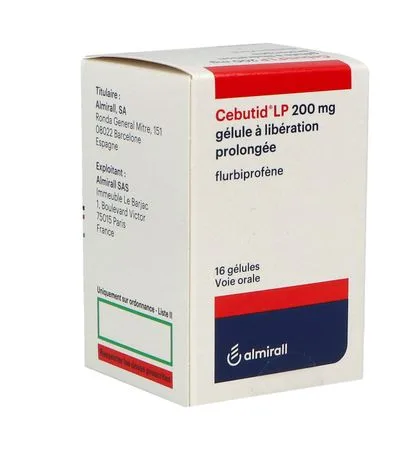
CEBUTID® LP
flurbiprofen
Forms and presentations
Film-coated tablet at 100 mg (white): Pack of 15, under thermoformed blister packs.Prolonged-release capsule at 200 mg (opaque yellow head, transparent yellow body): Bottle of 16.
Composition
| Lozenge: | per tablet |
| Flurbiprofen
|
100 mg |
Excipients with known effect: lactose, glucose, sucrose.
| LP capsule: | per capsule |
| Flurbiprofen
|
200 mg |
Indications
They derive from the anti-inflammatory activity of flurbiprofen, the significance of the intolerance reactions the medicine gives rise to, and its place among the anti-inflammatory products currently available.Indications are limited, in adults and children from 15 years of age, to:
- Tablet at 100 mg and LP capsule at 200 mg:
-
Long-term symptomatic treatment of:
- chronic inflammatory rheumatism, notably rheumatoid polyarthritis, ankylosing spondylarthritis or related syndromes, such as Fiessinger-Leroy-Reiter syndrome and psoriatic rheumatism,
- certain painful and disabling osteoarthritis.
- chronic inflammatory rheumatism, notably rheumatoid polyarthritis, ankylosing spondylarthritis or related syndromes, such as Fiessinger-Leroy-Reiter syndrome and psoriatic rheumatism,
- 100 mg tablet:
-
Short-term symptomatic treatment of acute flares of:
- abarticular rheumatism such as scapulohumeral periarthritis, tendinitis, bursitis,
- osteoarthritis,
- lumbago,
- radiculalgia.
- abarticular rheumatism such as scapulohumeral periarthritis, tendinitis, bursitis,
- Dysmenorrhoea after etiological investigation.
Dosage and administration
DosageCebutid is contraindicated in children under 15 years (see Contraindications).
The occurrence of adverse effects may be minimised by using the lowest possible dose for the shortest duration of treatment necessary to relieve symptoms (see Warnings and Precautions for Use).
- Rheumatic conditions:
-
- 100 mg tablet:
-
- Initial (loading) treatment:
1 tablet at 100 mg, 3 times a day, i.e. 300 mg/day. - Maintenance treatment:
1 tablet at 100 mg, 1 to 2 times a day, i.e. 100 to 200 mg/day.
- Initial (loading) treatment:
-
- LP capsule at 200 mg:
- In adults and children from 15 years of age for whom a dose of 200 mg/day is required: 1 capsule per day.
- Dysmenorrhea:
-
- 100 mg tablet:
- 1 tablet at 100 mg, 2 to 3 times a day, i.e. 200 to 300 mg/day, from the onset of pain until symptoms disappear.
Method of administration:
Oral use.
- Lozenge:
- The tablets are to be swallowed whole without chewing, with a glass of water, preferably during meals.
- Capsule:
- The capsules are to be swallowed with a glass of water, preferably during meals.
Contraindications
This medicine is contraindicated in the following situations:- Hypersensitivity to flurbiprofen or to any of the excipients listed in section Composition.
- History of allergy or asthma triggered by taking this medicine or substances of similar activity such as other NSAIDs, acetylsalicylic acid.
- History of gastrointestinal haemorrhage or perforation during a previous treatment with NSAIDs.
- Active peptic ulcer, history of peptic ulcer or recurrent haemorrhage (2 or more distinct episodes of objectively confirmed haemorrhage or ulceration).
- Severe heart failure, renal or hepatic failure (see Warnings and Precautions for Use).
- Children under 15 years of age.
- Pregnancy, from the beginning of the 6e month (24 weeks of amenorrhea) (see Fertility/Pregnancy/Breastfeeding).
- Oral anticoagulants.
- Other NSAIDs (including salicylates at high doses).
- Heparins (parenteral route).
- Lithium.
- Methotrexate (used at doses above 15 mg/week).
- Pemetrexed.
Warnings and precautions
Warnings:
Risk of fetal death:
Cebutid exposes to a risk of fetal death even after a single dose due to its cardiopulmonary toxicity (constriction of the ductus arteriosus and occurrence of oligohydramnios see Contraindications).
Effects on the unborn child:
Cebutid also exposes the newborn to a risk of kidney damage (renal failure), premature closure of the ductus arteriosus and pulmonary hypertension. See Fertility/Pregnancy/Breastfeeding.
Cebutid is contraindicated in pregnant women from the beginning of the 6e month of pregnancy (24 weeks of amenorrhoea).
In case of planned pregnancy or during the first 5 months (before 24 weeks of amenorrhoea), Cebutid should only be prescribed if absolutely necessary.
Concomitant use of Cebutid with other NSAIDs, including selective cyclo-oxygenase 2 (COX-2) inhibitors, should be avoided.
The occurrence of adverse effects may be minimised by using the lowest possible dose for the shortest duration of treatment necessary to relieve symptoms (see Posology and Method of administration and "Gastrointestinal effects", "Cardiovascular, renal and hepatic disorders" and "Cardiovascular and cerebrovascular effects" below).
Patients with asthma associated with chronic rhinitis, chronic sinusitis and/or nasal polyposis have a higher risk of allergic reactions when taking acetylsalicylic acid and/or non-steroidal anti-inflammatory drugs than the rest of the population.
Administration of this medicinal product may cause an asthma attack, particularly in certain patients allergic to acetylsalicylic acid or to an NSAID (see Contraindications).
- Elderly:
- Elderly patients have an increased risk of adverse effects with NSAIDs, in particular gastrointestinal haemorrhage and perforations which may be fatal (see Posology and Method of administration and below).
- Gastrointestinal effects:
- Gastrointestinal bleeding, ulceration or perforation, which can be fatal, has been reported with all NSAIDs at any time during treatment, with or without warning symptoms or a history of serious gastrointestinal events.
- The risk of gastrointestinal bleeding, ulceration or perforation increases with the dose used in patients with a history of ulcer, particularly in the case of a complication such as bleeding or perforation (see Contraindications) as well as in elderly patients. In these patients, treatment should be started at the lowest possible dose. Mucosal protective treatment (for example misoprostol or a proton pump inhibitor) should be considered for these patients, as well as for patients requiring low-dose acetylsalicylic acid or treated with other medicinal products likely to increase the gastrointestinal risk (see below and Interactions).
- Patients with a gastrointestinal history, especially elderly patients, should report any unusual abdominal symptoms (in particular gastrointestinal bleeding), especially at the start of treatment. Particular attention should be paid to patients receiving concomitant treatments that may increase the risk of ulceration or bleeding, such as oral corticosteroids, oral anticoagulants such as warfarin, selective serotonin reuptake inhibitors (SSRIs), and antiplatelet agents such as acetylsalicylic acid (see Interactions).
- If bleeding or ulceration occurs in a patient receiving Cebutid, treatment must be stopped.
- NSAIDs should be administered with caution and under close supervision in patients with a history of gastrointestinal disease (ulcerative colitis, Crohn's disease), due to the risk of exacerbation of the condition (see Undesirable effects).
- Cardiovascular, renal and hepatic disorders:
- Any administration of NSAIDs may lead to a deficit in prostaglandin synthesis and accelerate the onset of renal failure. The patients most at risk are patients with impaired renal function, impaired cardiac function, impaired hepatic function, patients with hypovolaemia (whatever the cause), patients taking diuretics, and elderly people. In all these patients, diuresis and renal function should be monitored (see Contraindications).
- Flurbiprofen should be administered with caution in patients with a history of heart failure or hypertension, as cases of oedema under flurbiprofen have been reported.
- Cardiovascular and cerebrovascular effects:
- Appropriate monitoring and advice are required in patients with a history of hypertension and/or mild to moderate heart failure, as cases of fluid retention and oedema have been reported in association with NSAID treatment.
- Systemic lupus erythematosus (SLE) and mixed connective tissue disease (Sharp's syndrome): in patients suffering from systemic lupus erythematosus (SLE) and in patients with disorders related to mixed connective tissue disease, the risk of aseptic meningitis is likely to be increased (see Undesirable effects).
- Clinical studies and epidemiological data suggest that the use of certain NSAIDs (especially when used at high doses and over a long period) may be associated with a slight increase in the risk of arterial thrombotic events (for example myocardial infarction, ischaemic heart disease, heart failure or heart attack, stroke). Data are currently insufficient to exclude this increased risk for flurbiprofen.
- Patients with uncontrolled hypertension, congestive heart failure, ischaemic heart disease, peripheral arterial disease, and/or a history of stroke (including transient ischaemic attack) should only be treated with flurbiprofen after careful evaluation of the benefit/risk ratio.
- Similar attention should be paid before initiating long-term treatment in patients with risk factors for cardiovascular disease (such as hypertension, hyperlipidaemia, diabetes or smoking).
- Skin effects:
- Serious skin reactions, some of which have been fatal, including exfoliative dermatitis, Stevens-Johnson syndrome and toxic epidermal necrolysis (Lyell's syndrome) have been very rarely reported during treatment with NSAIDs (see Undesirable effects).
- The incidence of these undesirable effects appears to be higher at the start of treatment, with onset in most cases occurring during the first month of treatment. Cebutid must be stopped at the first appearance of a skin rash, mucosal lesions or any other sign of hypersensitivity.
- Sodium and water retention:
- Fluid and sodium retention with possible oedema, hypertension or worsening of hypertension, worsening of heart failure. Clinical monitoring is necessary from the start of treatment in cases of hypertension or heart failure. A decrease in the effect of antihypertensives is possible (see Interactions).
- Hyperkalaemia:
- Hyperkalemia promoted by diabetes or concomitant treatment with hyperkalemic medicinal products (see Interactions). Regular monitoring of serum potassium must be performed in these circumstances.
- Masking of symptoms of underlying infections:
- Epidemiological studies suggest that systemic non-steroidal anti-inflammatory drugs (NSAIDs) may mask the symptoms of an infection, which may delay the initiation of adequate treatment and thus worsen the outcome of the infection. This phenomenon has been observed in the case of community-acquired bacterial pneumonia and bacterial complications of chickenpox. When Cebutid is administered while the patient has fever or pain related to an infection, it is advised to monitor the infection.
- Lozenge:
- This medicine contains glucose. Its use is not recommended in patients with glucose-galactose malabsorption syndrome (a rare hereditary disease).
- This medicine contains lactose. Patients with galactose intolerance, total lactase deficiency or glucose-galactose malabsorption syndrome (rare hereditary diseases) must not take this medicine.
- This medicine contains sucrose. Patients with fructose intolerance, glucose-galactose malabsorption syndrome or sucrase/isomaltase deficiency (rare hereditary diseases) must not take this medicine.
Interactions
Drug interactionsCertain medicines or therapeutic classes are likely to promote the occurrence of hyperkalaemia: potassium salts, hyperkalaemic diuretics, angiotensin-converting enzyme inhibitors, angiotensin II antagonists, non-steroidal anti-inflammatory drugs, heparins (low molecular weight or unfractionated), immunosuppressants such as ciclosporin or tacrolimus, trimethoprim.
The combination of these medicinal products increases the risk of hyperkalaemia. This risk is particularly important with potassium-sparing diuretics, especially when they are combined with each other or with potassium salts, whereas the combination of an ACE inhibitor and an NSAID, for example, carries a lower risk provided the recommended precautions are implemented.
To learn about the risks and specific levels of constraint for potassium-raising medicinal products, refer to the interactions specific to each substance.
However, some substances, such as trimethoprim, are not subject to specific interactions with regard to this risk. Nevertheless, they may act as contributing factors when combined with other medicines such as those mentioned above.
Not recommended:
Simultaneous administration of flurbiprofen with the following products requires rigorous monitoring of the patient's clinical and biological condition.
- Other NSAIDs: increased risk of gastrointestinal ulceration and bleeding.
- Acetylsalicylic acid at anti-inflammatory doses (≥ 1 g per dose and/or ≥ 3 g per day), and at analgesic or antipyretic doses (≥ 500 mg per dose and/or < 3 g per day): increased risk of ulcerogenic and digestive haemorrhage.
- Oral anticoagulants: increased haemorrhagic risk of the oral anticoagulant (inhibition of platelet function and damage to the gastroduodenal mucosa by NSAIDs). NSAIDs may increase the effects of anticoagulants, such as warfarin (see Warnings and Precautions for Use). If the combination cannot be avoided, close clinical and biological monitoring.
- Unfractionated heparins, low molecular weight heparins and related drugs (at curative doses and/or in elderly subjects): increased haemorrhagic risk (inhibition of platelet function and damage to the gastroduodenal mucosa by NSAIDs). If the combination cannot be avoided, close clinical monitoring (and biological monitoring for unfractionated heparins) is required.
- Lithium: increase in lithium levels which may reach toxic values (decreased renal excretion of lithium). If the combination cannot be avoided, closely monitor lithium levels and adjust the lithium dosage during the combination and after stopping the NSAID.
- Methotrexate, used at doses above 20 mg/week: increased haematological toxicity of methotrexate (decreased renal clearance of methotrexate by anti-inflammatory drugs).
- Pemetrexed (patients with low to moderate renal function, creatinine clearance between 45 ml/min and 80 ml/min): risk of increased toxicity of pemetrexed (decreased renal clearance by NSAIDs).
Requiring precautions for use:
- Ciclosporin, tacrolimus: risk of additive nephrotoxic effects, particularly in elderly subjects. Monitor renal function at the start of treatment with the NSAID.
- Diuretics, angiotensin-converting enzyme (ACE) inhibitors, angiotensin II receptor antagonists: NSAIDs may reduce the effect of diuretics and other antihypertensives (inhibition of vasodilatory prostaglandins by NSAIDs, leading to a decrease in glomerular filtration). In patients with impaired renal function (for example dehydrated patients or elderly patients with impaired renal function), concomitant administration of an angiotensin II converting enzyme (ACE) inhibitor or an angiotensin II receptor antagonist with cyclo-oxygenase inhibitors may lead to a further deterioration of renal function, including acute renal failure, generally reversible. These interactions should be taken into account in patients concomitantly taking flurbiprofen and angiotensin II converting enzyme (ACE) inhibitors or angiotensin II receptor antagonists. Therefore, this combination should be administered with caution, particularly in elderly persons. Patients should be adequately hydrated and monitoring of renal function should be considered after the start of concomitant treatment, and periodically thereafter.
- Methotrexate, used at doses less than or equal to 20 mg/week: increased hematological toxicity of methotrexate (decreased renal clearance of methotrexate by anti-inflammatory drugs). Weekly monitoring of the blood count during the first weeks of the combination. Increased monitoring in case of impairment (even slight) of renal function, as well as in elderly subjects.
- Pemetrexed (patients with normal renal function): risk of increased toxicity of pemetrexed (decreased renal clearance by NSAIDs). Biological monitoring of renal function.
To be taken into account:
- Acetylsalicylic acid at antiplatelet doses (from 50 mg to 375 mg per day in 1 or several doses): increased risk of ulcerogenic and digestive haemorrhage.
- Glucocorticoids (except hydrocortisone in replacement therapy): increased risk of gastrointestinal ulceration and haemorrhage (see Warnings and Precautions for Use).
- Platelet antiaggregants and selective serotonin reuptake inhibitors (SSRIs): increased risk of gastrointestinal haemorrhage (see Warnings and Precautions for Use).
- Unfractionated heparins, low molecular weight heparins (prophylactic doses): increased haemorrhagic risk.
- Beta-blockers (except esmolol): reduced antihypertensive effect (inhibition of vasodilatory prostaglandins by NSAIDs and sodium and water retention with pyrazolone NSAIDs).
Fertility, pregnancy and breastfeeding
Pregnancy:From the beginning of the 6e months of pregnancy (24 weeks of amenorrhoea): any intake of Cebutid, even occasional, is contraindicated. A single intake from 24 weeks of amenorrhoea onwards justifies cardiac and renal ultrasound monitoring of the foetus and/or newborn.
Except in absolute necessity, Cebutid must not be prescribed in a woman planning pregnancy or during the first 5 months of pregnancy (before 24 weeks of amenorrhoea). Where applicable, the dose should be as low as possible and the duration of treatment as short as possible. Prolonged intake is strongly discouraged.
In case of intake from the 20e week of amenorrhoea, cardiac and renal monitoring of the foetus may prove necessary.
In case of oligohydramnios, or constriction of the ductus arteriosus, treatment with Cebutid must be discontinued.
Inhibition of prostaglandin synthesis by NSAIDs may affect the course of pregnancy and/or the development of the embryo or foetus.
Risks associated with use during the 1er trimester:
Epidemiological studies suggest that treatment with a prostaglandin synthesis inhibitor during the 1er trimester of pregnancy is associated with an increased risk of miscarriage.
For certain NSAIDs, an increased risk of cardiac and abdominal wall malformations (gastroschisis) has also been described. The absolute risk of fetal cardiovascular malformation increased from less than 1% to approximately 1,5% with exposure to 1er trimester. The risk appears to increase with dose and duration of treatment.
In animals, administration of a prostaglandin synthesis inhibitor during the organogenesis phase causes increased pre- and post-implantation loss, increased embryo-foetal lethality and a higher incidence of certain malformations, including cardiovascular ones.
Risks associated with use during the 2e and 3e trimesters:
- From the 12e week of amenorrhea
Maternal intake of an NSAID exposes the fetus to a risk of renal functional impairment:- in utero (initiation of fetal diuresis): oligohydramnios may occur shortly after the start of treatment. This is generally reversible upon discontinuation of treatment. It may progress to anhydramnios, particularly with prolonged exposure to an NSAID.
- At birth: renal insufficiency (reversible or not) may be observed, or even persist, especially in cases of late and prolonged exposure, with a risk of delayed severe hyperkalaemia.
- in utero (initiation of fetal diuresis): oligohydramnios may occur shortly after the start of treatment. This is generally reversible upon discontinuation of treatment. It may progress to anhydramnios, particularly with prolonged exposure to an NSAID.
- From the 20e week of amenorrhoea:
In addition to the renal functional impairment (see above), maternal intake of an NSAID exposes the fetus to a risk of constriction of the ductus arteriosus (most often reversible on discontinuation of treatment). - From the 24e week of amenorrhoea:
The risk of cardiopulmonary toxicity (premature closure of the ductus arteriosus and pulmonary arterial hypertension) becomes more significant and may lead to fetal or neonatal right heart failure or even to fetal death in utero. This risk is all the greater and less reversible the closer the intake is to term. This effect exists even for a single intake.
- prolongation of bleeding time due to an anti-aggregant action, which may occur even after administration of very low doses of the medicinal product;
- inhibition of uterine contractions resulting in delayed labour or prolonged delivery.
Breastfeeding:
NSAIDs pass into breast milk, so this medicine is not recommended for women who are breastfeeding.
Fertility in women:Like all NSAIDs, use of this medicinal product may temporarily impair female fertility by affecting ovulation; it is therefore not recommended in women wishing to conceive. In women having difficulty conceiving or undergoing fertility investigations, discontinuation of treatment should be considered.
Driving and using machines
Cebutid has a minor influence on the ability to drive vehicles and use machines. Adverse effects such as dizziness, drowsiness, fatigue and visual disturbances are possible following the intake of NSAIDs. If they occur, patients should not drive or operate machinery.Adverse effects
- Gastrointestinal disorders:
- The most frequently observed adverse effects are gastrointestinal in nature. Peptic ulcers, perforations or gastrointestinal bleeding, sometimes fatal, may occur, particularly in the elderly (see Warnings and Precautions for Use).
- Nausea, vomiting, diarrhea, flatulence, constipation, dyspepsia, ulcerative stomatitis, abdominal pain, melena, hematemesis, exacerbation of colitis or Crohn's disease (see Warnings and Precautions for Use) have been reported following administration of NSAIDs. Less frequently, gastritis has been observed.
- Cardiovascular disorders:
- Oedema, hypertension and heart failure have been reported in association with NSAID treatment.
- Rarely reported: increased blood pressure, tachycardia, chest pain, arrhythmia, palpitations, hypotension, congestive heart failure.
- Data from clinical and epidemiological studies suggest that the use of certain NSAIDs (particularly at high doses and over the long term) may be associated with a slight increase in the risk of thrombotic events (for example myocardial infarction, ischaemic heart disease, heart failure, cerebrovascular accident [see Warnings and Precautions for Use]).
- Blood and lymphatic system disorders:
- Neutropenia, agranulocytosis, haemolytic anaemia, thrombocytopenia.
- Immune system disorders:
- Individuals, particularly those allergic to aspirin and other NSAIDs, have reported: (a) generalised reactions such as anaphylactic reactions, angioedema (Quincke's oedema), (b) hypersensitivity of the respiratory tract, including asthma, worsened asthma, bronchospasm or dyspnoea, or (c) various skin disorders including different types of skin rash, pruritus, urticaria and worsening of chronic urticaria, purpura, and very rarely exfoliative and bullous dermatitis (including Stevens-Johnson syndrome, Lyell's syndrome and erythema multiforme).
- Psychiatric disorders:
- Depression, confusion, hallucinations.
- Nervous system disorders:
- Cerebrovascular accident, optic neuritis, headache, paraesthesia, dizziness and drowsiness. Aseptic meningitis (particularly in patients with autoimmune diseases such as systemic lupus erythematosus and mixed connective tissue diseases) with symptoms of stiff neck, headache, nausea, vomiting, fever and disorientation (see Warnings and Precautions for Use).
- Eye disorders:
- Rarely, blurred vision.
- Ear and labyrinth disorders:
- Tinnitus, vertigo.
- Hepatobiliary disorders:
- Impaired liver function, hepatitis and jaundice. Increased transaminases.
- Renal and urinary tract disorders:
-
- Acute renal failure (ARF) in patients with risk factors (see Warnings and Precautions for Use).
- Functional renal failure that may lead to ARF: isolated cases of interstitial nephritis, acute tubular necrosis, nephrotic syndrome and renal medullary necrosis have been reported.
- Sodium and water retention, hyperkalaemia (see Warnings and Precautions for UseInteractions).
- Acute renal failure (ARF) in patients with risk factors (see Warnings and Precautions for Use).
- General disorders and administration site conditions:
- Malaise, fatigue.
- Skin and subcutaneous tissue disorders:
- Cases of photosensitisation have been reported very rarely.
Reporting suspected adverse reactions after authorisation of the medicinal product is important. It allows continuous monitoring of the benefit/risk balance of the medicinal product. Healthcare professionals should report any suspected adverse reaction via the national reporting system: National Agency for the Safety of Medicines and Health Products (ANSM) and the network of Regional Pharmacovigilance Centres. Website: https://signalement.social-sante.gouv.fr.
Overdose
- Immediate transfer to a hospital setting.
- Rapid removal of the ingested product by gastric lavage.
- Activated charcoal to reduce the reabsorption of flurbiprofen.
- Symptomatic treatment.
Pharmacodynamics
Pharmacotherapeutic class: Non-steroidal anti-inflammatory drug (M: musculoskeletal system).
Flurbiprofen is a non-steroidal anti-inflammatory drug, derived from arylcarboxylic acid, belonging to the propionic group. It has the following properties:- anti-inflammatory activity,
- analgesic activity,
- antipyretic activity,
- inhibition of platelet functions.
All of these properties are linked to inhibition of prostaglandin synthesis.
Pharmacokinetics
- Absorption:
- The pharmacokinetics of flurbiprofen are linear at therapeutic doses.
- No accumulation of the product is observed after repeated administration.
-
- 100 mg tablet:
- The rate of absorption is rapid and complete: peak serum concentration is reached 1 h 30 after oral administration.
-
- LP capsule at 200 mg:
- Each Cebutid LP 200 mg capsule contains microgranules, each formed of a polymer envelope acting as a semi-permeable membrane and enclosing the active product. Dissolution of the capsule envelope allows the microgranules to disperse and water to penetrate inside them. Release of the product occurs after saturation through the semi-permeable membrane.
- The prolonged-release formulation allows complete absorption of flurbiprofen. Maximum plasma concentrations are lower than those obtained with immediate-release forms and are reached later (5,5 h).
- Distribution:
- Binding to plasma proteins is significant: of the order of 99 %.
- Flurbiprofen diffuses into the synovial fluid. A plateau of synovial concentration is reached 6 h after administration and persists for more than 6 h. The maximum concentrations obtained are approximately ¼ of the maximum plasma concentrations.
- Metabolism:
- Flurbiprofen is extensively metabolised by glucuroconjugation. Flurbiprofen is not an enzyme inducer.
- Metabolism is not modified according to age. Studies in elderly subjects show no difference from young adults.
- Excretion:
- Elimination of flurbiprofen is exclusively urinary (100 %), essentially as glucuroconjugated metabolites (75 to 80 %).
- The mean plasma half-life is approximately 3 h 30 to 4 h.
Storage conditions
- Shelf life
- 3 years.
- Lozenge:
- No special precautions for storage.
- Capsule:
- Store at room temperature.
HANDLING/DISPOSAL INSTRUCTIONS
No special requirements.
Prescription, supply and reimbursement
LIST II| Marketing authorisation (AMM) | 3400932226757 (1978, SmPC rev 16.09.2024) tablets 100 mg. |
| 3400933199081 (1989, SmPC rev 16.09.2024) capsules 200 mg. |
| Price: | 2,70 euros (15 tablets at 100 mg). |
| 5,90 euros (16 LP capsules at 200 mg). | |
| Reimbursed by Social Security at 65 %. Collective. | |
ALMIRALL SAS
3-5, bd Galliéni. 92130 Issy-les-Moulineaux
Tel: 01 46 46 19 20. Fax: 01 46 46 19 66
E-mail: pharmacovigilance.fr@almirall.com
Source: VIDAL · Updated on 10/11/2026. This information does not replace advice from a healthcare professional.