
Medicines
SmPC of 08/08/2022
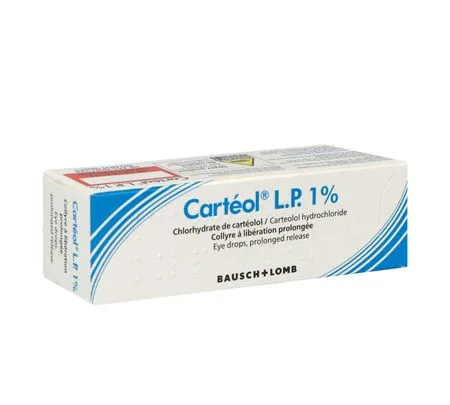
CARTEOL L.P. 1 %, prolonged-release eye drops
Forms and presentations
Prolonged-release eye drops (clear solution, slightly brownish-yellow).
The pH is between 6 and 7 and is compatible with the pH of tears.
Dropper bottle of 3 mL.
Composition
For 100 mL :
Carteolol hydrochloride: 1 g
1 mL of prolonged-release eye drops contains 10 mg of carteolol hydrochloride.
Excipients with known effect : benzalkonium chloride, monosodium phosphate dihydrate, disodium phosphate dodecahydrate.
This medicinal product contains 0,00165 mg of benzalkonium chloride in each drop, equivalent to 0,05 mg/mL, and 0,046 mg of phosphates in each drop, equivalent to 1,4 mg/mL (see sections Warnings and precautions and Adverse effects).
Benzalkonium chloride solution, alginic acid (E400), monosodium phosphate dihydrate (E339), disodium phosphate dodecahydrate (E339), sodium chloride, sodium hydroxide (for pH adjustment), purified water.
Dosage and administration
Dosage
Ophthalmic use.
The eye drops are available in two strengths: 1 % and 2 %.
Instil one drop of CARTEOL L.P. into the affected eye, once daily, in the morning.
- To administer the treatment, instil one drop into the eye while looking upwards and gently pulling the lower eyelid down, then close the eye for a few seconds.
- With the eye closed, carefully wipe away the excess,
- Replace the cap on the bottle after each use.
It is recommended to start treatment by instilling one drop of CARTEOL L.P. at the lowest strength into the affected eye.
However, normalisation of intraocular pressure with carteolol eye drops sometimes requires several weeks; therefore, evaluation of treatment should include measurement of intraocular pressure and examination of the cornea at the start of treatment and, accordingly, regularly after a treatment period of approximately 4 weeks.
The ophthalmologist may, if deemed necessary, combine carteolol eye drops with one or more other antiglaucoma treatments (topical and/or systemic).
Concomitant eye drops must be administered at least 15 minutes before CARTEOL L.P.
Systemic absorption may be reduced by nasolacrimal occlusion or by closing the eyelids for 2 minutes. This method may help to reduce systemic adverse effects and increase local efficacy.
Substitution of a previous treatment
When carteolol prolonged-release eye drops are to replace another anti-glaucoma eye drop, the latter must be stopped at the end of a full day of treatment, and carteolol prolonged-release eye drops must be administered the following day at one drop into the affected eye, once daily.
If carteolol eye drops are to be substituted for several associated antiglaucoma agents, the discontinuations should concern only one medicine at a time.
When switching miotic eye drops to carteolol eye drops, a refraction examination may be necessary when the effects of the miotics have disappeared.
The medical prescription will be accompanied by monitoring of intraocular pressure, especially when initiating treatment.
Paediatric population
The use of these eye drops is not recommended in children and adolescents due to the lack of safety and efficacy data.
Contraindications
The contraindications of beta-blockers administered systemically should be kept in mind, although systemic effects of beta-blockers are only observed exceptionally after ocular instillation.
- Hypersensitivity to the active substance or to any of the excipients listed in section Composition.
- Conditions associated with bronchial hyperreactivity, in particular asthma or a history of asthma, and severe chronic obstructive pulmonary disease.
- Heart failure.
- Cardiogenic shock.
- Second- and third-degree atrioventricular blocks not controlled by a pacemaker.
- Sinus node disease (including sinoatrial block).
- Sinus bradycardia.
- Untreated pheochromocytoma.
Warnings and precautions
Ocular
- Other beta-blocking agents:
The effect on intraocular pressure or the known systemic effects of beta-blockers may be increased when topical beta-blockers are administered to patients already receiving a systemic beta-blocker. The response of these patients should be closely monitored. The use of two topical beta-blockers is not recommended (see section Interactions). - Where this eye drop is administered to reduce intraocular pressure in patients with angle-closure glaucoma, a miotic must be associated.
Indeed, in these patients, the immediate goal of treatment is reopening of the angle, which requires the use of a miotic in order to obtain pupillary constriction, Cartéol having no or little effect on the pupil. - Choroidal detachments have been observed after glaucoma filtration surgery with the administration of treatments that reduce aqueous humor secretion (e.g., timolol, acetazolamide).
- Patients wearing contact lenses.
- There is a risk of contact lens intolerance due to decreased tear secretion, generally associated with beta-blockers.
- The preservative used in this eye drop, benzalkonium chloride, may cause eye irritation; it may deposit on soft contact lenses and alter their color; therefore, this eye drop should not be used when soft lenses are being worn. Lenses must be removed before instillation of the drops and must not be reinserted until at least 15 minutes after use of this eye drop.
- Benzalkonium chloride is known to cause eye irritation, symptoms of dry eye syndrome, and may affect the tear film and corneal surface. Should be used with caution in patients with dry eye and those at risk of corneal damage. Patients should be monitored during prolonged use.
- A decrease in sensitivity to carteolol may appear after prolonged treatment. During long-term treatment, it is advisable to check each year for the absence of therapeutic escape.
Corneal diseases
Ophthalmic beta-blockers may cause ocular dryness. Patients with corneal diseases should be treated with caution.
General
As with other ophthalmic medicines for local use, carteolol hydrochloride passes into the general circulation. Due to the presence of a beta-adrenergic component, carteolol hydrochloride, cardiovascular and pulmonary undesirable effects and other undesirable effects identical to those encountered with systemically administered beta-adrenergic blocking agents may occur. The frequency of systemic undesirable effects after ophthalmic administration is lower than after systemic administration. To reduce systemic absorption, see section Dosage and administration.
Athletes
Athletes are advised that this medicine contains an active ingredient that may induce a positive reaction in tests carried out during anti-doping controls.
Discontinuation of treatment
Never abruptly interrupt systemic beta-blocker treatment, particularly in patients with angina: sudden withdrawal may lead to serious cardiac rhythm disorders, myocardial infarction or sudden death.
The dose must be reduced gradually, that is, over one to two weeks.
Cardiac disorders
In patients with cardiovascular diseases (for example, coronary artery disease, Prinzmetal's angina and heart failure) or hypotension, beta-blocker treatment must be carefully evaluated and treatment with other active ingredients should be considered. In these patients, monitoring must be carried out in order to look for signs of worsening of these conditions or undesirable effects.
Due to their negative dromotropic effect, beta-blockers should be prescribed with caution to patients with first-degree atrioventricular block.
Bradycardia
If the heart rate falls below 50-55 beats per minute at rest and the patient presents symptoms related to bradycardia, the dose must be reduced.
Vascular disorders
Patients with severe peripheral circulatory disorders (that is, severe forms of the disease or of Raynaud's syndrome) must be treated with caution.
Respiratory disorders
In asthmatic patients, respiratory manifestations, including death from bronchospasm, have been reported following administration of certain ophthalmic beta-blockers.
CARTEOL L.P. must be administered with caution in patients with mild to moderate chronic obstructive pulmonary disease (COPD) and should be given only if the benefit appears to outweigh the risk.
Hypoglycaemia/Diabetes
Beta-blockers must be administered with caution in patients prone to spontaneous hypoglycaemia or in patients with unstable diabetes, since beta-blockers may mask the signs and symptoms of acute hypoglycaemia.
Pheochromocytoma
The use of beta-blockers in the treatment of hypertension due to treated pheochromocytoma requires close monitoring of blood pressure.
Elderly subjects, patients with renal and/or hepatic impairment
In these at-risk subjects, and when a beta-blocking eye drop is co-administered with a systemic beta-blocker, a dose adjustment is often necessary.
Psoriasis
Worsening of the disease has been reported under beta-blocker treatment, so the indication should be weighed carefully.
Allergic/anaphylactic reactions
When taking beta-blockers, patients with a history of atopy or severe anaphylactic reaction to a range of allergens may be more reactive to repeated challenge with these types of allergens. In patients who are susceptible to a severe anaphylactic reaction, whatever its origin, in particular to floctafenine, iodinated contrast media, when using anaesthetic products or during desensitisation treatments, beta-blocker treatment may lead to an aggravation of the reaction and resistance to treatment with epinephrine at usual doses.
Surgical anesthesia
Beta-blockers used in ophthalmology may block the effects of systemic beta-agonist agents such as adrenaline. The anaesthetist must be informed when the patient is receiving cartéolol hydrochloride:
- If discontinuation of treatment is considered necessary, a suspension of 48 hours is considered sufficient to allow the return of sensitivity to catecholamines.
- In some cases, beta-blocker treatment cannot be interrupted:
- In patients with coronary insufficiency, it is desirable to continue treatment until surgery, given the risk linked to abrupt withdrawal of beta-blockers,
- In cases of emergency or where discontinuation is not possible, the patient must be protected from vagal predominance by sufficient premedication with atropine, repeated as needed,
- Anaesthesia should use products that are as little myocardial depressant as possible, and blood losses should be compensated.
Thyrotoxicosis
Beta-blockers may mask the signs of hyperthyroidism.
Beta-blockers may mask certain signs of thyrotoxicosis, in particular cardiovascular signs.
Interactions with other medicinal products
The combination of CARTEOL L.P. sustained-release eye drops is not recommended with diltiazem, fingolimod, ozanimod and verapamil (see section Interactions).
Excipients with known effect
Benzalkonium chloride, monosodium phosphate dihydrate, disodium phosphate dodecahydrate.
This medicine contains 0,00165 mg of benzalkonium chloride in each drop, which is equivalent to 0,05 mg/mL, and 0,046 mg of phosphates in each drop, which is equivalent to 1,4 mg/mL.
Interactions
No specific interaction study has been performed with carteolol hydrochloride.
1°) Eye drops in solution
Mydriasis has occasionally been reported when ophthalmic beta-blockers and adrenaline have been used concomitantly.
Therefore, ophthalmological monitoring is necessary in case of concomitant treatment with an eye drop containing adrenaline (risk of mydriasis).
In case of use of several topical ophthalmic medicines, the administration of medicines must be spaced by at least 15 minutes. Ophthalmic ointments must be administered last.
2°) Other medicines
Although the amounts of beta-blockers passing into the systemic circulation are low after ocular instillation, the risk of drug interactions exists. The interactions observed with systemically administered beta-blockers should therefore be taken into account.
Bradycardic medicinal products
Many medicines may cause bradycardia. This is notably the case for class Ia antiarrhythmics, beta-blockers, certain class III antiarrhythmics, certain calcium antagonists, digoxin, pilocarpine, anticholinesterases, etc.
Combinations not recommended (see section Warnings and precautions)
+ Diltiazem
Disorders of automaticity (excessive bradycardia, sinus arrest), disorders of sino-atrial and atrioventricular conduction, and cardiac failure.
Such a combination should only be used under close clinical and ECG monitoring, particularly in elderly patients or at the start of treatment.
+ Fingolimod
Potentiation of bradycardic effects that may have fatal consequences. Beta-blockers are all the more at risk as they prevent adrenergic compensatory mechanisms.
Clinical monitoring and continuous ECG for 24 hours following the first dose.
+ Ozanimod
Potentiation of bradycardic effects which may have fatal consequences. Beta-blockers are all the more at risk as they prevent adrenergic compensation mechanisms.
Clinical monitoring and continuous ECG for at least 6 hours.
+ Verapamil
Automaticity disorders (excessive bradycardia, sinus arrest), sino-atrial and atrioventricular conduction disorder and heart failure.
Such a combination should only be used under close clinical and ECG monitoring, particularly in elderly patients or at the start of treatment.
Associations requiring precautions for use
+ Amiodarone
Automaticity and conduction disorders (suppression of compensatory sympathetic mechanisms).
Clinical monitoring and ECG.
+ Halogenated volatile anaesthetics (desflurane, halothane, isoflurane, methoxyflurane, sevoflurane)
Reduction of compensatory cardiovascular reactions by beta-blockers (beta-adrenergic inhibition may be reversed during surgery by beta-mimetics).
As a general rule, do not stop beta-blocker treatment and, in any case, avoid abrupt withdrawal. Inform the anaesthetist of this treatment.
+ Central antihypertensives (clonidine, guanfacine, methyldopa, moxonidine, rilmenidine)
Significant increase in blood pressure in case of abrupt withdrawal of treatment with the central antihypertensive.
Avoid abrupt withdrawal of treatment with the central antihypertensive. Clinical monitoring.
+ Glinides (nateglinide, repaglinide)
All beta-blockers may mask certain symptoms of hypoglycaemia: palpitations and tachycardia.
Inform the patient and reinforce blood glucose self-monitoring, especially at the beginning of treatment.
+ Gliptins (linagliptin, saxagliptin, sitagliptin, vildagliptin)
All beta-blockers may mask certain symptoms of hypoglycaemia: palpitations and tachycardia.
Inform the patient and reinforce blood glucose self-monitoring, especially at the beginning of treatment.
+ Insulin
All beta-blockers may mask certain symptoms of hypoglycaemia: palpitations and tachycardia.
Inform the patient and reinforce blood glucose self-monitoring, especially at the beginning of treatment.
+ Lidocaine
With intravenous lidocaine: increased plasma concentrations of lidocaine with possible neurological and cardiac adverse effects (decreased hepatic clearance of lidocaine).
Clinical monitoring, ECG and possibly monitoring of plasma lidocaine concentrations during the combination and after discontinuation of the beta-blocker. Adjust the lidocaine dosage if necessary.
+ Propafenone
Disorders of contractility, automaticity and conduction (suppression of compensatory sympathetic mechanisms).
Clinical monitoring and ECG.
+ Substances liable to induce torsades de pointes
(amiodarone, amisulpride, arsenic trioxide, chloroquine, chlorpromazine, citalopram, cocaine, crizotinib, cyamemazine, disopyramide, domperidone, dronedarone, droperidol, erythromycin, escitalopram, flupentixol, fluphenazine, halofantrine, haloperidol, hydroquinidine, hydroxychloroquine, hydroxyzine, levomepromazine, lumefantrine, mequitazine, methadone, moxifloxacin, pentamidine, pimozide, pipamperone, piperaquine, pipotiazine, quinidine, sotalol, spiramycin, sulpiride, tiapride, toremifene, vandetanib, vincamine, zuclopenthixol)
Increased risk of ventricular rhythm disorders, in particular torsades de pointes.
Clinical and electrocardiographic monitoring during the combination.
+ Hypoglycaemic sulfonylureas (glibenclamide, gliclazide, glimepiride, glipizide)
All beta-blockers may mask certain symptoms of hypoglycaemia: palpitations and tachycardia.
Inform the patient and reinforce blood glucose self-monitoring, especially at the start of treatment.
Associations to be taken into account
+ Non-steroidal anti-inflammatory drug NSAID
(aceclofenac, mefenamic acid, niflumic acid, tiaprofenic acid, alminoprofen, celecoxib, dexketoprofen trometamol, diclofenac, etodolac, etoricoxib, fenoprofen, flurbiprofen, ibuprofen, indomethacin, ketoprofen, meloxicam, morniflumate, nabumetone, naproxen, nimesulide, parecoxib, piroxicam, rofecoxib, sulindac, tenoxicam)
Reduction of the antihypertensive effect (inhibition of vasodilatory prostaglandins by NSAIDs).
+ Alpha-blockers for urological use (alfuzosin, doxazosin, prazosin, silodosin, tamsulosin, terazosin)
Increased hypotensive effect, increased risk of orthostatic hypotension.
+ Alpha-blocking antihypertensives (doxazosin, prazosin, urapidil)
Increased hypotensive effect, increased risk of orthostatic hypotension.
+ Other bradycardic agents
(acebutolol, ambenonium, amiodarone, atenolol, betaxolol, bisoprolol, carvedilol, celiprolol, clonidine, crizotinib, digoxin, diltiazem, disopyramide, donepezil, dronedarone, esmolol, fampridine, fingolimod, galantamine, hydroquinidine, ivabradine, labetalol, levobunolol, mefloquine, metoprolol, midodrine, nadolol, nebivolol, neostigmine, pasireotide, pilocarpine, pindolol, propranolol, pyridostigmine, quinidine, rivastigmine, sotalol, tertatolol, thalidomide, timolol, verapamil)
Risk of excessive bradycardia (additive effects).
+ Beta-2-mimetics (bambuterol, indacaterol, olodaterol, salbutamol, terbutaline, vilanterol)
Risk of reciprocal reduced efficacy through pharmacodynamic antagonism.
+ Dihydropyridines (amlodipine, clevidipine, felodipine, isradipine, lacidipine, lercanidipine, manidipine, nicardipine, nifedipine, nimodipine, nitrendipine)
Hypotension, heart failure in patients with latent or uncontrolled heart failure (additive negative inotropic effects). The beta-blocker may also minimise the reflex sympathetic reaction triggered by excessive haemodynamic repercussions.
+ Dipyridamole
With dipyridamole given by injection: increased antihypertensive effect.
+ Medicinal products causing orthostatic hypotension
(alfuzosin, alimemazine, alizapride, amantadine, amifostine, amisulpride, amitriptyline, amoxapine, apomorphine, aripiprazole, avanafil, baclofen, bromocriptine, chlorpromazine, clomipramine, clozapine, cyamemazine, isosorbide dinitrate, dosulepin, doxazosin, doxepin, droperidol, entacapone, flupentixol, fluphenazine, haloperidol, imipramine, isosorbide, levodopa, levomepromazine, levosimendan, lisuride, loxapine, maprotiline, metopimazine, molsidomine, nicorandil, olanzapine, oxomemazine, paliperidone, penfluridol, perindopril, pimozide, pipamperone, pipotiazine, piribedil, pramipexole, prazosin, promethazine, propericiazine, quetiapine, rasagiline, riociguat, risperidone, ropinirole, rotigotine, selegiline, sildenafil, silodosin, sulpiride, tadalafil, tamsulosin, terazosin, tiapride, tolcapone, trimipramine, trinitrine, vardenafil, vortioxetine, zuclopenthixol)
Risk of increased hypotension, particularly orthostatic hypotension
Fertility, pregnancy and breastfeeding
The systemic passage of beta-blockers administered by the ocular route is lower than by the general route but nevertheless real.
Pregnancy
There are no relevant data concerning the use of carteolol hydrochloride in pregnant women.
Carteolol hydrochloride should not be used during pregnancy except in cases of absolute necessity. To reduce systemic absorption, see the section Dosage and administration.
Epidemiological studies have not revealed a malformative effect but have shown a risk of intrauterine growth retardation when beta-blockers are administered orally. In addition, signs and symptoms of a beta-blocking effect (for example: bradycardia, hypotension, respiratory distress and hypoglycaemia) have been observed in the newborn when beta-blockers had been administered until delivery. If CARTEOL L.P. is administered until delivery, the newborn should be closely monitored during the first days of life.
Breast-feeding
Beta-blockers are excreted in breast milk. However, at the therapeutic doses of carteolol hydrochloride contained in the eye drops, it is unlikely that the quantity passing into breast milk would be sufficient to cause clinical symptoms of beta-blockers in the infant. To reduce systemic absorption, see section Dosage and administration.
Driving and using machines
This eye drop solution has undesirable effects (in particular visual disturbances) that may compromise the ability to drive vehicles and use machines.
Adverse effects
Like other topically applied ophthalmic medicines, this beta-blocker eye drop solution is absorbed into the systemic circulation and may therefore induce undesirable effects similar to those observed with systemically administered beta-blockers. The incidence of systemic drug-related undesirable effects is lower after ophthalmic administration than after systemic administration. The undesirable effects mentioned include those observed with the class of ophthalmic beta-blockers.
The following undesirable effects have been reported with carteolol ophthalmic solution, either during clinical trials or after marketing.
Adverse effects are classified according to their frequency, as follows:
Very common (≥ 1/10), Common (≥ 1/100/< 1/10), Uncommon (≥ 1/1 000/< 1/100), Rare (≥ 1/10 000/< 1/1 000), Very rare (< 1/10 000) and Frequency not known (cannot be estimated from the available data).
Additional side effects have been observed with ophthalmic beta-blockers and may occur with CARTEOL L.P.
Immune system disorders:
Frequency not known: Systemic allergic reactions including angioedema, urticaria, localised and generalised rash, pruritus, anaphylactic reaction.
Metabolism and nutrition disorders:
Frequency not known: Hypoglycaemia.
Psychiatric disorders:
Frequency not known: Insomnia, depression, nightmares, decreased libido.
Nervous system disorders:
Common: Dysgeusia.
Uncommon: Vertigo.
Frequency not known: Syncope, cerebrovascular accident, cerebral ischaemia, worsening of signs of myasthenia gravis, paraesthesia, headache, amnesia.
Eye disorders:
Common: Signs and symptoms of ocular irritation (for example burning), eye pain (for example, tingling), itching of the eye, increased lacrimation, ocular hyperaemia, conjunctival hyperaemia, conjunctivitis, keratitis.
Frequency not known: Blepharitis, blurred vision, choroidal detachment after filtering surgery (see section Warnings and precautions), ocular hypoaesthesia, dry eye, corneal erosion, ptosis, diplopia. Refractive disorder (due to discontinuation of miotic treatment in certain cases).
A few very rare cases of corneal calcification have been reported in association with the use of drops containing phosphates in some patients with severely damaged corneas.
Cardiac disorders:
Frequency not known: Bradycardia, palpitations, arrhythmia, congestive heart failure, atrioventricular block, cardiac arrest, cardiac failure.
Vascular disorders:
Frequency not known: Hypotension, Raynaud's syndrome, cold extremities, intermittent claudication.
Respiratory, thoracic and mediastinal disorders:
Frequency not known: Bronchospasm (mainly in patients with pre-existing bronchospastic disease), dyspnoea, cough.
Gastrointestinal disorders:
Frequency not known: Nausea, dyspepsia, diarrhoea, dry mouth, abdominal pain, vomiting.
Skin and subcutaneous tissue disorders:
Frequency not known: Alopecia, psoriasiform dermatitis, worsening of psoriasis, rash.
Musculoskeletal and connective tissue disorders:
Uncommon: Myalgia, muscle contractures.
Frequency not known: Systemic lupus erythematosus.
Reproductive system and breast disorders:
Frequency unknown: Sexual dysfunction, erectile dysfunction.
General disorders and administration site conditions:
Frequency unknown: Asthenia/fatigue, chest pain, oedema.
Investigations:
Rare: Appearance of antinuclear antibodies.
Reporting of suspected adverse reactions
Reporting suspected adverse reactions after authorisation of the medicinal product is important. It allows continued monitoring of the benefit/risk balance of the medicinal product. Healthcare professionals are asked to report any suspected adverse reactions via the national reporting system: National Agency for the Safety of Medicines and Health Products (ANSM) and the network of Regional Pharmacovigilance Centres - Website: www.signalement-sante.gouv.fr.
Overdose
Although the amounts of beta-blockers passing into the systemic circulation are low after ocular instillation, the risk of overdose must be kept in mind.
Experience of overdose by the ocular route is limited.
In case of accidental ocular overdose, rinse the eyes with a sterile sodium chloride solution at 9 mg/mL (0,9 %).
In case of accidental oral ingestion or misuse, the symptoms and management are modelled on those of a systemic beta-blocker overdose.
Pharmacodynamics
Pharmacotherapeutic class: Beta-blocking agent, ATC code: S01ED05.
General
Carteolol is a non-cardioselective beta-blocker, with partial agonist activity [moderate intrinsic sympathomimetic activity (ISA)] and a non-significant membrane-stabilising effect (local anaesthetic or quinidine-like).
Ocular
- Carteolol hydrochloride eye drops lower intraocular pressure, whether or not associated with glaucoma, by reducing the secretion of aqueous humour.
- Its activity usually becomes apparent about 30 minutes after instillation, reaches its maximum in 2 to 4 hours and is still present after 24 hours.
- Stability of the hypotensive effect over time: the effect may remain constant for one year.
- A decrease in sensitivity to carteolol hydrochloride is nevertheless possible, particularly after longer treatment.
- There is practically no change in pupil diameter or accommodation.
The excipient of CARTEOL L.P. contains a water-soluble polymer (alginic acid) that has physical properties (such as bioadhesiveness, ionic interactions...) allowing the frequency of daily instillations to be reduced to a single instillation.
Pharmacokinetics
The mean plasma concentrations observed after 2 months of repeated instillations of CARTEOL L.P. 2 % in glaucoma patients are lower with the prolonged-release formulation administered once daily (Cmax = 1,72 ng/mL) than with the conventional formulation administered twice daily (Cmax = 3,64 ng/mL).
Although renal function is important for elimination, no study has been conducted in patients with renal impairment.
Preclinical safety
Preclinical data from conventional tests of safety pharmacology, repeated-dose toxicity, genotoxicity or carcinogenicity did not reveal any particular risk in humans.
In reproductive toxicity studies, embryotoxicity was demonstrated at high oral doses, corresponding to systemic exposure levels considered sufficiently high compared with the systemic exposure associated with clinical use of CARTEOL eye drops. Carteolol showed no teratogenic properties in reproduction studies.
It has been reported in rats that carteolol hydrochloride can cross the placental barrier and is weakly excreted in milk.
INSTRUCTIONS FOR THE PREPARATION OF RADIOPHARMACEUTICALS
Any unused medicinal product or waste material should be disposed of in accordance with local requirements.
Prescription, supply and reimbursement
| Marketing authorisation (AMM) |
|
| Price: |
|
Collection.
CHAUVIN Laboratory
416, rue Samuel-Morse. CS 99535. 34961 Montpellier
Tel: 04 67 12 30 30
Source: VIDAL · Updated on 10/11/2026. This information does not replace advice from a healthcare professional.