
Medicines
SmPC of 05/10/2026
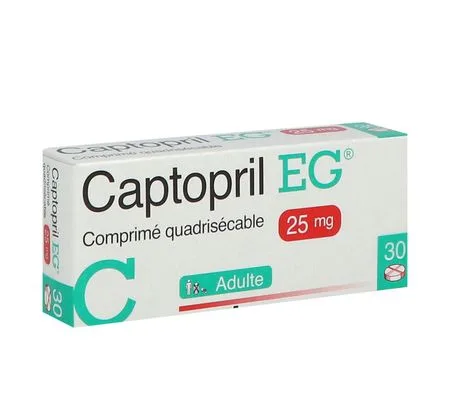
CAPTOPRIL EG 25 mg, quadrisect tablet
Forms and presentations
Tablets.
Flat, round, white tablets with a cross-shaped break line on both faces.
Diameter: 8 mm
The tablet is scored. Therefore the tablet can be divided into equal doses.
Composition
Captopril..........................................................................................................................................................25 mg
For a quadrisect tablet.
Excipient with known effect: lactose monohydrate
Each tablet contains 65 mg of lactose monohydrate.
For the full list of excipients, see section Composition.
Microcrystalline cellulose, lactose monohydrate, pregelatinised maize starch, stearic acid.
Indications
Hypertension: CAPTOPRIL EG is indicated in the treatment of hypertension.
Heart failure: CAPTOPRIL EG is indicated in the treatment of chronic heart failure with left ventricular systolic dysfunction, in combination with diuretics and, if necessary, digitalis glycosides and beta-blockers.
Myocardial infarction:
• Short-term treatment (4 weeks): CAPTOPRIL EG is indicated in any clinically stable patient within 24 hours following an infarction.
• Long-term prevention of symptomatic heart failure: CAPTOPRIL EG is indicated in clinically stable patients with asymptomatic left ventricular dysfunction (ejection fraction ≤ 40 %).
Type 1 diabetic nephropathy: CAPTOPRIL EG is indicated in the treatment of diabetic nephropathy with macroproteinuria in type 1 diabetics (see section Pharmacodynamics).
Dosage and administration
Dosage
The dose must be adjusted individually according to the patient's profile (see section Warnings and precautions) and the effect on blood pressure. The maximum recommended daily dose is 150 mg.
CAPTOPRIL EG may be taken before, during or after meals.
Hypertension: the recommended initial dose is 25-50 mg/day divided into two doses. At intervals of at least 2 weeks, the dose may be increased up to 100-150 mg/day, in two doses, in order to reach the target blood pressure values. Captopril may be used alone or in combination with other antihypertensives (see sections Contraindications, Warnings and precautions, Interactions and Pharmacodynamics), especially thiazide diuretics. A once-daily dosing regimen may be indicated when antihypertensives such as thiazide diuretics are added to the treatment at the same time.
In patients showing a strong activity of the renin-angiotensin-aldosterone system (hypovolaemia, renovascular hypertension and cardiac decompensation), it is recommended to start with a single dose of 6,25 mg or 12,5 mg. This treatment should preferably be initiated under close medical supervision. These doses may then be administered twice daily.
The dose may be gradually increased up to 50 mg/day in one or two doses and, if necessary, up to 100 mg/day in one or 2 doses.
Heart failure: treatment of heart failure with captopril must be initiated under close medical supervision. The usual initial dose is 6,25 mg-12,5 mg two or three times a day. Titration up to the maintenance dose (75-150 mg/day) should be based on the patient's response, clinical condition and tolerability, and the maximum maintenance dose is 150 mg/day in divided doses. Doses should be increased – at intervals of at least 2 weeks – according to the patient's response.
Myocardial infarction:
Short-term treatment: treatment with captopril should be initiated in a hospital setting as soon as possible after the onset of signs and/or symptoms in haemodynamically stable patients. A test dose of 6,25 mg should be administered, followed 2 hours later by a dose of 12,5 mg and, 12 hours later, by a dose of 25 mg. From the following day, captopril may be administered at a dose of 100 mg/day in 2 daily doses for 4 weeks if no negative haemodynamic reaction occurs. At the end of the 4 weeks of treatment, the patient's condition should be reassessed before deciding on the treatment to be initiated post-infarction.
Long-term treatment: if treatment with captopril is not initiated within the first 24 hours following acute myocardial infarction, it is suggested to initiate treatment between day 3e and day 16e post-infarction as soon as the patient meets the conditions necessary for treatment (stable haemodynamics and treatment of any residual ischaemia). Treatment should be initiated in a hospital setting under close medical supervision (especially blood pressure monitoring) until the dose of 75 mg is reached. The initial dose should be low (see section Warnings and precautions), especially if the patient is normotensive or hypotensive at the start of treatment. Treatment should be initiated at a dose of 6,25 mg, then 12,5 mg three times a day for 2 days and then 25 mg three times a day if no negative haemodynamic reaction is observed. The recommended dose for effective cardioprotection during long-term treatment is 75 mg to 150 mg/day in 2 or 3 doses. In the case of symptomatic hypotension, as in heart failure, the dose of diuretics and/or other concomitant vasodilators may be reduced to reach the steady-state dose of captopril. If necessary, the captopril dose should be adjusted to the patient's clinical responses. Captopril may be used in combination with other treatments for myocardial infarction, such as thrombolytics, beta-blockers and acetylsalicylic acid.
Type 1 diabetic nephropathy: in patients with diabetic nephropathy type 1, the recommended daily dose of captopril is 75-100 mg in divided doses. If a greater blood pressure reduction proves necessary, other antihypertensive agents may be added to the treatment (see sections Contraindications, Warnings and precautions, Interactions and Pharmacodynamics).
Renal impairment
As captopril is mainly excreted by the kidneys, the dose should be reduced or the interval between doses extended in patients with reduced renal function. If concomitant diuretic treatment is necessary, a loop diuretic (e.g. furosemide) is preferred over a thiazide diuretic in patients with severe renal impairment.
In patients with impaired renal function, the following daily doses are recommended to avoid accumulation of captopril.
|
Creatinine clearance (ml/min/1,73 m2) |
Initial daily dose (mg) |
Maximum daily dose (mg) |
|
> 40 21-40 10-20 < 10 |
25-50 25 12,5 6,25 |
150 100 75 37,5 |
Elderly patients
As with other antihypertensive agents, treatment should start with a lower dose (6,25 mg twice a day) in elderly patients with decreased renal function and other organ dysfunction (see above and section Warnings and precautions).
The dose should be titrated according to the blood pressure response and kept as low as possible to achieve adequate blood pressure control.
Paediatric population
The efficacy and safety of captopril have not been fully established. In children and adolescents, treatment with captopril should be initiated under close medical supervision. The initial dose of captopril is approximately 0,3 mg/kg body weight. In patients requiring special precautions (children with reduced renal function, premature infants, babies and infants, as their renal function differs from that of older children and adults), the initial dose must not exceed 0,15 mg captopril/kg body weight. In general, captopril is administered 3 times a day in children, but the dose and dosing interval should be individually adjusted according to the patient's response.
Method of administration
Oral use.
Contraindications
• Hypersensitivity to the active substance, to any other angiotensin-converting enzyme (ACE) inhibitor or to any of the excipients listed in section Composition.
• History of angioedema associated with previous treatment with an ACE inhibitor.
• Hereditary/idiopathic angioedema.
• Second and third trimesters of pregnancy (see sections Warnings and precautions and Fertility, pregnancy and breastfeeding).
• The combination of CAPTOPRIL EG with medicinal products containing aliskiren is contraindicated in patients with diabetes or renal impairment (GFR [glomerular filtration rate] < 60 ml/min/1,73 m2) (see sections Interactions and Pharmacodynamics).
• Combination with sacubitril/valsartan treatment. Captopril must not be initiated less than 36 h after the last dose of sacubitril/valsartan (see also sections Warnings and precautions and Interactions).
Warnings and precautions
Hypotension
Excessive hypotension has rarely been observed in patients with uncomplicated hypertension.
Symptomatic hypotension is probably more common in hypertensive patients with volume and/or sodium depletion due to aggressive diuretic treatment, a low-sodium diet, diarrhoea, vomiting or haemodialysis. Volume and/or sodium depletion must be corrected before administration of an ACE inhibitor, and reducing the initial dose should be considered.
Patients with heart failure have an increased risk of hypotension. Therefore, starting with a lower dose should be considered when initiating ACE inhibitor treatment. Caution is required when increasing the dose of captopril or of a diuretic in patients with heart failure.
As is the case for all antihypertensives, excessive blood pressure reduction in patients with ischaemic cardiovascular or cerebrovascular disease may increase the risk of myocardial infarction or stroke. If hypotension occurs, the patient should be placed in the supine position. Volume replacement with normal saline given intravenously may be necessary.
Renovascular hypertension
ACE inhibitor treatment carries an increased risk of hypotension and renal insufficiency in patients with bilateral renal artery stenosis or unilateral stenosis of a single functioning kidney. Renal function may be abolished with even slight changes in serum creatinine levels. In these patients, treatment should begin, under close medical supervision, with low doses, with cautious up-titration and monitoring of renal function.
Renal impairment
When renal function is impaired (creatinine clearance ≤ 40 ml/min.), the initial dose of captopril must be adapted to the patient's creatinine clearance (see section Dosage and administration) and then according to the individual response to treatment. Regular monitoring of potassium and creatinine levels is part of the normal medical management of these patients.
Hypersensitivity/angioedema
Angioedema affecting the extremities, face, lips, mucous membranes, tongue, glottis and/or larynx has been reported in patients treated with ACE inhibitors, including captopril. This can occur at any time during treatment, particularly during the first weeks of treatment. However, in rare cases, severe angioedema may develop after several months or years of long-term ACE inhibitor treatment. In these cases, captopril should be stopped immediately and appropriate monitoring of the patient should be instituted to ensure complete resolution of symptoms before discharge. In cases where the oedema is confined to the face and lips, the condition usually resolves without treatment, although antihistamines have proven useful in relieving symptoms. Angioedema associated with laryngeal oedema may be fatal. Where there is involvement of the tongue, glottis or larynx likely to cause airway obstruction, appropriate treatment should be administered promptly, which may include subcutaneous injection of adrenaline at 1:1000 (0,3 to 0,5 ml) and/or measures to ensure airway patency.
Black patients receiving ACE inhibitors have been reported to have an increased incidence of angioneurotic oedema compared with non-Black patients.
Patients with a history of angioneurotic oedema not related to ACE inhibitor treatment may be at increased risk of angioneurotic oedema when receiving an ACE inhibitor (see section Contraindications). Rare cases of intestinal angioedema have been reported in patients treated with ACE inhibitors. These patients presented with abdominal pain (with or without nausea or vomiting); in some cases there was no prior facial angioedema and C1-esterase levels were normal. Angioedema was diagnosed by investigations such as abdominal CT scan, ultrasound or during surgery, and symptoms resolved after ACE inhibitor discontinuation. Intestinal angioedema should be included in the differential diagnosis of patients treated with ACE inhibitors presenting with abdominal pain (see section Adverse effects).
Concomitant use of ACE inhibitors and sacubitril/valsartan is contraindicated due to the increased risk of angioedema. Treatment with sacubitril/valsartan must not be initiated less than 36 hours after the last dose of captopril. Treatment with captopril must not be initiated less than 36 hours after the last dose of sacubitril/valsartan (see sections Contraindications and Interactions).
Concomitant use of ACE inhibitors with racecadotril, mTOR inhibitors (for example sirolimus, everolimus, temsirolimus) and vildagliptin may lead to an increased risk of angioedema (for example, swelling of the airways or tongue, with or without respiratory insufficiency) (see section Interactions). Caution is required when initiating treatment with racecadotril, mTOR inhibitors (e.g. sirolimus; everolimus; temsirolimus) and vildagliptin in a patient already taking an ACE inhibitor.
Autoimmune insulin syndrome (AIS)
Cases of autoimmune insulin syndrome (AIS), including severe hypoglycaemic events, have been reported during treatment with captopril (see section Adverse effects). If AIS is suspected, treatment with captopril should be discontinued and an appropriate alternative treatment should be instituted.
Cough
Cough has been reported following the use of angiotensin-converting enzyme inhibitors. It is non-productive, persistent, and resolves upon discontinuation of treatment.
Hepatic impairment
ACE inhibitors have rarely been associated with a syndrome beginning with cholestatic jaundice and progressing to fulminant hepatic necrosis and (sometimes) death. The mechanism of this syndrome is unknown. Patients receiving ACE inhibitors who develop jaundice or marked elevation of hepatic enzymes should discontinue ACE inhibitor treatment and receive appropriate medical follow-up.
Serum potassium
ACE inhibitors, including captopril, can cause hyperkalaemia because they inhibit the release of aldosterone. The effect is generally not significant in patients with normal renal function. However, hyperkalaemia may occur in patients with renal impairment, diabetes mellitus and/or in patients taking potassium supplements (including salt substitutes), potassium-sparing diuretics, other medicinal products that increase serum potassium (e.g. heparin, trimethoprim or co-trimoxazole also known as trimethoprim/sulfamethoxazole), and in particular aldosterone antagonists or angiotensin receptor antagonists. Potassium-sparing diuretics and angiotensin receptor antagonists should be used with caution in patients receiving ACE inhibitors, and serum potassium and renal function should be monitored (see section Interactions).
Mitral and aortic valve stenosis/obstructive hypertrophic cardiomyopathy
ACE inhibitors should be used with caution in patients with left ventricular valvular disease and outflow tract obstruction, and should be avoided in cases of cardiogenic shock and haemodynamically significant obstruction.
Neutropenia/agranulocytosis
Neutropenia/agranulocytosis, thrombocytopenia and anaemia have been reported in patients receiving angiotensin-converting enzyme inhibitors, including captopril. Neutropenia occurs rarely in patients with normal renal function and no other risk factors.
Captopril should be used with extreme caution in patients with collagen vascular disease, in those receiving immunosuppressive treatment, in patients treated with allopurinol or procainamide, or in the presence of a combination of these risk factors, particularly in the presence of pre-existing renal impairment. Some of these patients developed serious infections which, in a small number of cases, did not respond to intensive antibiotic therapy.
If captopril is administered to these patients, it is advised to perform a white blood cell count and differential count before treatment is started, then every two weeks during the first three months of captopril treatment and periodically thereafter. During treatment, every patient should be instructed to report any sign of infection (e.g. sore throat, fever) and a differential leucocyte count should be performed. Captopril and any concomitant treatment responsible (see section Interactions) will be discontinued if neutropenia (neutrophils < 1 000/mm3) is detected or suspected.
In most patients, the neutrophil count returns rapidly to normal after discontinuation of captopril.
Proteinuria
Proteinuria is possible, especially in patients with pre-existing decreased renal function or treated with relatively high doses of ACE inhibitors.
Total proteinuria greater than 1 g/day has been observed in approximately 0,7 % of patients treated with captopril. Most patients showed signs of pre-existing renal pathology or had received relatively high doses of captopril (more than 150 mg/day) or both. Nephrotic syndrome developed in approximately 1/5 of patients with proteinuria. In most cases, it decreased or disappeared within 6 months, regardless of continuation of captopril treatment. Renal function parameters – such as urea and serum creatinine – were rarely altered in patients with proteinuria.
In patients with pre-existing renal pathology, proteinuria should be determined (dipstick on the first morning urine) before treatment and periodically thereafter.
Anaphylactoid reactions during desensitisation treatment
Persistent and potentially fatal anaphylactoid reactions have rarely been reported in patients undergoing desensitisation treatment against Hymenoptera venom while being treated with another ACE inhibitor. In these same patients, these reactions were avoided by temporarily discontinuing the ACE inhibitor, but they reappeared upon inadvertent re-exposure. Caution is therefore warranted in patients taking ACE inhibitors who are undergoing such desensitisation therapy.
Anaphylactoid reactions during dialysis with high-flux membranes/lipoprotein apheresis
Anaphylactoid reactions have been reported in patients undergoing haemodialysis with high-flux membranes or undergoing LDL (low-density lipoprotein) apheresis with dextran sulphate adsorption. In these patients, consideration should be given to using a different type of dialysis membrane or a medicinal product from a different class.
Surgery/anaesthesia
Hypotension is possible in patients undergoing major surgery or during treatment with anaesthetics known to lower blood pressure. If hypotension occurs, it can be corrected by volume expansion.
Diabetic patients
Blood glucose should be closely monitored in diabetic patients previously treated with oral antidiabetic agents or insulin, particularly during the first month of ACE inhibitor treatment.
Risk of hypokalaemia
The combination of an ACE inhibitor with a thiazide diuretic does not exclude the occurrence of hypokalaemia. Serum potassium should be monitored regularly.
Association with lithium
Captopril is not recommended in combination with lithium due to potentiation of lithium toxicity (see section Interactions).
Ethnic specificity
As observed with other angiotensin-converting enzyme inhibitors, captopril is apparently less active on blood pressure in Black people than in other people, probably due to a higher prevalence of a low renin level in the hypertensive Black population.
Pregnancy
ACE inhibitors must not be initiated during pregnancy. Unless continued ACE inhibitor treatment is considered essential, it is recommended to change the antihypertensive treatment in patients planning pregnancy to a medicinal product with an established safety profile during pregnancy. Upon diagnosis of pregnancy, ACE inhibitor treatment should be stopped immediately and, if necessary, alternative treatment should be started (see sections Contraindications and Fertility, pregnancy and breastfeeding).
Dual blockade of the renin-angiotensin-aldosterone system (RAAS)
It is established that the combination of angiotensin-converting enzyme (ACE) inhibitors, angiotensin II receptor antagonists (ARB) or aliskiren increases the risk of hypotension, hyperkalaemia and impaired renal function (including the risk of acute renal failure). Consequently, dual blockade of the RAAS through the combined use of ACE inhibitors, ARBs or aliskiren is not recommended (see sections Interactions and Pharmacodynamics).
Nevertheless, if such a combination is considered absolutely necessary, it may only be carried out under the supervision of a specialist and with close and frequent monitoring of renal function, blood electrolytes and blood pressure.
ACE inhibitors and angiotensin II receptor antagonists must not be used concomitantly in patients with diabetic nephropathy.
Lactose
This medicine contains lactose. Its use is not recommended in patients with galactose intolerance, total lactase deficiency or glucose-galactose malabsorption syndrome (rare hereditary diseases).
Interactions
Data from clinical trials have shown that dual blockade of the renin-angiotensin-aldosterone system (RAAS) through concomitant use of angiotensin-converting enzyme inhibitors, angiotensin II receptor antagonists or aliskiren is associated with a higher frequency of adverse events such as hypotension, hyperkalaemia and impaired renal function (including acute renal failure) compared with use of a single RAAS-acting medicinal product (see sections Contraindications, Warnings and precautions and Pharmacodynamics).
Medicinal products increasing the risk of angioedema
Concomitant use of ACE inhibitors and sacubitril/valsartan is contraindicated due to the increased risk of angioedema (see sections Contraindications and Warnings and precautions).
Concomitant use of ACE inhibitors with racecadotril, mTOR inhibitors (e.g. sirolimus, everolimus, temsirolimus) and vildagliptin may lead to an increased risk of angioedema (see section Warnings and precautions)
Potassium-sparing diuretics, potassium supplements or potassium-containing salt substitutes
ACE inhibitors attenuate potassium losses induced by diuretics. Although serum potassium usually remains within normal limits, hyperkalaemia may occur in some patients treated with captopril. Potassium-sparing diuretics (e.g. spironolactone, triamterene or amiloride), potassium supplements or potassium-containing salt substitutes can significantly increase serum potassium levels. Caution is also required when captopril is co-administered with other agents that increase serum potassium, such as trimethoprim and co-trimoxazole (trimethoprim/sulfamethoxazole), since trimethoprim is known to act as a potassium-sparing diuretic, like amiloride. Therefore, the combination of captopril with the medicinal products mentioned above is not recommended. If concomitant use is indicated, they should be used with caution and with frequent monitoring of serum potassium levels.
Diuretics (thiazide or loop diuretics)
Prior treatment with high doses of diuretics may result in volume depletion and carries a risk of hypotension when starting treatment with captopril (see section Warnings and precautions). Hypotensive effects may be reduced by stopping the diuretic, by administering fluid or salt, or by initiating treatment with a low dose of captopril. However, specific studies with hydrochlorothiazide or furosemide have not shown any clinically significant drug interaction.
Other antihypertensive agents
Captopril has been safely administered with other widely used antihypertensive agents (e.g. beta-blockers, methyldopa and long-acting calcium antagonists). Concomitant use of these medicinal products may enhance the hypotensive effects of captopril. Caution is advised during treatment with nitroglycerin and other nitrates or other vasodilators.
Alpha-blockers
Concomitant use of alpha-blockers may increase the antihypertensive effects of captopril and increase the risk of orthostatic hypotension.
Treatment of acute myocardial infarction
Captopril may be used with acetylsalicylic acid (at cardiological doses), thrombolytics, beta-blockers and/or nitrates in patients with myocardial infarction.
Lithium
A reversible increase in serum lithium levels and toxicity has been reported with concomitant use of lithium and ACE inhibitors. Concomitant use of thiazide diuretics may further increase the already elevated risk of lithium toxicity with ACE inhibitors. Concomitant administration of lithium and captopril should be undertaken with caution. If this combination proves necessary, careful monitoring of serum lithium levels is recommended during concomitant use (see section Warnings and precautions).
Tricyclic antidepressants/antipsychotics/anaesthetics
ACE inhibitors may enhance the hypotensive effects of certain anaesthetic medicinal products, tricyclic antidepressants and antipsychotics (see section Warnings and precautions).
Postural hypotension is possible.
Allopurinol, procainamide, cytostatics or immunosuppressants
Concomitant administration of these medicinal products and ACE inhibitors may increase the risk of leukopenia, especially if the latter are used at higher doses than currently recommended.
Non-steroidal anti-inflammatory drugs (NSAIDs)
When ACE inhibitors are administered concomitantly with non-steroidal anti-inflammatory drugs (i.e. selective COX-2 inhibitors, acetylsalicylic acid (> 3 g/day) and non-selective NSAIDs), attenuation of the antihypertensive effect may be observed. Non-steroidal anti-inflammatory drugs (NSAIDs) and ACE inhibitors have been described as having an additive effect on increasing serum potassium, whereas renal function may decrease. In principle, these effects are reversible. Concomitant use of ACE inhibitors and NSAIDs may increase the risk of worsening renal function, including, in rare cases, acute renal failure, particularly in patients with pre-existing poor renal function such as elderly or dehydrated patients. Patients should be adequately hydrated and monitoring of renal function should be considered after initiation of concomitant treatment and periodically thereafter.
Chronic administration of NSAIDs may reduce the antihypertensive effect of an ACE inhibitor.
Sympathomimetics
Sympathomimetics may reduce the antihypertensive effects of ACE inhibitors and therefore careful monitoring of patients is necessary.
Antidiabetics
Epidemiological studies have suggested that concomitant administration of ACE inhibitors and antidiabetic agents (insulin, oral antidiabetic agents) may lead to a significant increase in the hypoglycaemic effect with a risk of hypoglycaemia. These cases are more likely to occur during the first weeks of combined treatment, as well as in patients with renal impairment. If such an interaction – very rare – occurs, it may be necessary to reduce the dose of the antidiabetic agent in case of simultaneous treatment with an ACE inhibitor.
Laboratory tests
Captopril may give a false positive urinary test for acetone.
Immunosuppressants, cytostatics, systemic corticosteroids or procainamide, allopurinol
The combination of captopril with immunosuppressive medicinal products and/or medicinal products that may cause leukopenia should be avoided.
Antacids
Antacids (e.g., aluminium hydroxide, magnesium hydroxide, simethicone) may alter the absorption of captopril and therefore the two medicinal products should be administered at an interval of at least 2 hours.
Ciclosporin
Hyperkalaemia may occur with concomitant use of ACE inhibitors and ciclosporin. Monitoring of serum potassium is recommended.
Heparin
Hyperkalaemia may occur with concomitant use of ACE inhibitors and heparin. Monitoring of serum potassium is recommended.
Fertility, pregnancy and breastfeeding
Pregnancy
The use of ACE inhibitors is not recommended during the first trimester of pregnancy (see section Warnings and precautions). The use of ACE inhibitors is also contraindicated during the second and third trimesters of pregnancy (see sections Contraindications and Warnings and precautions).
Epidemiological data are inconclusive regarding the risk of teratogenicity following exposure to ACE inhibitors during the first trimester of pregnancy; however, a small increase in this risk cannot be excluded.
Unless continued ACE inhibitor therapy is considered essential, patients planning pregnancy should be switched to alternative antihypertensive treatments which have an established safety profile for use during pregnancy.
When pregnancy is diagnosed, treatment with ACE inhibitors should be stopped immediately and, if appropriate, alternative therapy should be started.
Exposure to ACE inhibitor treatment during the second and third trimesters is known to induce human foetotoxicity (renal impairment, oligohydramnios, delayed ossification of the skull) and neonatal toxicity (renal failure, hypotension, hyperkalaemia) (see section Preclinical safety). If exposure to an ACE inhibitor has occurred from the second trimester of pregnancy, an ultrasound check of renal function and the skull is recommended. Infants whose mothers have taken an ACE inhibitor should be closely observed for hypotension (see sections Contraindications and Warnings and precautions).
Breast-feeding
Limited pharmacokinetic data show very low concentrations in breast milk (see section Pharmacokinetics). Although these concentrations appear to have no clinical consequence, the use of captopril during breast-feeding is not recommended for premature infants or during the first few weeks after delivery, due to the theoretical risk of cardiovascular and renal effects and the lack of clinical experience.
In older infants, the use of captopril by a breast-feeding mother may be considered if this treatment is essential for her and the child is monitored for all possible adverse effects.
Driving and using machines
As with other antihypertensive agents, the ability to drive vehicles or operate machinery may be reduced, particularly at the beginning of treatment, when the dose is adjusted, or in case of concomitant alcohol consumption, although these effects depend on individual sensitivity.
Adverse effects
Within each frequency grouping, adverse reactions are presented in order of decreasing seriousness: very common (≥ 1/10); common (≥ 1/100, < 1/10); uncommon (≥ 1/1 000, < 1/100); rare (≥ 1/10 000, < 1/1 000); very rare (< 1/10 000); frequency not known (cannot be estimated from the available data).
The following adverse reactions have been reported during treatment with captopril and/or ACE inhibitors:
Blood and lymphatic system disorders
Very rare: neutropenia/agranulocytosis (see section Warnings and precautions), pancytopenia, particularly in patients with renal impairment (see section Warnings and precautions), anaemia (including aplastic and haemolytic anaemia), thrombocytopenia, lymphadenopathy, eosinophilia, autoimmune diseases and/or positive ANA titres.
Immune system disorders
Frequency not known: autoimmune insulin syndrome
Metabolism and nutrition disorders
Rare: anorexia.
Very rare: hyperkalaemia, hypoglycaemia (see section Warnings and precautions).
Psychiatric disorders
Frequent: sleep disorders.
Very rare: confusion, depression.
Nervous system disorders
Frequent: taste alteration, dizziness.
Rare: somnolence, headache and paraesthesia.
Very rare: cerebrovascular accidents, including cerebrovascular accident and syncope.
Eye disorders
Very rare: blurred vision.
Cardiac disorders
Uncommon: tachycardia or tachyarrhythmia, angina, palpitations.
Very rare: cardiac arrest, cardiogenic shock.
Vascular disorders
Uncommon: hypotension (see section Warnings and precautions), Raynaud's syndrome, flushing, pallor.
Respiratory, thoracic and mediastinal disorders
Frequent: dry irritative (non-productive) cough and dyspnoea.
Very rare: bronchospasm, rhinitis, allergic alveolitis/eosinophilic pneumonia.
Gastrointestinal disorders
Frequent: nausea, vomiting, gastric irritation, abdominal pain, diarrhoea, constipation, dry mouth.
Rare: stomatitis/aphthous ulcerations, intestinal angioedema (see section Warnings and precautions).
Very rare: glossitis, peptic ulcer, pancreatitis.
Hepatobiliary disorders
Very rare: decreased liver function and cholestasis (including jaundice), hepatitis, including necrosis, elevation of liver enzymes and bilirubin.
Skin and subcutaneous tissue disorders
Frequent: pruritus with or without rash, skin rash and alopecia.
Uncommon: angioedema (see section Warnings and precautions).
Very rare: urticaria, Stevens-Johnson syndrome, erythema multiforme, photosensitivity, erythroderma, pemphigoid reactions and exfoliative dermatitis.
Musculoskeletal and systemic disorders
Very rare: myalgia, arthralgia.
Renal and urinary disorders
Rare: renal function disorders, including renal failure, polyuria, oliguria, increased frequency of urination.
Very rare: nephrotic syndrome.
Disorders of the reproductive system and breast
Very rare: impotence, gynecomastia.
General disorders and administration site conditions
Uncommon: chest pain, fatigue, malaise.
Very rare: fever.
Investigations
Very rare: proteinuria, eosinophilia, hyperkalemia, hyponatremia, increased blood urea, serum creatinine and bilirubin, decreased hemoglobin, hematocrit, leukocytes, thrombocytes, positive ANA levels, increased erythrocyte sedimentation rate.
Reporting of suspected adverse reactions
Reporting suspected adverse reactions after authorisation of the medicinal product is important. It allows continued monitoring of the benefit/risk balance of the medicinal product. Healthcare professionals are asked to report any suspected adverse reactions via the national reporting system: National Agency for the Safety of Medicines and Health Products (ANSM) and the network of Regional Pharmacovigilance Centres - Website: https://signalement.social-sante.gouv.fr/
Overdose
Symptoms of overdose are: severe hypotension, shock, stupor, bradycardia, electrolyte disturbances and renal failure.
In case of recent ingestion, measures should be taken to prevent absorption (e.g., gastric lavage, administration of adsorbents and sodium sulfate within 30 minutes of ingestion) and to accelerate elimination.
In case of hypotension, the patient should be placed in the shock position and promptly receive hydrosaline replacement. Treatment with angiotensin II should be considered. Bradycardia or severe vagal reactions should be treated by administration of atropine. The use of a pacemaker may be considered.
Captopril can be removed from the blood circulation by hemodialysis.
Pharmacodynamics
Pharmacotherapeutic class: Angiotensin-converting enzyme (ACE) inhibitors alone, ATC code: C09AA01.
Captopril is a highly specific competitive inhibitor of angiotensin I-converting enzyme (ACE).
The positive effects of ACE inhibitors essentially result from inhibition of the plasma renin-angiotensin-aldosterone system. Renin is an endogenous enzyme formed by the kidneys and released into the circulation, where it converts angiotensinogen into angiotensin I, a relatively inactive decapeptide. Angiotensin I is then converted into angiotensin II by the angiotensin-converting enzyme, a peptidyldipeptidase. Angiotensin II is a potent vasoconstrictor that causes arterial vasoconstriction, an increase in blood pressure and an increase in aldosterone secretion by the adrenal glands. Inhibition of ACE causes a decrease in plasma angiotensin II levels, resulting in decreased vasopressor activity and aldosterone secretion. Although aldosterone secretion decreases only slightly, a slight elevation of serum potassium levels is possible, associated with loss of sodium and fluid. Cessation of the negative feedback of angiotensin II on renin secretion leads to an increase in plasma renin activity (PRA).
Another function of the converting enzyme is the degradation of bradykinin, a potent vasodepressor kinin peptide, into inactive metabolites. Consequently, inhibition of ACE leads to increased activity of the circulating and local kallikrein-kinin system, which contributes to peripheral vasodilation through activation of the prostaglandin system: this mechanism may contribute to the antihypertensive effect of ACE inhibitors and is responsible for certain adverse effects.
The blood pressure reduction is usually maximal 60 to 90 minutes after oral administration of a single dose of captopril. The duration of the effect is dose-dependent. The reduction in blood pressure may be gradual; several weeks of treatment may be necessary to achieve maximal therapeutic effects. The antihypertensive effects of captopril and thiazide diuretics are additive.
In patients withhypertension, captopril lowers blood pressure in the supine and standing positions, without inducing a compensatory increase in heart rate or sodium and fluid retention.
During hemodynamic studies, captopril induced a marked decrease in peripheral vascular resistance. In general, no clinically significant change in renal perfusion or glomerular filtration rate was observed. In most patients, the antihypertensive effect became apparent approximately 15 to 30 minutes after oral administration of captopril; the peak effect was reached after 60 to 90 minutes. The maximal reduction in blood pressure after ingestion of a given dose of captopril was generally observed after 3 to 4 weeks. At the recommended daily dose, the antihypertensive effect is maintained, even with prolonged treatment. Temporary cessation of captopril does not result in rapid or excessive rise in blood pressure (rebound). Antihypertensive treatment with captopril also reduces left ventricular hypertrophy.
Hemodynamic studies conducted in patients with heart failure have shown that captopril reduces peripheral systemic vascular resistance and increases venous capacity.
This resulted in a decrease in cardiac preload and afterload (decrease in ventricular filling pressure). An increase in cardiac output, work index and exercise tolerance was also observed during treatment with captopril.
In a large placebo-controlled study conducted in patients with left ventricular dysfunction (LVEF ≤ 40 %) after myocardial infarction, captopril (treatment initiated between the 3e and day 16e day post-infarction) prolonged survival and reduced cardiovascular mortality. Compared with placebo, the latter effect was manifested by slower development of symptomatic heart failure and a lower need for hospitalisation for heart failure. Compared with placebo, a decrease in the rate of recurrent infarction and cardiac revascularisations and/or of the need for concomitant medication with diuretics and/or digitalis, or of the need to increase the dose of the latter, was also reported. A retrospective analysis showed that captopril reduces the number of recurrent infarctions and revascularisation procedures (neither of these two aspects was a study endpoint).
Another large placebo-controlled study, conducted in post-infarction patients, showed that captopril (treatment initiated within 24 hours of the event and continued for 1 month) significantly reduces mortality at 5 weeks compared with placebo. The positive effect of captopril on total mortality remained visible even at 1 year. No negative effect on early mortality on the first day of treatment was noted.
The cardioprotective effects of captopril are observed regardless of the patient's age or sex, the location of the infarction, and concomitant treatments with proven efficacy during the post-infarction period (thrombolytics, beta-blockers and acetylsalicylic acid).
The use of the combination of an angiotensin-converting enzyme (ACE) inhibitor with an angiotensin II receptor antagonist (ARB) has been analysed in two large randomised controlled trials (ONTARGET (ONgoing Telmisartan Alone and in combination with Ramipril Global Endpoint Trial) and VA NEPHRON-D (The Veterans Affairs Nephropathy in Diabetes).
The ONTARGET study was conducted in patients with a history of cardiovascular or cerebrovascular disease, or with type 2 diabetes with target organ damage. The VA NEPHRON-D study was conducted in patients with type 2 diabetes and diabetic nephropathy.
Compared with monotherapy, these studies did not demonstrate a significant beneficial effect on the course of renal and/or cardiovascular disease and on mortality, whereas an increased risk of hyperkalaemia, acute renal failure and/or hypotension was observed. These results are also applicable to other ACE inhibitors and ARA IIs, given the similarity of their pharmacodynamic properties.
ACE inhibitors and ARB IIs should therefore not be combined in patients with diabetic nephropathy.
The ALTITUDE study (Aliskiren Trial in Type 2 Diabetes Using Cardiovascular and Renal Disease Endpoints) was carried out with the aim of evaluating the benefit of adding aliskiren to standard treatment with an ACE inhibitor or ARB II in patients with type 2 diabetes and chronic renal failure, with or without cardiovascular disorders. This study was stopped prematurely due to an increased risk of adverse events. Cardiovascular deaths and strokes were more frequent in the aliskiren group than in the placebo group; likewise, adverse events and certain serious adverse events such as (hyperkalaemia, hypotension and renal failure) were reported more frequently in the aliskiren group than in the placebo group.
Diabetic nephropathy type 1
In a multicentre, double-blind, placebo-controlled clinical study conducted in insulin-dependent diabetic patients (type 1), hypertensive or not, with proteinuria (concomitant use of other antihypertensives was permitted to control blood pressure), captopril significantly reduced (by 51 %) the time until doubling of initial creatinine levels compared with placebo; the incidence of end-stage renal failure (dialysis, transplantation) or mortality was significantly lower with captopril than with placebo (51 %). In diabetic patients with microalbuminuria, treatment with captopril reduced albumin excretion within 2 years.
The effect of captopril treatment on maintaining renal function adds to the positive effects of blood pressure reduction.
Pharmacokinetics
Captopril is an orally active medicinal product that requires no biotransformation to exert its activity. The mean minimum absorption is approximately 75 %. Peak plasma concentrations are reached within 60-90 minutes. The presence of food in the gastrointestinal tract reduces absorption by approximately 30-40 %. Approximately 25-30 % of the circulating medicinal product binds to plasma proteins.
The apparent elimination half-life of unchanged captopril in blood is approximately 2 hours. More than 95 % of the absorbed dose is excreted in urine within 24 hours; 40-50 % of the medicinal product remains unchanged and the remaining % are inactive disulfide metabolites (captopril disulfide and captopril cysteine disulfide). A decrease in renal function may result in accumulation of the medicinal product. Therefore, the dose should be reduced and/or the interval between doses extended in these patients (see section Dosage and administration).
Animal studies show that captopril does not significantly cross the blood-brain barrier.
Breast-feeding
In twelve women taking oral captopril at a dose of 100 mg 3 times daily, the mean maximum concentration in milk was 4,7 μg/l and was reached 3,8 hours after administration. Based on these data, the maximum daily dose that an infant would receive would be less than 0,002 % of the dose absorbed daily by the mother.
Preclinical safety
Animal studies with captopril, conducted during organogenesis, showed no teratogenic effect, but the substance had toxic effects on the foetus in several species, including foetal mortality at term, growth retardation and postnatal mortality in rats.
Non-clinical data from conventional safety pharmacology, repeated-dose toxicity, genotoxicity and carcinogenicity studies revealed no particular risk for humans.
Prescription, supply and reimbursement
| Marketing authorisation (AMM) |
|
| Price: |
|
Collection.
CENTRAL PARK 9-15 RUE MAURICE MALLET
92130 ISSY-LES-MOULINEAUX
Tel: 01 46 94 86 86 contact@eglabo.fr
https://www.eglabo.fr/
Source: VIDAL · Updated on 10/11/2026. This information does not replace advice from a healthcare professional.