
Medicines
SmPC of the 10/06/2024
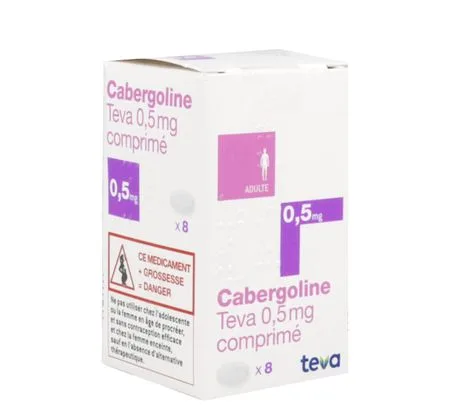
CABERGOLINE TEVA 0,5 mg, tablet
Forms and presentations
Tablet.
White, flat, bevelled, oval-shaped tablets with a break-line on one side, marked "CBG" on one side of the break-line and "0,5" on the other side.
The tablet can be divided into two equal doses.
Composition
Cabergoline..........................................................................................................................................................0,5 mg
For one tablet.
Excipient with known effect: each tablet contains 75,8 mg of lactose.
For the full list of excipients, see section Composition.
Lactose, L-Leucine, magnesium stearate (E572).
Indications
• Inhibition/suppression of lactation due to medical causes.
• Hyperprolactinaemic disorders (for example, amenorrhoea, oligomenorrhoea, anovulation or galactorrhoea).
• Hyperprolactinaemia related to a pituitary adenoma.
• Idiopathic hyperprolactinaemia.
• Empty sella syndrome associated with hyperprolactinaemia
Treatment must be initiated by a specialist or after consultation with a specialist.
Dosage and administration
Dosage
General
The risk of adverse reactions is reduced in patients with known intolerance to dopamine agonists if cabergoline treatment is started at reduced doses (for example, 0,25 mg once weekly) and gradually increased until the therapeutic dose is reached. If adverse reactions persist, worsen or are severe, a temporarily reduced dose followed by gradual dose escalation (for example, 0,25 mg/week every 14 days) may improve tolerability.
Inhibition of lactation
The recommended dose of cabergoline is 1 mg as a single intake within the first 24 hours post-partum (see section Warnings and precautions).
Suppression of established lactation
The recommended dosage regimen is 0,25 mg (half a tablet of 0,5 mg) every 12 hours for two days (total dose of 1 mg). This dosage regimen must not be exceeded in breastfeeding women treated for suppression of established lactation, in order to avoid possible orthostatic hypotension.
Hyperprolactinaemie
The recommended initial dose is 0,5 mg of cabergoline per week, in one or two intakes (for example on Monday and Thursday). The weekly dose may be gradually increased, preferably in steps of 0,5 mg per week at monthly intervals until an optimal therapeutic response is obtained.
The optimal dose of cabergoline is generally 1 mg per week, but doses of cabergoline up to 4,5 mg per week have been used in patients with hyperprolactinaemia (see section Warnings and precautions).
The weekly dose may be administered as a single intake or divided into two or more intakes per week, depending on patient tolerability. It is recommended to divide the weekly dose into several intakes for doses above 1 mg of cabergoline per week.
Patients should be evaluated during dose escalation in order to ensure achievement of the minimum effective dose.
It is recommended to measure serum prolactin levels once a month because normalisation of serum prolactin usually occurs within 2 to 4 weeks after reaching the therapeutic dose.
The maximum dose must not exceed 3 mg of cabergoline per day.
After discontinuation of cabergoline, recurrence of hyperprolactinaemia is usually observed. However, a reduction in prolactin levels has been observed in some patients for several months after discontinuation of cabergoline. In most women, the ovulation cycle continues for at least 6 months after discontinuation of cabergoline.
Hepatic impairment
Lower doses of cabergoline should be considered in patients with severe hepatic impairment, see section Warnings and precautions.
Paediatric population
The safety and efficacy of cabergoline in children and adolescents aged less than 16 years have not been established.
Subjects elderlys
Given the indications for which this dosage of cabergoline is indicated, experience in elderly subjects is very limited. The available data do not show any particular risk.
Method of administration
Cabergoline must be administered orally.
In order to reduce the risk of gastrointestinal adverse effects, it is recommended to take cabergoline during a meal.
Contraindications
• Hypersensitivity to the active substance, to other ergot alkaloids or to any of the excipients listed in section Composition.
• History of psychosis or risk of postpartum psychosis.
• History of pulmonary, pericardial and retroperitoneal fibrosis (see section Warnings and precautions).
For long-term treatment:
Sign of cardiac valvulopathy detected during echocardiography prior to treatment (see section Warnings and precautions).
Warnings and precautions
Generals
As with other ergot derivatives, cabergoline must be administered with caution in patients with severe cardiovascular disease, hypotension, Raynaud's syndrome, gastroduodenal ulcer or gastrointestinal haemorrhage, or with a history of severe mental disorders, in particular psychotic disorders.
At present, the effects of alcohol on the general tolerance of cabergoline are not known.
Hepatic impairment
The use of lower doses should be considered in patients with severe hepatic impairment receiving prolonged treatment with cabergoline. In patients with severe hepatic impairment (Child-Pugh class C) receiving a single dose of 1 mg, an increase in AUC has been observed compared with healthy volunteers or with less severe hepatic impairment.
Orthostatic hypotension
Orthostatic hypotension may occur following administration of cabergoline. Particular attention is required when cabergoline is co-administered with other medicinal products known for their hypotensive effects.
Fibrosis and cardiac valvulopathy and related clinical phenomenas
Fibrotic and serous inflammatory disorders, for example pleurisy, pleural effusion, pleural fibrosis, pulmonary fibrosis, pericarditis, pericardial effusion, cardiac valvulopathy affecting one or more valves (aortic, mitral or tricuspid) or retroperitoneal fibrosis have occurred after prolonged use of ergot derivatives with agonist activity at the 5HT receptor2B of serotonin, such as cabergoline. In some cases, symptoms or manifestations of cardiac valvulopathy regressed after discontinuation of cabergoline.
An abnormal elevation of the erythrocyte sedimentation rate (ESR) has been observed in association with pleural effusion/fibrosis. It is recommended to perform a chest X-ray in case of unexplained elevations of ESR to abnormal values.
Cases of valvulopathy have been associated with the administration of cumulative doses; patients should therefore be treated at the minimum effective dose. At each visit, the benefit/risk balance of cabergoline treatment for the patient should be re-evaluated to determine whether it is appropriate to continue cabergoline treatment.
Before starting long-term treatment
All patients must undergo a cardiovascular assessment, including an echocardiography to evaluate the potential presence of asymptomatic valvular pathology. It is also appropriate to determine the erythrocyte sedimentation rate or measure other inflammatory markers, examine pulmonary function, perform a chest X-ray and assess renal function before starting treatment.
It is not known whether treatment with cabergoline is likely to worsen an underlying valvular regurgitation. In cases of fibrotic valvular pathology, do not treat the patient with cabergoline (see section Contraindications).
During long-term treatment
Fibrotic disorders may have an insidious onset; patients should therefore be regularly checked for possible manifestations of progressive fibrosis.
Also during treatment, the following signs and symptoms should be monitored:
• Pleuropulmonary disease: dyspnoea, shortness of breath, persistent cough or chest pain.
• Renal insufficiency or ureteral/abdominal vascular obstruction, which may be accompanied by pain in the kidneys/flanks and oedema of the lower limbs, as well as masses or tender points in the abdomen that may indicate retroperitoneal fibrosis.
• Heart failure; the cases of valvular and pericardial fibrosis observed have often presented as heart failure. If such symptoms occur, valvular fibrosis (and constrictive pericarditis) should be ruled out.
Clinical diagnostic monitoring for the onset of fibrotic disorders is essential. Once treatment has started, the first echocardiogram must be performed after 3 to 6 months. Thereafter, the frequency of echocardiographic follow-up should be determined based on individual clinical assessment, paying particular attention to the signs and symptoms mentioned above, but in all cases an echocardiogram must be performed at least every 6 to 12 months.
Administration of cabergoline must be stopped if the echocardiogram reveals the onset or worsening of valvular regurgitation, valvular restriction or thickening of a valve leaflet (see section Contraindications).
The need for additional clinical follow-up examinations (for example clinical examination including careful cardiac auscultation, X-ray, echocardiography, CT scan) should be determined on a case-by-case basis.
Appropriate additional investigations, for example erythrocyte sedimentation rate and serum creatinine measurements, should be performed if necessary to confirm the diagnosis of fibrotic disorder.
Somnolence/sleep attacks
Cabergoline has been associated with cases of somnolence. Dopamine agonists may be associated with sudden-onset sleep episodes, particularly in patients with Parkinson's disease. A dose reduction or treatment discontinuation may be considered (see section Driving and using machines).
Inhibition/suppression of physiological lactation
Like other ergot derivatives, cabergoline should not be used in women with pregnancy-induced hypertension, for example pre-eclampsia or postpartum hypertension, unless the potential benefit outweighs the possible risk.
The dose of 0,25 mg of cabergoline in a single intake should not be exceeded in breastfeeding women treated to stop lactation, in order to avoid possible orthostatic hypotension (see section Dosage and administration).
Serious adverse events in postpartum women
Serious adverse events, including hypertension, myocardial infarction, convulsions, stroke or psychiatric disorders, have been reported in postpartum women treated with cabergoline for lactation inhibition. In some patients, the occurrence of convulsions or stroke was preceded by severe headaches and/or transient visual disturbances. Blood pressure should be closely monitored during treatment. In case of hypertension, suggestive chest pain, severe, progressive or persistent headache (with or without visual disturbances) or signs of central nervous system toxicity, cabergoline intake should be discontinued and the patient should be promptly evaluated.
Treatment of hyperprolactinaemia
Since hyperprolactinaemia, coupled with amenorrhoea/galactorrhoea and infertility, may be associated with a pituitary tumour, a complete examination of the pituitary gland is indicated before starting treatment with cabergoline.
Cabergoline restores ovulation and fertility in women with hyperprolactinaemic hypogonadism.
Before administration of cabergoline, a possible pregnancy must be ruled out. As a precaution, it is recommended that women wishing to become pregnant stop taking cabergoline one month before the planned date of conception, once regular ovulatory cycles have been restored. This is due to the limited clinical experience and the prolonged half-life of cabergoline (see section Fertility, pregnancy and breastfeeding).
Since pregnancy may occur before menstruation resumes, a pregnancy test is recommended at least every four weeks during the period of amenorrhoea. From the resumption of menstruation, a pregnancy test is recommended whenever a delay of more than three days in menstruation occurs. Women will be advised to use a mechanical method of contraception during treatment with cabergoline and for at least one month after stopping cabergoline.
In case of pregnancy, discontinuation of cabergoline treatment should be considered after careful assessment of the benefits and risks for the mother and the baby (see section Fertility, pregnancy and breastfeeding). As a precaution, women who become pregnant should be monitored for signs suggesting an increase in pituitary volume, as the development of pre-existing pituitary tumours may occur during gestation.
Renal impairment
No differences in the pharmacokinetics of cabergoline have been observed in patients with moderate to severe renal impairment. The pharmacokinetics of cabergoline have not been studied in patients with end-stage renal disease or in patients on haemodialysis; caution is recommended in these patients.
Psychiatric aspects
The development of impulse control disorders must be monitored regularly. Patients and their caregivers must be informed of the possibility of behavioural symptoms of the impulse control disorder type, including pathological gambling, increased libido, hypersexuality, compulsive spending or buying, bulimia and compulsive eating, in patients treated with dopamine agonists, including cabergoline. A dose reduction/gradual discontinuation should be considered if symptoms of this type develop.
Excipient
Lactose
Patients with galactose intolerance, total lactase deficiency or glucose-galactose malabsorption syndrome (rare hereditary diseases) must not take this medicine.
Interactions
No information is available regarding an interaction between cabergoline and other ergot alkaloids; therefore, concomitant use of these medicinal products during long-term treatment with cabergoline is not recommended.
Since the therapeutic effect of cabergoline is obtained through direct stimulation of dopaminergic receptors, cabergoline must not be administered at the same time as medicinal products with a dopamine-antagonist effect (such as phenothiazines, butyrophenones, thioxanthenes, metoclopramide), as these could reduce the prolactin-lowering effect of cabergoline.
As with other ergot derivatives, cabergoline must not be used with antibiotics of the macrolide group (such as erythromycin) because of the increased systemic bioavailability of cabergoline.
Interactions with medicinal products having a hypotensive effect must be taken into account.
No pharmacokinetic interaction with L-dopa or selegiline was observed in studies conducted in patients with Parkinson's disease. Pharmacokinetic interactions with other medicinal products cannot be predicted from the available data on the metabolism of cabergoline.
Fertility, pregnancy and breastfeeding
No adequate and well-controlled data are available regarding the use of cabergoline in pregnant women. Animal studies did not demonstrate teratogenic effects, but a decrease in fertility and embryotoxicity were observed in association with the pharmacodynamic activity (see section Preclinical safety).
Pregnancy
Cabergoline should be used during pregnancy only if clearly indicated and after careful assessment of the benefit/risk ratio (see section Warnings and precautions). Women of childbearing potential must use effective contraception during treatment and for at least one month after its discontinuation.
Only limited data are available regarding the use of cabergoline during pregnancy; however, a dose of 0,5 to 2 mg/week for the treatment of hyperprolactinaemic conditions is apparently not associated with an increased risk of miscarriage, premature delivery, multiple pregnancies or congenital malformations (see section Warnings and precautions).
Information is available on 256 pregnancies from a twelve-year observational study on pregnancy outcomes after treatment with cabergoline. Seventeen of these 256 pregnancies (6,6 %) resulted in major congenital malformations or miscarriage. Information is available for 23 newborns out of 258, with a total of 27 neonatal abnormalities, both major and minor. Musculoskeletal malformations were the most frequent neonatal abnormality (10), followed by cardiopulmonary abnormalities (5). There is no information regarding perinatal disorders or the long-term development of newborns exposed in utero to cabergoline. Recent publications in the literature report a prevalence of at least 6,9 % of major congenital malformations in the general population. Rates of congenital abnormalities vary between populations. It is not possible to determine precisely whether there is an increased risk of congenital malformations, as no control group was included.
Pregnancy must be excluded before starting cabergoline and avoided for at least one month after the end of treatment. As the half-life of cabergoline is 79 to 115 hours in hyperprolactinaemic patients, women with regular ovulatory cycles should stop cabergoline treatment one month before the planned date of conception. This will avoid possible exposure of the foetus to the medicinal product and will not affect the possibility of fertilisation, as the ovulatory cycle continues in some cases for at least 6 months after cabergoline discontinuation. If conception occurs during treatment, cabergoline treatment must be stopped as soon as pregnancy is confirmed in order to limit/reduce foetal exposure to the medicinal product (see section Warnings and precautions).
Breast-feeding
In rats, cabergoline and/or its metabolites are excreted in milk.
There are no data on the excretion of cabergoline in human milk. However, mothers should refrain from breast-feeding if lactation inhibition/suppression by cabergoline fails. Cabergoline must not be administered to mothers with hyperprolactinaemic disorders who choose to breast-feed their children, as it inhibits lactation.
Fertility
Cabergoline restores ovulation and fertility in women with hyperprolactinaemic hypogonadism (see section Warnings and precautions).
Driving and using machines
Patients should take precautions when engaged in activities requiring rapid and precise reactions during the initiation phase of treatment.
Patients treated with cabergoline who experience drowsiness and/or episodes of sudden onset sleep must be informed that they must not drive vehicles or engage in activities where impaired alertness could expose themselves or others to a risk of serious injury or death (for example, operating machinery) until these episodes and the drowsiness resolve (see section Warnings and precautions).
Adverse effects
In general, adverse reactions are dose-dependent and can be reduced by gradually decreasing the dosage.
Inhibition of lactation: approximately 14 % of patients experience adverse reactions. The most frequent are hypotension (12 %), dizziness (6 %) and headache (5 %). Prolonged treatment increases the frequency of adverse reactions by approximately 70 %.
The following adverse reactions have been observed and reported during treatment with cabergoline with the following frequencies: very common (≥ 1/10), common (≥ 1/100, < 1/10), uncommon (≥ 1/1 000, < 1/100), rare (≥ 1/10 000, < 1/1 000), very rare (< 1/10 000), frequency not known (cannot be estimated from the available data).
|
MedDRA system organ class |
Frequency |
Adverse effects |
|
Immune system disorders |
Uncommon |
Hypersensitivity reaction |
|
Psychiatric disorders |
Common |
Depression |
|
Uncommon |
Increased libido |
|
|
Frequency not known |
Aggression, delusional ideas, impulse control disorder (such as hypersexuality and pathological gambling), psychotic disorder, hallucinations |
|
|
Nervous system disorders |
Very common |
Headache*, dizziness/vertigo* |
|
Common |
Somnolence |
|
|
Uncommon |
Transient hemianopia, syncope, paraesthesia, sudden sleep onset |
|
|
Frequency not known |
Tremor |
|
|
Eye disorders |
Frequency not known |
Visual defects |
|
Cardiac disorders |
Very common |
Valvulopathy (including regurgitation) and related disorders (pericarditis and pericardial effusion) |
|
Uncommon |
Palpitations |
|
|
Frequency not known |
Angina pectoris |
|
|
Vascular disorders |
Common |
Cabergoline generally has a hypotensive effect in patients receiving long-term treatment; orthostatic hypotension, hot flushes/facial flushing** |
|
Uncommon |
Digital vasospasm, fainting |
|
|
Respiratory, thoracic and mediastinal disorders |
Uncommon |
Dyspnoea, pleural effusion, fibrosis (including pulmonary fibrosis), epistaxis |
|
Very rare |
Pleural fibrosis |
|
|
Frequency not known |
Respiratory disorders, respiratory insufficiency, pleurisy, chest pain |
|
|
Gastrointestinal disorders |
Very common |
Nausea*, dyspepsia, gastritis, abdominal pain* |
|
Common |
Constipation, vomiting** |
|
|
Rare |
Epigastric pain |
|
|
|
|
|
|
|
|
|
|
Hepatobiliary disorders |
Frequency not known |
Abnormal liver function |
|
Skin and subcutaneous tissue disorders |
|
|
|
Uncommon |
Dermatological reactions, for example acne, pruritus, rash, alopecia |
|
|
Musculoskeletal and systemic disorders |
Uncommon |
Leg cramps |
|
|
|
|
|
Disorders of the reproductive system and breast |
Common |
Breast pain |
|
General disorders and administration site conditions |
Very common |
Asthenia***, fatigue |
|
Uncommon |
Oedema, peripheral oedema |
|
|
Investigations |
Common |
Asymptomatic decreases in blood pressure (≥ 20 mmHg for systolic pressure and ≥ 10 mmHg for diastolic pressure) |
|
Uncommon |
A decrease in haemoglobin has been observed in women with amenorrhoea during the first months following menstruation resumption |
|
|
Frequency not known |
Increase in blood creatine phosphokinase, abnormal liver function tests |
* Very common in patients treated for hyperprolactinaemia; common in female patients treated for inhibition/suppression of lactation
** Common in patients treated for hyperprolactinaemia; uncommon in female patients treated for inhibition/suppression of lactation
*** Very common in patients treated for hyperprolactinaemia; uncommon in female patients treated for inhibition/suppression of lactation
Impulse control disorders
Pathological gambling, increased libido, hypersexuality, compulsive spending or buying, bulimia and compulsive eating are possible in patients treated with dopamine agonists, including cabergoline (see section Warnings and precautions).
Reporting of suspected adverse reactions
Reporting suspected adverse reactions after authorisation of the medicinal product is important. It allows continued monitoring of the benefit/risk balance of the medicinal product. Healthcare professionals are asked to report any suspected adverse reactions via the national reporting system: National Agency for the Safety of Medicines and Health Products (ANSM) and the network of Regional Pharmacovigilance Centres - Website: https://signalement.social-sante.gouv.fr/.
Overdose
The probable symptoms of an overdose would be those of hyperstimulation of dopaminergic receptors, namely: nausea, vomiting, gastric pain, hypotension, confusion/psychosis or hallucinations.
Supportive measures must be instituted.
In particular, the unabsorbed medicinal product should be eliminated and blood pressure stabilised, if necessary. In addition, administration of a dopaminergic antagonist may be necessary.
Pharmacodynamics
Pharmacotherapeutic class: Prolactin inhibitors, ATC code: G02CB03.
Mechanism of action
Cabergoline is an alkaloid derived from synthetic rye ergot and an ergoline derivative that has long-acting dopaminergic agonist and prolactin-inhibiting properties. The central dopaminergic effect via stimulation of D2 receptors is obtained with doses higher than those that induce a decrease in prolactinaemia.
Pharmacodynamic effects
The prolactin-inhibiting effect is dose-dependent, appears within three hours of administration and persists for two to three weeks. Due to the long duration of action, a single dose is generally sufficient to inhibit lactation. In the treatment of hyperprolactinaemia, serum prolactin concentrations are generally normalised two to four weeks after the optimal dose is reached. Prolactinaemia may still be significantly decreased several months after treatment is stopped.
Regarding the endocrine effects of cabergoline not related to the anti-prolactin effect, the data available in humans confirm the experimental observations in animals, which indicate that the tested compound has very selective activity with no effect on the basal secretion of other pituitary hormones or of cortisol.
The pharmacodynamic actions of cabergoline not correlated with the therapeutic effect are only linked to a decrease in blood pressure. The maximum hypotensive effect of cabergoline after a single dose generally occurs within six hours of administration of the active substance and is dose-dependent both in terms of frequency and maximum decrease in blood pressure.
Pharmacokinetics
Absorption
After oral administration, cabergoline is rapidly absorbed from the gastrointestinal tract and the peak plasma concentration is reached after 0,5 to 4 hours.
Food does not appear to have any effect on the absorption and elimination of cabergoline.
Distribution
Studies in vitro Plasma protein binding of cabergoline was shown to be 41 to 42% at concentrations ranging from 0,1 to 10 ng/mL.
Biotransformation
In urine, the main metabolite detected is 6-allyl-8ß-carboxy-ergoline, which represents 4 to 6% of the dose. Three other metabolites have been identified in urine; together they represent less than 3% of the administered dose. In vitroThe prolactin-secretion-inhibiting activity of the metabolites is much weaker than that of cabergoline.
Elimination
The elimination half-life of cabergoline is long (63 to 68 hours in healthy volunteers and 79 to 115 hours in hyperprolactinaemic patients).
Based on the elimination half-life, steady state should be reached after 4 weeks, as confirmed by the mean maximum plasma concentrations observed after administration of a single dose of 0,5 mg of cabergoline (37 ± 8 pg/mL) and after repeated-dose treatment for 4 weeks (101 ± 43 pg/mL).
Ten days after administration, approximately 18% and 72% of the dose are eliminated in urine and faeces, respectively. In urine, unchanged cabergoline represents 2 to 3% of the dose.
Linearity/nnon-linearity
The pharmacokinetic profile is linear up to a dose of 7 mg per day.
Preclinical safety
Maternotoxic effects, but no teratogenic effect, were observed in mice that received doses of cabergoline up to 8 mg/kg/day (approximately 55 times the maximum recommended dose in humans) during organogenesis.
A dose of 0,012 mg/kg/day (1/7e approximately of the maximum recommended dose in humans) administered to rats during organogenesis caused an increase in embryofetal losses after implantation. These losses could be attributable to inhibition of prolactin secretion by cabergoline in rats. In rabbits, doses of 0,5 mg/kg/day of cabergoline (approximately 19 times the maximum recommended dose in humans) administered during organogenesis caused maternotoxicity characterised by loss of body weight and decreased food consumption. Also in rabbits, doses of 4 mg/kg/day (approximately 150 times the maximum recommended dose in humans) administered during organogenesis caused an increase in the number of various malformations. However, in another study in rabbits, no treatment-related malformations or embryofetal toxicity were observed after administration of doses up to 8 mg/kg/day (approximately 300 times the maximum recommended dose in humans).
Special storage precautions
Store at a temperature not exceeding 30 °C.
Store in the original package, protected from moisture.
The absorbent capsule or absorbent sachet of silica gel must not be removed from the vial.
Prescription, supply and reimbursement
| Marketing authorisation (AMM) |
|
| Price: |
|
Collection.
COEUR DEFENSE 100-110 ESPLANADE DU GAL DE GAULLE
92931 PARIS LA DEFENSE CEDEX
Tel: 01 55 91 78 00 www.teva-sante.fr
Source: VIDAL · Updated on 10/11/2026. This information does not replace advice from a healthcare professional.