
Medicines
SmPC of 09/12/2024
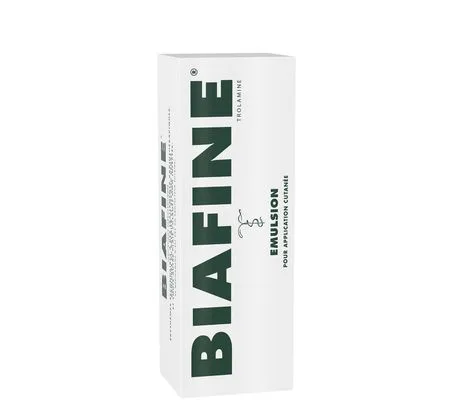
BIAFINE, emulsion for cutaneous application
Composition
Trolamine...................................................................................................................................... 0,670 g
Excipient(s) with known effect: propylene glycol, potassium sorbate, sodium methyl parahydroxybenzoate (E 219), sodium propyl parahydroxybenzoate (E 217), Yerbatone fragrance.
Ethylene glycol stearate, stearic acid, cetyl palmitate, solid paraffin, liquid paraffin, perhydrosqualene, propylene glycol, avocado oil, trolamine and sodium alginate, potassium sorbate, sodium methyl parahydroxybenzoate (E 219), sodium propyl parahydroxybenzoate (E 217), Yerbatone fragrance*, purified water.
* Composition of the Yerbatone fragrance : Terpeneless orange essential oil, galbanum essential oil, terpeneless petitgrain essential oil, lemongrass essential oil, celestolide, paratertiobutyl cyclohexyl acetate, alpha hexyl cinnamic aldehyde, citral, limonene, phenylethyl alcohol, traseolide, hercolyn, phenylethyl acetate, methylionone, dipropylene glycol, isopropyl myristate, methyl dihydrojasmonate.
Indications
- Erythema secondary to radiotherapy treatments.
- First- and second-degree burns and any other non-infected cutaneous wound.
Dosage and administration
- Erythema secondary to radiotherapy treatments: 2 to 3 daily applications, regularly spaced, working in with gentle massage.
- Second-degree burns and other cutaneous wounds: after cleaning the wound, apply in a thick layer extending well beyond the surface of the lesion and repeat applications so as to always maintain an excess of emulsion on the lesion. Cover if necessary with a moistened compress and complete the dressing. Do not use a dry absorbent dressing.
- First-degree burns: apply in a thick layer until the skin is saturated. Work in with gentle massage. Repeat 2 to 4 times per day.
Contraindications
- Hypersensitivity to the active substance or to any of the excipients listed in section Composition.
- Haemorrhagic wound.
- Infected lesion.
Warnings and precautions
Special warnings
In case of second-degree burns or non-infected cutaneous wounds, the management will depend on the extent and location of the lesion, the patient's age and history, associated lesions and the aetiology.
Precautions for use
This medicine is not a sunscreen.
This medicine must not be used as a skincare cream on healthy skin.
Do not apply near the eyes.
This medicine contains 38 mg of propylene glycol per 1,65 g dose and may cause skin irritation.
Do not use this medicine in babies younger than 4 weeks with open wounds or large areas of damaged or injured skin (burns).
This medicine contains potassium sorbate and may cause local skin reactions (for example: eczema).
This medicine contains sodium methyl parahydroxybenzoate (E 219) and sodium propyl parahydroxybenzoate (E 217) and may cause allergic reactions (possibly delayed).
This medicine contains a fragrance (Yerbatone fragrance) containing the following substances: 3-Methyl-4-(2,6,6-trimethyl-2-cyclohexen-1-yl)-3-buten-2-one, benzyl benzoate, citral, citronellol, d-limonene, eugenol, geraniol, hexyl cinnamic aldehyde, hydroxycitronellal, isoeugenol and linalool. These substances may cause allergic reactions.
Fertility, pregnancy and breastfeeding
Pregnancy
There are no data in pregnant women. However, no effect is expected in pregnant women, nor on the foetus.
Breast-feeding
There are no data in breastfeeding women. However, no effect is expected in breastfeeding women, nor on the breastfed infant.
There are no data on the passage of trolamine or its metabolites into milk.
Adverse effects
Undesirable effects are classified according to their frequency of occurrence, as follows: uncommon (≥ 1/1 000, < 1/100), rare (≥ 1/10 000, < 1/1 000) and very rare (< 1/10 000).
General disorders and administration site conditions :
- Uncommon: moderate, transient tingling-type pain after application.
- Rare: contact allergy.
- Very rare: contact eczema requiring immediate discontinuation of treatment.
Reporting of suspected adverse reactions
Reporting suspected adverse reactions after authorisation of the medicinal product is important. It allows continued monitoring of the benefit/risk balance of the medicinal product. Healthcare professionals are asked to report any suspected adverse reactions via the national reporting system: National Agency for the Safety of Medicines and Health Products (ANSM) and the network of Regional Pharmacovigilance Centres - Website: https://signalement.social-sante.gouv.fr/.
Pharmacodynamics
Pharmacotherapeutic class: SKIN PROTECTANT, ATC code: D03AX12 (D. Dermatology).
Mechanism of action
Trolamine, combined with fatty acids such as stearic acid, acts as an emulsifier. After cutaneous application, it develops occlusive and moisturising properties, increases the recruitment of macrophages at the wound site, and promotes healing in the dermis and the formation of granulation tissue.
Pharmacokinetics
The effects of this medicine are limited to the superficial layers of the epidermis and promote hydration. No systemic effect is expected.
Preclinical safety
The tests in vitro for mutagenicity and chromosomal aberrations conducted with trolamine were negative.
The results of carcinogenicity studies in rodents are equivocal. There are no data in humans.
Trolamine proved to be embryotoxic in a reproduction study in chickens. There are no data in humans.
SPECIAL PRECAUTIONS FOR DISPOSAL AND OTHER HANDLING
Any unused medicinal product or waste material should be disposed of in accordance with local requirements.
Prescription, supply and reimbursement
| Marketing authorisation (AMM) |
|
41 RUE CAMILLE DESMOULINS
92130 ISSY-LES-MOULINEAUX CEDEX 9
Tel: 00 800 555 22 000 https://www.kenvuecontact.com/
Source: VIDAL · Updated on 10/11/2026. This information does not replace advice from a healthcare professional.