
Medicines
SmPC of 22/04/2025
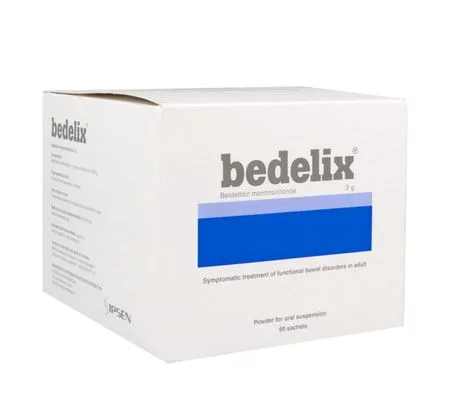
BEDELIX powder for oral suspension in sachet.
Composition
Beidellitic montmorillonite .......................................................................................................... 3,000 g
per sachet of 3,925 g
Excipient with known effect: Glucose
Co-dried aluminium hydroxide and magnesium carbonate gel, liquorice extract, vanillin, sodium saccharin, glucose monohydrate.
Dosage and administration
Dosage
Oral route:
Adults: 3 sachets per day on average.
Method of administration
Oral route: the contents of one sachet may be dissolved in half a glass of water or mixed with a semi-liquid food such as porridge, purée, etc.
Preferably administer between meals or shortly before.
Contraindications
Hypersensitivity to the active substance or to any of the excipients listed in section Composition.
Stenosing disorders of the digestive tract.
Warnings and precautions
Although the dose of aluminium hydroxide is minimal, take it into account in chronic dialysis patients (cases of encephalopathy have been described after major and prolonged treatment with aluminium hydroxide).
It is known that aluminium absorption could in the long term cause phosphorus depletion; however, in recent clinical trials, no increase in blood or urinary aluminium has been reported during treatment. Phosphocalcic balance assays are not modified.
This medicine contains glucose. Its use is not recommended in patients with glucose-galactose malabsorption syndrome.
Interactions
Associations requiring precautions for use
Gastrointestinal topicals, charcoal and antacids, whether or not associated with alginates, reduce the digestive absorption of certain other medicines taken at the same time.
As a precaution, these topicals or antacids should be taken at a distance from the following medicines:
+ Acetylsalicylic acid
+ Antisecretory antihistamines H2
+ Atenolol
+ Bisphosphonates (oral route)
+ Sulfonate sodium polystyrene resin (reduced capacity of the resin to bind potassium, with risk of metabolic alkalosis in renally impaired patients).
+ Chloroquine
+ Tetracyclines
+ Digitalis glycosides
+ Ethambutol
+ Iron
+ Fexofenadine
+ Fluor
+ Fluoroquinolones
+ Glucocorticoids except hydrocortisone in replacement therapy (described for prednisolone and dexamethasone)
+ Thyroid hormones
+ Indomethacin
+ Isoniazid
+ Ketoconazole (decreased digestive absorption due to increased gastric pH)
+ Lansoprazole
+ Lincosamides
+ Metoprolol
+ Phenothiazine neuroleptics
+ Penicillamine
+ Phosphorus
+ Propranolol
+ Sulpiride
Associations to be taken into account:
+ Ulipristal
Risk of decreased effect of ulipristal due to decreased absorption.
Fertility, pregnancy and breastfeeding
Pregnancy
There are no data or there are limited data (fewer than 300 pregnancies) on the use of BEDELIX in pregnant women.
Studies performed in animals are insufficient to allow a conclusion regarding reproductive toxicity.
BEDELIX is not recommended during pregnancy.
Breast-feeding
There are limited data on the use of BEDELIX during breastfeeding.
BEDELIX is not recommended during breastfeeding.
Fertility
The effect on human fertility has not been studied.
Driving and using machines
No effect on the ability to drive vehicles and use machines has been reported.
Adverse effects
Since the marketing of BEDELIX, the following adverse effects have been reported (frequency not known):
Skin and subcutaneous tissue disorders:
- Rash, angioedema, pruritus and urticaria.
Reporting of suspected adverse reactions
Reporting suspected adverse reactions after authorisation of the medicinal product is important. It allows continued monitoring of the benefit/risk balance of the medicinal product. Healthcare professionals are asked to report any suspected adverse reactions via the national reporting system: National Agency for the Safety of Medicines and Health Products (ANSM) and the network of Regional Pharmacovigilance Centres - Website: https://signalement.social-sante.gouv.fr/.
Overdose
No cases of overdose have been reported in adults. A very limited number of cases of overdose have been reported in children. The associated symptoms were a bezoar and vomiting.
Pharmacodynamics
Pharmacotherapeutic class: OTHER INTESTINAL ADSORBENTS, ATC code: A07BC05.
Beidellitic montmorillonite belongs to the class of natural clays. Due to its lamellar structure, the fineness of its particles and its high viscosity, it perfectly and completely coats the digestive mucosa. In vitro, it activates coagulation factors VII and XII and reduces hemorrhagic suffusions. Its adsorbent power is strong against various microbial toxins, which gives it significant detoxifying power. BEDELIX has a very weak swelling power and has no effect on physiological intestinal transit. Chemically neutral, it is radiotransparent and does not modify the coloration of stools.
Prescription, supply and reimbursement
| Marketing authorisation (AMM) |
|
3 PLACE RENAULT
92500 RUEIL-MALMAISON
Source: VIDAL · Updated on 10/11/2026. This information does not replace advice from a healthcare professional.