
Medicines
SmPC of 19/12/2022
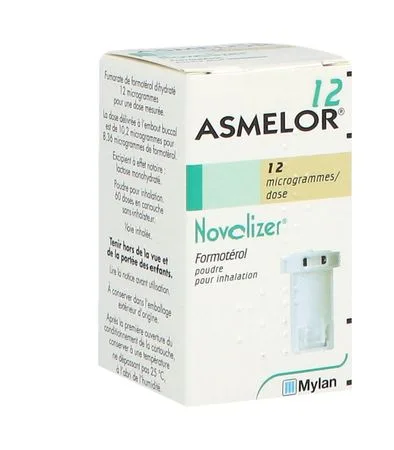
ASMELOR NOVOLIZER 12 micrograms/dose, powder for inhalation
Composition
Formoterol fumarate dihydrate………………………………………………………….12 micrograms
Per metered dose
The dose delivered at the mouthpiece is 10,2 micrograms for 8,36 micrograms of formoterol.
Lactose monohydrate.
Indications
Asmelor Novolizer 12 micrograms is indicated in adults, adolescents and children aged 6 to 12 years.
Continuous symptomatic treatment of moderate to severe persistent asthma in patients requiring continuous bronchodilator treatment with a long-acting beta-2 agonist, in combination with inhaled corticosteroid therapy (with or without oral corticosteroid).
The associated corticosteroid therapy should be maintained on a regular basis.
Symptomatic treatment of bronchial obstruction in patients with chronic obstructive pulmonary disease (COPD) requiring long-acting bronchodilator treatment.
Dosage and administration
Dosage
Inhalation route.
The taking of additional doses above the usual dosage on more than 2 days per week is a sign of insufficient control and the maintenance treatment should then be reassessed.
The treatment will be administered in 2 doses per day.
ASTHMA:
Adults (including elderly people) and adolescents over 12 years:
The usual dosage is 1 inhalation (12 micrograms) 2 times per day. For severe asthma, the dosage may be increased up to 2 inhalations (24 micrograms) 2 times per day.
The maximum daily dose is 4 inhalations (2 inhalations 2 times per day) corresponding to 48 micrograms.
Paediatric population
Children aged 6 years and over:
The usual dosage is 1 inhalation (12 micrograms) 2 times per day. For severe asthma, the dosage may be increased up to 2 inhalations (24 micrograms) 2 times per day, after evaluation by the physician.
In continuous regular treatment, the daily dose not to be exceeded is 2 inhalations (24 micrograms). However, occasionally, it may be increased to 4 inhalations spread over a period of 24 hours.
Children under 6 years:
Asmelor Novolizer is not recommended in children under 6 years due to insufficient data in this age group.
CHRONIC OBSTRUCTIVE PULMONARY DISEASE (COPD):
Adults (including elderly people) and adolescents over 12 years:
The usual dosage in continuous regular treatment is 1 inhalation (12 micrograms) twice per day.
The usual daily dose not to be exceeded in continuous regular treatment is 2 inhalations (24 micrograms). However, if needed, additional inhalations at the usual dose prescribed as part of the continuous regular treatment may be taken to relieve symptoms, without however exceeding the maximum total dose of 4 inhalations per day (i.e. 48 micrograms including continuous treatment and additional inhalations). At each intake, do not exceed more than 2 inhalations.
Inhaled formoterol is indicated in patients receiving inhaled corticosteroid therapy when continuous symptomatic treatment of asthma is needed in addition to the inhaled corticosteroid.
Although formoterol has a rapid onset of action, the use of long-acting inhaled bronchodilators (such as formoterol) should be reserved for continuous background symptomatic treatment only, taken regularly.
Formoterol is not intended for the treatment of asthma attacks. In case of an asthma attack, a short-acting β2 agonist should be used.
Patients must be advised not to stop or modify their concomitant corticosteroid treatment when treatment with Asmelor Novolizer is started.
Elderly subjects and patients with renal or hepatic impairment
No dose adjustment is necessary in elderly patients or in patients with renal or hepatic impairment (see section Warnings and precautions).
Method of administration
Treatment instructions
In order to ensure optimal intrabronchial delivery of the active substance, inhalation should be performed with a steady flow, inhaling as deeply and rapidly as possible (up to maximum inspiratory amplitude). The device is fitted with a system that signals by an audible click and a change of colour of the control window whether the inhalation has been performed correctly.
If the device does not signal by a click and a change of colour of the control window that the inhalation was performed correctly, the patient must repeat the inhalation.
The inhaler remains locked until the inhalation is performed correctly.
Instructions for use and handling of the Novolizer
Reloading
Gently press the ribbed surfaces located on the 2 sides of the cover, push it forward and remove it.
Remove the aluminium protective film from the cartridge housing and take out a new cartridge.
Insert the cartridge into the Novolizer, orienting the dose counter facing the mouthpiece.
Replace the cover in its side guides and push it horizontally towards the button until it snaps into its housing. The cartridge may be left in the Novolizer inhaler until it is empty or for a maximum of 6 months after insertion.
Note: Asmelor Novolizer 12 microgram cartridges may only be used with the NOVOLIZER powder inhaler.
Instructions for use of the device
1. For inhalation, it is preferable to be seated or standing. When using the Novolizer device, always hold it horizontally. First remove the protective cap.
2. Press the coloured button fully. A double audible click is then heard and the colour of the control window (at the bottom) changes from red to green. Then release the coloured button. The green colour in the window indicates that the Novolizer is ready for use.
3. Breathe out fully (away from the inhaler).
4. Close the lips around the mouthpiece. Inhale the powder firmly, deeply and as rapidly as possible (until complete inhalation). During this inhalation, an audible click should be heard, proving that the inhalation was performed correctly. Hold the breath for a few seconds then breathe normally.
Note: If the patient needs several inhalations, repeat steps 2 to 4.
5. Replace the protective cap on the mouthpiece. The inhalation is now complete.
6. The number appearing in the upper window indicates the number of doses remaining, from 10 down to 10 ... 60 to 0 doses remaining.
Note: The coloured button should only be pressed immediately before inhalation.
With the Novolizer device, unintentional inhalation of a double dose is impossible. The audible click and the colour change in the control window indicate that the inhalation was performed correctly. If the colour of the control window remains unchanged, the inhalation must be repeated. If inhalation is not performed correctly after several attempts, the patient must consult their doctor.
Cleaning
The NOVOLIZER device must be cleaned at regular intervals and at least each time a cartridge is changed. For instructions on cleaning the device, refer to the instructions for use contained in the box.
Remark : in order to ensure correct use of the inhaler, the patient's instructions for use of the device should be clearly explained to patients. When using this medicinal product in children, it should be ensured that an adult supervises the administration of the medicine.
Contraindications
Hypersensitivity to the active substance (formoterol) or to the excipient (lactose).
Warnings and precautions
Asmelor Novolizer 12 micrograms must not be used (and is not sufficient) as first-line treatment for asthma.
Asthmatic patients requiring treatment with long-acting beta-2-agonist medicinal products must also receive appropriate anti-inflammatory maintenance treatment with corticosteroids. Patients should be informed that they must continue their anti-inflammatory treatment and not reduce the dose without medical advice after starting treatment with Asmelor Novolizer 12 micrograms, even when symptoms improve. Persistence or worsening of symptoms, or an increase in the dose of beta-2-agonist medicine needed to control symptoms, indicates worsening of the disease, which should prompt re-evaluation of treatment by a physician.
Although it may be used as add-on treatment when inhaled corticosteroid therapy does not provide sufficient control of asthma symptoms, Asmelor Novolizer must not be initiated during a severe asthma exacerbation, a significant worsening or an acute destabilisation of asthma.
Serious asthma-related adverse events and exacerbations may occur during treatment with Asmelor Novolizer. Patients should be informed that if asthma symptoms persist or worsen during treatment with Asmelor Novolizer, they should continue their treatment and seek advice from their physician.
As soon as asthma symptoms are controlled, a gradual reduction of the dose of Asmelor Novolizer should be considered. It is important that patients are monitored regularly during the treatment reduction phase. The minimum effective dose of Asmelor Novolizer should be used.
Formoterol should be reserved for the treatment of patients requiring regular continuous symptomatic treatment with a long-acting bronchodilator (see section Indications) and should not be used as an alternative to short-acting beta-2-agonists, which are intended to treat acute symptoms of an asthma attack. In the event of an asthma attack, a short-acting beta-2-agonist medicinal product should be used.
The recommended maximum daily dose must not be exceeded. The long-term tolerability of regular treatment at a daily dose exceeding 4 inhalations per day in adults and 2 inhalations per day in children, or 2 inhalations per day in patients with chronic obstructive pulmonary disease (COPD), has not been established.
Frequent use of medicinal treatment to prevent exercise-induced asthma symptoms may be a sign of insufficient control of the disease. The physician should then re-evaluate the therapeutic approach and ensure adherence to treatment. If the patient needs to use their treatment several times a week to prevent the occurrence of exercise-induced asthma symptoms, despite appropriate maintenance treatment (corticosteroids and long-acting beta-2-agonists), the overall therapeutic approach should be re-evaluated by a specialist.
Caution is recommended in patients with thyrotoxicosis, pheochromocytoma, obstructive cardiomyopathy, idiopathic subvalvular aortic stenosis, severe arterial hypertension, aneurysm or other severe cardiovascular disorders such as ischaemic heart disease, tachyarrhythmia, in particular 3rd-degree atrioventricular block, or severe heart failure. A dose adjustment may be necessary.
Formoterol may cause prolongation of the QTc interval. Caution is recommended in patients with prolongation of the QTc interval (see section Interactions).
Due to the hyperglycaemic effects of beta-2-agonists, it is recommended to increase blood glucose monitoring at the start of treatment in diabetic patients.
Treatment with beta-2-agonists may cause potentially serious hypokalaemia. Caution is recommended particularly in cases of severe acute asthma, as the associated risks may be increased by hypoxia. The hypokalaemic effect may be potentiated by concomitant administration of xanthine derivatives, corticosteroids and diuretics. Serum potassium should therefore be monitored in these situations. Particular attention is needed when theophylline and formoterol are used concomitantly in patients with pre-existing heart disease.
As with other inhalation treatments, administration of the product may cause paradoxical bronchospasm. Wheezing or dyspnoea following inhalation should be treated promptly with a fast-acting inhaled bronchodilator. Treatment with Asmelor Novolizer should then be discontinued immediately and an alternative treatment should be initiated if necessary, after evaluation by the physician.
Asmelor Novolizer 12 micrograms contains 11,488 mg of lactose per delivered dose. In general, these low doses do not cause harmful effects in patients with lactose intolerance. Lactose may contain small amounts of milk proteins.
The use of formoterol is not recommended in children under 6 years of age due to insufficient data for this age group.
The pharmacokinetics of formoterol have not been studied in elderly subjects or in cases of hepatic or renal impairment. As formoterol is mainly metabolised by the liver, increased systemic exposure is expected in patients with severe hepatic cirrhosis.
Interactions
No interaction studies have been performed with Asmelor Novolizer.
Concomitant treatment with other sympathomimetic agents such as other beta-2-agonists or ephedrine may potentiate the adverse effects of formoterol and may require a dose reduction.
Concomitant treatment with xanthine derivatives, corticosteroids or diuretics such as thiazide diuretics and loop diuretics risks aggravating the hypokalaemic effect of agonists β2. Hypokalaemia increases the risk of arrhythmia in patients receiving cardiac glycosides.
Concomitant treatment with oral corticosteroids may increase the hyperglycaemic effects.
There is a theoretical risk that concomitant treatment with other substances known to prolong the QT intervalc may cause a pharmacodynamic interaction with formoterol and increase the risk of ventricular arrhythmia. These substances may be, for example: certain antihistamines (such as terfenadine, astemizole, mizolastine), certain antiarrhythmics (such as quinidine, disopyramide, procainamide), phenothiazines, erythromycin, tricyclic antidepressants.
Caution is recommended when administering formoterol to patients treated with monoamine oxidase inhibitors (or who have been treated within the preceding 14 days) or with tricyclic antidepressants, due to the risk of potentiation of their beta-2-adrenergic action on the cardiovascular system.
On the other hand, L-dopa, L-thyroxine, oxytocin and alcohol may disrupt the cardiac tolerance of beta-2-agonists.
In patients receiving a halogenated volatile anesthetic concomitantly, the risk of arrhythmia is increased.
Beta-blockers may reduce or completely neutralize the effect of formoterol. Unless absolutely necessary, the combination of formoterol and beta-blocker treatment (even in the form of eye drops) is not recommended.
Fertility, pregnancy and breastfeeding
Fertility
Only limited data are available on fertility (see section Preclinical safety). Reproduction studies conducted in rats showed no impairment of fertility at maximum oral doses of 3 mg/kg (approximately 1 000 times the recommended daily dose of 24 µg by inhalation in humans based on body surface area [mg/m²]).
Pregnancy
No adequate data on the use of formoterol in pregnant women are available. In animal studies, formoterol caused post-implantation losses as well as a decrease in early postnatal survival and birth weight. The effects appeared at systemic exposures well above those achieved with clinical use of formoterol. Treatment with formoterol may be considered at all stages of pregnancy if needed to achieve asthma control, and if the expected benefit to the mother outweighs any potential risk to the fetus. The potential risk to humans is unknown.
Breast-feeding
It has not been established whether formoterol passes into breast milk. In rats, small amounts of formoterol have been detected in breast milk. Administration of formoterol to breastfeeding women should only be considered if the expected benefit to the mother outweighs any potential risk to the child.
Driving and using machines
Formoterol has no or negligible effect on the ability to drive vehicles or use machines.
Adverse effects
The most common adverse reactions, such as tremor and palpitations, are moderate and disappear after a few days of treatment.
The adverse events associated with formoterol are presented below by system organ class and frequency. Frequencies are defined as follows: very common (≥ 1/10); common (≥ 1/100 to < 1/10); uncommon (≥ 1/1 000 to < 1/100); rare (≥ 1/10 000 to < 1/1 000); very rare (< 1/10 000); not known (frequency cannot be estimated from the available data).
|
System organ class |
Frequency |
Adverse effects |
|
Immune system disorders |
Rare |
Hypersensitivity reactions, including bronchospasm, exanthema, urticaria, pruritus, Quincke's edema |
|
Metabolism and nutrition disorders |
Rare |
Hypokalemia / hyperkalemia |
|
Very rare |
Hyperglycaemia |
|
|
Psychiatric disorders |
Uncommon |
Agitation, nervousness, sleep disorders
|
|
Nervous system disorders |
Common
|
Headache, tremor
|
|
Rare |
Nervousness |
|
|
Very rare |
Taste disturbances, dizziness |
|
|
Cardiac disorders |
Common |
Palpitations
|
|
Uncommon |
Tachycardia |
|
|
Rare |
Cardiac arrhythmias, notably atrial fibrillation, supraventricular tachycardia, extrasystoles |
|
|
Very rare |
Angina, prolongation of the QTc interval |
|
|
Vascular disorders |
Very rare
|
变化 blood pressure variation |
|
Respiratory, thoracic and mediastinal disorders |
Uncommon |
Oropharyngeal irritation
|
|
Gastrointestinal disorders |
Rare |
Nausea
|
|
Musculoskeletal and systemic disorders |
Uncommon |
Muscle cramps |
As with all inhalation treatments, paradoxical bronchospasm may occur in a few rare cases.
Treatment with beta-2 agonists may induce an increase in blood levels of insulin, free fatty acids, glycerol and ketone bodies.
Reporting of suspected adverse reactions
Reporting suspected adverse reactions after authorisation of the medicinal product is important. It allows continued monitoring of the benefit/risk balance of the medicinal product. Healthcare professionals are asked to report any suspected adverse reaction via the national reporting system: National Agency for the Safety of Medicines and Health Products (ANSM) and the network of Regional Centres of Pharmacovigilance - Website: www.signalement-sante.gouv.fr.
Overdose
Clinical experience in the treatment of overdose is limited.
In case of overdose, the typical effects of beta-2 agonists may be expected : tremor, headache, palpitations.
In isolated cases, the following have been reported: tachycardia, hyperglycaemia, hypokalaemia, prolongation of the QT intervalc, arrhythmia, nausea and vomiting. Treatment will be symptomatic with maintenance of vital functions.
The use of β-blockers, cardioselective, can only be considered with extreme caution, as they may cause bronchospasm. Serum potassium should be monitored.
Pharmacodynamics
Pharmacotherapeutic class: selective agonists β2 formoterol, ATC code: R03AC13
Formoterol is a selective beta-2-adrenergic receptor agonist that causes relaxation of bronchial smooth muscle. It exerts a bronchodilator effect in patients with reversible airway obstruction. The bronchodilator effect occurs rapidly, within 1 to 3 minutes after inhalation, and persists on average for 12 hours after inhalation of the dose.
Pharmacokinetics
Absorption
Inhaled formoterol is rapidly absorbed. The maximum plasma concentration is reached approximately 10 minutes after inhalation.
Clinical studies show that after inhalation using the Novolizer device, the deposition of formoterol in the lungs is comparable to that obtained with other formoterol inhalers.
Distribution and biotransformation
The plasma protein binding rate is approximately 50%.
Formoterol is directly metabolised by glucuronidation and O-demethylation.
The enzyme responsible for O-demethylation is not identified. Neither the total plasma clearance nor the volume of distribution have been determined.
Elimination
The major part of the formoterol dose is eliminated by metabolism. After inhalation using a similar device, 8-13% of the delivered formoterol dose was excreted as unchanged formoterol in the urine. Approximately 20% of an intravenous dose is excreted unchanged in the urine. The terminal half-life after inhalation is estimated to be 8 hours.
Preclinical safety
In toxicity studies conducted in rats and dogs, formoterol mainly caused cardiovascular effects such as hyperaemia, tachycardia, arrhythmias and myocardial lesions. These phenomena are known pharmacological manifestations of the administration of high doses of beta-2-agonists.
In animal studies, formoterol induced implantation defects as well as a decrease in postnatal survival and birth weight. The effects occurred at systemic exposures considerably higher than those achieved with clinical use of formoterol. In male rats exposed to high systemic exposure to formoterol, a slight reduction in fertility was observed.
Studies conducted in vitro and in vivo did not show genotoxic effects of formoterol. In rats and mice, a slight increase in the incidence of benign uterine leiomyomas was observed. This is considered a class effect observed in rodents after prolonged exposure to high doses of beta-2-agonists.
Shelf life
Shelf life before opening the packaging: 3 years
Shelf life after opening the cartridge: 6 months
Novolizer inhaler
Shelf life before first use: 4 years
Shelf life during use: 1 year
Note: The functioning of the Novolizer has been validated by tests involving 2000 unit doses. This number of doses should not be exceeded in 1 year under normal conditions of use.
Special storage precautions
Store in the original outer packaging.
After first opening of the cartridge packaging, store at a temperature not exceeding 25°C, protected from moisture.
Prescription, supply and reimbursement
| Marketing authorisation (AMM) |
|
| Price: |
|
Collection.
1 RUE DE TURIN
69007 LYON
Tel: 04 37 25 75 00 https://www.viatris.fr/
Source: VIDAL · Updated on 10/11/2026. This information does not replace advice from a healthcare professional.