
Medicines
Update of 16/02/2023
ARICEPT®
donepezil
Forms and presentations
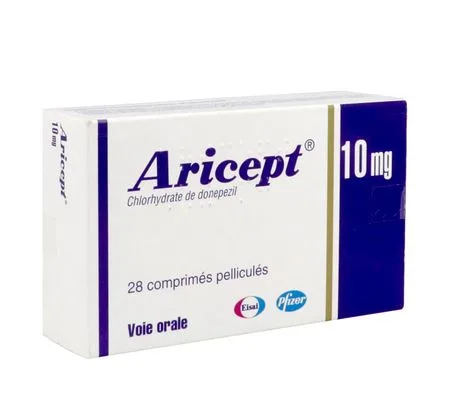
Orodispersible tablet at 5 mg (white, engraved "5" on one side and "ARICEPT" on the other) and at 10 mg (yellow, engraved "10" on one side and "ARICEPT" on the other): Boxes of 28, under blister packs.Film-coated tablet at 5 mg (white, round, biconvex, engraved in recess "ARICEPT" on one side and "5" on the other) and at 10 mg (yellow, round, biconvex, engraved in recess "ARICEPT" on one side and "10" on the other): Boxes of 28, under blister packs.
Composition
| p tab | |
| Donepezil hydrochloride
|
5 mg |
| or
|
10 mg |
| (equivalent to donepezil: 4,56 mg/tablet to 5 mg or 9,12 mg/tablet to 10 mg) | |
Orodispersible tablet: mannitol, anhydrous colloidal silica, k-carrageenan, polyvinyl alcohol, yellow iron oxide E 172 (tablet at 10 mg).
Film-coated tablet: Core: lactose monohydrate, maize starch, microcrystalline cellulose, hyprolose, magnesium stearate. Film coating: Tablet at 5 mg: Opadry YS-1R-18134-A (talc, macrogol, hypromellose, titanium dioxide E 171). Tablet at 10 mg: Yellow Opadry YS-1R-12700-A (talc, macrogol, hypromellose, titanium dioxide E 171 and yellow iron oxide E 172).
Excipient with known effect: lactose (87,17 mg/film-coated tablet at 5 mg; 174,33 mg/film-coated tablet at 10 mg).
Indications
Aricept is indicated for the symptomatic treatment of Alzheimer's disease in its mild to moderately severe forms.Dosage and administration
Dosage- Adult, elderly subject:
- Treatment should be initiated at a dose of 5 mg per day (as a single intake). The dose of 5 mg/day will be maintained for at least 1 month, the duration necessary to evaluate the first clinical responses to treatment and to reach steady state of plasma concentrations. Depending on the clinical results observed after 1 month of treatment at the dose of 5 mg/day, the dose of Aricept may be increased to 10 mg/day (in one intake per day). The recommended maximum daily dose is 10 mg. Doses above 10 mg/day have not been studied in clinical trials.
- Treatment must be initiated and supervised by a physician experienced in the diagnosis and treatment of patients with Alzheimer's disease. Diagnosis will be made in accordance with current criteria (for example DSM IV, ICD 10). Treatment with donepezil should only be undertaken in the presence of a relative who can regularly ensure that the patient takes the medicine. Maintenance treatment may be continued as long as the patient benefits. Consequently, the clinical benefit should be reassessed regularly. The individual response to treatment is not predictable.
- On discontinuation of treatment, a progressive reduction of the beneficial effects produced by Aricept has been observed.
- Paediatric population:
- The use of Aricept in children and adolescents under 18 years of age is not recommended.
- Renal and hepatic impairment:
- In patients with renal impairment, the clearance of donepezil hydrochloride is not modified, so it is not necessary to adjust the dosage.
- In cases of mild to moderate hepatic impairment, due to a possible increase in exposure to donepezil (see Pharmacokinetics), the dosage increase should be adjusted according to individual tolerance to the product. There are no data in patients with severe hepatic impairment.
Method of administration:
Aricept must be administered orally, in the evening, just before bedtime.
Orodispersible tablet: place the tablet on the tongue and allow it to disintegrate before swallowing, with or without water, according to patient preference.
In cases of sleep disturbances, including abnormal dreams, nightmares or insomnia (see Undesirable effects), administration of Aricept in the morning may be considered.
Contraindications
Known hypersensitivity to donepezil hydrochloride, to piperidine derivatives or to any of the excipients mentioned in section Composition.Warnings and precautions
The use of Aricept in patients at the severe stage of Alzheimer's disease or suffering from other types of dementia or other forms of memory impairment (for example age-related cognitive decline) has not been studied.
- Anaesthesia:
- Aricept, like any cholinesterase inhibitor, may potentiate the muscle relaxation induced by treatments such as succinylcholine during anaesthesia.
- Cardiovascular disorders:
- Due to their pharmacological activity, cholinesterase inhibitors may have vagotonic effects on heart rate (for example bradycardia). Their incidence may be particularly high in patients with sick sinus syndrome or other supraventricular conduction abnormalities such as sinoatrial or atrioventricular block.
- Cases of syncope and convulsions have been reported. When examining these patients, the possibility of cardiac block or prolonged sinus pauses should be considered.
- Cases of QTc interval prolongation and torsades de pointes have been reported after marketing (see InteractionsAdverse effects). Caution is recommended in patients with pre-existing QTc interval prolongation or a family history of QTc interval prolongation, in patients treated with medicines known to prolong the QTc interval, or in patients with relevant pre-existing cardiac disease (for example, uncompensated heart failure, recent myocardial infarction, bradyarrhythmias) or electrolyte disturbances (hypokalaemia, hypomagnesaemia). Clinical monitoring (ECG) may be necessary.
- Gastrointestinal disorders:
- Patients at particular risk of ulcers, such as those with a history of ulcer disease or those receiving concomitant treatment with non-steroidal anti-inflammatory drugs (NSAIDs), should be closely monitored for symptoms. However, clinical studies conducted with Aricept have not shown an increased incidence of ulcers or gastrointestinal bleeding compared with placebo.
- Genitourinary disorders:
- Although not observed in studies conducted with Aricept, cholinomimetics may induce urinary retention.
- Neurological disorders:
- Convulsions: cholinomimetics are described as potentially responsible for generalised convulsive seizures. However, convulsions may also be a manifestation of Alzheimer's disease.
- Cholinomimetics may have the potential to exacerbate or induce extrapyramidal symptoms.
- Neuroleptic malignant syndrome (NMS):
- NMS, a potentially fatal syndrome characterised by hyperthermia, muscle rigidity, autonomic instability, altered consciousness and elevated serum creatine phosphokinase levels, has been very rarely reported with donepezil, particularly in patients also receiving concomitant antipsychotics. Other signs may be added, such as myoglobinuria (rhabdomyolysis) and acute renal failure. If a patient develops signs or symptoms suggestive of NMS, or presents with unexplained hyperthermia without other signs of NMS, treatment must be discontinued.
- Bronchopulmonary disorders:
- Due to their cholinomimetic activity, cholinesterase inhibitors should be prescribed with caution in patients with a history of asthma or obstructive bronchopulmonary disease.
- Concomitant administration of Aricept and other acetylcholinesterase inhibitors, cholinergic agonists or cholinergic antagonists should be avoided.
- Severe hepatic impairment:
- There are no data in patients with severe hepatic impairment.
- Mortality in studies conducted in vascular dementia:
- Three six-month clinical studies were conducted in patients meeting the NINDS-AIREN criteria for probable or possible vascular dementia (VaD). The NINDS-AIREN criteria are designed to identify patients whose dementia is attributable solely to vascular causes and to exclude patients with Alzheimer's disease.
- In the first study, mortality was 2/198 (1,0%) with donepezil hydrochloride 5 mg, 5/206 (2,4%) with donepezil hydrochloride 10 mg, and 7/199 (3,5%) with placebo. In the second study, mortality was 4/208 (1,9%) with donepezil hydrochloride 5 mg, 3/215 (1,4%) with donepezil hydrochloride 10 mg, and 1/193 (0,5%) with placebo. In the third study, mortality was 11/648 (1,7%) with donepezil hydrochloride 5 mg and 0/326 (0%) with placebo. Across the three studies combined, mortality was higher in the donepezil group (1,7%) than in the placebo group (1,1%); however, this difference was not statistically significant. The majority of deaths in patients receiving either donepezil or placebo resulted from various vascular causes, which was expected in this elderly population with pre-existing vascular disease. An analysis of all serious vascular events, whether or not they resulted in death, showed no difference in their incidence between the donepezil group and the placebo group.
- In studies conducted with donepezil hydrochloride in Alzheimer's disease on the one hand (n = 4146) and in all dementias, including vascular dementia, on the other hand (total n = 6888), mortality in the placebo groups was higher than in the donepezil groups.
- Excipients (film-coated tablet):
- This medicinal product contains lactose. Its use is not recommended in patients with galactose intolerance, Lapp lactase deficiency or glucose-galactose malabsorption syndrome (rare hereditary disorders).
Interactions
Drug interactionsDonepezil and/or its metabolites do not inhibit the metabolism of theophylline, warfarin, cimetidine or digoxin in humans.
The metabolism of donepezil is not modified by concomitant administration of digoxin or cimetidine. In vitro studies have shown that the cytochrome P450 system (isoenzyme 3A4 and to a lesser extent 2D6) is involved in the metabolism of donepezil.
In vitro drug interaction studies have shown that ketoconazole and quinidine, inhibitors of CYP3A4 and 2D6 respectively, inhibit the metabolism of donepezil. Consequently, these and other CYP3A4 inhibitors, such as itraconazole and erythromycin, and CYP2D6 inhibitors, such as fluoxetine, could inhibit the metabolism of donepezil. In a study in healthy volunteers, mean donepezil concentrations were increased by approximately 30% by ketoconazole.
Enzyme inducers such as rifampicin, phenytoin, carbamazepine and alcohol may decrease donepezil concentrations. In the absence of data on the magnitude of these inducing or inhibiting effects, such drug combinations should be used with caution.
Donepezil may modify the activity of other anticholinergic treatments. Potentiation of cholinergic activity may also occur when taken concomitantly with products such as succinylcholine, other neuromuscular blocking agents or cholinergic agonists, or beta-blockers that affect cardiac conduction.
Cases of QTc interval prolongation and torsades de pointes have been reported with donepezil. Caution is recommended when donepezil is used in combination with other medicinal products known to prolong the QTc interval, and clinical monitoring (ECG) may be necessary. Examples include:
- Class IA antiarrhythmics (for example quinidine).
- Class III antiarrhythmics (for example amiodarone, sotalol).
- Certain antidepressants (for example citalopram, escitalopram, amitriptyline).
- Other antipsychotics (for example phenothiazine derivatives, sertindole, pimozide, ziprasidone).
- Certain antibiotics (for example clarithromycin, erythromycin, levofloxacin, moxifloxacin).
Fertility, pregnancy and breastfeeding
Pregnancy:There are no data on the administration of donepezil in pregnant women. Animal studies have not shown a teratogenic effect but have demonstrated peri- and post-natal toxicity (see Preclinical safety). The potential risk in humans is unknown.
Aricept should not be prescribed during pregnancy unless clearly necessary.
Breastfeeding:
Donepezil is excreted in breast milk in rats. The passage of donepezil into breast milk is not documented and there are no studies in breastfeeding women. Consequently, women receiving donepezil should not breastfeed.
Driving and using machines
Aricept has a minor to moderate influence on the ability to drive and use machines.Alzheimer's disease may impair the ability to drive vehicles or operate machinery. In addition, donepezil may cause fatigue, dizziness and muscle cramps, particularly when starting treatment or increasing the dose. The ability of patients with Alzheimer's disease treated with donepezil to continue driving or operating complex machinery should be regularly assessed by the treating physician.
Adverse effects
The most frequently observed adverse reactions were: diarrhoea, muscle cramps, fatigue, nausea, vomiting and insomnia.
Adverse effects that have been reported more than once are listed below by system organ class and by frequency as defined below: very common (≥ 1/10), common (≥ 1/100 to < 1/10), uncommon (≥ 1/1000 to < 1/100), rare (≥ 1/10 000 to < 1/1000), very rare (< 1/10 000) and frequency not known (cannot be estimated from the available data).
| System organ class/Frequency | Adverse reaction |
| Infections and infestations | |
| Common | Cold |
| Metabolism and nutrition disorders | |
| Common | Anorexia |
| Psychiatric disorders | |
| Common | Hallucinations**, agitation**, aggressiveness**, abnormal dreams and nightmares** |
| Frequency not known | Increased libido, hypersexuality |
| Nervous system disorders | |
| Common | Syncope*, dizziness, insomnia |
| Uncommon | Convulsions* |
| Rare | Extrapyramidal symptoms |
| Very rare | Neuroleptic malignant syndrome |
| Frequency not known | Pleurothotonus (leaning tower of Pisa syndrome) |
| Cardiac disorders | |
| Uncommon | Bradycardia |
| Rare | Sino-atrial block, atrioventricular block |
| Frequency not known | Polymorphic ventricular tachycardia including torsades de pointes; prolongation of the QT interval on electrocardiogram |
| Gastrointestinal disorders | |
| Very common | Diarrhoea, nausea |
| Common | Vomiting, abdominal disorders |
| Uncommon | Gastrointestinal haemorrhages, gastric and duodenal ulcer, hypersalivation |
| Hepatobiliary disorders | |
| Rare | Hepatic disorders including hepatitis*** |
| Skin and subcutaneous tissue disorders | |
| Common | Rash, pruritus |
| Musculoskeletal and systemic disorders | |
| Common | Muscle cramps |
| Very rare | Rhabdomyolysis**** |
| Renal and urinary disorders | |
| Common | Urinary incontinence |
| General disorders and administration site conditions | |
| Very common | Headache |
| Common | Fatigue, pain |
| Investigations | |
| Uncommon | Slight increase in serum muscle creatine kinase concentrations |
| Injury and poisoning | |
| Common | Accidents including falls |
** Reported cases of hallucinations, agitation, aggression, abnormal dreams and nightmares regressed upon dose reduction or discontinuation of treatment.
*** In case of hepatitis of unknown aetiology, discontinuation of Aricept should be considered.
**** Rhabdomyolysis has been reported to occur independently of Neuroleptic Malignant Syndrome and in close temporal relation to the initiation or dose increase of donepezil.
Reporting of suspected adverse reactions:
Reporting suspected adverse reactions after authorisation of the medicinal product is important. It allows continuous monitoring of the benefit/risk balance of the medicinal product. Healthcare professionals should report any suspected adverse reaction via the national reporting system: National Agency for the Safety of Medicines and Health Products (ANSM) and the network of Regional Pharmacovigilance Centres. Website: https://signalement.social-sante.gouv.fr.
Overdose
The median lethal dose of donepezil hydrochloride after single oral administration in mice and rats is estimated at 45 and 32 mg/kg respectively, i.e. approximately 225 and 160 times the maximum recommended dose in humans (10 mg/day). Dose-dependent signs of cholinergic stimulation were observed in animals, including reduced spontaneous motor activity, prostration, staggering gait, lacrimation, clonic convulsions, respiratory depression, salivation, miosis, fasciculation and decreased body temperature.
Overdose with cholinesterase inhibitors may give rise to cholinergic crisis characterised by severe nausea, vomiting, salivation, sweating, bradycardia, hypotension, respiratory depression, collapse and convulsions. Increasing muscle weakness is possible, which may lead to death if the respiratory muscles are affected.
In case of overdose, treatment should be symptomatic. Tertiary anticholinergics, such as atropine, may be used as an antidote in case of Aricept overdose. Intravenous administration of atropine sulfate is recommended at an initial dose of 1,0 to 2,0 mg intravenously, to be repeated if necessary, adjusting the dose according to the clinical response. Atypical responses in blood pressure and heart rate have been observed with other cholinomimetics when administered concomitantly with quaternary anticholinergics such as glycopyrrolate. Elimination of donepezil and/or its metabolites by dialysis (haemodialysis, peritoneal dialysis or haemofiltration) is not documented.
Pharmacodynamics
Pharmacotherapeutic class: Anti-dementia drugs, anticholinesterase; ATC code: N06DA02.
- Mechanism of action
- Donepezil is a specific and reversible inhibitor of acetylcholinesterase, the predominant cholinesterase in the brain. In vitro, it has an inhibitory activity on acetylcholinesterase 1000 times greater than that on butyrylcholinesterase, the predominant cholinesterase outside the central nervous system.
- Alzheimer's disease:
- In Alzheimer's disease patients included in clinical studies, administration of a single daily dose of 5 or 10 mg of Aricept produced inhibition of acetylcholinesterase activity (measured in red blood cell membranes) of 63,6% and 77,3%, respectively, measured at steady state just before the next dose. Inhibition of acetylcholinesterase (AChE) in red blood cells by donepezil has been shown to correlate with the change on the ADAS-Cog, a sensitive scale for measuring certain cognitive parameters. The possibility that donepezil modifies the course of the underlying neuropathological disease has not been studied. Consequently, Aricept cannot be considered to have an effect on disease progression.
- The efficacy of treatment with Aricept has been studied in 4 placebo-controlled clinical trials, 2 trials of 6 months' duration and 2 trials of 1 year's duration.
- An analysis was conducted at the end of 6 months of clinical trial treatment with donepezil on a combination of three efficacy criteria: ADAS-Cog (a scale measuring cognitive performance), the clinician's and caregiver's global impression of change (CIBIC - a scale measuring global function), and the CDR activities of daily living subscale (a scale measuring the patient's activities related to social life, domestic activities, hobbies and personal hygiene).
- Patients who met the following criteria were considered treatment responders.
- Responders:
-
- Improvement of at least 4 points on the ADAS-Cog scale.
- No deterioration on the CIBIC scale.
- No deterioration on the CDR activities of daily living subscale.
- Improvement of at least 4 points on the ADAS-Cog scale.
-
Percentage of responders "Intent-to-treat" population
n = 365Evaluable population
n = 352Placebo 10 % 10 % Aricept 5 mg 18 %* 18 %* Aricept 10 mg 21 %* 22 %** -
* p < 0,05.
-
** p < 0,01.
- Aricept led to a dose-dependent and statistically significant increase in the percentage of patients considered treatment responders.
Pharmacokinetics
- Absorption:
- Maximum plasma concentrations are reached in approximately 3 to 4 hours after oral administration. Plasma concentrations and area under the curve increase proportionally with dose. The terminal elimination half-life (T ½) is approximately 70 hours, so steady state is reached gradually with repeated once-daily dosing. Steady state is reached in approximately 3 weeks after initiation of treatment. At steady state, plasma concentrations of donepezil and its associated pharmacological activity show little variability over the course of the day.
- Food has no influence on the absorption of donepezil hydrochloride.
- Distribution:
- Donepezil is bound to human plasma proteins at approximately 95%. The plasma protein binding rate of the 6-O-desmethyldonepezil metabolite is not known. The distribution of donepezil in the various tissues of the body is not fully documented.
- However, in a study in healthy male volunteers, approximately 28% of a single 5 mg dose of donepezil labelled with 14C was not recovered 240 hours after a single administration, suggesting the persistence of donepezil and/or its metabolites in the body beyond 10 days.
- Biotransformation, elimination:
- Donepezil is excreted in urine, both unchanged and as metabolites resulting from the action of cytochrome P450, not all of which have been identified. After administration of a single 5 mg dose of donepezil hydrochloride labelled with 14C, plasma radioactivity, expressed as a percentage of the administered dose, was present mainly as unchanged donepezil hydrochloride (30%), 6-O-desmethyl-donepezil (11%, the only metabolite with activity similar to donepezil), N-oxide-cis-donepezil derivative (9%), 5-O-desmethyl-donepezil derivative (7%) and the glucuronoconjugated form of the 5-O-desmethyl-donepezil derivative (3%). Approximately 57% of the total radioactivity was recovered in urine (17% unchanged) and 14,5% in feces, suggesting that the main elimination route is based on biotransformation and urinary excretion. There is no evidence for a second enterohepatic cycle of donepezil hydrochloride and/or one of its metabolites.
- Donepezil hydrochloride has a plasma half-life of approximately 70 hours.
- Sex, race and smoking do not have a significant clinical influence on the plasma concentrations of donepezil. The pharmacokinetics of donepezil have not been formally studied in healthy elderly volunteers or in patients with Alzheimer's disease or vascular dementia. However, the mean plasma levels in these patients closely match those observed in healthy young volunteers.
- In patients with mild to moderate hepatic impairment, the mean area under the curve (AUC) and the mean maximum concentration (Cmax) at steady state may be increased by 48 % and 39 % respectively (see Posology and Method of administration).
Preclinical safety
The numerous studies carried out in animals have shown that donepezil produces few effects other than the expected pharmacological effects, consistent with its cholinergic stimulating activity (see Overdose).
Donepezil is not mutagenic in bacterial and mammalian cell tests. Clastogenic effects were observed in vitro at concentrations that are highly toxic to the cell itself and more than 3000 times higher than the steady-state plasma concentration. Donepezil did not show a clastogenic effect or other genotoxic effects in the in vivo micronucleus test in mice. Long-term carcinogenesis studies did not reveal carcinogenic potential in rats or mice.
Donepezil hydrochloride has no effect on fertility in rats and does not show a teratogenic effect in rats and rabbits, but has a slight effect on the number of stillborn embryos and the survival rate of newborns when administered to pregnant rats at a dose 50 times higher than the human dose (see Fertility/Pregnancy/Breastfeeding).
Storage conditions
- Orodispersible tablet:
-
- Shelf life
- 3 years.
- No special precautions for storage.
- Film-coated tablet:
-
- Shelf life
- 4 years.
- Store at a temperature not exceeding 30 °C.
HANDLING/DISPOSAL INSTRUCTIONS
No particular requirements.
Prescription, supply and reimbursement
LIST I| Medicine subject to special monitoring during treatment. | |
| Initial annual prescription reserved for specialist physicians in neurology and psychiatry, for specialist physicians holding the complementary specialised diploma in geriatrics, and for specialist or qualified general practitioners holding the certificate in gerontology. | |
| Marketing authorisation (AMM) | 3400937306096 (2006, SmPC rev 27.12.2022) 28 orodispersible tablets 5 mg. |
| 3400937306447 (2006, SmPC rev 27.12.2022) 28 orodispersible tablets 10 mg. | |
| 3400934449093 (1997, SmPC rev 27.12.2022) 28 film-coated tablets 5 mg. | |
| 3400934449505 (1997, SmPC rev 27.12.2022) 28 film-coated tablets 10 mg. | |
| Not reimbursed by Social Security. |
EISAI SAS
1, Terrasse Bellini. 92800 Puteaux
Medical information: Tel: 01 47 67 00 05
Source: VIDAL · Updated on 10/11/2026. This information does not replace advice from a healthcare professional.