
Medicines
SmPC of 30/10/2023
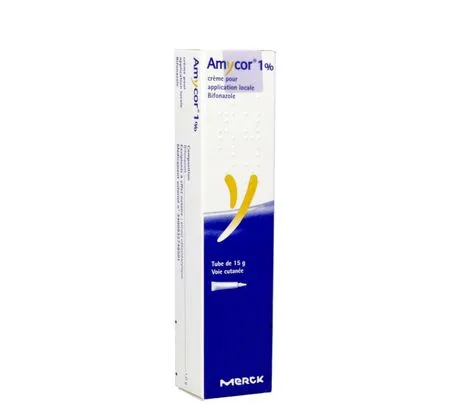
AMYCOR 1 PERCENT, cream for topical application
Composition
For 100 g of cream:
Bifonazole: 1,0 g
Excipients with known effect: cetostearyl alcohol and benzyl alcohol.
Sorbitan monostearate (Arlacel 60), polysorbate 60, cetyl palmitate, cetostearyl alcohol (Lanette 0), octyldodecanol (Eutanol G), benzyl alcohol (E1519), purified water q.s. 100 g.
Indications
Topical treatment of cutaneous and mucocutaneous mycoses due to:
- Dermatophytes
- Pityriasis versicolor
- Candida
Dosage and administration
AMYCOR 1 %, cream for topical application is to be applied once daily, morning or evening, after washing and drying the lesions to be treated, gently massaging the lesions and their periphery. In intertrigo, the cream should be applied in small quantities so as to avoid any maceration.
The duration of treatment depends on the infecting organisms and the sites of infection: generally 3 weeks for dermatophytoses and candidiasis and 2 weeks for Pityriasis Versicolor.
Warnings and precautions
Warnings:
- Despite the available clinical data, which are reassuring in this regard, and low transcutaneous passage, the experimental hepatic toxicity of this active ingredient administered systemically in several animal species should be noted.
- The occurrence of systemic effects is unlikely due to the very low rate of absorption through healthy skin. However, on damaged skin, over a large surface area or in infants (due to the surface area/weight ratio and the occlusive effect of diapers), caution is required.
Precautions for use
- The cream is not intended for ophthalmic use.
- In case of a hypersensitivity reaction, application should be discontinued.
- In certain cases, and in particular in mycoses of the perioral and perianogenital region, it is recommended to treat the digestive tract simultaneously.
- This medicine contains cetostearyl alcohol which may cause local skin reactions (for example: contact dermatitis).
- This medicine contains 20 mg of benzyl alcohol per gram of cream, and may cause allergic reactions or mild local irritation.
Interactions
The data available to date do not suggest the existence of clinically significant interactions.
Fertility, pregnancy and breastfeeding
Pregnancy
Although no teratogenic effect has been observed in animal studies, it is recommended not to administer this product during the first trimester of pregnancy.
Adverse effects
Some signs of local irritation (pruritus, burning, erythema) and dyshidrosis have been reported, most often mild and transient. They resolve spontaneously upon discontinuation of treatment.
Reporting of suspected adverse reactions
Reporting suspected adverse reactions after authorisation of the medicinal product is important. It allows continued monitoring of the benefit/risk balance of the medicinal product. Healthcare professionals are asked to report any suspected adverse reactions via the national reporting system: National Agency for the Safety of Medicines and Health Products (ANSM) and the network of Regional Pharmacovigilance Centres - Website: https://signalement.social-sante.gouv.fr/.
Pharmacodynamics
Pharmacotherapeutic class: antifungal for topical use (D: dermatological drugs), ATC code: D01AC10.
An imidazole antimycotic, bifonazole has a broad spectrum including dermatophytes, yeasts, moulds, certain fungi (Malassezia furfur) and GRAM+ bacteria such as corynebacterium and staphylococcus. The activity of bifonazole is fungicidal in vitro on dermatophytes above the concentration of 5 μg/mL. Trials in vitro have not demonstrated acquired resistance.
Pharmacokinetics
Following application of bifonazole, concentrations of 150 to 1 000 μg/mL were observed in the upper layer of the epidermis. A concentration of 2 to 3 μg/mL is still measured in the deep dermis. These concentrations are higher than the inhibitory concentrations measured in vitro.
Cutaneous absorption of bifonazole, studied after application maintained for 6 hours under an occlusive dressing, is on the order of 1% on healthy skin and 4 to 5 times higher on inflamed skin. These serum concentrations obtained, on the order of ng/mL, make a systemic effect unlikely.
Preclinical safety
The LD50 of bifonazole by oral route is > 2 000 mg/kg in rats and mice and > 500 mg/kg in rabbits and dogs.
Subchronic and chronic toxicity studies, carried out by oral route in rats, dogs and monkeys, did not show significant toxicity, apart from hepatic polarity observed at high doses and characterised by a slight elevation of liver enzymes without histopathological change. These observations are linked to an enzyme-inducing effect of the product. Hepatic fatty overload and a generalised disturbance of maturation were noted in dogs at high doses exceeding those used in topical formulations.
Local tolerance studies were carried out in rabbits up to doses of 3 mg/kg body weight of bifonazole. No alteration attributable to bifonazole was noted.
For certain formulations (cream), slight signs of skin irritation attributable to the excipients used (2-octododecanol or isopropyl myristate) were observed.
No specific effect was observed in reproduction and mutagenesis studies.
Prescription, supply and reimbursement
| Marketing authorisation (AMM) |
|
| Price: |
|
MERCK SERONO
37, rue Saint-Romain. 69379 Lyon cdx 08
Tel: 04 72 78 25 25
Medical information/Pharmacovigilance:
E-mail: infoqualit@merckgroup.com
Website: www.merckserono.fr
Source: VIDAL · Updated on 10/11/2026. This information does not replace advice from a healthcare professional.