

Medicines
SmPC of the 02/12/2024
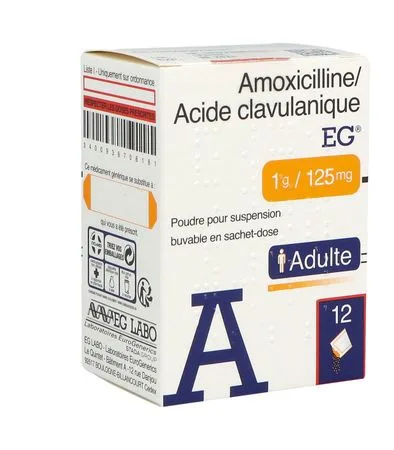
AMOXICILLIN/CLAVULANIC ACID EG 1 g/125 mg ADULTS, powder for oral suspension in sachet-dose (amoxicillin/clavulanic acid ratio: 8/1)
Composition
Amoxicillin (as amoxicillin trihydrate)............................................................................1000 mg
Clavulanic acid (as potassium clavulanate)...........................................................125 mg
Per sachet-dose
Excipients with known effect: This medicine contains 38,22 mg of sodium and 30 mg of aspartame (E951) per sachet-dose, as well as maltodextrin (source of glucose).
Microcrystalline cellulose, croscarmellose sodium, silica gel, fruit flavouring (containing in particular maltodextrin), aspartame (E951), magnesium stearate.
Indications
AMOXICILLIN/CLAVULANIC ACID EG is indicated for the treatment of the following infections in adults and children (see sections Dosage and administration, Warnings and precautions and Pharmacodynamics) :
• acute bacterial sinusitis (appropriately diagnosed);
• acute otitis media;
• acute exacerbation of chronic bronchitis (appropriately diagnosed);
• acute community-acquired pneumonia;
• cystitis;
• pyelonephritis;
• skin and soft tissue infections, in particular cellulitis, animal bites, severe dental abscess with spreading cellulitis;
• bone and joint infections, in particular osteomyelitis.
Official recommendations concerning the appropriate use of antibacterial agents should be taken into account.
Dosage and administration
Dosage
Doses are expressed as the quantity of amoxicillin/clavulanic acid, except where indicated by reference to an individual component.
The dose of AMOXICILLIN/CLAVULANIC ACID EG chosen to treat a particular infection should take into account:
• the expected pathogens and their probable susceptibility to antibacterial agents (see section Warnings and precautions) ;
• the severity and site of the infection;
• the patient's age, weight and renal function (see below).
The use of other formulations of AMOXICILLIN/CLAVULANIC ACID EG (e.g., providing higher doses of amoxicillin and/or different amoxicillin/clavulanic acid ratios) should be considered, if necessary (see sections Warnings and precautions and Pharmacodynamics).
For adults and children ≥ 40 kg, this formulation of AMOXICILLIN/CLAVULANIC ACID EG provides a total daily dose of 2000 mg of amoxicillin/250 mg of clavulanic acid, in two daily intakes, and 3000 mg of amoxicillin/375 mg of clavulanic acid, in three daily intakes, when administered in accordance with the recommendations below. For children < 40 kg, this formulation of AMOXICILLIN/CLAVULANIC ACID EG provides a maximum daily dose of 1600-3000 mg of amoxicillin/200-400 mg of clavulanic acid, when administered in accordance with the recommendations below. If a higher daily dose of amoxicillin is considered necessary, it is recommended to choose another formulation of AMOXICILLIN/CLAVULANIC ACID EG in order to avoid unnecessary administration of high daily doses of clavulanic acid (see sections Warnings and precautions and Pharmacodynamics).
The duration of treatment will depend on the patient's response to treatment. Certain infections (e.g., osteomyelitis) require prolonged treatment. Treatment should not be extended beyond 14 days without medical advice (see section Warnings and precautions on prolonged treatment).
Adults and children ≥ 40 kg
Recommended doses:
• standard dose (for all indications): 1000 mg/125 mg three times a day;
• lower dose (in particular for skin and soft tissue infections, and non-severe sinusitis): 1000 mg/125 mg twice daily.
Children < 40 kg
In children, use AMOXICILLIN/CLAVULANIC ACID EG as tablets, suspension, or pediatric sachets.
Recommended dose:
• from 40 mg/5 mg/kg/day to 80 mg/10 mg/kg/day (not exceeding 3000 mg/375 mg per day) in three doses, depending on the severity of the infection.
There are no clinical data for the 8/1 formulation in patients aged less than 1 month.
Elderly patients
No dose adjustment is considered necessary.
Patients with renal impairment
No dose adjustment is necessary in patients with a creatinine clearance (CrCl) greater than 30 ml/min.
In patients whose creatinine clearance is below 30 ml/min, the use of AMOXICILLIN/CLAVULANIC ACID EG formulations with an amoxicillin to clavulanic acid ratio of 8/1 is not recommended, as no dose adjustment recommendation is available.
Patients with hepatic impairment
Use with caution and monitor liver function regularly (see sections Contraindications and Warnings and precautions).
Method of administration
AMOXICILLIN/CLAVULANIC ACID EG is intended for oral administration.
Take the medicine at the start of a meal, in order to minimise the risk of gastrointestinal intolerance and to improve absorption of amoxicillin/clavulanic acid.
Treatment may be initiated parenterally according to the SmPC of the IV formulation and continued with a formulation for oral administration.
The contents of the sachet should be dispersed in half a glass of water before ingestion.
Contraindications
• hypersensitivity to the active substances, to penicillins or to any of the excipients listed in section Composition ;
• history of severe immediate hypersensitivity reaction (e.g., anaphylaxis) to another beta-lactam (e.g., a cephalosporin, a carbapenem, or a monobactam);
• history of jaundice/hepatic impairment related to amoxicillin/clavulanic acid (see section Adverse effects).
Warnings and precautions
Before starting treatment with amoxicillin/clavulanic acid, a thorough history is necessary to look for previous hypersensitivity reactions to penicillins, cephalosporins or other beta-lactams (see sections Contraindications and Adverse effects).
Serious and sometimes fatal hypersensitivity reactions (including anaphylactoid reactions and severe cutaneous adverse reactions) have been observed in patients treated with penicillins. Hypersensitivity reactions may also progress to Kounis syndrome, a severe allergic reaction that can lead to myocardial infarction (see section Adverse effects). Such reactions are more likely in patients with a history of penicillin hypersensitivity and in individuals with atopy.
Antibiotic-associated enterocolitis syndrome (drug-induced enterocolitis syndrome, DIES) has been reported mainly in children receiving amoxicillin/clavulanic acid (see section Adverse effects). SEIM is an allergic reaction whose main symptom is prolonged vomiting (1 to 4 hours after drug administration) in the absence of cutaneous or respiratory allergic symptoms. Other symptoms may include abdominal pain, diarrhoea, hypotension or leukocytosis with neutrophilia. Severe cases have been reported, including progression to shock. The occurrence of any allergic manifestation requires discontinuation of treatment with amoxicillin/clavulanic acid and initiation of another appropriate treatment.
In case of infection proven to be caused by organisms sensitive to amoxicillin, consideration should be given to replacing the amoxicillin/clavulanic acid combination with amoxicillin, in accordance with official recommendations.
This formulation of AMOXICILLIN/CLAVULANIC ACID EG may not be suitable when there is a significant risk that the expected pathogens are resistant to beta-lactams, without mediation by beta-lactamases sensitive to inhibition by clavulanic acid. This formulation may not be suitable for treating S. pneumoniae penicillin-resistant.
Convulsions are possible in patients with renal impairment or in patients receiving high doses (see section Adverse effects).
The amoxicillin/clavulanic acid combination should be avoided in case of suspected infectious mononucleosis, as the occurrence of a morbilliform rash has been associated with this condition after the use of amoxicillin.
Concomitant use of allopurinol during treatment with amoxicillin may increase the likelihood of allergic skin reactions.
Prolonged use of AMOXICILLIN/CLAVULANIC ACID EG may, in some cases, lead to excessive growth of non-susceptible organisms.
The occurrence at the beginning of treatment of a generalised febrile erythema associated with pustules may be a symptom of acute generalised exanthematous pustulosis (AGEP) (see section Adverse effects). This reaction requires discontinuation of treatment with AMOXICILLIN/CLAVULANIC ACID EG, and contraindicates any future use of amoxicillin in the patient.
The amoxicillin/clavulanic acid combination should be used with caution in patients showing signs of hepatic impairment (see sections Dosage and administration, Contraindications and Adverse effects).
Hepatic effects have been reported mainly in men and elderly patients and may be associated with prolonged treatment. These effects have very rarely been reported in children. In all populations, signs and symptoms generally appear during or shortly after treatment but, in some cases, they may only occur several weeks after treatment has stopped. They are generally reversible. Hepatic effects may be severe and deaths have been reported in extremely rare circumstances. They have almost always concerned patients with serious underlying disease or taking concomitant medicinal products known for their potential to induce hepatic effects (see section Adverse effects).
Antibiotic-associated colitis has been observed with virtually all antibacterial agents; its severity varies, from mild to life-threatening (see section Adverse effects). Therefore, it is important to consider this diagnosis if diarrhoea occurs during or after administration of any antibiotic. If antibiotic-associated colitis occurs, the amoxicillin/clavulanic acid combination must be stopped immediately; a physician should be consulted and appropriate treatment initiated. Medicinal products that inhibit peristalsis are contraindicated in this situation.
In case of prolonged treatment, it is recommended to regularly monitor organ function, in particular renal, hepatic and haematopoietic function.
Rare cases of prolonged prothrombin time (Quick time) have been reported in patients receiving amoxicillin/clavulanic acid. Appropriate monitoring should be put in place when anticoagulants are prescribed concomitantly. Dose adjustment of oral anticoagulants may be necessary to maintain the desired level of anticoagulation (see sections Interactions and Adverse effects). In patients with renal impairment, the dosage must be adjusted to the severity of the impairment (see section Dosage and administration).
Very rare cases of crystalluria (including acute renal injury) have been observed in patients with low urine output, mainly during parenteral administration. When high doses of amoxicillin are administered, it is advisable to maintain adequate fluid intake and urine output to reduce the risk of crystalluria. In patients with urinary catheters, catheter patency should be checked regularly (see sections Adverse effects and Overdose).
During treatment with amoxicillin, the enzymatic method with glucose oxidase should be used when testing for the presence of glucose in urine, as non-enzymatic methods may lead to false-positive results.
The presence of clavulanic acid in AMOXICILLIN/CLAVULANIC ACID EG may cause non-specific binding of IgG and albumin to red blood cell membranes, leading to a falsely positive Coombs test.
A positive result of the enzyme immunoassay test Aspergillus Platelia from Bio-Rad laboratories have been reported in patients receiving amoxicillin/clavulanic acid. However, these patients were not infected with Aspergillus. Cross-reactions with non-Aspergillus polysaccharides and polyfuranoses have been reported during the enzyme immunoassay test Aspergillus Platelia from Bio-Rad laboratories. Therefore, positive analytical results in patients receiving amoxicillin/clavulanic acid should be interpreted with caution and confirmed by other diagnostic methods.
Excipients
This medicine contains 38,22 mg of sodium per sachet-dose, which is equivalent to 1,91 % of the World Health Organization's maximum recommended daily dietary intake of 2 g of sodium per adult.
This medicine contains 30 mg of aspartame (E951) per sachet-dose. Aspartame contains a source of phenylalanine. May be harmful for people with phenylketonuria (PKU), a rare genetic disorder characterised by the accumulation of phenylalanine that cannot be properly eliminated. There are no clinical or non-clinical data on the use of aspartame in children under 12 weeks of age.
This medicine contains maltodextrin (a source of glucose). Patients with glucose-galactose malabsorption syndrome (a rare inherited disease) must not take this medicine.
Interactions
Oral anticoagulants
Oral anticoagulants are often administered concomitantly with penicillin-family antibiotics and no interaction has been reported. However, cases of increased INR have been reported in patients maintained on acenocoumarol or warfarin during amoxicillin administration. If co-administration is necessary, prothrombin time (Quick time) or INR should be closely monitored when amoxicillin is added or discontinued. In addition, dose adjustment of oral anticoagulants may be necessary (see sections Warnings and precautions and Adverse effects).
Methotrexate
Penicillins may reduce the excretion of methotrexate and thus increase its toxicity.
Probenecid
Concomitant use of probenecid is not recommended. Probenecid decreases the renal tubular secretion of amoxicillin. Concomitant use of probenecid may lead to a prolonged increase in the blood concentration of amoxicillin, but not of clavulanic acid.
Mycophenolate mofetil
In patients treated with mycophenolate mofetil, a decrease of approximately 50 % in the trough concentrations of the active metabolite, mycophenolic acid (MPA), has been reported in the days following the start of oral treatment combining amoxicillin and clavulanic acid. The change in trough concentration does not necessarily imply a change in overall MPA exposure. Therefore, a change in the dose of mycophenolate mofetil should normally not prove necessary in the absence of clinical signs of graft dysfunction. However, close clinical monitoring is required during administration of the combination, as well as shortly after the end of the antibiotic treatment.
Fertility, pregnancy and breastfeeding
Pregnancy
Animal studies have shown no direct or indirect harmful effects on pregnancy and/or embryonic/fetal development and/or parturition and/or postnatal development (see section Preclinical safety). Limited data on the use of amoxicillin/clavulanic acid in pregnant women do not indicate an increased risk of congenital malformations. A single study conducted in women with premature rupture of the foetal membranes before term indicated that prophylactic treatment with amoxicillin/clavulanic acid may be associated with an increased risk of necrotising enterocolitis in newborns. Use should be avoided during pregnancy unless the physician considers it necessary.
Breast-feeding
Both substances are excreted in breast milk (the effects of clavulanic acid on the breastfed infant are not known). Therefore, diarrhoea and fungal infection of the mucous membranes are possible in the breastfed infant and may require discontinuation of breastfeeding.
The amoxicillin-clavulanic acid combination may be used during breastfeeding only after assessment of the benefit/risk ratio by the treating physician.
Driving and using machines
Effects on the ability to drive vehicles or use machines have not been studied.
However, the occurrence of adverse reactions (e.g., allergic reactions, dizziness, convulsions) that may affect the ability to drive vehicles or use machines is possible (see section Adverse effects).
Adverse effects
The most frequent adverse reactions are diarrhoea, nausea and vomiting.
The adverse reactions identified in clinical studies and since the marketing of AMOXICILLIN/CLAVULANIC ACID EG are listed below by system organ class according to MedDRA classification.
The following terminology is used to classify adverse reactions according to their frequency:
Very common (≥1/10)
Common (≥1/100 to <1/10)
Uncommon (≥1/1 000 to <1/100)
Rare (≥1/10 000 to <1/1000)
Very rare (<1/10 000)
Not known (frequency cannot be estimated from the available data)
|
Infections and infestations |
|
|
Mucocutaneous candidiasis |
Common |
|
Excessive development of non-susceptible organisms |
Frequency not known |
|
Blood and lymphatic system disorders |
|
|
Reversible leucopenia (including neutropenia) |
Rare |
|
Thrombocytopenia |
Rare |
|
Reversible agranulocytosis |
Frequency not known |
|
Haemolytic anaemia |
Frequency not known |
|
Prolongation of bleeding time and prothrombin time (Quick test)1 |
Frequency not known |
|
Immune system disorders8 |
|
|
Quincke's oedema |
Frequency not known |
|
Anaphylaxis |
Frequency not known |
|
Serum sickness |
Frequency not known |
|
Hypersensitivity vasculitis |
Frequency not known |
|
Nervous system disorders |
|
|
Dizziness |
Uncommon |
|
Headache |
Uncommon |
|
Reversible hyperactivity |
Frequency not known |
|
Convulsions1 |
Frequency not known |
|
Aseptic meningitis |
Frequency not known |
|
Cardiac disorders |
|
|
Kounis syndrome |
Frequency not known |
|
Gastrointestinal disorders |
|
|
Diarrhoea |
Very common |
|
Nausea2 |
Common |
|
Vomiting |
Common |
|
Indigestion |
Uncommon |
|
Antibiotic-associated colitis3 |
Frequency not known |
|
Drug-induced enterocolitis syndrome |
Frequency not known |
|
Acute pancreatitis |
Frequency not known |
|
Glossophytia |
Frequency not known |
|
Dental discolorations9 |
Frequency not known |
|
Hepatobiliary disorders |
|
|
Elevations of AST and/or ALT levels4 |
Uncommon |
|
Hepatitis5 |
Frequency not known |
|
Cholestatic jaundice5 |
Frequency not known |
|
Skin and subcutaneous tissue disorders6 |
|
|
Skin rash |
Uncommon |
|
Pruritus |
Uncommon |
|
Urticaria |
Uncommon |
|
Erythema multiforme |
Rare |
|
Stevens-Johnson syndrome |
Frequency not known |
|
Toxic epidermal necrolysis |
Frequency not known |
|
Bullous or exfoliative dermatitis |
Frequency not known |
|
Acute generalised exanthematous pustulosis (AGEP)1 |
Frequency not known |
|
Drug hypersensitivity syndrome (DRESS) |
Frequency not known |
|
Drug-induced symmetrical intertriginous and flexural exanthema (SDRIFE) (baboon syndrome) |
Frequency not known |
|
Linear IgA dermatosis |
Frequency not known |
|
Renal and urinary disorders |
|
|
Interstitial nephritis |
Frequency not known |
|
Crystalluria (including acute kidney injury)7 |
Frequency not known |
|
1 See section Warnings and precautions 2 Nausea is more often associated with high oral doses. Gastrointestinal effects may be reduced by taking AMOXICILLIN/CLAVULANIC ACID EG at the start of a meal. 3 Including pseudomembranous colitis and haemorrhagic colitis (see section Warnings and precautions) 4 A moderate increase in AST and/or ALT levels has been noted in patients treated with beta-lactam antibiotics, but the significance of these increases is unknown. 5 These effects have been observed with other penicillins and cephalosporins (see section Warnings and precautions). 6 If hypersensitivity dermatitis occurs, treatment must be discontinued (see section Warnings and precautions). 7 See section Overdose 8 See sections Contraindications and Warnings and precautions 9 Superficial tooth discolouration has been very rarely observed in children. Good oral hygiene helps prevent tooth discolouration, as these can usually be removed by brushing. |
|
Reporting of suspected adverse reactions
Reporting suspected adverse reactions after authorisation of the medicinal product is important. It allows continued monitoring of the benefit/risk balance of the medicinal product. Healthcare professionals are asked to report any suspected adverse reaction via the national reporting system: National Agency for the Safety of Medicines and Health Products (ANSM) and the network of Regional Centres of Pharmacovigilance - Website: https://signalement.social-sante.gouv.fr/.
Overdose
Signs and symptoms of overdose
Gastrointestinal symptoms and disturbances of fluid and electrolyte balance are possible.
Cases of crystalluria leading in some cases to renal failure have been observed with amoxicillin (see section Warnings and precautions).
Convulsions are possible in patients with renal impairment or those receiving high doses.
Precipitation of amoxicillin has been observed in urinary catheters, particularly after intravenous administration of high doses. The patency of the catheter should be checked regularly (see section Warnings and precautions).
Management of intoxication
Treatment of gastrointestinal signs is symptomatic and involves particular monitoring of fluid and electrolyte balance.
Amoxicillin and clavulanic acid can be removed from the blood circulation by haemodialysis.
Pharmacodynamics
Pharmacotherapeutic class: Combinations of penicillins, including beta-lactamase inhibitors, ATC code: J01CR02.
Mechanism of action
Amoxicillin is a semi-synthetic penicillin (an antibiotic of the beta-lactam family), which inhibits one or more enzymes (often referred to as penicillin-binding proteins or PBPs) in the bacterial peptidoglycan biosynthesis pathway, structural components of the bacterial cell wall. Inhibition of peptidoglycan synthesis leads to a weakening of the cell wall, often followed by cell lysis and death.
As amoxicillin is subject to degradation by beta-lactamases produced by resistant bacteria, its spectrum of activity when administered alone does not include organisms producing these enzymes.
Clavulanic acid is a beta-lactam structurally related to penicillins. It inhibits certain beta-lactamase enzymes and thus prevents the inactivation of amoxicillin. Clavulanic acid alone does not have a clinically relevant antibacterial effect.
Pharmacokinetic/pharmacodynamic relationship
The time above the minimum inhibitory concentration (T > MIC) is considered the main parameter of the efficacy of amoxicillin.
Mechanisms of resistance
The two main mechanisms of resistance to amoxicillin/clavulanic acid are:
• inactivation by bacterial beta-lactamases not inhibited by clavulanic acid, including those of classes B, C and D;
• modification of PBPs, which reduces the affinity of the antibacterial agent for the target.
Impermeability of bacteria or efflux pump mechanisms may result in bacterial resistance, particularly in Gram-negative bacteria.
Susceptibility testing breakpoints
The MIC (minimum inhibitory concentration) interpretive criteria for susceptibility testing have been established by the European Committee on Antimicrobial Susceptibility Testing (EUCAST) for amoxicillin/clavulanic acid and are listed here:
https://www.ema.europa.eu/documents/other/minimum-inhibitory-concentration-mic-breakpoints_en.xlsx
The prevalence of resistance may vary geographically and over time for some species, and local information on resistance prevalence is desirable, particularly for the treatment of severe infections. If necessary, specialist advice should be sought when the usefulness of the agent in certain types of infection may be questionable given the local prevalence of resistance.
|
Classes |
|
Commonly susceptible species Gram-positive aerobes Enterococcus faecalis Gardnerella vaginalis Staphylococcus aureus (sensitive to methicillin)£ Coagulase-negative staphylococci (methicillin-sensitive) Streptococcus agalactiae Streptococcus pneumoniae1 Streptococcus pyogenes and other beta-haemolytic streptococci Group of Streptococcus viridans Gram-negative aerobes Capnocytophaga spp. Eikenella corrodens Haemophilus influenzae2 Moraxella catarrhalis Pasteurella multocida Anaerobes Bacteroides fragilis Fusobacterium nucleatum Prevotella spp. |
|
Species with potentially problematic acquired resistance Gram-positive aerobes Enterococcus faecium$ Gram-negative aerobes Escherichia coli Klebsiella oxytoca Klebsiella pneumoniae Proteus mirabilis Proteus vulgaris |
|
Naturally resistant species Gram-negative aerobes Acinetobacter sp. Citrobacter freundii Enterobacter sp. Legionella pneumophila Morganella morganii Providencia spp. Pseudomonas sp. Serratia sp. Stenotrophomonas maltophilia Other microorganisms Chlamydophila pneumoniae Chlamydophila psittaci Coxiella burnetti Mycoplasma pneumoniae |
|
$ Moderate natural sensitivity in the absence of an acquired resistance mechanism. £ All methicillin-resistant staphylococci are resistant to the amoxicillin/clavulanic acid combination. 1 This formulation of the amoxicillin/clavulanic acid combination may not be suitable for the treatment of Streptococcus pneumoniae penicillin-resistant (see sections Dosage and administration and Warnings and precautions). 2 The existence of certain strains with decreased susceptibility has been reported in certain countries of the European Union with a frequency greater than 10%. |
Pharmacokinetics
Absorption
Amoxicillin and clavulanic acid are completely dissociated in aqueous solution at physiological pH. These two components are rapidly absorbed after oral administration.
Absorption of amoxicillin/clavulanic acid is improved when the medicinal product is taken at the start of a meal. After oral administration, amoxicillin and clavulanic acid have a bioavailability of approximately 70 %. The plasma profiles of these two components are similar, and the time to reach maximum plasma concentration (Tmax) is approximately one hour in each case.
The pharmacokinetic results of a study in which the amoxicillin/clavulanic acid combination (powder for oral suspension in sachet 1000 mg/125 mg, three times daily) was administered fasting to groups of healthy volunteers are presented below.
|
Mean pharmacokinetic parameters (± SD) |
|||||
|
Active substances administered |
Dose |
Cmax |
Tmax * |
AUC (0-∞) |
T 1/2 |
|
(mg) |
(µg/ml) |
(h) |
(µg.h/ml) |
(h) |
|
|
Amoxicillin |
|||||
|
AMX/AC 1000 mg/125 mg |
1000 |
14,4 ±3,1 |
1,5 (0,75-2,0) |
38,2
|
1,1 ±0,2 |
|
Clavulanic acid |
|||||
|
AMX/AC 1000 mg/125 mg |
125 |
3,2 ±0,85 |
1,0
|
6,3 ±1,8 |
0,91 ±0,09 |
|
AMX – amoxicillin, AC – clavulanic acid * Median (range) |
|||||
The serum concentrations of amoxicillin and clavulanic acid obtained with the amoxicillin/clavulanic acid combination are similar to those obtained after oral administration of equivalent doses of amoxicillin or clavulanic acid alone.
Distribution
About 25 % of total plasma clavulanic acid and 18 % of total plasma amoxicillin are protein-bound.
The apparent volume of distribution is approximately 0,3 to 0,4 L/kg for amoxicillin and approximately 0,2 L/kg for clavulanic acid.
After intravenous administration, amoxicillin and clavulanic acid have been detected in the gallbladder, abdominal tissue, skin, fat, muscle tissues, synovial and peritoneal fluids, bile and pus. Amoxicillin does not adequately distribute into cerebrospinal fluid.
Animal studies have not shown significant tissue accumulation of drug-derived substance for either component. Amoxicillin, like most penicillins, can be detected in breast milk. Traces of clavulanic acid are also found in breast milk (see section Fertility, pregnancy and breastfeeding).
Amoxicillin and clavulanic acid have been shown to cross the placental barrier (see section Fertility, pregnancy and breastfeeding).
Biotransformation
Amoxicillin is partially excreted in urine as inactive penicilloic acid, in a proportion of up to 10 to 25 % of the initial dose. Clavulanic acid is extensively metabolised in humans and eliminated in urine and faeces, and as carbon dioxide in expired air.
Elimination
The main route of elimination of amoxicillin is renal, whereas clavulanic acid is eliminated by both renal and non-renal mechanisms.
The amoxicillin/clavulanic acid combination has a mean elimination half-life of about one hour and a mean total clearance of about 25 l/h in healthy subjects. About 60 to 70 % of the amoxicillin and about 40 to 65 % of the clavulanic acid are excreted unchanged in the urine within 6 hours following administration of single tablets of AMOXICILLIN/CLAVULANIC ACID EG 250 mg/125 mg or 500 mg/125 mg. Various studies have shown that urinary excretion is 50 to 85 % for amoxicillin and 27 to 60 % for clavulanic acid over a period of 24 hours. In the case of clavulanic acid, the major part of the medicinal product is excreted within the first 2 hours following administration.
Concomitant use of probenecid delays the excretion of amoxicillin, but does not delay the renal excretion of clavulanic acid (see section Interactions).
Age
The elimination half-life of amoxicillin in young children aged about 3 months to 2 years is similar to that of older children and adults. In very young children (including premature newborns), during the first week of life, administration should be limited to twice daily due to the immaturity of the renal elimination pathway. Because of an increased probability of impaired renal function in elderly patients, the dose should be selected carefully and it may be useful to monitor renal function.
Sex
After oral administration of amoxicillin/clavulanic acid to healthy men and women, sex has no significant effect on the pharmacokinetic characteristics of amoxicillin or clavulanic acid.
Patients with renal impairment
Total serum clearance of the amoxicillin/clavulanic acid combination decreases in proportion to the decline in renal function. A more pronounced reduction in drug clearance is observed for amoxicillin compared with clavulanic acid, because a greater proportion of amoxicillin is excreted renally. In cases of renal impairment, the dose should therefore be selected so as to avoid unnecessary accumulation of amoxicillin while maintaining an adequate concentration of clavulanic acid (see section Dosage and administration).
Patients with hepatic impairment
The amoxicillin/clavulanic acid combination should be used with caution in patients with hepatic impairment, and hepatic function should be monitored regularly.
Preclinical safety
Non-clinical data from conventional safety pharmacology, genotoxicity, and reproductive function studies did not reveal any particular risk for humans.
Repeated-dose toxicology studies conducted in dogs with the amoxicillin/clavulanic acid combination show a potential for gastric irritation, vomiting and discolouration of the tongue.
No carcinogenesis studies have been conducted with AMOXICILLIN/CLAVULANIC ACID EG or its constituents.
Prescription, supply and reimbursement
Possible repackaging
| Marketing authorisation (AMM) |
|
| Price: |
|
Collection.
CENTRAL PARK 9-15 RUE MAURICE MALLET
92130 ISSY-LES-MOULINEAUX
Tel: 01 46 94 86 86 contact@eglabo.fr
https://www.eglabo.fr/
Source: VIDAL · Updated on 10/11/2026. This information does not replace advice from a healthcare professional.