
Medicines
SmPC of 18/12/2025
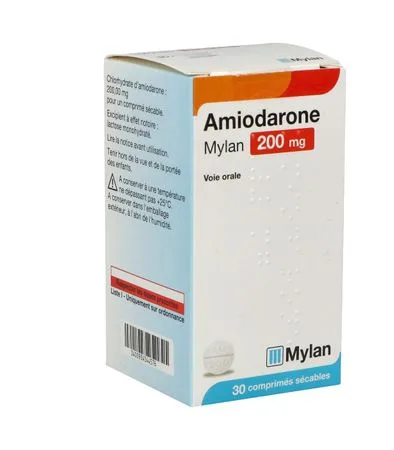
AMIODARONE VIATRIS 200 mg, scored tablet
Composition
Amiodarone hydrochloride..................................................................................................................200,00 mg
For a scored tablet.
Excipients with known effect: lactose monohydrate (100,00 mg).
Lactose monohydrate, microcrystalline cellulose (E460), povidone (E1201), crospovidone (E1202), anhydrous colloidal silica, talc (E553b), magnesium stearate.
Indications
Prevention of recurrences of:
• life-threatening ventricular tachycardias: treatment must be initiated in a hospital setting under monitoring;
• documented symptomatic and disabling ventricular tachycardias;
• documented supraventricular tachycardias when the need for treatment is established in case of resistance or contraindication to other therapies;
• ventricular fibrillations.
Treatment of supraventricular tachycardias:
• slowing or reduction of atrial fibrillation or atrial flutter.
Amiodarone may be used in the presence of coronary artery disease and/or impaired left ventricular function (see section Pharmacodynamics).
Dosage and administration
Dosage
Loading treatment
The usual dosage regimen is 3 tablets per day, for 8 to 10 days.
In certain cases the loading treatment may have required higher doses (4 to 5 tablets per day), always for short periods and under electrocardiographic monitoring.
Maintenance treatment
Seek the minimum effective dose, which varies between patients, of ½ tablet per day (1 tablet every two days) to 2 tablets every day.
Paediatric population
The safety and efficacy of amiodarone in children have not been established.
The data currently available are described in the sections Pharmacodynamics and Pharmacokinetics.
Method of administration
Oral use.
Contraindications
This medicine is contraindicated in the following situations:
• sinus bradycardia and non-paced sino-atrial blocks;
• sick sinus syndrome without pacemaker (risk of sinus arrest);
• high-degree atrioventricular conduction disorders without pacemaker;
• hyperthyroidism, due to its possible worsening by amiodarone;
• hypersensitivity to amiodarone, to iodine or to any of the excipients listed in section Composition ;
• the 2th and 3th trimesters of pregnancy;
• breastfeeding;
• in combination with:
- drugs that cause torsades de pointes (except antiparasitics, neuroleptics and methadone):
- class IA antiarrhythmics (quinidine, hydroquinidine, disopyramide),
- class III antiarrhythmics (sotalol, dofetilide, ibutilide),
- other medicines such as: arsenic trioxide, bepridil, cisapride, citalopram, escitalopram, diphemanil, dolasetron IV, domperidone, dronedarone, erythromycin IV, levofloxacin, mequitazine, mizolastine, moxifloxacin, prucalopride, spiramycin IV, toremifene, vincamine IV (see section Interactions),
- telaprevir,
- cobicistat.
Warnings and precautions
Special warnings
Cardiac effects
• An ECG must be performed before starting treatment.
• The slowing of heart rate may be more pronounced in elderly patients.
• Under amiodarone, the electrocardiogram is modified. This "cordaronic" modification consists of a prolongation of QT reflecting prolongation of repolarisation, possibly with the appearance of a U wave; it is a sign of therapeutic impregnation and not of toxicity.
• The occurrence during treatment of a 2th or 3th degree, of sinoatrial block or of bifascicular block must lead to discontinuation of treatment. An atrioventricular block of the 1er degree atrioventricular block should lead to reinforced monitoring.
• The occurrence of a new rhythm disorder or the worsening of a pre-existing and treated rhythm disorder has been reported (see section Adverse effects).
• Such an arrhythmogenic effect is possible, in particular in the presence of factors favouring QT interval prolongation such as certain drug combinations and/or the existence of hypokalaemia (see sections Interactions and Adverse effects). The risk of inducing torsades de pointes under amiodarone appears lower at an equal degree of interval prolongation than with other antiarrhythmics.
Thyroid manifestations
• The presence of iodine in the molecule falsifies certain thyroid tests (radioactive iodine uptake, PBI); nevertheless, a thyroid assessment is always possible (T3, T4, TSHus).
• Amiodarone may cause thyroid abnormalities, particularly in patients with a history of thyroid disorders. A TSH assay is recommended in all patients before starting treatment, then regularly during treatment and several months after its discontinuation, and in case of clinical suspicion of dysthyroidism (see section Adverse effects).
Pulmonary manifestations
The onset of dyspnoea or an isolated dry cough, alone or associated with an alteration of general condition, should suggest pulmonary toxicity such as interstitial pneumonitis and requires radiological monitoring (see section Adverse effects).
Hepatic manifestations
Regular monitoring of hepatic function is recommended at the start of treatment and then regularly during treatment with amiodarone (see section Adverse effects).
Neuromuscular manifestations
Amiodarone may cause sensory, motor or mixed peripheral neuropathies and myopathies (see section Adverse effects).
Ocular manifestations
In case of blurred vision or decreased visual acuity, a complete ophthalmological examination including fundus examination should be performed promptly. Discontinuation of amiodarone is required if amiodarone-induced optic neuropathy or neuritis occurs, due to the potential risk of progression to blindness (see section Adverse effects).
Severe cutaneous reactions
Cutaneous reactions such as Stevens-Johnson syndrome and Lyell syndrome (toxic epidermal necrolysis), which may be life-threatening or fatal, may occur. If symptoms or signs suggestive of these syndromes appear (such as a progressive skin rash with blisters or mucosal lesions), treatment with amiodarone must be stopped immediately.
Severe bradycardia and conduction disorders
Cases of severe bradycardia and conduction disorders, which may be life-threatening, have been observed when amiodarone is used in combination with sofosbuvir in combination with another direct-acting antiviral (DAA) acting directly on the hepatitis C virus (HCV), such as daclatasvir, simeprevir, or ledipasvir.
Bradycardia generally occurred within a period of a few hours to a few days, but cases with a longer onset interval have been observed, mostly up to 2 weeks after initiation of anti-HCV treatment.
Amiodarone should be used in patients treated with medicinal products containing sofosbuvir only in cases of intolerance or contraindication to other antiarrhythmic treatments.
If concomitant use of amiodarone is deemed necessary, it is recommended that patients undergo cardiac monitoring in a hospital setting during the first 48 hours of co-administration, after which outpatient monitoring or self-monitoring of heart rhythm should be performed daily for at least the first 2 weeks of treatment.
Given the long half-life of amiodarone, cardiac monitoring as indicated above should also be performed in patients who have stopped amiodarone in the last few months and who need to start treatment with medicinal products containing sofosbuvir alone or in combination with other DAAs.
All patients currently using or who have recently used amiodarone in combination with medicinal products containing sofosbuvir must be made aware of the symptoms of bradycardia and conduction disorders and must be informed of the need to consult a physician urgently if they experience these symptoms.
Related to amiodarone
The combination (see section Interactions) with:
• beta-blockers other than sotalol (contraindicated combination) and esmolol (combination requiring precautions for use);
• verapamil and diltiazem;
will only be considered for the prevention of life-threatening ventricular arrhythmias.
Taking amiodarone is not recommended with ciclosporin, diltiazem (injectable route) and verapamil (injectable route), certain antiparasitic agents (halofantrine, lumefantrine and pentamidine), certain neuroleptics (amisulpride, chlorpromazine, cyamemazine, droperidol, flupentixol, fluphenazine, haloperidol, levomepromazine, pimozide, pipamperone, pipotiazine, sertindole, sulpiride, sultopride, tiapride, zuclopenthixol), fluoroquinolones (other than levofloxacin and moxifloxacin), stimulant laxatives, methadone and fingolimod (see section Interactions).
Related to excipients
This medicine contains lactose. Patients with galactose intolerance, total lactase deficiency or glucose-galactose malabsorption syndrome (rare hereditary diseases) must not take this medicine.
Precautions for use
• Electrolyte disturbances, in particular hypokalaemia: it is important to take into account situations that may be associated with hypokalaemia, as the latter may promote the occurrence of proarrhythmic effects.
Hypokalaemia will be corrected before administration of amiodarone.
• The adverse effects mentioned below are most often related to drug overdose; they can be avoided or their significance minimized by carefully seeking the minimum maintenance dose.
During treatment, it is advised to avoid sun exposure or to protect yourself from it.
• In children, the tolerability and efficacy of amiodarone have not been evaluated in controlled clinical trials.
• Due to the possible increase in the defibrillation and/or pacing threshold of implantable cardioverter-defibrillators or pacemakers, it is recommended to check this threshold before and several times after starting amiodarone treatment as well as during any change in dosage.
• Anaesthesia
Before surgery, the anaesthetist must be informed that the patient is being treated with amiodarone.
Chronic treatment with amiodarone is likely to add to the haemodynamic risk of general or local anaesthetics in terms of adverse effects. These concern in particular the bradycardic and hypotensive effects, the decrease in cardiac output and conduction disorders.
In addition, a few cases of acute respiratory distress have been observed in the immediate aftermath of surgical procedures in patients treated with amiodarone. Consequently, close monitoring is recommended during artificial ventilation of these patients (see section Adverse effects).
• Transplantation
In retrospective studies, the use of amiodarone in transplant recipients before cardiac transplantation has been associated with an increased risk of primary graft dysfunction (PGD).
PGD is a potentially fatal complication of heart transplantation that manifests as left, right or biventricular dysfunction occurring within the 24 first hours after the graft and for which there is no identifiable secondary cause (see section Adverse effects). Severe PGD may be irreversible.
For patients on the waiting list for cardiac transplantation, another antiarrhythmic medicine should be used as soon as possible before transplantation.
Interactions
Antiarrhythmic medicinal products
Many antiarrhythmics depress cardiac automaticity, conduction and contractility.
The association of antiarrhythmics of different classes can provide a beneficial therapeutic effect, but it proves most often very delicate, requiring close clinical monitoring and ECG control. The association of antiarrhythmics causing torsades de pointes (amiodarone, disopyramide, quinidine-type agents, sotalol…) is contraindicated.
Combining antiarrhythmics of the same class is not recommended, except in exceptional cases, due to the increased risk of cardiac adverse effects.
The association with medicinal products having negative inotropic, bradycardic and/or atrioventricular conduction-slowing properties is delicate and requires clinical monitoring and ECG control.
Medicinal products that may induce torsades de pointes
This serious cardiac rhythm disorder can be caused by a number of medicinal products, whether antiarrhythmic or not.
Hypokalaemia (see hypokalaemic medicinal products) is a predisposing factor, as is bradycardia (see bradycardic medicinal products) or a pre-existing prolongation of the QT interval, congenital or acquired.
The medicinal products concerned include in particular class IA and III antiarrhythmics and certain neuroleptics.
For dolasetron, erythromycin, spiramycin and vincamine, only the forms administered intravenously are concerned by this interaction.
The use of a torsadogenic medicine with another torsadogenic medicine is generally contraindicated.
However, some of them, because of their essential nature, are exceptions to the rule, being only advised against with torsadogenic agents. These are methadone, antiparasitic agents (halofantrine, lumefantrine, pentamidine) and neuroleptics.
Bradycardic medicinal products
Many medicinal products can cause bradycardia. This is the case in particular for class IA antiarrhythmics, beta-blockers, certain class III antiarrhythmics, certain calcium antagonists, digitalis glycosides, pilocarpine, anticholinesterases, etc.
Effects of amiodarone on other medicinal products
Amiodarone and/or its metabolite, desethylamiodarone, inhibits CYP1A, CYP1A2, CYP3A4, CYP2C9, CYP2D6 and P-glycoprotein, and may increase the exposure of their substrates.
Due to the long duration of action of amiodarone, these interactions may be observed for several months after amiodarone discontinuation.
Effects of other medicinal products on amiodarone
Inhibitors of CYP3A4 and CYP2C8 may potentially inhibit the metabolism of amiodarone and increase its exposure.
It is recommended to avoid CYP3A4 inhibitors (for example grapefruit juice and certain medicinal products) during treatment with amiodarone.
Contraindicated combinations
+ Medicines liable to cause torsades de pointes (except antiparasitics, neuroleptics and methadone, see "Contraindicated associations")
+ Class IA antiarrhythmics (quinidine, hydroquinidine, disopyramide...)
+ Class III antiarrhythmics (dofetilide, ibutilide, sotalol)
+ Other medicines such as: arsenic trioxide, bepridil, cisapride, citalopram, escitalopram, diphemanil, dolasetron IV, domperidone, dronedarone, erythromycin IV, levofloxacin, mequitazine, mizolastine, moxifloxacin, prucalopride, spiramycin IV, toremifene, vincamine IV
Increased risk of ventricular rhythm disorders, in particular torsades de pointes.
+ Telaprevir
Disorders of automaticity and cardiac conduction with risk of excessive bradycardia.
+ Cobicistat
Risk of increased adverse effects of amiodarone due to decreased metabolism.
Combinations not recommended
+ Sofosbuvir
Co-administration of amiodarone with treatments containing sofosbuvir may lead to severe symptomatic bradycardia. Use only if no alternative treatment is available. Close monitoring is recommended in case of co-administration of these medicinal products (see section Warnings and precautions).
+ Substrates of CYP3A4
Amiodarone, an inhibitor of CYP3A4, increases plasma concentrations of CYP3A4 substrates, which may lead to a possible increase in their toxicity.
+ Ciclosporin
Increased blood concentrations of ciclosporin, due to decreased hepatic metabolism, with risk of nephrotoxic effects.
Measurement of blood ciclosporin concentrations, monitoring of renal function and adjustment of the ciclosporin dose during treatment with amiodarone.
+ Injectable diltiazem
Risk of bradycardia and atrioventricular block. If this combination cannot be avoided, close clinical monitoring and continuous ECG.
+ Fingolimod
Potentiation of bradycardic effects that may have fatal consequences. Beta-blockers are all the more at risk as they prevent adrenergic compensatory mechanisms.
Clinical monitoring and continuous ECG for 24 hours following the first dose.
+ Injectable verapamil
Risk of bradycardia and atrioventricular block.
If this combination cannot be avoided, close clinical monitoring and continuous ECG.
+ Antiparasitic agents liable to cause torsades de pointes (halofantrine, lumefantrine, pentamidine)
Increased risk of ventricular rhythm disorders, in particular torsades de pointes.
If possible, interrupt one of the two treatments. If the combination cannot be avoided, prior QT check and monitored ECG surveillance.
+ Neuroleptics liable to cause torsades de pointes (amisulpride, chlorpromazine, cyamemazine, droperidol, flupentixol, fluphenazine, haloperidol, levomepromazine, pimozide, pipamperone, pipotiazine, sertindole, sulpiride, sultopride, tiapride, zuclopenthixol)
Increased risk of ventricular rhythm disorders, in particular torsades de pointes.
+ Methadone
Increased risk of ventricular rhythm disorders, in particular torsades de pointes.
+ Fluoroquinolones other than levofloxacin and moxifloxacin (contraindicated combinations)
Increased risk of ventricular rhythm disorders, in particular torsades de pointes.
+ Stimulant laxatives
Increased risk of ventricular rhythm disorders, in particular torsades de pointes (hypokalaemia is a predisposing factor).
Correct any hypokalaemia before administering the product and carry out clinical, electrolyte and electrocardiographic monitoring.
+ Fidaxomicin
Increased plasma concentrations of fidaxomicin.
Associations requiring precautions for use
+ P-gp substrates
Amiodarone is a P-gp inhibitor. Co-administration with P-gp substrates may result in an increase in their exposure.
+ Digitalis glycosides
Depression of automaticity (excessive bradycardia) and atrioventricular conduction disorders.
When digoxin is used: increase in digoxinemia due to decreased clearance of digoxin.
Clinical monitoring and ECG, and if appropriate, monitor digoxinemia and adjust the dose of digoxin.
+ Dabigatran
Increase in plasma concentrations of dabigatran, with increased risk of bleeding.
In the post-surgical indication: clinical monitoring and adjustment of the dabigatran dose if necessary, without exceeding 150 mg/day.
+ CYP2C9 substrates
Amiodarone increases the concentrations of substrates of CYP2C9 such as vitamin K antagonists and phenytoin.
+ Vitamin K antagonists
Increased effect of the vitamin K antagonist and risk of bleeding.
More frequent INR monitoring. Adjustment of the vitamin K antagonist dose during treatment with amiodarone and 8 days after its discontinuation.
+ Phenytoin (and, by extrapolation, fosphenytoin)
Increase in plasma concentrations of phenytoin with signs of overdose, particularly neurological (decreased hepatic metabolism of phenytoin).
Clinical monitoring, monitoring of plasma phenytoin concentrations and possible adjustment of its dose.
+ CYP2D6 substrates
• Flecainide
Amiodarone increases plasma concentrations of flecainide by inhibition of cytochrome CYP2D6. The flecainide dose must be adjusted.
+ Substrates of CYP3A4
Amiodarone, an inhibitor of CYP3A4, increases plasma concentrations of substrates of this cytochrome, which may lead to a possible increase in their toxicity.
• Statins (simvastatin, atorvastatin, lovastatin)
The risk of muscle toxicity (e.g. rhabdomyolysis) is increased when amiodarone is administered concomitantly with statins metabolised by CYP3A4. It is recommended to use another statin not concerned by this type of interaction.
+ Tacrolimus
Increase in blood concentrations of tacrolimus due to inhibition of its metabolism by amiodarone.
Measurement of blood tacrolimus concentrations, monitoring of renal function and adjustment of the tacrolimus dose during the combination and upon discontinuation of amiodarone.
+ Lidocaine
Risk of increased plasma lidocaine concentrations, with possible neurological and cardiac adverse effects, due to decreased hepatic metabolism by amiodarone.
Clinical monitoring, ECG and possibly monitoring of plasma lidocaine concentrations. If needed, adjustment of the lidocaine dose during treatment with amiodarone and after its discontinuation.
+ Other molecules metabolised by CYP3A4 (sirolimus, sildenafil, midazolam, dihydroergotamine, ergotamine, colchicine, triazolam)
Amiodarone, an inhibitor of CYP3A4, increases plasma concentrations of these molecules, which may lead to a possible increase in their toxicity.
+ Beta-blockers (except esmolol and sotalol)
Automaticity and conduction disorders (suppression of compensatory sympathetic mechanisms).
Clinical monitoring and ECG.
+ Beta-blockers in heart failure (bisoprolol, carvedilol, metoprolol, nebivolol)
Disorders of automaticity and cardiac conduction with risk of excessive bradycardia.
Increased risk of ventricular rhythm disorders, particularly torsades de pointes. Clinical monitoring and regular ECG.
+ Esmolol
Disorders of contractility, automaticity and conduction (suppression of compensatory sympathetic mechanisms).
Clinical monitoring and ECG.
+ Diltiazem per os
Risk of bradycardia or atrioventricular block, particularly in elderly persons.
Clinical monitoring and ECG.
+ Verapamil per os
Risk of bradycardia or atrioventricular block, particularly in elderly persons.
Clinical monitoring and ECG.
+ Certain macrolides (azithromycin, clarithromycin, roxithromycin)
Increased risk of ventricular rhythm disorders, in particular torsades de pointes.
Clinical and electrocardiographic monitoring during the combination.
+ Hypokalaemic agents (hypokalaemic diuretics (alone or in combination), amphotericin B (IV route), glucocorticoids (systemic route), tetracosactide)
Increased risk of ventricular rhythm disorders, in particular torsades de pointes (hypokalaemia is a predisposing factor).
Correct any hypokalaemia before administering the product and carry out clinical, electrolyte and electrocardiographic monitoring.
+ Bradycardic agents
Increased risk of ventricular rhythm disorders, particularly torsades de pointes. Clinical and electrocardiographic monitoring.
+ Orlistat
Risk of decreased plasma concentrations of amiodarone and its active metabolite.
Clinical monitoring and, if necessary, ECG.
+ Tamsulosin
Risk of increased adverse effects of tamsulosin, through inhibition of its hepatic metabolism.
Clinical monitoring and adjustment of the tamsulosin dosage during treatment with the enzyme inhibitor and after its discontinuation, where applicable.
+ Voriconazole
Increased risk of ventricular rhythm disorders, in particular torsades de pointes, through possible decreased metabolism of amiodarone.
Clinical monitoring and ECG, and possible adjustment of the amiodarone dosage.
Association to be taken into account
+ Pilocarpine
Risk of excessive bradycardia (additive bradycardic effects).
Fertility, pregnancy and breastfeeding
Pregnancy
Animal studies have not shown any teratogenic effect. In the absence of a teratogenic effect in animals, a malformative effect in humans is not expected. Indeed, to date, substances responsible for malformations in humans have been shown to be teratogenic in animals in well-conducted studies in two species.
In clinical practice, there are currently no sufficiently relevant data to assess a possible teratogenic effect of amiodarone when administered in the first trimester of pregnancy.
Fetal thyroid begins to take up iodine from 14 weeks of amenorrhoea; no effect on the fetal thyroid is expected in case of prior administrations.
An iodine overload with the use of this product beyond this term may lead to fetal hypothyroidism, biological or even clinical (goitre).
Consequently, the use of this medicine is contraindicated from 2th trimester.
Breast-feeding
Amiodarone and its metabolite, as well as iodine, pass into breast milk at concentrations higher than in maternal plasma. Due to the risk of hypothyroidism in the infant, breastfeeding is contraindicated during treatment with this medicine.
Adverse effects
Adverse effects have been classified by system organ class and by frequency according to the following conventions:
Very common (≥ 10 %); common (≥ 1 %, < 10 %); uncommon (≥ 0,1 %, < 1 %); rare (≥ 0,01 %, < 0,1 %); very rare (< 0,01 %); frequency not known (cannot be estimated from the available data).
Eye disorders
Very common
Corneal micro-deposits, almost constant in adults, usually remaining localised to the sub-pupillary area and not contraindicating continuation of treatment. Exceptionally, they may be accompanied by perception of coloured halos in dazzling light, or a sensation of fog.
Consisting of complex lipid deposits, corneal micro-deposits are always fully reversible upon discontinuation of treatment.
Very rare
Optic neuropathies (optic neuritis) with blurred vision and decreased vision and papilledema on fundoscopy. The course may progress to a more or less severe reduction in visual acuity. The relationship with amiodarone does not currently appear established. However, in the absence of another obvious etiology, it is recommended to discontinue treatment.
Skin and subcutaneous tissue disorders
Very common
Photosensitization. It is advised not to expose oneself to the sun (and, in general, to ultraviolet rays) during treatment.
Common
Cutaneous pigmentation, lilac or slate-grey, occurring at high daily doses prescribed over a long period; after treatment discontinuation, the disappearance of this pigmentation is slow (10 to 24 months).
Very rare
• Erythema during radiotherapy.
• Skin rashes, generally non-specific.
• Exfoliative dermatitis without the relationship with the product clearly established.
• Alopecia.
Frequency not known
• Eczema.
• Severe skin reactions, sometimes fatal, such as toxic epidermal necrolysis (Lyell syndrome) and Stevens-Johnson syndrome.
• Bullous dermatitis.
• DRESS syndrome (Drug Rash with Eosinophilia and Systemic Symptoms).
Endocrine disorders
Thyroid manifestations
Very common
Apart from any clinical sign of dysthyroidism, a "dissociated" thyroid hormone level (increase in T4, normal or slightly reduced T3) does not justify discontinuing treatment.
Common
Hypothyroidism takes a classic form: weight gain, feeling of cold, apathy, drowsiness; a clear rise in TSH confirms the diagnosis. Discontinuation of administration leads to a gradual return to euthyroidism within 1 to 3 months; this discontinuation is not mandatory: if the indication justifies it, amiodarone may be continued while combining replacement thyroid therapy based on L-thyroxine, with TSH serving as a dosing guide.
Hyperthyroidism is more misleading: paucisymptomatic (slight unexplained weight loss, attenuation of antianginal and/or antiarrhythmic efficacy); psychiatric forms in elderly subjects, or even thyrotoxicosis.
The collapse of the ultrasensitive TSH confirms the diagnosis. Discontinuation of amiodarone is imperative: it is usually sufficient to initiate clinical recovery within 3-4 weeks. Severe cases that may lead to the patient's death require urgent initiation of appropriate treatment. When thyrotoxicosis is concerning, either in itself or because of its impact on a precarious myocardial balance, the inconsistent efficacy of synthetic antithyroid agents leads to recommending frank corticosteroid therapy (1 mg/kg) and sufficiently prolonged (3 months). Cases of hyperthyroidism have been reported up to several months after discontinuation of amiodarone.
Other endocrine disorders
Very rare cases of SIADH (syndrome of inappropriate antidiuretic hormone secretion), particularly when associated with medicinal products potentially inducing hyponatraemia. See also the section "investigations".
Respiratory, thoracic and mediastinal disorders
Common
Cases of diffuse interstitial or alveolar pneumopathy and of bronchiolitis obliterans organizing pneumonia (BOOP), sometimes with a fatal course, have been reported. The onset of exertional dyspnea or a dry cough, isolated or associated with an impairment of general condition (fatigue, weight loss, low-grade fever) requires radiological monitoring and, if appropriate, discontinuation of treatment. These pneumopathies may in fact progress to pulmonary fibrosis.
Early discontinuation of amiodarone, whether or not associated with corticosteroid therapy, leads to regression of the disorders. Clinical signs usually disappear within 3 or 4 weeks; radiological and functional improvement is slower (several months).
A few cases of pleurisy, generally associated with interstitial pneumopathies, have been reported.
Very rare
• Bronchospasm, particularly in asthmatic patients.
• Acute respiratory distress syndromes, sometimes with a fatal course, sometimes immediately following a surgical procedure (a possible interaction with high doses of oxygen has been suggested) (see section Warnings and precautions).
Not known (frequency cannot be estimated from the available data)
Cases of pulmonary hemorrhage, sometimes manifesting as hemoptysis, have been reported. These pulmonary manifestations often appear associated with amiodarone-induced pneumopathy.
Nervous system disorders
Common
• Tremor or other extrapyramidal symptoms.
• Sleep disorders including nightmares.
• Sensory, motor or mixed peripheral neuropathies.
Uncommon
• Myopathies.
• Sensory, motor, or mixed peripheral neuropathies and myopathies may occur only after a few months of treatment but sometimes after several years of treatment. They are generally reversible upon discontinuation of treatment. However, this recovery may be incomplete, very slow, and may only become apparent several months after discontinuation of treatment.
Very rare
• Cerebellar ataxia.
• Benign intracranial hypertension, headaches. The appearance of isolated headaches requires investigation for an underlying pathology.
Frequency not known
Parkinsonian syndrome, parosmia.
Hepatobiliary disorders
Cases of hepatic impairment have been reported; these cases were diagnosed by elevation of serum transaminases. Indeed, the following have been reported:
Very common
Elevation of transaminases, isolated and generally moderate (1,5 times to 3 times normal) regressing after dose reduction, or even spontaneously.
Common
Acute hepatic involvement with hypertransaminasemia and/or jaundice, sometimes with a fatal course, requiring discontinuation of treatment.
Very rare
Chronic hepatic involvement during prolonged treatments.
The histology is that of pseudo-alcoholic hepatitis. The discreetness of the clinical and biological picture (inconstant hepatomegaly, hypertransaminasemia between 1,5 and 5 times the normal value) justifies regular monitoring of liver function. Hypertransaminasemia, even moderate, occurring after treatment lasting more than 6 months should prompt consideration of a diagnosis of chronic hepatic involvement. Clinical and biological disturbances usually regress after discontinuation of treatment. A few cases of irreversible progression have been reported.
Cardiac disorders
Common
Bradycardia, generally moderate, dose-dependent.
Uncommon
Conduction disorders (sinoatrial blocks, atrioventricular blocks of various degrees).
Very rare
Marked bradycardia, more exceptionally sinus arrest, reported in some cases (sinus node dysfunction, elderly subjects).
Frequency not known
Torsades de pointes (see sections Warnings and precautions and Interactions).
Gastrointestinal disorders
Very common
Mild digestive disorders (nausea, vomiting, dysgeusia) usually concurrent with the initial treatment and disappearing with dose reduction.
Frequency not known
Pancreatitis/acute pancreatitis, dry mouth, constipation.
Disorders of the reproductive system and breast
Very rare
Epididymitis. The relationship with the product does not appear to be established.
Vascular disorders
Very rare
Vasculitis.
Investigations
Rarely
Rare hyponatremias that may suggest SIADH.
Very rare
Renal involvement with moderate elevation of creatinine.
Blood and lymphatic system disorders
Very rare
Thrombocytopenia, haemolytic anaemia, aplastic anaemia.
Frequency not known
Neutropenia, agranulocytosis.
Immune system disorders
Frequency not known
Cases of angioedema and/or urticaria have been reported.
Anaphylactic/anaphylactoid reaction, even shock.
General disorders and administration site conditions
Frequency not known
Granuloma, mainly reported in the bone marrow.
Metabolism and nutrition disorders
Frequency not known
Decreased appetite.
Psychiatric disorders
Common
Decreased libido.
Frequency not known
Confusional state, delirium, hallucination.
Musculoskeletal and systemic disorders
Frequency not known
Lupus syndrome.
Injury, poisoning and procedural complications
Frequency not known
Potentially fatal primary graft dysfunction after heart transplantation (see section Warnings and precautions).
Reporting of suspected adverse reactions
Reporting suspected adverse reactions after authorisation of the medicinal product is important. It allows continuous monitoring of the benefit/risk balance of the medicinal product. Healthcare professionals report any suspected adverse reaction via the national reporting system: National Agency for the Safety of Medicines and Health Products (ANSM) and the network of Regional Pharmacovigilance Centres – Website: https://signalement.social-sante.gouv.fr/.
Overdose
Acute ingestion of high doses of amiodarone is poorly documented. A few cases of sinus bradycardia, ventricular rhythm disorders, in particular torsades de pointes, and liver involvement have been reported. Treatment must be symptomatic. Given the kinetics of the product, sufficiently prolonged monitoring, in particular cardiac monitoring, is recommended.
Amiodarone and its metabolites are not dialysable.
Pharmacodynamics
Pharmacotherapeutic class: class III antiarrhythmic, ATC code: C01BD01.
Antiarrhythmic properties :
• prolongation of the 3 phase of the cardiac fibre action potential resulting essentially from a decrease in the potassium current (Vaughan Williams class III);
• bradycardic effect through decrease of sinus automaticity. This effect is not antagonised by atropine;
• non-competitive alpha and beta adrenergic antagonist properties;
• slowing of sino-atrial, atrial and nodal conduction, more marked the faster the rhythm;
• no change in intraventricular conduction;
• increase in refractory periods and decrease in myocardial excitability at the atrial, nodal and ventricular levels;
• slowing of conduction and prolongation of refractory periods in atrioventricular accessory pathways.
Other properties :
• decrease in oxygen consumption through moderate fall in peripheral resistances and reduction in heart rate;
• increase in coronary flow through direct effect on the smooth muscle of myocardial arteries and maintenance of cardiac output through decrease in pressure and peripheral resistance, and absence of negative inotropic effect.
A meta-analysis pooling thirteen prospective, randomised, controlled studies, including 6553 patients with recent myocardial infarction (78 %) or chronic heart failure (22 %) was carried out.
The mean follow-up of patients ranged between 0,4 and 2,5 years. The mean daily maintenance dose was between 200 and 400 mg.
This meta-analysis showed a significant reduction in favour of amiodarone, of 13 % in total mortality (CI95 % 0,78 - 0,99 ; P=0,030) and of 29 % in rhythm-related mortality (CI95 % 0,59 - 0,85 ; P=0,0003).
However, these results should be interpreted with caution, taking into account the heterogeneity of the included studies (heterogeneity related mainly to the selected population, the duration of follow-up, the methodology used and the study results).
The percentage of treatment discontinuations was higher in the amiodarone group (41 %) than in the placebo group (27 %).
Seven percent of patients on amiodarone had hypothyroidism, versus 1 % in the placebo group. Hyperthyroidism was detected in 1,4 % of patients on amiodarone versus 0,5 % in the placebo group.
Interstitial pneumopathy occurred in 1,6 % of patients on amiodarone versus 0,5 % in the placebo group.
Paediatric population
No controlled clinical study has been carried out in children. In the published studies, the tolerability of amiodarone was assessed in 1118 children presenting with various arrhythmias.
In paediatric clinical trials, the following doses were used:
• loading treatment: 10 to 20 mg/kg/day for 7 to 10 days (or 500 mg/m2/day if the dose is expressed per body surface area);
• maintenance treatment: the minimum effective dose should be used; depending on individual response, this may vary between 5 and 10 mg/kg/day (or 250 mg/m2/day if the dose is expressed per body surface area).
Pharmacokinetics
Amiodarone is a molecule with slow transit and high tissue affinity.
Its oral bioavailability varies between individuals from 30 to 80 % (mean value 50 %). After a single dose, maximum plasma concentrations are reached in 3 to 7 hours. The therapeutic activity is obtained, on average, within one week (a few days to two weeks).
The half-life of amiodarone is long with great inter-individual variability (20 to 100 days). During the first days of treatment, the product accumulates in most tissues of the body, particularly adipose tissue. Elimination appears after a few days and the intake/output balance is reached after a period of one to several months depending on the individual.
These characteristics justify the use of loading doses aimed at rapidly creating the tissue saturation necessary for therapeutic activity.
A portion of the iodine detaches from the molecule and is found in the urine in the form of iodide; it corresponds to 6 mg/24 hours for a daily intake of 200 mg of amiodarone. The remainder of the molecule, and therefore most of the iodine, is eliminated via the feces after passing through the liver.
The negligible urinary elimination allows use of the product at usual doses in patients with renal impairment.
After treatment discontinuation, elimination continues for several months. The persistence of residual activity for ten days to one month must be taken into consideration.
Amiodarone is mainly metabolized by cytochrome CYP3A4, but also by CYP2C8. Amiodarone and its metabolite, desethylamiodarone, are potential inhibitors in vitro of the cytochromes CYP1A1, CYP1A2, CYP2C9, CYP2C19, CYP2D6, CYP3A4, CYP2A6, CYP2B6 and CYP2C8. Amiodarone and desethylamiodarone may also inhibit transport proteins such as P-gp and OCT2 (organic cation transporter protein). A study indeed showed an increase of 1,1% in creatinine concentration (a substrate of OCT2).
The data in vivo describe an interaction of amiodarone with substrates of CYP3A4, CYP2C9, CYP2D6, and of P-gp.
Paediatric population
No controlled clinical study has been carried out in children.
According to the available and limited published data, no difference in pharmacokinetic parameters has been demonstrated between adults and children.
Preclinical safety
In a carcinogenicity study of 2 years in rats, amiodarone caused an increase in the number of thyroid follicular tumors (adenomas and/or carcinomas) in rats of both 2 sexes at clinically relevant exposures.
As the results of mutagenicity studies were negative, an epigenetic rather than genotoxic mechanism is proposed to explain the induction of this type of tumour.
In mice, although no carcinoma was observed, a dose-dependent hyperplasia of thyroid follicles was however demonstrated. These effects on the thyroid of rats and mice are probably due to the effects of amiodarone on the synthesis and/or release of thyroid hormones. The relevance of these results to humans is low.
Special storage precautions
Store at a temperature not exceeding 25°C.
Store in the outer packaging, protected from moisture.
Prescription, supply and reimbursement
| Marketing authorisation (AMM) |
|
| Price: |
|
- Indication(s) listed in the marketing authorization on the date of publication of this order (Fl/30)
Social Security reimbursement at 65% (B/30).
Collection.
1 RUE DE TURIN
69007 LYON
Tel: 04 37 25 75 00 https://www.viatris.fr/
Source: VIDAL · Updated on 10/11/2026. This information does not replace advice from a healthcare professional.