
Medicines
SmPC of 09/04/2026
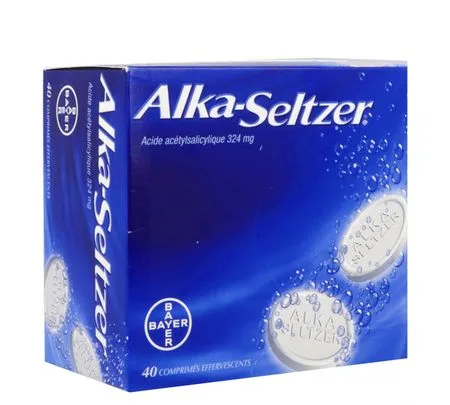
ALKA SELTZER 324 mg, effervescent tablet
Composition
Acetylsalicylic acid................................................................................................................................324 mg
For one effervescent tablet.
Excipient with known effect : sodium
Sodium bicarbonate, sodium carbonate, citric acid.
Dosage and administration
Dosage
This presentation is reserved for adults and children from 20 kg (approximately from 6 years).
In children under 12 years, medical advice is necessary before taking acetylsalicylic acid.
In children under 18 years, medical advice is necessary in case of signs of viral infections, when other measures have not proven conclusive.
In children, it is imperative to follow the dosages defined according to the child's weight and to choose an appropriate presentation. The approximate ages according to weight are given for information only.
In general, the recommended daily dose of acetylsalicylic acid in children is approximately 60 mg/kg per day, to be divided into 4 or 6 doses, i.e. approximately 15 mg/kg every 6 hours or 10 mg/kg every 4 hours.
For children weighing 20 to 26 kg (approximately 6 to 10 years), the dosage is 1 unit per dose, to be repeated if necessary after 6 hours, not exceeding 4 units per day.
For children weighing 27 to 36 kg (approximately 8 to 12 years), the dosage is 1 unit per dose, to be repeated if necessary after 4 hours, not exceeding 6 units per day.
For children weighing 37 to 50 kg (approximately 11 to 15 years), the dosage is 2 units per dose, to be repeated if necessary after 6 hours, without exceeding 8 units per day.
For adults and children weighing more than 50 kg (from approximately 15 years of age): the maximum recommended daily dose is 3 g of aspirin, i.e. 9 units per day.
The usual dose is 2 unit(s) of 324 mg, to be repeated if needed after at least 4 hours, without exceeding 9 units per day.
For Elderly subjects:
The maximum recommended daily dose is 2 g of aspirin, i.e. 6 units per day. The usual dose is 1 unit of 324 mg, to be repeated if needed after at least 4 hours, not exceeding 6 units per day.
Subjects with hepatic impairment
Acetylsalicylic acid should be used with caution in patients with mild to moderate hepatic impairment (see sections Contraindications and Warnings and precautions).
Subjects with renal impairment
Acetylsalicylic acid should be used with caution in patients with mild to moderate renal impairment (see sections Contraindications and Warnings and precautions).
Method of administration
Oral use.
Drink immediately after the effervescent tablet has completely dissolved in a large glass of water, preferably during or just after a meal.
Frequency of administration
Regular dosing helps prevent fluctuations in pain or fever:
Doses should be regularly spaced, including at night, of preferably 6 hours, and at least 4 hours apart: follow the dosage specified above.
Duration of treatment
The patient must be informed not to use acetylsalicylic acid for more than 3 days for fever or for more than 5 days for pain without the advice of a doctor or dentist.
Contraindications
• Hypersensitivity to acetylsalicylic acid or to any of the excipients listed in section Composition.
• History of asthma triggered by administration of salicylates or substances with similar activity, in particular non-steroidal anti-inflammatory drugs,
• Active gastroduodenal ulcer,
• Any constitutional or acquired hemorrhagic disease,
• Bleeding risk,
• Severe hepatic impairment,
• Severe renal impairment,
• Severe uncontrolled heart failure,
• In combination with methotrexate used at doses above 20 mg/week (see section Interactions), and for anti-inflammatory doses ≥ 1 g per intake and/or ≥ 3 g per day) or for analgesic or antipyretic doses ≥ 500 mg per intake and/or < 3 g per day),
• Association with oral anticoagulants for anti-inflammatory doses of acetylsalicylic acid (≥1 g per intake and/or ≥3 g per day), or for analgesic or antipyretic doses (≥500 mg per intake and/or < 3 g per day) in a patient with a history of gastroduodenal ulcer (see section Interactions).
• Pregnancy, from the beginning of the 6th month (24 weeks of amenorrhea) for aspirin doses above 100 mg per day (see section Fertility, pregnancy and breastfeeding)
Warnings and precautions
Risk of fetal death
ALKA SELTZER 324 mg, effervescent tablet exposes the fetus to a risk of fetal death even after a single intake due to its cardiopulmonary toxicity (constriction of the ductus arteriosus and occurrence of oligohydramnios, see section Contraindications).
Effects on the unborn child
ALKA SELTZER 324 mg, effervescent tablet also exposes the newborn to a risk of kidney damage (renal failure), premature closure of the ductus arteriosus and pulmonary hypertension. (See section Fertility, pregnancy and breastfeeding).
ALKA SELTZER 324 mg, effervescent tablet is contraindicated in pregnant women from the beginning of the 6th month of pregnancy (24 weeks of amenorrhea).
In case of planned pregnancy or during the first 5 months (before 24 weeks of amenorrhea), ALKA SELTZER 324 mg, effervescent tablet should be prescribed only in cases of absolute necessity.
• In case of association with other medicines, to avoid a risk of overdose, check the absence of acetylsalicylic acid in the composition of the other medicines.
• In case of long-term administration of high-dose analgesic medicines, the occurrence of headaches must not be treated with higher doses.
• Regular use of analgesics, in particular the combination of analgesics, may lead to persistent kidney damage with a risk of renal failure.
• Reye's syndrome, very rare but life-threatening conditions, has been observed in children with signs of viral infections (in particular chickenpox and flu-like episodes) and receiving acetylsalicylic acid.
Consequently, acetylsalicylic acid should be administered to these children only on medical advice, when other measures have failed.
If persistent vomiting, impaired consciousness or abnormal behaviour occurs, treatment with acetylsalicylic acid must be stopped.
• In some cases of severe G6PD deficiency, high doses of acetylsalicylic acid may have caused haemolysis. Administration of acetylsalicylic acid in cases of G6PD deficiency must be done under medical supervision.
• In children under 1 month, administration of acetylsalicylic acid is justified only in certain situations under medical prescription
• Monitoring of the treatment should be reinforced in the following cases:
- history of gastroduodenal ulcer, digestive haemorrhage or gastritis,
- renal or hepatic failure
- asthma: the occurrence of an asthma attack, in some subjects, may be linked to an allergy to non-steroidal anti-inflammatory drugs or to acetylsalicylic acid. In this case, this medicine is contraindicated.
- Rare cases of acute myocardial ischaemia with or without myocardial infarction have been reported in the context of a hypersensitivity reaction (Kounis syndrome), in patients treated with acetylsalicylic acid. In case of confirmed Kounis syndrome due to acetylsalicylic acid, ALKA SELTZER 324 mg, effervescent tablet must be stopped immediately.
- metrorrhagia or menorrhagia (risk of increased heaviness and duration of periods).
• Gastrointestinal haemorrhages or ulcers/perforations may occur at any time during treatment without necessarily any prior symptoms or history. The relative risk increases in frail elderly subjects, subjects of low body weight, and patients receiving anticoagulant or antiplatelet treatment (see section Interactions).
In case of gastrointestinal haemorrhage, stop treatment immediately.
• Effervescent tablets at 324 mg are not suitable for children under 20 kg for whom better-adapted dosages exist.
• Given the antiplatelet effect of acetylsalicylic acid, appearing from very low doses and persisting for several days, the patient should be warned of the bleeding risks that may occur in case of even minor surgical procedures (e.g. tooth extraction).
• Acetylsalicylic acid modifies uricaemia (at analgesic doses acetylsalicylic acid increases uricaemia by inhibiting uric acid excretion; at the doses used in rheumatology, acetylsalicylic acid has a uricosuric effect).
• In children, it is recommended to monitor salicylaemia, particularly when starting treatment.
• Use of this medicine is not recommended during breastfeeding.
• Concomitant use of this medicine is not recommended with:
- oral anticoagulants, for analgesic or antipyretic doses (≥ 500 mg per dose and/or < 3 g per day) of acetylsalicylic acid and in a patient with no history of gastroduodenal ulcer (see section Interactions),
- oral anticoagulants, for antiplatelet doses of acetylsalicylic acid (from 50 mg to 375 mg per day) and in a patient with a history of gastroduodenal ulcer (see section Interactions),
- non-steroidal anti-inflammatory drugs at anti-inflammatory doses (≥ 1 g per dose and/or ≥ 3 g per day), analgesic or antipyretic doses (≥ 500 mg per dose and/or < 3 g per day) of acetylsalicylic acid,
- clopidogrel (outside the validated indications for this combination in the acute phase of coronary syndrome),
- glucocorticoids (except hydrocortisone for replacement therapy) at anti-inflammatory doses (≥ 1 g per dose and/or ≥ 3 g per day) of acetylsalicylic acid (see section Interactions),
- Low molecular weight heparins (and related drugs) and unfractionated heparins: curative doses and/or elderly subject and at anti-inflammatory doses (≥ 1 g per dose and/or ≥ 3 g per day) or analgesic or antipyretic doses (≥ 500 mg per dose and/or < 3 g per day) of acetylsalicylic acid,
- Pemetrexed in patients with low to moderate renal function (creatinine clearance between 45 ml/min and 80 ml/min),
- ticlopidine,
- uricosuric agents (see section Interactions).
Information on excipients:
• This medicine contains 477 mg of sodium per tablet, which is equivalent to 23,85 % of the maximum recommended daily dietary intake of sodium by the WHO of 2 g of sodium per adult.
Interactions
Risk related to antiplatelet effect
Several substances are involved in interactions due to their antiplatelet properties: abciximab, aspirin and clopidogrel, epoprostenol, eptifibatide and iloprost, tirofiban, ticlopidine.
The use of several antiplatelet agents increases the risk of bleeding, as does their combination with heparin and related molecules (for example hirudin), oral anticoagulants and other thrombolytics, and this must be taken into account by maintaining regular clinical and biological monitoring.
Contraindicated combinations
+ Methotrexate used at doses above 20 mg / week
With acetylsalicylic acid used at analgesic or antipyretic doses (≥ 500 mg per dose and/or < 3 g per day) or anti-inflammatory doses (≥ 1 g per dose and/or ≥ 3 g per day).
Increased toxicity, particularly haematological, of methotrexate (decreased renal clearance by anti-inflammatory drugs).
+ Oral anticoagulants
For anti-inflammatory doses of acetylsalicylic acid (≥1 g per dose and/or ≥3 g per day), or for analgesic or antipyretic doses (≥500 mg per dose and/or < 3 g per day) in a patient with a history of gastroduodenal ulcer: increased haemorrhagic risk, particularly in case of a history of gastroduodenal ulcer.
Combinations not recommended
+ Oral anticoagulants
For analgesic or antipyretic doses (≥ 500 mg per dose and/or < 3 g per day) and in the absence of a history of gastroduodenal ulcer: increased haemorrhagic risk.
For antiplatelet doses of acetylsalicylic acid (from 50 mg to 375 mg per day) and in case of a history of gastroduodenal ulcer: increased haemorrhagic risk, particularly in case of a history of gastroduodenal ulcer. Monitoring is required, in particular of bleeding time.
+ Non-steroidal anti-inflammatory drugs
For anti-inflammatory doses of acetylsalicylic acid (≥1 g per dose and/or ≥3 g per day), or for analgesic or antipyretic doses (≥500 mg per dose and/or < 3 g per day): increased risk of ulcerogenic and gastrointestinal haemorrhage.
+ Clopidogrel (outside the validated indications for this combination in acute coronary syndromes)
Increased risk of bleeding due to the addition of platelet antiaggregant activities.
+ Glucocorticoids (except hydrocortisone as replacement therapy)
For anti-inflammatory doses of acetylsalicylic acid (≥ 1 g per dose and/or ≥ 3 g per day). Increased risk of bleeding.
+ Low molecular weight heparins, related products and unfractionated heparins (therapeutic doses and/or the elderly subject)
For anti-inflammatory doses of acetylsalicylic acid (≥ 1 g per dose and/or ≥ 3 g per day), or for analgesic or antipyretic doses (≥ 500 mg per dose and/or < 3 g per day): increased risk of bleeding (inhibition of platelet function and damage to the gastroduodenal mucosa by acetylsalicylic acid). Use another analgesic, antipyretic or anti-inflammatory.
+ Pemetrexed
In patients with mild to moderate renal impairment (creatinine clearance between 45 ml/min and 80 ml/min), risk of increased toxicity of pemetrexed (reduction of its renal clearance by acetylsalicylic acid at anti-inflammatory doses, i.e. ≥ 1 g per dose and/or ≥ 3 g per day).
+ Uricosurics (benzbromarone, probenecid)
Reduction of the uricosuric effect through competition for the elimination of uric acid at the renal tubules.
+ Ticlopidine
Increased risk of bleeding due to the addition of platelet antiaggregant activities.
If the combination cannot be avoided, close clinical monitoring.
Associations requiring precautions for use
+ Diuretics, angiotensin-converting enzyme inhibitors, angiotensin II antagonists
For anti-inflammatory doses of acetylsalicylic acid (≥1 g per dose and/or ≥3 g per day) or for analgesic or antipyretic doses (≥500 mg per dose and/or < 3 g per day): acute renal failure in dehydrated patients due to reduced glomerular filtration secondary to decreased renal prostaglandin synthesis. In addition, reduction of the antihypertensive effect. Hydrate the patient and monitor renal function at the start of treatment.
+ Methotrexate used at doses less than or equal to 20 mg/week
With acetylsalicylic acid used at analgesic or antipyretic doses (≥ 500 mg per dose and/or < 3 g per day) or anti-inflammatory doses (≥ 1 g per dose and/or ≥ 3 g per day). Increased toxicity, particularly haematological, of methotrexate (reduction of renal clearance by anti-inflammatory drugs).
Weekly monitoring of the blood count during the first weeks of the combination. Increased monitoring in case of impairment (even slight) of renal function, as well as in elderly subjects.
+ Methotrexate used at doses greater than 20 mg/week
For antiplatelet doses of acetylsalicylic acid (50 to 375 mg per day). Increased toxicity, particularly haematological, of methotrexate (reduction of its renal clearance by acetylsalicylic acid).
Weekly monitoring of the blood count during the first weeks of the combination. Increased monitoring in case of impairment (even slight) of renal function, as well as in elderly subjects.
+ Pemetrexed
In patients with normal renal function, risk of increased toxicity of pemetrexed (reduction of its renal clearance by acetylsalicylic acid at anti-inflammatory doses, i.e. ≥ 1 g per dose and/or ≥ 3 g per day).
Biological monitoring of renal function.
+ Gastrointestinal topicals, antacids and charcoal
Reduction of the digestive absorption of acetylsalicylic acid.
Take gastrointestinal topicals and antacids at a distance (2 hours) from acetylsalicylic acid.
+ Clopidogrel (within the approved indications for this combination in acute coronary syndromes)
Increased risk of bleeding due to additive antiplatelet activity. Clinical monitoring.
Associations to be taken into account
+ Oral anticoagulants
For antiplatelet doses of acetylsalicylic acid (from 50 mg to 375 mg/day).
Increased risk of bleeding, particularly in cases of gastroduodenal ulcer.
+ Non-steroidal anti-inflammatory drugs
For antiplatelet doses of acetylsalicylic acid (from 50 mg to 375 mg/day).
Increased risk of ulcerogenic and digestive hemorrhage.
+ Deferasirox
With acetylsalicylic acid at anti-inflammatory doses (≥ 1 g per dose and/or ≥ 3 g per day), or at analgesic or antipyretic doses (≥ 500 mg per dose and/or < 3 g per day): increased risk of ulcerogenic and digestive haemorrhagic events.
+ Glucocorticoids (except hydrocortisone as replacement therapy)
For analgesic or antipyretic doses (≥ 500 mg per dose and/or < 3 g per day of acetylsalicylic acid.
Increased bleeding risk.
+ Low molecular weight heparins (and related drugs) and unfractionated heparins: therapeutic doses and/or elderly subject
For antiplatelet doses of acetylsalicylic acid (from 50 mg to 375 mg/day).
Increased bleeding risk (inhibition of platelet function) and damage to the gastroduodenal mucosa by acetylsalicylic acid.
+ Low molecular weight heparins (and related drugs) and unfractionated heparins: prophylactic doses
Concomitant use of medicinal products acting at various levels of haemostasis increases the risk of bleeding. Thus, in subjects under 65 years of age, the combination of heparins at prophylactic doses (low molecular weight heparins and related drugs or unfractionated heparins) with acetylsalicylic acid, whatever the dose, must be considered, maintaining clinical and possibly biological monitoring.
+ Selective serotonin reuptake inhibitors (citalopram, escitalopram, fluoxetine, fluvoxamine, paroxetine, sertraline)
Increased bleeding risk.
+ Thrombolytics
Increased risk of bleeding.
Fertility, pregnancy and breastfeeding
Pregnancy
Low doses, less than or equal to 100 mg per day:
Clinical studies show that doses up to 100 mg/day appear to be safe in extremely limited obstetric uses requiring specialised monitoring.
Doses between 100 and 500 mg per day:
Clinical experience with the administration of doses between 100 mg and 500 mg per day is insufficient. Consequently, the recommendations below for doses above 500 mg per day apply to these doses.
Doses greater than or equal to 500 mg per day:
|
From the beginning of the 6th months of pregnancy (24 weeks of amenorrhoea): any intake of ALKA SELTZER 324 mg, effervescent tablet, even a single one, is contraindicated. Even a single intake from 24 weeks of amenorrhoea justifies cardiac and renal ultrasound monitoring of the foetus and/or newborn. Unless absolutely necessary,, ALKA SELTZER 324 mg, effervescent tablet must not be prescribed to a woman who is planning a pregnancy or during the first 5 months of pregnancy (before 24 weeks of amenorrhoea). If so, the dose should be as low as possible and the duration of treatment as short as possible. Prolonged use is strongly discouraged. In case of intake from the 20th weeks of amenorrhea, cardiac and renal monitoring of the fetus may prove necessary. In case of oligohydramnios, or constriction of the ductus arteriosus, treatment with ALKA SELTZER 324 mg, effervescent tablet must be discontinued. |
Inhibition of prostaglandin synthesis by NSAIDs may affect the course of pregnancy and/or the development of the embryo or foetus.
Risks associated with use during the 1st trimester
Epidemiological studies suggest that treatment with a prostaglandin synthesis inhibitor during the 1st trimester of pregnancy is associated with an increased risk of miscarriage.
For certain NSAIDs, an increased risk of cardiac malformations and abdominal wall defects (gastroschisis) is also described. The absolute risk of foetal cardiovascular malformation rose from less than 1% to approximately 1,5% with exposure during the 1er trimester. The risk appears to increase with dose and duration of treatment.
In animals, administration of a prostaglandin synthesis inhibitor during the organogenesis phase causes increased pre- and post-implantation loss, increased embryo-foetal lethality and a higher incidence of certain malformations, including cardiovascular ones.
Risks associated with use during the 2th and 3th trimester
• From the 12th week of amenorrhoea
Maternal intake of an NSAID exposes the fetus to a risk of renal functional impairment :
- In utero (onset of fetal diuresis): oligoamnios may occur shortly after the start of treatment. This is generally reversible upon discontinuation of treatment. It may progress to anamnios, particularly with prolonged exposure to an NSAID.
- At birth: renal failure (reversible or not) may be observed, or may even persist, especially in cases of late and prolonged exposure, with a risk of delayed severe hyperkalaemia.
• From the 20th week of amenorrhoea:
In addition to renal functional impairment (see above), maternal intake of an NSAID exposes the foetus to a risk of constriction of the ductus arteriosus (most often reversible on discontinuation of treatment).
• From the 24th week of amenorrhoea:
The risk of cardiopulmonary toxicity (premature closure of the ductus arteriosus and pulmonary arterial hypertension) becomes greater and may lead to foetal or neonatal right heart failure or even foetal death in utero. This risk is all the greater and less reversible the closer the intake is to term. This effect exists even with a single intake
In late pregnancy (close to term), NSAID intake also exposes the mother and the newborn to:
- prolonged bleeding time due to an antiaggregant action, which may occur even after administration of very low doses of the medicinal product;
- inhibition of uterine contractions resulting in delayed labour or prolonged delivery.
Breast-feeding
Acetylsalicylic acid passes into breast milk, so this medication is not recommended during breastfeeding.
Fertility
As with all NSAIDs, use of this medicine may temporarily impair female fertility by acting on ovulation; it is therefore not recommended in women wishing to conceive a child. In women experiencing difficulties conceiving or undergoing fertility tests, discontinuation of treatment should be considered.
Driving and using machines
ALKA SELTZER 324 mg, effervescent tablet has no or negligible effect on the ability to drive vehicles and use machines.
Adverse effects
• Gastrointestinal effects:
- abdominal pain,
- overt (haematemesis, melaena...) or occult digestive haemorrhages, responsible for iron-deficiency anaemia. These haemorrhages are all the more frequent the higher the dosage,
- gastric ulcers and perforations,
- Intestinal diaphragm-type stenosis (frequency unknown), especially with long-term treatment.
• Effects on the central nervous system:
- headache, dizziness,
- sensation of reduced hearing acuity,
- tinnitus
which are usually the hallmark of an overdose.
• Haematological effects:
- haemorrhagic syndromes (epistaxis, gum bleeding, purpura,...) with increased bleeding time. This effect persists for 4 to 8 days after discontinuation of acetylsalicylic acid. It may create a haemorrhagic risk in the event of surgical intervention.
• Hypersensitivity reaction:
- urticaria, skin reactions, anaphylactic reactions, asthma, Quincke's oedema.
• Cardiac effects
Kounis syndrome (acute myocardial ischaemia with or without myocardial infarction in the context of a hypersensitivity reaction) with indeterminate frequency (see section Warnings and precautions "Special warnings and precautions for use").
• Reye's syndrome in children (see section Warnings and precautions).
Reporting of suspected adverse reactions
Reporting suspected adverse reactions after authorisation of the medicinal product is important. It allows continued monitoring of the benefit/risk balance of the medicinal product. Healthcare professionals are asked to report any suspected adverse reaction via the national reporting system: National Agency for the Safety of Medicines and Health Products (ANSM) and the network of Regional Centres of Pharmacovigilance - Website: https://signalement.social-sante.gouv.fr/
Overdose
Intoxication is to be feared in elderly subjects and especially in young children (therapeutic overdose or frequent accidental intoxication) where it may be fatal.
• Symptoms:
- Moderate intoxication:
Tinnitus, sensation of reduced hearing acuity, headache, dizziness are the hallmark of an overdose and may be controlled by reducing the dosage.
- Severe intoxication:
In children, overdose may be fatal from 100 mg/kg in a single dose.
The symptoms are: fever, hyperventilation, ketosis, respiratory alkalosis, metabolic acidosis, coma, cardiovascular collapse, respiratory failure, severe hypoglycaemia.
• Emergency management:
- Immediate transfer to a specialised hospital setting,
- gastrointestinal decontamination and administration of activated charcoal,
- control of the acid-base balance,
- alkaline diuresis to obtain a urinary pH between 7,5 and 8, possibility of haemodialysis in severe poisonings,
- symptomatic treatment.
Pharmacodynamics
Pharmacotherapeutic class: OTHER ANALGESICS AND ANTIPYRETICS, ATC code: N02BA01. N: Nervous System.
Acetylsalicylic acid belongs to the group of non-steroidal anti-inflammatory drugs with analgesic, antipyretic and anti-inflammatory properties. Its mechanism of action is based on the irreversible inhibition of the cyclo-oxygenase enzymes involved in the synthesis of prostaglandins.
Acetylsalicylic acid also inhibits platelet aggregation by blocking platelet synthesis of thromboxane A2.
Pharmacokinetics
Absorption
Acetylsalicylic acid is rapidly and almost completely absorbed orally.
Peak plasma concentrations are reached in 15 to 40 minutes.
The bioavailability of acetylsalicylic acid varies according to dose: it is approximately 60 % for doses below 500 mg and 90 % for doses above 1 g, due to saturation of hepatic hydrolysis.
Acetylsalicylic acid undergoes rapid hydrolysis giving salicylic acid (also an active metabolite).
Distribution
Acetylsalicylic acid and salicylic acid diffuse rapidly into all tissues. They cross the placental barrier and are found in breast milk.
Salicylic acid is largely bound to plasma proteins (at 90 %).
The plasma half-life is 15 to 20 minutes for acetylsalicylic acid, and 2 to 4 h for salicylic acid.
Biotransformation - Elimination
Acetylsalicylic acid is extensively metabolised in the liver. It is excreted mainly in the urine as salicylic acid and glucuronide conjugate, as well as salicyluric acid and gentisic acid.
Preclinical safety
Mutagenic and carcinogenic potential:
Acetylsalicylic acid has been the subject of very numerous preclinical studies carried out in vitro and in vivo the overall results of which revealed no reason to suspect a mutagenic effect.
Long-term studies carried out in rats and mice showed no carcinogenic effect of acetylsalicylic acid.
Prescription, supply and reimbursement
| Marketing authorisation (AMM) |
|
1 RUE CLAUDE BERNARD
59000 LILLE
Tel: 03 28 16 34 00 Tel (toll-free): 08 00 87 54 54
https://www.bayer.fr
Source: VIDAL · Updated on 10/11/2026. This information does not replace advice from a healthcare professional.