
Medicines
SPC of 07/04/2026
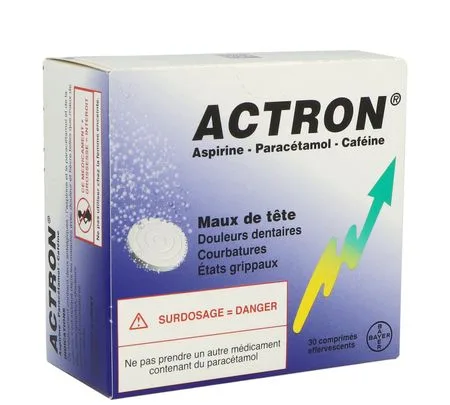
ACTRON, effervescent tablet
Composition
Acetylsalicylic acid........................................................................................................ 0,267 g
Paracetamol........................................................................................................................ 0,133 g
Anhydrous caffeine.................................................................................................................. 0,040 g
For one effervescent tablet.
Excipient with known effect: 472 mg of sodium per tablet.
Citric acid, sodium bicarbonate.
Dosage and administration
Dosage
FOR ADULTS ONLY (over 15 years).
Systematic intake helps prevent peaks of fever or pain. Doses should be spaced at least 4 hours apart.
This medicine must not be used for more than 3 to 5 days without medical advice.
It is recommended to avoid taking this medicine in the late evening due to the presence of caffeine.
• Adults:
For guidance: 1 tablet to be repeated if necessary after 4 hours. For more intense pain, 2 tablets per dose.
Do not exceed a dose of 7 tablets per day.
The maximum daily dose of aspirin and paracetamol is 3 g.
• Elderly:
For guidance: 1 tablet, to be repeated if necessary after 4 hours.
For more intense pain, 2 tablets per dose.
Do not exceed a dose of 5 tablets per day.
The maximum daily dose of aspirin and paracetamol is 2 g.
Method of administration
ORAL USE
Drink immediately after the effervescent tablet has completely dissolved in a glass of water.
Contraindications
This medication is CONTRAINDICATED in the following situations:
• Hypersensitivity to salicylates and to substances with similar activity: in particular non-steroidal anti-inflammatory drugs, caffeine, paracetamol, or any of the excipients listed in the section Composition
• due to the presence of aspirin:
- active gastroduodenal ulcer,
- any constitutional or acquired hemorrhagic disease,
- hemorrhagic risk,
- severe heart failure,
- severe renal insufficiency,
- severe hepatic insufficiency,
- history of asthma induced by the administration of aspirin or any substance with similar action, in particular with NSAIDs,
- pregnancy, from the beginning of the 6th month (24 weeks of amenorrhea) for aspirin doses greater than 100 mg per day (see section Fertility, pregnancy and breastfeeding)
- association (see section Interactions):
- with methotrexate at doses greater than or equal to 20 mg per week,
- with oral anticoagulants when salicylates are used at analgesic or antipyretic doses (≥ 500 mg per dose and/or < 3 g/day) and in case of a history of duodenal ulcer;
• due to the presence of paracetamol :
- severe hepatocellular insufficiency;
• due to the presence of caffeine :
- children under 15 years of age.
Warnings and precautions
Risk of fetal death
ACTRON, effervescent tablet exposes to a risk of fetal death even after a single intake due to its cardiopulmonary toxicity (constriction of the ductus arteriosus and occurrence of oligohydramnios, see section Contraindications).
Effects on the unborn child
ACTRON, effervescent tablet also exposes the newborn to a risk of renal damage (renal insufficiency), premature closure of the ductus arteriosus and pulmonary hypertension. See section Fertility, pregnancy and breastfeeding).
ACTRON, effervescent tablet is contraindicated in pregnant women from the beginning of the 6th month of pregnancy (24 weeks of amenorrhea).
In case of planned pregnancy or during the first 5 months (before 24 weeks of amenorrhea), ACTRON, effervescent tablet should only be prescribed in case of absolute necessity.
Special warnings
Reye's syndrome having been observed in children with viral infections (in particular chickenpox and influenza-like episodes) receiving aspirin, it is prudent to avoid administering aspirin in these situations.
If persistent vomiting, disturbances of consciousness or abnormal behavior occur, treatment with acetylsalicylic acid must be discontinued.
Precautions for use
Related to the presence of aspirin:
In certain severe forms of G6PD deficiency, high doses of acetylsalicylic acid have been able to cause hemolysis or hemolytic anemia. Administration of acetylsalicylic acid in cases of G6PD deficiency must be done under medical supervision. Factors that could increase this risk are: high dosage, fever, severe infection, for example.
Aspirin should be used with caution in cases of:
• history of gastric or duodenal ulcer or digestive hemorrhage,
• renal insufficiency, hepatic insufficiency or in cases of impaired cardiovascular circulation (renal vascular disease, congestive heart failure, plasma depletion, major surgical intervention, sepsis or major haemorrhagic event) because aspirin could worsen the risk of renal insufficiency.
• Asthma: the occurrence of asthma attacks in some subjects may be linked to allergy to non-steroidal anti-inflammatory drugs or to aspirin. In this case, this medicine is contraindicated.
• Rare cases of acute myocardial ischaemia with or without myocardial infarction have been reported in the context of a hypersensitivity reaction (Kounis syndrome) in patients treated with acetylsalicylic acid. In the event of confirmed Kounis syndrome due to acetylsalicylic acid, ACTRON, effervescent tablet must be stopped immediately.
• metrorrhagia or menorrhagia,
• Gastrointestinal haemorrhages or ulcers/perforations may occur at any time during treatment without necessarily any prior symptoms or history. The relative risk increases in the elderly, subjects of low body weight, and patients receiving anticoagulant or antiplatelet treatment. In the event of gastrointestinal haemorrhage, interrupt treatment immediately.
• Given the antiplatelet effect of acetylsalicylic acid, appearing from very low doses and persisting for several days, the patient should be warned of the haemorrhagic risks that may occur in the event of even minor surgical procedures (e.g. tooth extraction).
• Acetylsalicylic acid modifies uricaemia (at analgesic doses acetylsalicylic acid increases uricaemia by inhibiting uric acid excretion; at the doses used in rheumatology, acetylsalicylic acid has a uricosuric effect). Consequently, aspirin is not recommended in cases of gout.
• In children or adolescents with viral infection, with or without fever, without prior consultation of a doctor in order to rule out the risk of Reye's syndrome
• use of an intrauterine device (see section Interactions).
Related to the presence of paracetamol :
Interactions with paraclinical examinations: taking paracetamol may distort the determination of blood uric acid by the phosphotungstic acid method and the determination of blood glucose by the glucose oxidase-peroxidase method.
Because of its hepatotoxicity, paracetamol must not be used at doses or for a duration greater than those recommended. Use over a longer period than recommended may lead to severe hepatic sequelae, such as liver cirrhosis. Acute or chronic overdose may lead to severe hepatotoxicity, exceptionally with a fatal outcome (see section Overdose).
Patients suffering from hepatic disorders or infections affecting the liver such as viral hepatitis must consult a doctor before taking paracetamol. In these patients, an evaluation of liver function must be carried out at regular intervals during high-dose or long-term treatment, in particular in patients with pre-existing hepatic disease.
Patients with hepatic insufficiency (Child-Pugh < 9) must use paracetamol with caution.
An elevation of alanine aminotransferase (ALAT) may occur when paracetamol is administered at therapeutic doses.
Moderate alcohol intake, combined with paracetamol intake, may potentially lead to an increased risk of hepatic toxicity.
Paracetamol and its metabolites are excreted mainly in the urine. Patients suffering from renal disorders must consult a doctor before taking paracetamol, as a dose adjustment may prove necessary. In cases of severe renal insufficiency (creatinine clearance < 10 mL/min), the doctor must critically assess the benefit/risk ratio of using paracetamol. Doses must be spaced at least 8 hours apart. Dose adjustment and continuous monitoring must be carried out.
In general, continuous use of paracetamol, in particular in combination with other analgesics, may lead to permanent renal damage and a risk of renal insufficiency (analgesic nephropathy).
Prolonged use at high doses may lead to hepatic and renal damage. Situations that increase hepatic oxidative stress and decrease hepatic glutathione reserves, such as combination with certain medicines, alcoholism, sepsis, or diabetes mellitus, may increase the risk of hepatic toxicity at therapeutic doses.
Cases of severe skin reactions have been very rarely reported. In the event of skin reddening, rash, appearance of vesicles or desquamation, paracetamol intake must be stopped and medical care must be provided immediately (see section Adverse effects).
Use of paracetamol in patients with Gilbert's syndrome may lead to more pronounced hyperbilirubinaemia and associated clinical symptoms such as jaundice. Therefore, these patients must use paracetamol with caution.
Concomitant intake of other medicines containing paracetamol must be avoided.
If new symptoms appear or if the pain and/or fever are not relieved within 3 to 5 days, patients are advised to stop treatment and consult a doctor.
Patients with a hereditary deficiency of glucose-6-phosphate dehydrogenase must consult their doctor before taking paracetamol (risk of haemolytic anaemia).
Cases of high anion gap metabolic acidosis (HAGMA) due to pyroglutamic acidosis have been reported in patients with serious illness such as severe renal insufficiency and sepsis, or in patients suffering from malnutrition or other sources of glutathione deficiency (for example, chronic alcoholism) who were treated with paracetamol at a therapeutic dose for a prolonged period or with a combination of paracetamol and flucloxacillin. In case of suspected HAGMA due to pyroglutamic acidosis, it is recommended to stop paracetamol immediately and carry out close monitoring. Measurement of urinary 5-oxoproline may be useful to identify pyroglutamic acidosis as the underlying cause of HAGMA in patients with multiple risk factors.
Related to the presence of caffeine:
This medicine may cause insomnia; it must not be taken late in the day.
Athletes' attention is drawn to the fact that caffeine may induce a positive reaction in tests carried out during anti-doping controls.
Caffeine is not recommended in cases of hyperthyroidism.
Due to the presence of caffeine, the use of this medicine is not recommended in cases of:
• cardiac rhythm disorders and/or severe cardiovascular disease
• severe and/or uncontrolled arterial hypertension
Related to excipients:
This medicine contains sodium. This medicine contains 472 mg of sodium per tablet, which is equivalent to 24% of the maximum daily dietary intake recommended by the WHO. The maximum daily dose of this product (7 tablets) is equivalent to 168% of the maximum daily dietary intake recommended by the WHO.
Actron, effervescent tablet is considered to be high in sodium. To be taken into account in patients following a strict low-sodium diet.
Interactions
No interaction studies have been performed.
The following interactions are related to the presence of aspirin, caffeine and paracetamol.
Risk related to the antiplatelet effect of aspirin:
Several substances are involved in interactions due to their antiplatelet properties: abciximab, acetylsalicylic acid and clopidogrel, epoprostenol, eptifibatide, iloprost, iloprost tromethamine, ticlopidine and tirofiban.
The use of several antiplatelet agents increases the risk of bleeding, as does their combination with heparin and related molecules, oral anticoagulants and other thrombolytics, and this must be taken into account by maintaining regular clinical monitoring.
Contraindicated combinations
Related to the presence of aspirin:
+ Oral anticoagulants
Increased risk of haemorrhage, particularly in cases of a history of gastroduodenal ulcer.
For anti-inflammatory doses of acetylsalicylic acid (≥ 1 g per dose and/or ≥ 3 g per day) or for analgesic or antipyretic doses (≥ 500 mg per dose and/or < 3 g/day) and in cases of a history of gastroduodenal ulcer: increased risk of haemorrhage, particularly in cases of gastroduodenal ulcer.
+ Methotrexate used at doses greater than 20 mg/week
With acetylsalicylic acid used at analgesic or antipyretic doses (≥ 500 mg per dose and/or < 3 g per day) or anti-inflammatory doses (≥ 1 g per dose and/or ≥ 3 g per day)
Increased toxicity, particularly haematological, of methotrexate (decreased renal clearance of methotrexate by acetylsalicylic acid).
Combinations not recommended
Related to the presence of aspirin:
+ Acetazolamide
Increased undesirable effects, particularly metabolic acidosis, of acetylsalicylic acid at high doses and of acetazolamide, due to decreased elimination of acetylsalicylic acid by acetazolamide.
+ Anagrelide
Increased haemorrhagic events.
+ Oral anticoagulants, in the absence of a history of gastroduodenal ulcer:
Acetylsalicylic acid at analgesic or antipyretic doses (≥ 500 mg per dose and/or < 3 g/day): increased risk of haemorrhage.
Salicylates at low doses: need for monitoring where appropriate, in particular of bleeding time.
+ Oral anticoagulants
For analgesic or antipyretic doses (≥ 500 mg per dose and/or < 3 g per day) in the absence of a history of gastroduodenal ulcer.
For antiplatelet doses of acetylsalicylic acid (from 50 mg to 375 mg per day) and in cases of a history of gastroduodenal ulcer.
Increased risk of haemorrhage, particularly in cases of a history of gastroduodenal ulcer.
Need for monitoring where appropriate, in particular of bleeding time.
+ NSAIDs
(Including salicylates from 3 g/day in adults)
For anti-inflammatory doses of acetylsalicylic acid (≥ 1 g per dose and/or ≥ 3 g per day), or for analgesic or antipyretic doses (≥ 500 mg per dose and/or < 3 g per day)
Increased risk of ulcerogenic and digestive hemorrhage.
+ Clopidogrel (outside the indications validated for this combination in acute coronary syndromes)
Increased risk of bleeding due to the addition of platelet antiaggregant activities.
+ Defibrotide
Increased bleeding risk.
+ Glucocorticoids (except hydrocortisone as replacement therapy)
For anti-inflammatory doses of acetylsalicylic acid (≥ 1 g per dose and/or ≥ 3 g per day).
Increased risk of bleeding
+ Low molecular weight heparins and related drugs and unfractionated heparins (curative doses and/or elderly patients)
For anti-inflammatory doses of acetylsalicylic acid (≥ 1 g per dose and/or ≥ 3 g per day) or for analgesic or antipyretic doses (≥ 500 mg per dose and/or < 3 g/day): Increased risk of bleeding (inhibition of platelet function and aggression of the gastroduodenal mucosa by acetylsalicylic acid).
Use another anti-inflammatory or an analgesic or antipyretic.
+ Nicorandil
Increased risk of ulcerogenic and digestive hemorrhage.
+ Pemetrexed, in patients with low to moderate renal function (creatinine clearance between 45 ml/min and 80 ml/min)
Risk of increased pemetrexed toxicity (decreased renal clearance by acetylsalicylic acid at anti-inflammatory doses).
+ Ticagrelor (outside the indications validated for this combination in acute coronary syndromes)
Increased risk of bleeding due to the addition of platelet antiaggregant activities.
+ Ticlopidine
Increased risk of bleeding due to the addition of platelet antiaggregant activities. If the combination cannot be avoided, close clinical monitoring.
+ Gastrointestinal topicals, antacids and adsorbents
With integrase inhibitors (raltegravir, bictegravir, dolutegravir)
Decreased absorption of these substances.
+ Uricosurics (benzbromarone, probenecid)
Decreased uricosuric effect due to (competition for uric acid elimination at the renal tubules).
Use another analgesic.
Related to the presence of caffeine:
+ Enoxacin
Increased plasma concentrations of caffeine, which may cause excitation and hallucinations, due to decreased hepatic metabolism.
Associations requiring precautions for use
Related to the presence of aspirin:
+ Angiotensin II receptor antagonists
For anti-inflammatory doses of acetylsalicylic acid (≥ 1 g per dose and/or ≥ 3 g per day) or for analgesic or antipyretic doses of aspirin (doses ≥ 500 mg per dose and/or < 3 g per day):
Acute renal failure in at-risk patients (elderly, dehydrated, on diuretics, with impaired renal function), due to decreased glomerular filtration secondary to decreased synthesis of renal prostaglandins. Furthermore, reduced antihypertensive effect.
Hydrate the patient and monitor renal function at the start of treatment and regularly during the combination.
+ Antidiabetics: insulins, chlorpropamide
Increased hypoglycaemic effect with high doses of acetylsalicylic acid (hypoglycaemic action of acetylsalicylic acid and displacement of the sulfonamide from its binding to plasma proteins).
Inform the patient and reinforce blood glucose self-monitoring.
+ Cobimetinib
Increased risk of bleeding.
Clinical monitoring.
+ Glucocorticoids (systemic route)
Decrease in salicylaemia during corticosteroid treatment and risk of salicylate overdose after their discontinuation (increased elimination of salicylates by corticosteroids).
Adjust salicylate doses during the combination and after discontinuation of glucocorticoid treatment.
+ Diuretics, angiotensin-converting enzyme (ACE) inhibitors
For acetylsalicylic acid at anti-inflammatory doses (>= 1 g per dose and/or >= 3 g per day) and analgesic or antipyretic doses (>= 500 mg per dose and/or < 3 g per day): acute renal failure in at-risk patients (elderly, dehydrated, with impaired renal function), due to decreased glomerular filtration secondary to decreased synthesis of renal prostaglandins. In addition, reduction of the antihypertensive effect.
Hydrate the patient and monitor renal function at the start of treatment and regularly during the combination.
+ Interferon alfa
Risk of inhibition of the action of interferon.
Preferably use a non-salicylate analgesic-antipyretic.
+ Ibrutinib
Increased risk of bleeding.
Clinical monitoring.
+ Methotrexate used at doses less than or equal to 20 mg/week
With acetylsalicylic acid used at analgesic or antipyretic doses (≥ 500 mg per dose and/or < 3 g per day) or anti-inflammatory doses (≥ 1 g per dose and/or ≥ 3 g per day)
Increased toxicity, particularly haematological, of methotrexate (decreased renal clearance by acetylsalicylic acid.
Weekly monitoring of the blood count during the first weeks of the combination.
Increased monitoring in case of impairment (even slight) of renal function, as well as in elderly subjects.
+ Methotrexate used at doses greater than 20 mg/week
For antiplatelet doses of acetylsalicylic acid (50 to 375 mg per day).
Increased toxicity, particularly haematological, of methotrexate (decreased renal clearance of methotrexate by acetylsalicylic acid).
Weekly monitoring of the blood count during the first weeks of the combination. Increased monitoring in case of impairment (even slight) of renal function, as well as in elderly subjects.
+ Pemetrexed, in patients with normal renal function
Risk of increased toxicity of pemetrexed (decreased renal clearance by acetylsalicylic acid at anti-inflammatory doses), i.e. >= 1 g per dose and/or >= 3 g per day).
Biological monitoring of renal function.
+ Pentoxifylline
Increased risk of bleeding.
Reinforce clinical monitoring and more frequent checks of bleeding time.
+ Ticagrelor (in the indications validated for this combination in acute coronary syndromes.)
Increased bleeding risk due to additive antiplatelet activities. Clinical monitoring
+ Gastrointestinal topicals, antacids and adsorbents and charcoal
Decreased absorption of acetylsalicylic acid.
As a precaution, these gastrointestinal topicals or antacids should be taken at a distance (more than 2 hours, if possible) from acetylsalicylic acid.
+ Clopidogrel (within the approved indications for this combination in acute coronary syndromes)
Increased risk of bleeding due to the addition of platelet antiaggregant activities.
Clinical monitoring.
+ Digoxin
The plasma concentration of digoxin is increased due to decreased renal excretion
+ valproic acid
Increased toxicity of valproic acid due to displacement of proteins from their binding site
+ alcohol:
Increased damage to the gastrointestinal mucosa and prolonged bleeding time due to the additive effects of aspirin and alcohol
Related to the presence of paracetamol:
+ Vitamin K antagonists
Risk of increased effect of the vitamin K antagonist and of bleeding risk when paracetamol is taken at maximum doses (4 g/day) for at least 4 days.
More frequent INR monitoring. Possible adjustment of the vitamin K antagonist dose during paracetamol treatment and after its discontinuation.
Related to the presence of caffeine:
+ Dipyridamole
With intravenous dipyridamole: reduction of the vasodilator effect of dipyridamole by caffeine.
Discontinue caffeine-containing treatment at least 5 days before myocardial imaging with dipyridamole, and avoid consumption of coffee, tea, chocolate or cola within the 24 hours preceding the test.
+ Stiripentol
Possible increase in plasma caffeine concentrations, with risk of overdose, due to inhibition of its hepatic metabolism.
Clinical monitoring and possible adjustment of the caffeine dose.
Associations to be taken into account
Related to the presence of aspirin:
+ Oral anticoagulants
For antiplatelet doses of acetylsalicylic acid (from 50 mg to 375 mg/day). Increased bleeding risk, particularly in cases of gastroduodenal ulcer.
+ NSAIDs
Increased risk of ulcerogenic and gastrointestinal bleeding
For antiplatelet doses (from 50 mg to 375 mg per day in 1 or several doses)
+ Deferasirox
With acetylsalicylic acid at anti-inflammatory doses (≥ 1 g per dose and/or ≥ 3 g per day), or at analgesic or antipyretic doses (≥ 500 mg per dose and/or < 3 g per day).
Increased risk of ulcerogenic and gastrointestinal bleeding
+ Intrauterine device
Risk (controversial) of decreased efficacy of the intrauterine device.
+ Glucocorticoids (except hydrocortisone used as replacement therapy)
For analgesic or antipyretic doses (≥ 500 mg per dose and/or < 3 g per day of acetylsalicylic acid)
Increased bleeding risk.
+ Low molecular weight heparins (and related products) and unfractionated heparins: therapeutic doses and/or elderly subject
For antiplatelet doses of acetylsalicylic acid (from 50 mg to 375 mg/day)
Increased bleeding risk (inhibition of platelet function) and damage to the gastroduodenal mucosa by acetylsalicylic acid.
+ Low molecular weight heparins and related products and unfractionated heparins (prophylactic doses)
Concomitant use of medicines acting at various levels of haemostasis increases the risk of bleeding. Thus, in subjects under 65 years of age, the combination of heparin at preventive doses, or related substances, with acetylsalicylic acid, whatever the dose, must be taken into account by maintaining clinical and possibly biological monitoring.
+ Selective serotonin reuptake inhibitors citalopram, escitalopram, fluoxetine, fluvoxamine, paroxetine, sertraline)
Increased risk of bleeding.
+ Mixed adrenergic-serotonergic medicines
Increased risk of bleeding.
+ Thrombolytics
Increased risk of haemorrhage,
+ Gastro-intestinal topicals: magnesium, aluminium and calcium salts, oxides and hydroxides
Increased renal excretion of salicylates by alkalinisation of the urine.
Related to the presence of caffeine:
+ Ciprofloxacin, norfloxacin
Increase in plasma concentrations of caffeine, due to decreased hepatic metabolism.
+ Lithium
In case of abrupt cessation of coffee or caffeine-containing medicines consumption, risk of increased lithaemia.
+ Mexiletine
Increase in plasma concentrations of caffeine, due to inhibition of its hepatic metabolism by mexiletine.
Other effects of caffeine:
Caffeine antagonises the sedative effects of many substances such as barbiturates, antihistamines etc.
Caffeine acts synergistically with the tachycardic effects of, for example, sympathomimetics, thyroxine, etc.
In the case of substances with a broad spectrum of action (for example benzodiazepines), interactions may vary individually and may be unpredictable.
Cytochrome P450 1A2 (CYP1A2) is known to be the main enzyme involved in the metabolism of caffeine. Consequently, caffeine has the potential to interact with medicines that are substrates of CYP1A2.
Caffeine reduces the excretion of theophylline and increases the dependence potential of ephedrine-type substances.
Oral contraceptives, cimetidine and disulfiram slow the degradation of caffeine in the liver; barbiturates and smoking accelerate it.
Concomitant use of quinolone carboxylic acid type gyrase inhibitors may delay the elimination of caffeine and its metabolite paraxanthine.
Other interactions related to the presence of paracetamol:
Medicines leading to delayed gastric emptying may lead to slower absorption of paracetamol and therefore to a delayed onset of action.
Medicines leading to accelerated gastric emptying (for example metoclopramide) may lead to faster absorption of paracetamol and therefore to a faster onset of action.
Concomitant use of medicines that cause induction of hepatic enzymes, for example certain hypnotic and antiepileptic medicines (phenobarbital, phenytoin, carbamazepine etc.) or rifampicin, may lead to liver damage, even at doses of paracetamol that would otherwise be without risk. In case of excessive alcohol consumption, taking paracetamol, even at therapeutic doses, may lead to liver damage.
The effects of the following medicines are intensified: the combination with chloramphenicol may prolong its half-life and thus potentially increase its toxicity.
Tropisetron and granisetron, serotonin 5HT-3 receptor antagonists, may completely inhibit the analgesic effect of paracetamol due to a pharmacodynamic interaction.
Concomitant use of paracetamol and AZT (zidovudine) increases the tendency towards a reduction in the white blood cell count (neutropenia). Therefore paracetamol must not be taken in combination with AZT, except on medical advice.
Precautions must be taken when paracetamol is used at the same time as flucloxacillin, as concomitant intake has been associated with high anion gap metabolic acidosis due to pyroglutamic acidosis, particularly in patients with risk factors (see section Warnings and precautions).
It is preferable to avoid concomitant intake of another analgesic with Actron, effervescent tablet. The incidence of side effects is generally additive.
Fertility, pregnancy and breastfeeding
The presence of aspirin determines the course of action during pregnancy and breastfeeding.
Related to the presence of paracetamol:
A large body of data on pregnant women shows no malformation or foetal/neonatal toxicity. Epidemiological studies on the neurodevelopment of children exposed to paracetamol in utero produce inconclusive results. If clinically necessary, paracetamol may be used during pregnancy; however, it should be used at the lowest effective dose, for the shortest possible duration and at the lowest possible frequency and, as a precaution, after medical consultation
Pregnancy
Low doses, less than or equal to 100 mg per day:
Clinical studies show that doses up to 100 mg/day appear to be safe in extremely limited obstetric uses requiring specialised monitoring.
Doses between 100 and 500 mg per day:
Clinical experience with the administration of doses between 100 mg and 500 mg per day is insufficient. Consequently, the recommendations below for doses above 500 mg per day apply to these doses.
Doses greater than or equal to 500 mg per day:
|
From the beginning of the 6th months of pregnancy (24 weeks of amenorrhoea): any intake of ACTRON, effervescent tablet, even a single one, is contraindicated. Even a single intake from 24 weeks of amenorrhoea justifies cardiac and renal ultrasound monitoring of the foetus and/or newborn. Unless absolutely necessary,, ACTRON, effervescent tablet must not be prescribed to a woman who is planning a pregnancy or during the first 5 months of pregnancy (before 24 weeks of amenorrhoea). If so, the dose should be as low as possible and the duration of treatment as short as possible. Prolonged use is strongly discouraged. In case of intake from the 20th week of amenorrhoea, cardiac and renal monitoring of the foetus may prove necessary. If oligohydramnios or constriction of the ductus arteriosus occurs, treatment with ACTRON, effervescent tablet must be discontinued. |
Inhibition of prostaglandin synthesis by NSAIDs may affect the course of pregnancy and/or the development of the embryo or foetus.
Risks associated with use during the 1st trimester
Epidemiological studies suggest that treatment with a prostaglandin synthesis inhibitor during the 1st trimester of pregnancy is associated with an increased risk of miscarriage.
For certain NSAIDs, an increased risk of cardiac and abdominal wall malformations (gastroschisis) has also been described. The absolute risk of foetal cardiovascular malformation rose from less than 1% to approximately 1,5% with exposure during the 1er trimester. The risk appears to increase with dose and duration of treatment.
In animals, administration of a prostaglandin synthesis inhibitor during the organogenesis phase causes increased pre- and post-implantation loss, increased embryo-foetal lethality and a higher incidence of certain malformations, including cardiovascular ones.
Risks associated with use during the 2th and 3th trimester
• From the 12th week of amenorrhoea
Maternal intake of an NSAID exposes the foetus to a risk of renal functional impairment :
- In utero (initiation of foetal diuresis): oligohydramnios may occur shortly after the start of treatment. This is generally reversible on discontinuation of treatment. It may be complicated by anhydramnios, particularly with prolonged exposure to an NSAID.
- At birth: renal insufficiency (reversible or not) may be observed, or even persist, especially in cases of late and prolonged exposure, with a risk of delayed severe hyperkalaemia.
• From the 20th week of amenorrhoea:
In addition to renal functional impairment (see above), maternal intake of an NSAID exposes the foetus to a risk of constriction of the ductus arteriosus (most often reversible on discontinuation of treatment).
• From the 24th week of amenorrhoea:
The risk of cardiopulmonary toxicity (premature closure of the ductus arteriosus and pulmonary arterial hypertension) becomes greater and may lead to foetal or neonatal right heart failure or even foetal death in utero. This risk is all the greater and less reversible the closer the intake is to term. This effect exists even with a single intake
In late pregnancy (close to term), NSAID intake also exposes the mother and the newborn to:
• prolonged bleeding time due to an anti-aggregant action that may occur even after administration of very low doses of the medicine;
• inhibition of uterine contractions resulting in delayed term or prolonged labour.
Breast-feeding
As aspirin passes into breast milk, this medicine is not recommended during breastfeeding.
Fertility
Like all NSAIDs, use of this medicine may temporarily impair female fertility by affecting ovulation; it is therefore not recommended in women wishing to conceive a child. In women experiencing difficulty conceiving or undergoing fertility tests, discontinuation of treatment should be considered.
Driving and using machines
Some patients taking paracetamol may experience dizziness or drowsiness. Patients should be cautious if they engage in activities requiring alertness.
Adverse effects
Related to aspirin:
Effects on the central nervous system:
• tinnitus,
• sensation of reduced hearing acuity
• headache, dizziness, which are usually the hallmark of an overdose.
Gastrointestinal effects:
• Gastric ulcers and overt or occult digestive perforations (haematemesis, melaena...) responsible for iron-deficiency anaemia. These haemorrhages are all the more frequent the higher the dose used.
• Intestinal stenosis in the form of diaphragm (frequency unknown), especially in cases of long-term treatment.
• Disorders of the upper and lower gastrointestinal tract such as common symptoms of dyspepsia, gastrointestinal and abdominal pain, rarely gastrointestinal inflammation,
Haematological effects:
• haemorrhagic syndromes (epistaxis, gingival bleeding, purpura...) with increased bleeding time. This effect persists 4 to 8 days after stopping aspirin. It may create a haemorrhagic risk in the event of surgical intervention.
Hypersensitivity reaction:
• these reactions may affect the skin, the respiratory system, the gastrointestinal tract, the cardiac system and manifest as symptoms such as rash, QUINCKE's oedema, urticaria, asthma, skin reactions, rhinitis, nasal congestion, cardiorespiratory distress and very rarely anaphylactic shock.
Cardiac effects:
• Kounis syndrome (acute myocardial ischaemia with or without myocardial infarction in the context of a hypersensitivity reaction), with an undetermined frequency (see section Warnings and precautions "Special warnings and precautions for use").
Other:
• Reye's syndrome in children (see section Warnings and precautions)
• Hepatic involvement with increased transaminases has rarely been reported.
• Renal failure and acute renal lesions have been reported.
• Cases of haemolysis and haemolytic anaemia in patients with glucose-6-phosphate dehydrogenase (G6PD) deficiency have been reported.
Related to paracetamol:
The listed adverse effects are based on spontaneous reports, therefore an organisation according to the CIOMS III frequency categories is not possible.
Blood and lymphatic system disorders
• Changes in blood count, notably thrombocytopenia, thrombocytopenic purpura, leukopenia, and pancytopenia.
Gastrointestinal disorders
• Nausea, vomiting, stomach upset, diarrhoea and abdominal pain.
Hepatobiliary disorders
• Hepatic involvement, hepatitis, dose-dependent hepatic failure, hepatic necrosis (including fatal outcome). Non-compliant chronic use may lead to hepatic fibrosis, hepatic cirrhosis, including fatal outcome (see sections Warnings and precautions and Overdose).
Immune system disorders
• Allergic reactions, anaphylactic reaction, and anaphylactic shock.
Nervous system disorders
• Dizziness, drowsiness.
Renal and urinary disorders
• Renal involvement, particularly in cases of overdose.
Respiratory, thoracic and mediastinal disorders
• Bronchospasm and asthma, in particular analgesic asthma syndrome.
Skin and subcutaneous tissue disorders
• Very rare cases of severe skin reactions have been reported.
• Rash, pruritus, urticaria, allergic oedema and angioedema, acute generalised exanthematous pustulosis, fixed pigmented erythema, erythema multiforme, Stevens-Johnson syndrome and toxic epidermal necrolysis (including fatal outcome).
Metabolism and nutrition disorders
High anion gap metabolic acidosis with frequency "not determinable" (cannot be estimated from available data)
Description of selected adverse reactions
• High anion gap metabolic acidosis
- Cases of high anion gap metabolic acidosis due to pyroglutamic acidosis have been observed in patients with risk factors taking paracetamol (see section Warnings and precautions). Pyroglutamic acidosis may occur in these patients due to low glutathione levels.
Related to caffeine:
• Possibility of excitation, insomnia and palpitations
Reporting of suspected adverse reactions
Reporting suspected adverse reactions after authorisation of the medicinal product is important. It allows continued monitoring of the benefit/risk balance of the medicinal product. Healthcare professionals are asked to report any suspected adverse reaction via the national reporting system: National Agency for the Safety of Medicines and Health Products (ANSM) and the network of Regional Centres of Pharmacovigilance - Website: https://signalement.social-sante.gouv.fr/.
Overdose
Intoxication with aspirin and paracetamol is to be feared in elderly subjects and especially in young children (therapeutic overdose or frequent accidental intoxication), in whom it may be fatal.
Symptoms of aspirin overdose:
• Moderate intoxication: tinnitus, sensation of reduced hearing acuity, headache, dizziness are signs of overdose and may be controlled by reducing the dose.
• Severe intoxication: fever, hyperventilation, ketosis, respiratory alkalosis, metabolic acidosis, coma, cardiovascular collapse, respiratory failure, significant hypoglycaemia.
Symptoms of paracetamol overdose: nausea, vomiting, anorexia, pallor, abdominal pain generally appear within the first 24 hours.
• An overdose, starting from 10 g of paracetamol in adults and 150 mg/kg of body weight in a single intake in children, causes hepatic cytolysis that may lead to complete and irreversible necrosis resulting in hepatocellular failure, metabolic acidosis, encephalopathy that may progress to coma and death.
• Simultaneously, an increase in hepatic transaminases, lactate dehydrogenase, bilirubin and a decrease in prothrombin level are observed, which may appear 12 to 48 hours after ingestion.
Emergency management:
• Immediate transfer to a specialised hospital setting;
• Rapid evacuation of the ingested product by gastric lavage;
• Before starting treatment:
- take a blood sample to determine the plasma paracetamol level,
- monitoring of acid-base balance;
• Treatment of aspirin overdose classically includes forced alkaline diuresis; haemodialysis or peritoneal dialysis are possible if necessary.
• Treatment of paracetamol overdose classically includes administration of the antidote N-acetylcysteine as early as possible by IV or oral route if possible before the tenth hour.
• Symptomatic treatment.
Pharmacodynamics
Pharmacotherapeutic class: ANALGESIC and ANTIPYRETIC, ATC code: (N: central nervous system)
Pharmacokinetics
Acetylsalicylic acid (aspirin) is hydrolysed in the plasma into the active metabolite, salicylic acid. The latter is largely bound to plasma proteins. Its maximum blood concentration is reached at 2 or 4 hours. Urinary elimination increases urinary pH. The half-life of salicylic acid is 3 to 9 hours and increases with the dose administered.
The absorption of paracetamol by oral route is complete and rapid. Maximum plasma concentrations are reached 30 to 60 minutes after ingestion, depending on the formulation.
It is distributed rapidly into all tissues. Concentrations are comparable in blood, saliva and plasma. Binding to plasma proteins is low. It is metabolised mainly in the liver. The two major metabolic pathways are glucuronidation and sulfoconjugation. The latter pathway is rapidly saturable at doses above therapeutic doses. A minor pathway, catalysed by cytochrome P450, leads to the formation of a reactive intermediate which, under normal conditions of use, is rapidly detoxified by reduced glutathione and eliminated in the urine after conjugation with cysteine and mercapturic acid. In contrast, during massive overdoses, the quantity of this toxic metabolite is increased.
Its elimination is mainly urinary. 80 % of the ingested dose is eliminated by the kidney within 24 hours, mainly in glucuronide-conjugated form (60 to 80 %) and sulfo-conjugated form (20 to 30 %).
Only 1 to 3% is eliminated in unchanged form. Elimination is delayed in patients with impaired hepatic or renal function.
The elimination half-life is approximately 1,5 to 2,5 hours.
Pathophysiological variations:
Elderly subject: conjugation capacity is not modified.
Hepatic impairment: according to recent data, paracetamol metabolism does not appear to be modified.
The caffeine is rapidly and completely absorbed. The maximum plasma concentration is generally reached between a few minutes and 1 hour after ingestion. It is metabolised by the liver. Its elimination is urinary.
Preclinical safety
Related to the presence of paracetamol: No conventional study based on currently accepted standards for assessing reproductive and developmental toxicity is available.
Prescription, supply and reimbursement
| Marketing authorisation (AMM) |
|
1 RUE CLAUDE BERNARD
59000 LILLE
Tel: 03 28 16 34 00 Tel (toll-free): 08 00 87 54 54
https://www.bayer.fr
Source: VIDAL · Updated on 10/11/2026. This information does not replace advice from a healthcare professional.