
Medicines
SmPC of the 16/04/2026
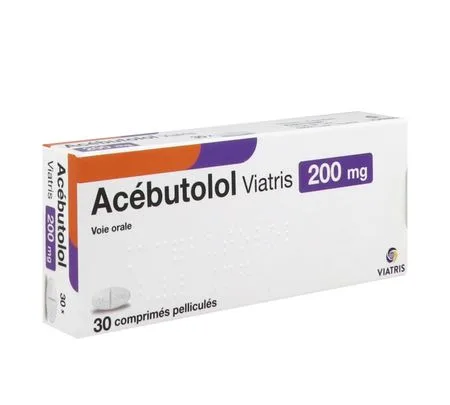
ACEBUTOLOL VIATRIS 200 mg, film-coated tablet
Composition
Acebutolol hydrochloride.....................................................................................................................221,68 mg
Quantity corresponding to acebutolol base......................................................................................200,00 mg
For a film-coated tablet.
Excipient with known effect: lactose.
Maize starch, povidone K 30, anhydrous colloidal silica, purified talc, microcrystalline cellulose, magnesium stearate.
Film coating: Opadry OY-LS-28908: titanium dioxide (E171), lactose, hypromellose, macrogol 4000.
Indications
• Arterial hypertension.
• Prophylaxis of exertional angina attacks.
• Long-term treatment after myocardial infarction (acebutolol reduces the risk of recurrent myocardial infarction and mortality, particularly sudden death).
• Treatment of certain heart rhythm disorders: supraventricular (tachycardia, atrial flutter and fibrillation, junctional tachycardia) or ventricular (ventricular extrasystole, ventricular tachycardia).
Dosage and administration
Dosage
• Arterial hypertension :
the usual daily dose of acebutolol is 400 mg, to be administered preferably as a single dose each morning, or as two doses, one in the morning and one in the evening.
This dose may be increased in cases of severe arterial hypertension.
• Prophylaxis of effort angina attacks, tachyarrhythmias :
the daily dose may vary from 400 to 800 mg (600 mg on average), starting with the lowest dose and adjusting the dosage in progressive steps according to the clinical condition or the electrocardiogram.
• Long-term treatment after myocardial infarction :
treatment with acebutolol should preferably be initiated between the 3th and the 21th day after the acute episode of infarction: the dose is 2 tablets per day, in two intakes.
Paediatric population
Not applicable.
Method of administration
Oral use.
Contraindications
This medicine must NEVER be used in the following cases:
• severe forms of asthma and chronic obstructive bronchopneumopathies;
• heart failure not controlled by treatment;
• cardiogenic shock;
• non-fitted second- and third-degree atrioventricular blocks;
• Prinzmetal's angina (in pure forms and as monotherapy);
• sinus node disease (including sinoatrial block);
• bradycardia (< 45-50 beats per minute);
• Raynaud's phenomenon and peripheral arterial disorders, in their severe forms;
• untreated pheochromocytoma;
• hypotension (blood pressure ≤ 100/60 mmHg);
• hypersensitivity to the active substance or to any of the excipients listed in section Composition or to other beta-blockers;
• history of anaphylactic reaction;
• metabolic acidosis;
• breastfeeding.
Warnings and precautions
Special warnings
|
Never abruptly interrupt treatment in patients with angina: sudden cessation may lead to serious rhythm disorders, myocardial infarction or sudden death. |
Precautions for use
Discontinuation of treatment
Treatment must not be interrupted abruptly, particularly in patients with ischaemic heart disease. The dose must be reduced gradually, ideally over one to two weeks, starting at the same time, if necessary, with replacement therapy, to avoid worsening of angina.
Asthma and chronic obstructive pulmonary disease
Beta-blockers may only be administered in cases of mild forms, by choosing a selective beta‑1 with a low initial dose. It is recommended that respiratory function tests be performed before starting treatment.
In the event of an attack occurring during treatment, beta-mimetic bronchodilators may be used.
Drug-induced bronchospasm is usually at least partially reversible with the use of an appropriate agonist.
Although cardioselective beta-blockers have less effect on pulmonary function than non-selective beta-blockers, as with all beta-blockers, they should be avoided in patients with chronic obstructive pulmonary disease unless there is a clinical reason justifying their use. When such reasons exist, cardioselective beta-blockers must be used with the greatest caution.
Heart failure
In patients with heart failure controlled by treatment and where necessary, acebutolol will be administered at very low, gradually increasing doses and under strict medical supervision.
Bradycardia
If the heart rate falls below 50-55 beats per minute at rest and the patient presents symptoms related to bradycardia, the dose must be reduced.
First-degree atrioventricular block
Given their negative dromotropic effect, beta-blockers must be administered with caution to patients with first-degree atrioventricular block.
Prinzmetal's angina
Beta-blockers may increase the number and duration of attacks in patients suffering from Prinzmetal's angina. The use of a cardioselective beta-1 beta-blocker is possible, in minor and associated forms, provided a vasodilator is co-administered.
Peripheral arterial disorders
In patients suffering from peripheral arterial disorders (Raynaud's disease or syndrome, arteritis or chronic obliterative arteriopathies of the lower limbs), beta-blockers may cause worsening of these disorders. In these situations, a cardioselective beta-blocker with partial agonist activity should be preferred, and administered with caution.
Pheochromocytoma
The use of beta-blockers in the treatment of hypertension due to treated pheochromocytoma requires close monitoring of blood pressure.
They should only be used in patients suffering from pheochromocytoma treated with an alpha-adrenoceptor blocker.
Elderly subject
In elderly subjects, absolute respect of contraindications is imperative. Care should be taken to initiate treatment at a low dose and to ensure close monitoring.
Renal insufficiency
Renal insufficiency is not a contraindication to the use of acebutolol, which has both renal and extra-renal elimination. Precautions should be taken when high doses are administered to patients with severe renal insufficiency, as accumulation of the product is possible in these circumstances.
In cases of renal insufficiency, the dosage should be adapted to the state of renal function: in practice, it is sufficient to monitor heart rate, so as to reduce doses if excessive bradycardia occurs (< 50-55 beats/min at rest).
The frequency of intake must not exceed one administration per day in patients with renal insufficiency. It may be recommended to reduce the dose by 50% when the glomerular filtration rate is between 25 and 50 mL/min and by 75% when it is below 25 mL/min (see section Dosage and administration).
Diabetic subject
Inform the patient and, at the start of treatment, reinforce blood glucose self-monitoring. Warning signs of hypoglycaemia may be masked, in particular tachycardia, palpitations and sweating.
Psoriasis
Worsening of the disease has been reported under beta-blockers; the indication should be carefully weighed.
Allergic reactions
In patients liable to have a severe anaphylactic reaction, whatever its origin, in particular with iodinated contrast media or floctafenine, or during desensitisation treatments, beta-blocker treatment may lead to an aggravation of the reaction and resistance to treatment with adrenaline at usual doses.
General anaesthesia
Beta-blockers will lead to attenuation of reflex tachycardia and an increased risk of hypotension. Continuation of beta-blocker treatment reduces the risk of arrhythmia, myocardial ischaemia and hypertensive episodes. The anaesthetist should be informed that the patient is being treated with a beta-blocker.
• If discontinuation of the treatment is deemed necessary, a suspension of at least 24 hours may be considered sufficient to allow the reappearance of sensitivity to catecholamines.
• In certain cases, beta-blocker treatment cannot be interrupted:
- in patients with coronary insufficiency, it is advisable to continue treatment until the intervention, given the risk associated with abrupt withdrawal of beta-blockers,
- in cases of emergency or impossibility of withdrawal, the patient must be protected against vagal predominance by sufficient premedication with atropine, repeated as needed. Anaesthesia should use agents that depress the myocardium as little as possible, and blood losses should be compensated.
• The risk of anaphylaxis should be taken into account.
Thyrotoxicosis
Beta-blockers may mask its cardiovascular signs.
Excipient
This medicine contains lactose. Patients with galactose intolerance, total lactase deficiency or glucose-galactose malabsorption syndrome (rare hereditary diseases) must not take this medicine.
Interactions
Bradycardic medicinal products
Many medicines can cause bradycardia. This is particularly the case with class Ia antiarrhythmics, beta-blockers, certain class III antiarrhythmics, certain calcium antagonists, digitalis glycosides, pilocarpine, anticholinesterases, etc.
A sinus arrest may occur when beta-blockers, including ACEBUTOLOL VIATRIS, are used in combination with other medicinal products known to induce sinus arrest (see section Adverse effects.).
Combinations not recommended
+ Diltiazem, verapamil
Disorders of automaticity (excessive bradycardia, sinus arrest), sino-atrial and atrioventricular conduction disorders and cardiac failure.
Such a combination should only be made under close clinical and ECG monitoring, particularly in elderly subjects or at the start of treatment.
Acebutolol must not be used with verapamil or within the days following verapamil intake (or vice versa). Great care must be taken when combining with any other calcium antagonist, in particular with diltiazem.
An increased risk of depression has been reported when beta-blockers are co-administered with diltiazem (see section Adverse effects).
+ Fingolimod
Potentiation of bradycardic effects which may have fatal consequences. Beta-blockers are all the more at risk as they prevent adrenergic compensation mechanisms.
Clinical monitoring and continuous ECG for 24 hours following the first dose.
Associations requiring precautions for use
+ Halogenated volatile anaesthetics
Reduction of compensatory cardiovascular reactions by beta-blockers. Beta-adrenergic inhibition may be reversed during surgery by beta-mimetics.
As a general rule, do not stop beta-blocker treatment and, in any case, avoid abrupt withdrawal. Inform the anaesthetist of this treatment (see section Warnings and precautions).
+ Amiodarone
Disorders of automaticity and conduction (suppression of compensatory sympathetic mechanisms). Clinical monitoring and ECG.
Class I antiarrhythmics (such as disopyramide) and amiodarone may increase atrial conduction time and induce negative inotropic effects when used in combination with beta-blockers.
+ Central antihypertensives
Significant increase in blood pressure in case of abrupt withdrawal of the central antihypertensive treatment. Avoid abrupt withdrawal of central antihypertensive treatment. Clinical monitoring.
If a beta-blocker is used in combination with clonidine, gradual withdrawal of the beta-blocker should first be considered before withdrawal of clonidine.
+ Insulin, glinides, gliptins and hypoglycaemic sulfonylureas
All beta-blockers may mask certain symptoms of hypoglycaemia: palpitations and tachycardia. Inform the patient and reinforce blood glucose self-monitoring, especially at the start of treatment (see section Warnings and precautions).
In patients with unstable diabetes or insulin-dependent diabetes, the dose of the hypoglycaemic medicine (e.g. insulin or oral antidiabetic) may need to be reduced. In addition, beta-blockers are also known to reduce the effect of glibenclamide.
+ Lidocaine administered intravenously
Increased plasma concentrations of lidocaine with possible neurological and cardiac adverse effects (reduced hepatic clearance of lidocaine).
Clinical monitoring, ECG and possibly monitoring of plasma lidocaine concentrations during the combination and after withdrawal of the beta-blocker. Adjust the lidocaine dose if necessary.
+ Medicinal products liable to induce torsades de pointes
Increased risk of ventricular rhythm disorders, in particular torsades de pointes.
Clinical and electrocardiographic monitoring.
+ Class I antiarrhythmics (except lidocaine)
Disorders of contractility, automaticity and conduction (suppression of compensatory sympathetic mechanisms). Clinical monitoring and ECG.
Class I antiarrhythmics (such as disopyramide) and amiodarone may increase atrial conduction time and induce negative inotropic effects when used in combination with beta-blockers.
Associations to be taken into account
+ Non-steroidal anti-inflammatory drugs
Reduction of the antihypertensive effect (inhibition of vasodilatory prostaglandins by non-steroidal anti-inflammatory drugs and sodium and water retention with phenylbutazone).
+ Alpha-blockers for urological use
Increase of the hypotensive effect. Increased risk of orthostatic hypotension.
+ Alpha-blocking antihypertensives
Increased hypotensive effect. Increased risk of orthostatic hypotension.
+ Other bradycardic agents
Risk of excessive bradycardia (additive effects).
+ Dapoxetine
Risk of increased adverse effects, notably dizziness or syncope.
+ Dihydropyridines
Hypotension, heart failure in patients with latent or uncontrolled heart failure (additive negative inotropic effects). The beta-blocker may also minimise the reflex sympathetic reaction triggered by excessive haemodynamic repercussions.
+ Dipyridamole (IV route)
Increase in the antihypertensive effect.
+ Pilocarpine
Risk of excessive bradycardia (additive bradycardic effects).
+ Medicines causing orthostatic hypotension (in particular antihypertensives, nitrate derivatives, type 5 phosphodiesterase inhibitors, urological alpha-blockers, imipramine-type antidepressants, phenothiazine neuroleptics, dopamine agonists, levodopa)
Risk of increased hypotension, in particular orthostatic hypotension.
Fertility, pregnancy and breastfeeding
Pregnancy
Animal studies have not shown any teratogenic effect.
In the absence of a teratogenic effect in animals, a malformative effect in humans is not expected. Indeed, to date, substances responsible for malformations in humans have proven teratogenic in animals in well-conducted studies in two species.
In clinical practice, no teratogenic effect has been reported to date, and the results of prospective controlled studies with some beta-blockers have not reported birth malformations.
Acebutolol must not be administered to pregnant women during the 1er trimester of pregnancy unless the physician considers the treatment essential. In such cases, the lowest possible dose should be used.
Beta-blockers administered in late pregnancy may increase the risk of bradycardia, hypoglycaemia and cardiac or pulmonary complications in the foetus and newborn.
In newborns of treated mothers, the beta-blocking action persists for several days after birth and may result in bradycardia, respiratory distress, hypoglycaemia; however, most often this persistence has no clinical consequence. Nevertheless, heart failure requiring hospitalisation in intensive care may occur due to reduced compensatory cardiovascular reactions (see section Overdose), while avoiding plasma-expanding solutions (risk of pulmonary oedema).
Beta-blockers may reduce placental perfusion, which may cause intrauterine foetal death, miscarriage, premature delivery and newborns small for gestational age.
Consequently, this medicine, under normal conditions of use, may be prescribed during pregnancy if needed. If treatment continues until delivery, close monitoring of the newborn (heart rate and blood glucose during the first 3 to 5 days of life) is recommended.
Breast-feeding
If acebutolol is being administered, breast-feeding is contraindicated due to significant passage into milk and the risks of hypoglycaemia and bradycardia to which the newborn is exposed (see section Pharmacokinetics).
Driving and using machines
No study on the effects of acebutolol on the ability to drive vehicles and use machines has been performed. As with all beta-blockers, dizziness or fatigue may occasionally occur. This should be taken into account when driving vehicles or using machines.
Adverse effects
The adverse reactions associated with acebutolol during controlled clinical trials in patients with hypertension, angina pectoris or arrhythmia (1002 patients exposed to acebutolol) are presented by system organ class and in order of decreasing frequency.
The frequency of the adverse reactions "antinuclear antibodies" and "lupus-like syndrome" was determined from the 1440 patients with hypertension, angina pectoris or arrhythmia exposed to acebutolol in open or double-blind studies conducted in the United States.
Frequencies are defined as: very common (≥ 1/10), common (≥ 1/100 to ≤ 1/10), uncommon (≥ 1/1 000 to ≤ 1/100), rare (≥ 1/10 000 to ≤ 1/1 000); very rare (< 10 000). When the exact frequency has not been reported, the frequency category "not known" is assigned (Adverse reactions marked with a *).
Adverse reactions reported during post-marketing experience have also been listed. These adverse reactions come from spontaneously reported cases and therefore, the frequency of these reactions is unknown (cannot be estimated from the available data).
The most frequent and most severe adverse reactions of acebutolol are related to its adrenergic beta-blocking activity. The most frequently reported clinical adverse reactions are fatigue and gastrointestinal disorders. The most severe adverse reactions are heart failure, atrioventricular block and bronchospasm.
As with all beta-blockers, abrupt withdrawal may exacerbate angina pectoris, and precautions are particularly necessary in patients suffering from ischaemic heart disease (see section Warnings and precautions).
|
Immune system disorders |
Very common |
Antinuclear antibody** |
|
Uncommon |
Lupus-like syndrome** |
|
|
Psychiatric disorders |
Common |
Depression, nightmare |
|
Unknown |
Psychoses, hallucinations, confusion, loss of libido*, sleep disorder |
|
|
Nervous system disorders |
Very common |
Fatigue |
|
Common |
Malaise, headache |
|
|
Unknown |
Paraesthesia*, central nervous system disorder |
|
|
Eye disorders |
Common |
Visual disturbance |
|
Unknown |
Dry eye* |
|
|
Cardiac disorders |
Unknown |
Heart failure*, atrioventricular block of 1er degree, worsening of pre-existing atrioventricular block, bradycardia*, sinus arrest in predisposed patients (for example, elderly patients or patients with pre-existing bradycardia, sinus node dysfunction or atrioventricular block) |
|
Vascular disorders |
Unknown |
Intermittent claudication, Raynaud's syndrome, cyanosis and coldness of the extremities, hypotension* |
|
Respiratory, thoracic and mediastinal disorders |
Common |
Dyspnoea |
|
Unknown |
Pneumonia, pulmonary infiltration, bronchospasm |
|
|
Gastrointestinal disorders |
Very common |
Gastrointestinal disorders |
|
Common |
Nausea, diarrhoea |
|
|
Unknown |
Vomiting* |
|
|
Skin and subcutaneous tissue disorders |
Common |
Rash |
|
Unknown |
Alopecia** |
|
|
General disorders and administration site conditions |
Unknown |
Withdrawal syndrome (see section Warnings and precautions) |
|
Hepatobiliary disorders |
Unknown |
Increase in blood levels of liver enzymes, liver damage mainly hepatocellular |
** Resolving upon discontinuation of treatment
Reporting of suspected adverse reactions
Reporting suspected adverse reactions after authorisation of the medicinal product is important. It allows continued monitoring of the benefit/risk balance of the medicinal product. Healthcare professionals are asked to report any suspected adverse reactions via the national reporting system: National Agency for the Safety of Medicines and Health Products (ANSM) and the network of Regional Pharmacovigilance Centres - Website: https://signalement.social-sante.gouv.fr/.
Overdose
In case of bradycardia or excessive hypotension, 1 mg of atropine sulfate administered intravenously will be given without delay. If this is insufficient, this injection must be followed by a slow intravenous injection of isoprenaline (5 mcg per minute) with continuous monitoring until the response occurs.
In severe cases of overdose with circulatory collapse not responding to atropine or catecholamines, intravenous injection of 10 to 20 mg of glucagon could result in significant improvement. Cardiac stimulation should be used if bradycardia becomes severe.
Cases of sinus arrest have been reported during overdose.
The use of vasopressors, diazepam, phenytoin, lidocaine, digoxin and bronchodilators should be considered depending on the patient's condition.
Acebutolol can be removed from the blood by haemodialysis. Other symptoms and signs of overdose include cardiogenic shock, atrioventricular block, conduction problems, pulmonary oedema, depression of the level of consciousness, bronchospasm and rarely hyperkalaemia.
In case of cardiac decompensation in the newborn of a mother treated with beta-blockers:
• glucagon on the basis of 0,3 mg/kg;
• hospitalisation in intensive care;
• isoprenaline and dobutamine: generally high dosages and prolonged treatment require specialised monitoring.
Pharmacodynamics
Pharmacotherapeutic class: beta-blocker, selective, ATC code: C07AB04.
Acebutolol is characterised by three pharmacological properties:
• selective beta-1 beta-blocking activity;
• antiarrhythmic effect;
• partial agonist activity (moderate intrinsic sympathomimetic activity).
Pharmacokinetics
Absorption
Administered orally, acebutolol is rapidly and almost completely absorbed; however, the hepatic first-pass effect is significant and the bioavailability is 40 %; the peak plasma concentration is reached after approximately 2 to 4 hours.
Distribution
Plasma protein binding: protein binding is low: 9 to 11 % for acebutolol, 6 to 9 % for diacetolol.
Elimination half-life: the plasma elimination half-life of acebutolol is approximately 4 hours and 10 hours for diacetolol.
Biotransformation
The majority of acebutolol is metabolized in the liver into an N-acetylated derivative, diacetolol, which is an active metabolite; the peak plasma concentration of this metabolite is reached after approximately 4 hours, and plasma concentrations of diacetolol are twice those of acebutolol.
Elimination
Circulating acebutolol and diacetolol are excreted predominantly by the kidney.
At-risk populations
Renal impairment
Urinary elimination is reduced and the half-lives of acebutolol, and even more so of diacetolol, increase. There is a very significant correlation between creatinine clearance and renal clearance of diacetolol.
Risks of accumulation exist in renal insufficiency, particularly in cases of twice-daily dosing. Reduce doses where appropriate, with careful clinical monitoring of the bradycardic effect, for example (see section Warnings and precautions).
Elderly subject
The physiological decline in renal function may lead to an increase in the half-lives of acebutolol and diacetolol.
Pregnancy
Acebutolol crosses the placenta. The mean cord blood/maternal blood concentration ratios of acebutolol and its active metabolite, diacetolol, are approximately 1,6 for doses of 200 and 400 mg. Maximum concentrations are observed, for acebutolol, 4 to 5 hours after the last dose, and for diacetolol, 5 to 7 hours later.
Breast-feeding
Acebutolol is excreted in human milk; the concentration of acebutolol in milk is maximal between 4 h 30 and 6 hours after intake. The mean milk/maternal blood concentration ratios vary in a range of 4 to 5,5 for doses of 200 and 400 mg respectively. For diacetolol, these ratios vary between 3 and 4, with the maximum concentration observed 7 hours after a dose of 200 mg and 12 hours after a dose of 400 mg.
SPECIAL PRECAUTIONS FOR DISPOSAL AND OTHER HANDLING
No special requirements.
Any unused medicinal product or waste material should be disposed of in accordance with local requirements.
Prescription, supply and reimbursement
| Marketing authorisation (AMM) |
|
| Price: |
|
Social Security reimbursement at 65% (Plq/90, Fl/30) in the following indications:
- Indication(s) listed in the marketing authorization on the date of publication of this order (Fl/30)
- Arterial hypertension (Plq/90)
- Ventricular tachycardia (Plq/90)
- Angina, preventive treatment (of) (Plq/90)
- Atrial flutter (Plq/90)
- Ventricular extrasystole (Plq/90)
- Atrial fibrillation (Plq/90)
- Junctional tachycardia (Plq/90)
- Supraventricular tachycardia (Plq/90)
Collection.
1 RUE DE TURIN
69007 LYON
Tel: 04 37 25 75 00 https://www.viatris.fr/
Source: VIDAL · Updated on 10/11/2026. This information does not replace advice from a healthcare professional.