Professional product catalogue
Home care
Home care equipment here includes incontinence articles, ostomy appliances and mobility aids. These families have different collection, protective or external-support functions. Their association within an equipment pathway does not make them interchangeable. For pharmacy professionals, a useful description separates worn components, consumables and durable equipment, then identifies materials, dimensions and intended combinations. Absorbent textiles, skin barriers, handles, support points and walking tips each provide a different contact component, with dimensions and materials specific to the intended equipment.
Products in this category
5 products
 Biocodex
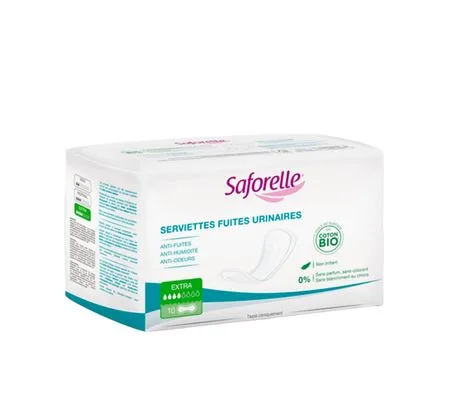
SAFORELLE URINARY LEAKAGE Disposable ultra-absorbent extra pad B/10
CIP / EAN : 3700399101711
- Biocodex
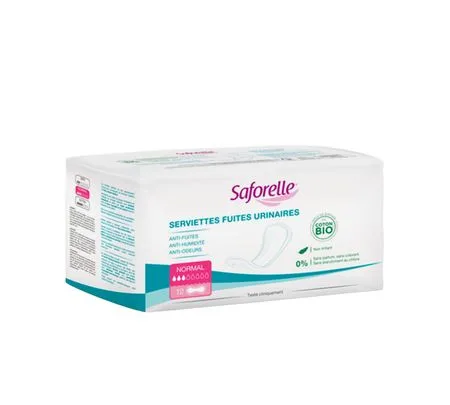
SAFORELLE URINARY LEAKAGE Disposable ultra-absorbent normal pad B/12
CIP / EAN : 3700399101704


Understanding home care
Incontinence and absorbent constructions
Shaped pads, absorbent pants and full briefs are not simply different capacities. Their forms, openings and retention arrangements differ. The absorbent core, contact surface and outer layer have separate roles. An underpad concerns a surface, while worn protection has another geometry. Size and absorption remain distinct: a letter describes manufacturer-defined dimensions rather than a universal absorption measure or a level suitable for every situation. The same physical form can also be supplied in more than one stated absorption level.
Ostomy barriers, pouches and couplings
A one-piece appliance joins a pouch and skin barrier, while a two-piece system connects a separate barrier and pouch through an intended coupling. Closed pouches, drainable pouches and urinary collection devices have different constructions. Coupling diameter and skin-opening size do not describe the same measurement. Protective or filling accessories are separate components again, whose compatibility cannot be inferred from the barrier’s appearance. The system architecture explains the relationship between parts more clearly than counting the units inside the box.
Mobility support and equipment structure
Sticks, walking frames and wheeled walkers provide different support geometries. Handles, forearm supports, tips, wheels and brakes contribute to the architecture according to the model. Seats and baskets are not universal features. Open and folded dimensions answer different storage questions. Equipment weight also differs from declared maximum user load. Adjustable height, frame width and contact components complement these dimensional descriptions of a walking aid and its equipment structure. Adjustable construction describes a mechanism rather than establishing how that mechanism should be set for a particular person.
Components belong to intended systems
A spare part, consumable and complete device are different presentations. Compatibility of a walking-stick tip, ostomy pouch or protective accessory depends on its intended system. Identical diameter or a similar size name is insufficient to establish a combination. Care requirements and single-use designation also belong to each component. Each family has its own contact elements, from absorbent textiles and skin barriers to handles and walking tips, with different materials and dimensions. The full equipment assembly and the separately supplied replacement part therefore remain distinct specifications.
Frequently asked questions
Is every home care article reusable?
No. The family includes durable equipment and consumables. Intended number of uses, care requirements and presentation belong to each article and its individual components rather than to the category as a whole.
Is size enough to compare two devices in this family?
Size describes only part of the article. Function, geometry and compatibility remain essential for absorbent products, ostomy barriers and mobility aids alike.
Updated 10 November 2026
Sources and further reading