Professional product catalogue
Hydrocolloid dressings
Hydrocolloid dressings contain a matrix that interacts with wound fluid and can form a gel. Their sheet construction differs from absorbent foam dressings and fibrous compresses. Designs vary in thickness, transparency, outer backing and shape. These physical distinctions matter to pharmacy teams because two sheets with similar overall measurements may have different structures. The category name identifies a material family; it does not establish identical ingredients, clinical purposes or handling characteristics across all products.
Products in this category
11 products

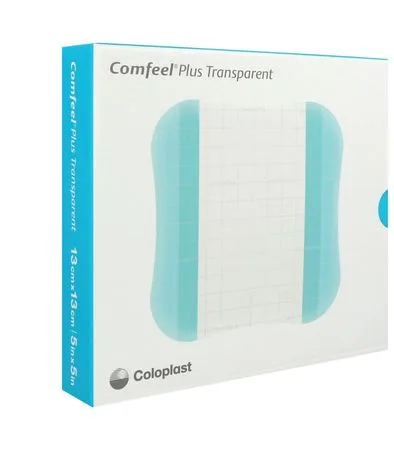
COMFEEL PLUS TRANSPARENT Dressing 13x13cm B/10
Prices and discounts are reserved for client pharmacies.
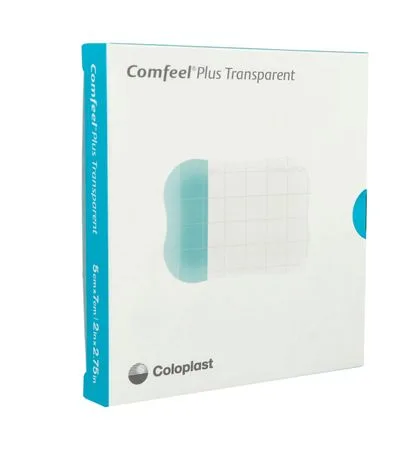
COMFEEL PLUS TRANSPARENT Dressing 5x7cm B/10
Prices and discounts are reserved for client pharmacies.

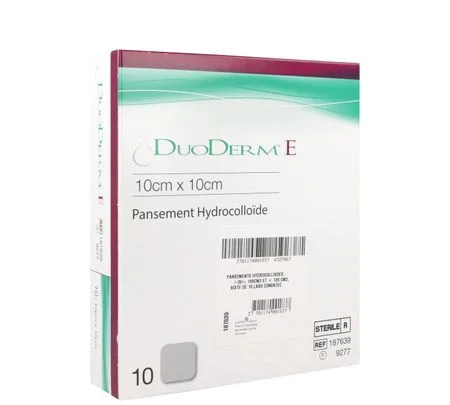
DUODERM E Hydrocolloid dressing 10x10cm B/10
Prices and discounts are reserved for client pharmacies.
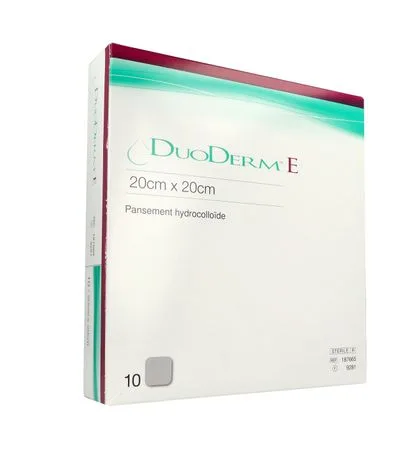
DUODERM E Hydrocolloid dressing 20x20cm B/10
Prices and discounts are reserved for client pharmacies.
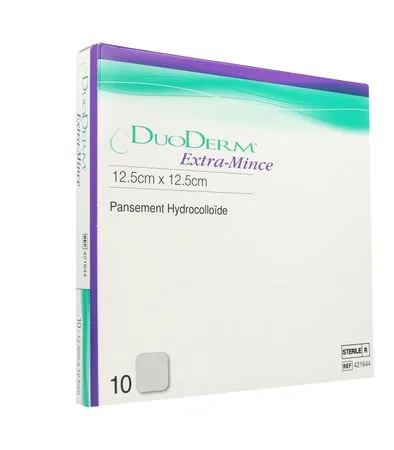
DUODERM EXTRA THIN Sterile hydrocolloid dressing 12,5x12,5cm B/10
Prices and discounts are reserved for client pharmacies.
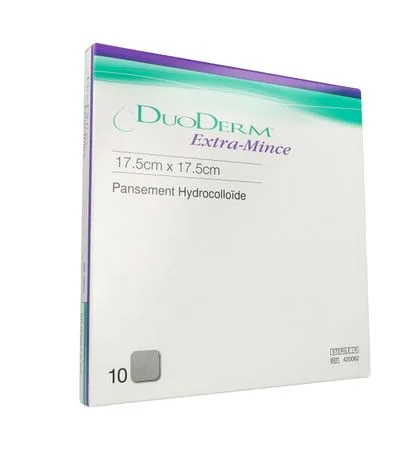
DUODERM EXTRA MINCE Sterile hydrocolloid dressings 17,5x17,5cm Box of 10
Prices and discounts are reserved for client pharmacies.
DUODERM EXTRA MINCE Sterile hydrocolloid dressing 6x11cm B/10
Prices and discounts are reserved for client pharmacies.
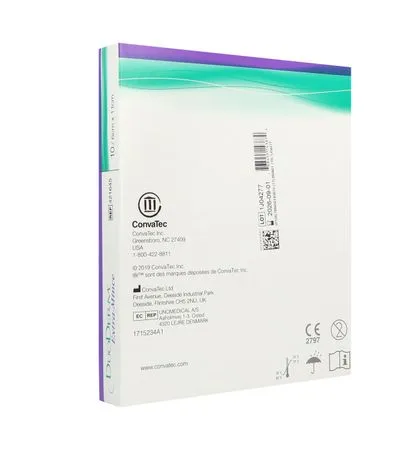
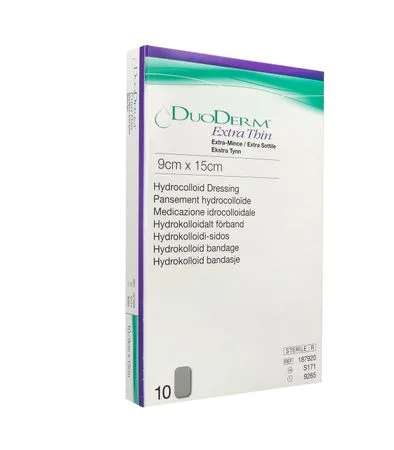
DUODERM EXTRA MINCE Sterile hydrocolloid dressing 9x15cm B/10
Prices and discounts are reserved for client pharmacies.

Understanding hydrocolloid dressings
A hydrocolloid matrix is not one fixed formula
Hydrocolloid matrices may contain cellulose derivatives, and some formulations also include pectin or gelatin. The exact composition belongs to the individual device and should not be attributed to the entire family. Interaction with fluid can produce a gel, which explains an important physical feature of this type of dressing. Composition alone, however, does not establish an appropriate clinical selection. The proportions, backing and complete design also distinguish one sheet from another in a professional technical description.
Thickness, visibility and shaped sheets
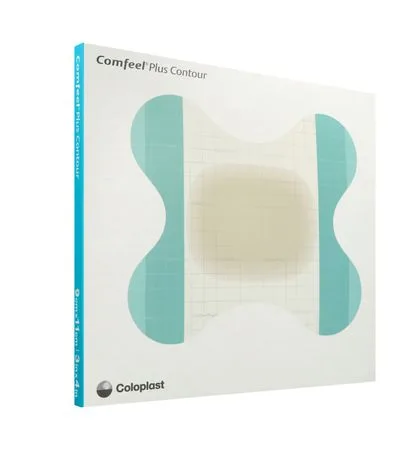
Extra-thin sheets and thicker designs have different profiles. Flexibility, visibility through the dressing and the space occupied beneath clothing can vary between constructions. Some sheets have anatomical shapes for contours such as the heel or sacral area. An anatomical format changes the geometry of the device rather than simply increasing its size. Outer backing and edge design are therefore useful comparison points alongside length and width. Similar external measurements do not necessarily mean the same usable surface or construction.
Keeping neighbouring categories distinct
A hydrocolloid sheet is not the same construction as an adhesive island dressing with a separate central absorbent pad. The fluid-interacting area and the peripheral structure differ. Hydrocolloid also does not mean antiseptic or antimicrobial: any additional substance or function must be identified separately. For professional specifications, composition, thickness, useful dimensions and storage requirements describe the sheet more meaningfully than its colour alone. Intended purposes and restrictions on cutting remain specific to the device rather than general permissions for the category.
Frequently asked questions
Do all hydrocolloids contain the same ingredients?
No. The term describes a material family. The matrix and associated ingredients vary, so a formula used in one product cannot be assumed for every other hydrocolloid sheet.
Is a hydrocolloid dressing an antiseptic?
Gel formation is a material behaviour, not an antiseptic action. An active component or additional function would need to be explicitly stated for the particular device.
Updated 10 November 2026
Sources and further reading